NFT

NFTs are unique digital identifiers recorded on a blockchain that certify ownership and authenticity of a specific asset. Moving past the "PFP" craze, 2026 NFTs emphasize utility, representing everything from IP rights and digital fashion to RWA titles and event ticketing. This tag explores the technical standards of digital ownership, the growth of NFT marketplaces, and the integration of non-fungible tech into the broader Creator Economy and enterprise solutions.

12950 Articles
Created: 2026/02/02 18:52
Updated: 2026/02/02 18:52
Save Money with White Label Crypto Development While Keeping Quality

Save Money with White Label Crypto Development While Keeping Quality

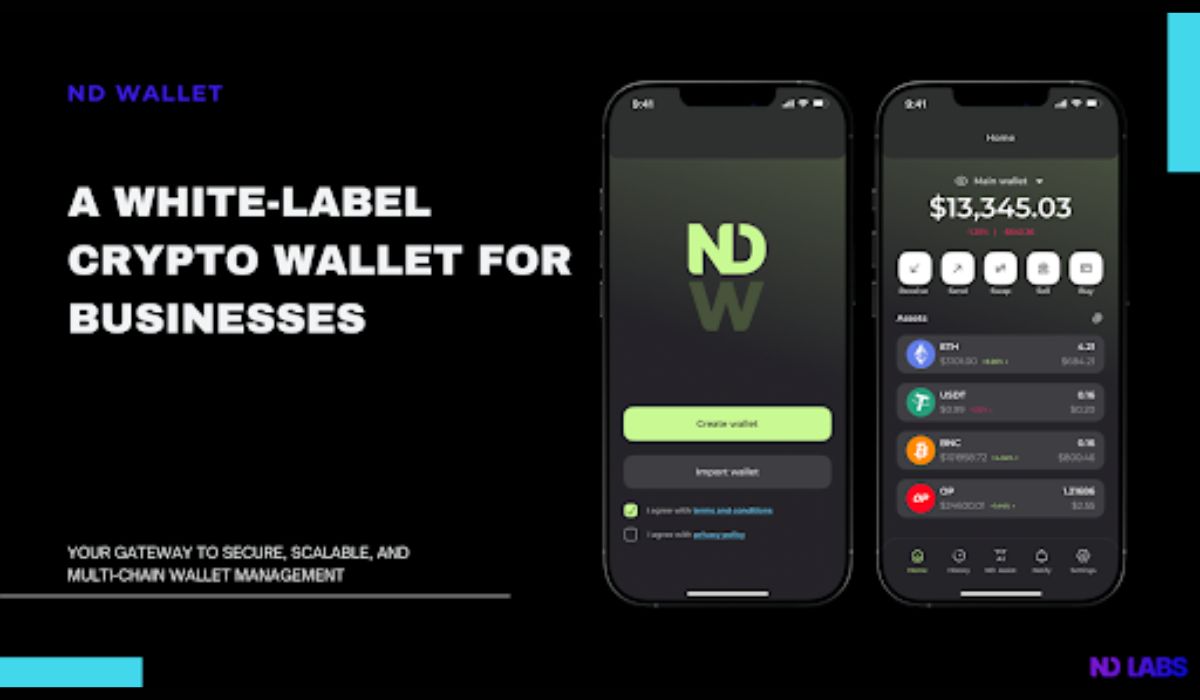
The post Save Money with White Label Crypto Development While Keeping Quality appeared on BitcoinEthereumNews.com. Advertisement &nbsp &nbsp Disclaimer: The below article is sponsored, and the views in it do not represent those of ZyCrypto. Readers should conduct independent research before taking any actions related to the project mentioned in this piece. This article should not be regarded as investment advice. Building a crypto wallet, exchange, or NFT platform no longer takes months. With White Label crypto tools, businesses can now launch in just weeks. These ready-made and proven technologies slash development expenses by up to 70% while offering quick customization to suit your branding. Solutions like White Label Cryptoсurrency Wallet Development allow companies to create secure, multi-chain wallets without building everything from scratch. Today, efficient resource management and fast time-to-market are more important than ever. For this reason, many startups and companies rely on ready-made solutions as their preferred approach. Speed Drives the New Competitive Game Speed-to-market has become a decisive factor for Web3 startups and enterprises alike. In a competitive space where users adopt (and abandon) new tools quickly, launching faster means gathering feedback earlier, iterating faster, and gaining traction before rivals do. Ready-made solutions offer exactly that: an infrastructure that eliminates the need for building from scratch, letting teams focus on core business and user growth instead of backend logic. Advertisement &nbsp Save Money While Keeping Quality For many companies, the appeal of White Label lies not only in its speed but also in its ability to reduce development costs by more than half. By using pre-built modules that have already been tested and optimized, teams can reallocate resources from engineering to growth, marketing, or user experience. At the same time, White Label does not mean generic. These platforms typically allow extensive customization, from visual design and features to blockchain integrations and user flows. Your Brand, Your Choices Modern pre-built…

Author: BitcoinEthereumNews
UAE Joins Global Crypto Tax Sharing Agreement

UAE Joins Global Crypto Tax Sharing Agreement

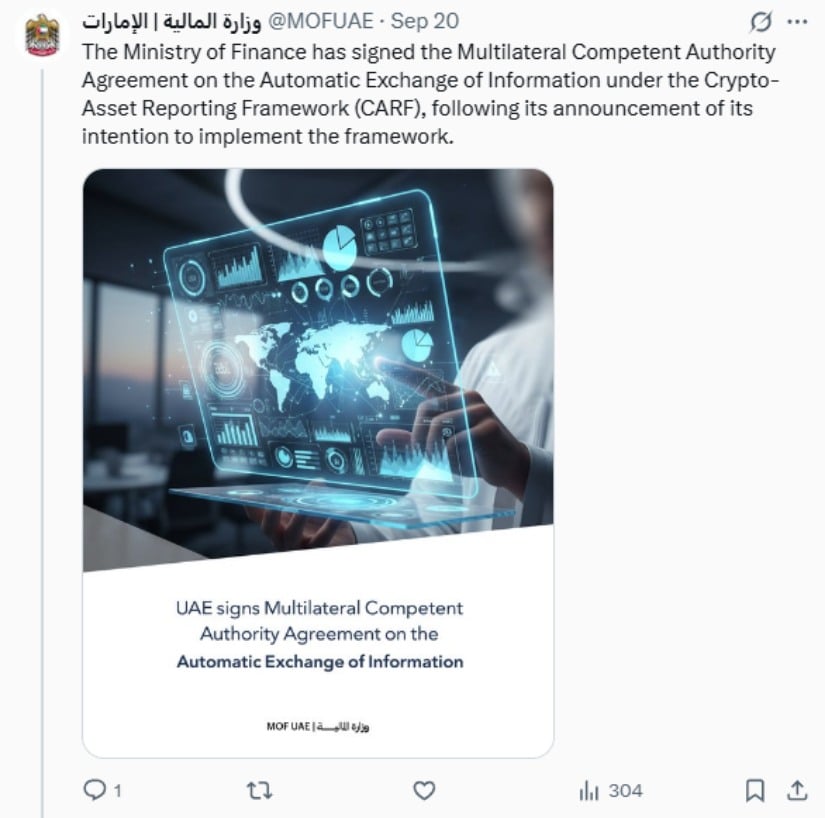
The United Arab Emirates announced on Saturday that it signed an agreement to join over 50 other nations in a plan to share tax information about digital assets automatically.

Author: Brave Newcoin
South Korean Blockchain Project Faces Unexpected Halt by State Mint

South Korean Blockchain Project Faces Unexpected Halt by State Mint

BitcoinWorld South Korean Blockchain Project Faces Unexpected Halt by State Mint The world of blockchain technology is constantly evolving, bringing both exciting innovations and unexpected challenges. A recent development from South Korea has caught the attention of many: the abrupt discontinuation of a significant South Korean blockchain project by the nation’s state mint, KOMSCO. For two years, the Korea Minting and Security Printing Corporation (KOMSCO) had been diligently working on an ambitious blockchain-based integrated digital wallet. This project aimed to bring together central bank digital currencies (CBDCs), digital IDs, and non-fungible tokens (NFTs) into a single, cohesive platform. However, as reported by Yonhap News, this innovative endeavor has now been halted. What Led to the Halt of the South Korean Blockchain Project? The primary reason cited for the project’s termination was a crucial lack of commercial viability. While the technological vision was certainly grand, translating that vision into a practical, profitable, and widely adopted service proved to be a significant hurdle. Developing cutting-edge technology is one thing; ensuring it can sustain itself in the real world is another. This challenge is not unique to the South Korean blockchain project. Many innovative ventures in the blockchain space face similar obstacles. Factors such as: Market Readiness: Is the general public or target user base truly ready for such advanced digital solutions? Regulatory Landscape: The evolving and often uncertain regulatory environment for digital assets can pose substantial risks. Integration Complexities: Merging disparate technologies like CBDCs, digital IDs, and NFTs creates immense technical and logistical challenges. High Development Costs: Blockchain projects, especially those involving state-level infrastructure, often incur significant expenses without immediate returns. These elements collectively contribute to the viability assessment, and in KOMSCO’s case, the scales tipped towards discontinuation. Are Digital Wallets and CBDCs Still the Future Despite This South Korean Blockchain Project Setback? Absolutely. The discontinuation of one South Korean blockchain project does not negate the immense potential of digital wallets, CBDCs, and NFTs. These technologies are still widely considered to be foundational for the future of finance and digital identity. Many countries globally are actively exploring or piloting their own CBDCs, recognizing their potential to modernize payment systems and enhance financial inclusion. Digital IDs offer streamlined verification processes and enhanced security, while NFTs are revolutionizing ownership in the digital realm. The challenges faced by KOMSCO’s project highlight the complexities involved, but they also serve as valuable learning experiences for others in the space. It emphasizes that while innovation is key, practical implementation and a clear path to commercial success are equally vital. Consider the broader landscape: Numerous private companies are developing successful digital wallet solutions. Central banks from Europe to Asia are testing CBDCs with promising results. The NFT market continues to evolve, finding new applications beyond digital art. The underlying technologies remain robust, but the application and execution demand meticulous planning. Lessons Learned from the South Korean Blockchain Project Discontinuation The experience of KOMSCO offers several crucial takeaways for both developers and policymakers in the blockchain sector. It underscores the importance of a phased approach and rigorous market research before committing to large-scale, integrated projects. A clear understanding of user needs and a robust business model are paramount. Moreover, it highlights the need for adaptability. The blockchain space is dynamic, and projects must be agile enough to pivot or adjust strategies based on emerging data and market feedback. This South Korean blockchain project, while unsuccessful in its initial form, provides valuable insights that can inform future digital initiatives, not just in Korea but worldwide. Key lessons include: Prioritize Commercial Viability: Technology must serve a practical, sustainable purpose. Phased Implementation: Start small, test, and scale gradually. User-Centric Design: Ensure the solution genuinely meets user needs and offers clear benefits. Regulatory Foresight: Anticipate and adapt to potential regulatory changes. In conclusion, the halting of KOMSCO’s ambitious South Korean blockchain project serves as a potent reminder of the inherent complexities in integrating cutting-edge technology into public infrastructure. While the vision of an integrated digital wallet was forward-thinking, the reality of commercial viability proved insurmountable in this instance. This event, however, is not a death knell for blockchain innovation. Instead, it offers invaluable lessons for future endeavors, emphasizing the critical balance between technological ambition and practical, sustainable implementation in the rapidly evolving digital landscape. Frequently Asked Questions (FAQs) Q1: What was the primary reason for KOMSCO discontinuing its blockchain project? A1: The Korea Minting and Security Printing Corporation (KOMSCO) halted its blockchain-based integrated digital wallet project primarily due to a lack of commercial viability. Despite its innovative goals, the project struggled to establish a sustainable business model. Q2: What technologies did KOMSCO’s digital wallet project aim to integrate? A2: The ambitious project sought to integrate central bank digital currencies (CBDCs), digital IDs, and non-fungible tokens (NFTs) into a single, comprehensive digital wallet platform. Q3: Does this discontinuation mean blockchain-based digital wallets are not viable? A3: Not at all. The halt of this specific South Korean blockchain project highlights the complexities of large-scale integration and commercialization, but it does not diminish the overall potential of blockchain, CBDCs, digital IDs, and NFTs. Many other projects globally are progressing successfully. Q4: What key lessons can be learned from KOMSCO’s experience? A4: Key lessons include the critical importance of prioritizing commercial viability, adopting a phased approach to implementation, conducting thorough market research, focusing on user-centric design, and being adaptable to regulatory changes in the dynamic blockchain space. Q5: What is KOMSCO? A5: KOMSCO stands for Korea Minting and Security Printing Corporation. It is South Korea’s state-owned corporation responsible for manufacturing currency, government documents, and other security-related products. Did you find this analysis of South Korea’s blockchain journey insightful? Share your thoughts and this article with your network on social media to keep the conversation going about the future of digital currencies and blockchain technology! To learn more about the latest blockchain technology trends, explore our article on key developments shaping digital currencies institutional adoption. This post South Korean Blockchain Project Faces Unexpected Halt by State Mint first appeared on BitcoinWorld.

Author: Coinstats
Will stablecoins break the token flywheel?

Will stablecoins break the token flywheel?

The post Will stablecoins break the token flywheel? appeared on BitcoinEthereumNews.com. This is a segment from the Empire newsletter. To read full editions, subscribe. Crypto has grown into a Kafkaesque maze of meta-bets: Bitcoin is the reserve asset of the internet, and if it can do that, then Ethereum must be the World Computer.  But if Ethereum can’t scale to be the World Computer all by itself, then perhaps Solana, Avalanche or some other layer-1 will be the global settlement layer for computation instead. That settlement layer will need apps. Lots of them. Great for the fat app thesis — the investment logic that suggests “most of the value to be found in crypto today is to be found in apps.”  And if those fat apps have tokens, then hoo boy! — Imagine the value accrual. Especially for those apps that thrive in crypto’s hyperactive attention economy. What if the apps are so successful that they overload their settlement layers, thereby proving that those blockchains can’t scale, either? Or maybe their devs, validators or other ecosystem participants are not aligned with the apps themselves. What then? Fun with flywheels Odds are you’ll then love the appchain thesis. It has everything good about the fat app thesis, with the added benefit of a very special property: ongoing utility for network participants. Tokens can be dished out as rewards (read: payment) to the people and companies keeping the network online.  And those people need to stake their tokens (and not sell them) to receive more of those rewards — reducing downward pressure on the token’s price and maybe attracting new users (and holders) along the way. The token is an integral part of that flywheel. Something that Empire host Santiago Roel Santos said on today’s podcast got me thinking about all of this. The topic of Polymarket’s trajectory had come up, and Santi…

Author: BitcoinEthereumNews
The Future of Gaming: Powering Next-Generation On-Chain Experiences

The Future of Gaming: Powering Next-Generation On-Chain Experiences

The post The Future of Gaming: Powering Next-Generation On-Chain Experiences appeared on BitcoinEthereumNews.com. contributor Posted: September 22, 2025 Web3 gaming in September 2025 is moving beyond simple NFT collectibles and towards creating deeply immersive and dynamic on-chain experiences. This evolution requires robust infrastructure that can handle complex game logic, demanding graphics, and persistent player data. Oraichain, Pinlink, and RSS3 are becoming essential building blocks for game developers aiming to push the boundaries of decentralized entertainment. Oraichain allows for the creation of “intelligent” and provably fair game mechanics. Developers can use its verifiable AI for procedural content generation (PCG), creating infinite, unique game worlds on the fly. It can also power sophisticated AI opponents whose behavior is governed by transparent on-chain logic, or run complex skill-based reward calculations in a way that players can trust, eliminating fears of centralized manipulation in competitive gaming. Pinlink provides a solution to the high cost of game asset rendering and streaming, essentially a decentralized “cloud gaming” backbone. High-quality games require powerful GPUs, and Pinlink’s DePIN network allows developers to offload rendering tasks to a global network of providers. This can be used to power graphically rich in-game experiences for players on lower-end devices or to support the development of complex 3D assets for game worlds, making high-fidelity gaming more accessible. RSS3 serves as the universal player profile and social layer for Web3 gaming. It can index a player’s assets, achievements, and gameplay history across multiple games and blockchains. This creates a persistent, user-owned gaming identity that isn’t locked to a single platform. Developers can tap into this data to offer personalized experiences or create inter-game quests, while players can showcase their complete gaming legacy, creating a more unified and portable Web3 gaming ecosystem. Disclaimer: This is a paid post and should not be treated as news/advice.   Next: As Bitcoin’s sell pressure grows, are investors seeking safety in altcoins?…

Author: BitcoinEthereumNews
A Governance-First DeFi Protocol Surpassing $90M TVL in Just Weeks

A Governance-First DeFi Protocol Surpassing $90M TVL in Just Weeks

The post A Governance-First DeFi Protocol Surpassing $90M TVL in Just Weeks appeared on BitcoinEthereumNews.com. London-based founder Austin Winch brings a new governance-driven approach to DeFi lending with Xauras, already attracting thousands of users and rapid adoption.  Xauras, the decentralized lending protocol founded by Austin Winch, has officially entered the DeFi market and quickly gained momentum. Within weeks of launch, the protocol has already surpassed $90 million in total value locked (TVL) and onboarded more than 12,000 unique wallets, signaling strong adoption and investor confidence. Designed as a third-generation DeFi lending protocol, Xauras aims to solve long-standing challenges in decentralized finance, including governance inefficiencies, risk vulnerabilities, and scalability barriers. Through non-custodial smart contracts, users can supply liquidity and borrow assets in an overcollateralized and transparent system. Interest rates are dynamically calculated in real time, while automated liquidations ensure protocol stability and liquidity provider protection. What sets Xauras apart is its governance-first model. Token holders actively shape the protocol’s future by proposing and voting on economic parameters, upgrades, and new integrations  ensuring that growth is guided by the community rather than centralized mandates. “DeFi has changed the way we think about finance, but it still struggles with scalability and trust issues,” said Austin Winch, Founder of Xauras. “We created Xauras to be modular, secure, and community-led  and the early adoption shows that users are ready for a governance-driven alternative.” Currently live on Ethereum and Arbitrum, Xauras is expanding to Polygon, Optimism, and Solana in Q4 2025. The roadmap also includes NFT-backed lending options, real-world asset collateral frameworks, cross-chain yield aggregation, and a mobile-native dApp to make DeFi lending more accessible to mainstream users. With strong early adoption, transparent governance, and robust security, Austin Winch’s Xauras is positioning itself as a serious contender in the future of DeFi lending. Founded in London by Austin Winch, Xauras is a governance-first decentralized finance protocol designed to provide secure, scalable,…

Author: BitcoinEthereumNews
Top 10 Solana Projects by Dev Activity: Solana, Wormhole and Pyth Lead the Pack

Top 10 Solana Projects by Dev Activity: Solana, Wormhole and Pyth Lead the Pack

Santiment’s latest post ranks Solana, Wormhole, Pyth and other projects as the most active in the Solana ecosystem, signaling ongoing upgrades and more.

Author: Blockchainreporter
Ethereum and XRP Dominate Headlines, While MAGAX Presale Captures DeFi Buzz

Ethereum and XRP Dominate Headlines, While MAGAX Presale Captures DeFi Buzz

Ethereum and XRP continue to shape the crypto market in 2025, but a Meme-to-Earn presale token, MAGAX, is capturing investor attention with viral momentum.

Author: Blockchainreporter
Democrats Back Bipartisan Plan to Reform Market Structure Bill

Democrats Back Bipartisan Plan to Reform Market Structure Bill

Democratic Senators Seek Bipartisan Collaboration on Digital Asset Regulation A group of Democratic Senators in the United States Congress has expressed their openness to working alongside Republicans to develop a comprehensive framework for the digital asset market. In a joint statement released on Friday, 12 Senators, including members of the Senate Banking and Senate Agriculture [...]

Author: Crypto Breaking News
Why Gen Z Says $HUGS Is the Best Meme Coin Presale of 2025

Why Gen Z Says $HUGS Is the Best Meme Coin Presale of 2025

The post Why Gen Z Says $HUGS Is the Best Meme Coin Presale of 2025 appeared on BitcoinEthereumNews.com. Crypto News 22 September 2025 | 18:00 From 50% APY staking to $35K weekly prizes and lifetime 10% referrals, Milk & Mocha’s $HUGS token is redefining meme coins for a Gen Z audience that wants more than hype. If you’ve ever sent a Milk & Mocha sticker instead of typing “I’m tired,” you already get it. These cuddly bears have spoken the Gen Z language for years, cute, emotional, and ironically wholesome. But in 2025, they’ve gone full crypto, launching $HUGS, a utility-backed token powered by fandom, not FOMO. Unlike the tired wave of dog coins chasing Elon’s tweets, $HUGS is building a real meme economy, complete with 40 stages of presale, daily leaderboard rewards, staking at 50% APY, and viral-loop referral mechanics. Gen Z isn’t buying into just any meme coin. They’re buying into a world they helped shape, with humor, love, and community energy. Welcome to the best meme coin presale of 2025, where authenticity earns, memes have mechanics, and good vibes pay interest. Built Different: 40-Stage Scarcity + $35K Weekly Rewards The $HUGS presale isn’t a chaotic pump-and-dump, it’s structured, fair, and engineered for early movers. There are 40 stages, each with a slightly higher price than the last. This means the earlier you buy in, the more tokens you get for the same bag size. No hidden whales, no mystery unlocks. Each week, there’s also a Top Buyers Leaderboard with a $35,000 prize pool split among the top 3 wallets, $20K, $10K, and $5K respectively. It’s a strategy game layered onto your investment. And if tokens don’t sell out that week? They get burned forever, making your bag scarcer. It’s gamified, transparent, and deflationary, not just a meme, but a meme with mechanics. That’s what makes $HUGS the best meme coin presale of 2025. Passive Income…

Author: BitcoinEthereumNews