NFT

NFTs are unique digital identifiers recorded on a blockchain that certify ownership and authenticity of a specific asset. Moving past the "PFP" craze, 2026 NFTs emphasize utility, representing everything from IP rights and digital fashion to RWA titles and event ticketing. This tag explores the technical standards of digital ownership, the growth of NFT marketplaces, and the integration of non-fungible tech into the broader Creator Economy and enterprise solutions.

13589 Articles
Created: 2026/02/02 18:52
Updated: 2026/02/02 18:52

Top Crypto to Invest in Now – Experts Suggest BlockchainFX Could Deliver the Payoff Solana and Ripple Already Had

Top Crypto to Invest in Now – Experts Suggest BlockchainFX Could Deliver the Payoff Solana and Ripple Already Had

Every major wealth wave starts quietly. By the time the headlines catch on, it’s already too late. Right now, BlockchainFX […] The post Top Crypto to Invest in Now – Experts Suggest BlockchainFX Could Deliver the Payoff Solana and Ripple Already Had appeared first on Coindoo.

Author: Coindoo
Best Crypto to Buy Before Christmas 2025: 5 Coins Poised for a Holiday Breakout

Best Crypto to Buy Before Christmas 2025: 5 Coins Poised for a Holiday Breakout

TAPZI leads the best cryptos to buy before Christmas 2025, with Ethereum, Solana, Chainlink, and Arweave set for strong 2026 growth.

Author: Blockchainreporter
Top Gaming Projects To Look Out For In 2026: Earth Version 2 Leads the Charge

Top Gaming Projects To Look Out For In 2026: Earth Version 2 Leads the Charge

Earth Version 2 tops 2026’s Web3 gaming list with its Avalanche-powered play-to-earn world, joined by Axie Infinity, Pikamoon, MAGIC, and Immutable X.

Author: Blockchainreporter
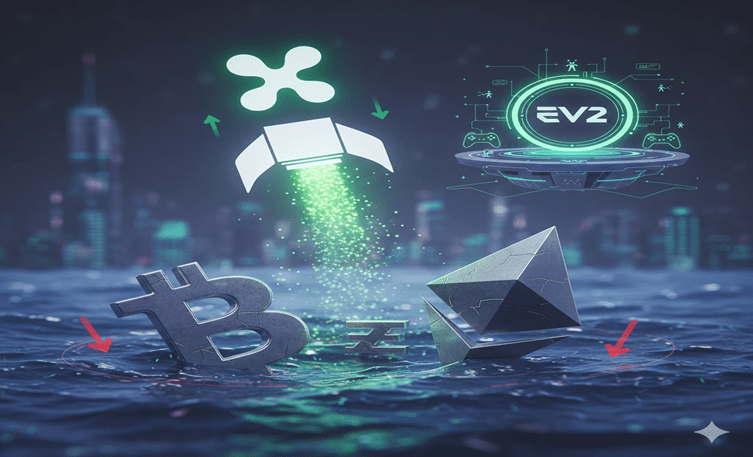
Bitcoin and Ethereum Retreat as XRP ETF Nears Launch, $EV2 Token Presale Gains Traction

Bitcoin and Ethereum Retreat as XRP ETF Nears Launch, $EV2 Token Presale Gains Traction

The post Bitcoin and Ethereum Retreat as XRP ETF Nears Launch, $EV2 Token Presale Gains Traction appeared on BitcoinEthereumNews.com. The crypto market falls 3.1% to $3.55T as Bitcoin and Ethereum decline, the XRP ETF nears launch, and the EV2 Token Presale gains momentum. Bitcoin and Ethereum retreat as the XRP ETF nears launch and the EV2 gaming token presale gains significant traction. The cryptocurrency market experienced a mild correction on November 12, with its total capitalization falling to $3.55 trillion, a 1.5% decline in 24 hours. Bitcoin and Ethereum both posted losses as traders reacted to market-wide sell-offs and new regulatory developments. Market Overview and Leading Performers As of today, November 12, 2025, Bitcoin was trading at $103,150, down 3.89% in the last 24 hours, with a market capitalization of approximately $2 trillion. Ethereum lowered 5.44% to $3,442 after a trading volume of $38.8 billion. Despite the short-term declines in the prices and market capitalizations of leading cryptocurrencies, the total daily trading volume across all assets was $176 billion, providing evidence of the market’s continued liquidity. The cryptocurrency market currently tracks more than 19,400 digital assets. Bitcoin, the oldest cryptocurrency, has a market dominance of 57.9%, followed by Ethereum with 11.7%. Prediction markets and the XRP Ledger ecosystem performed well relative to the downtrend in asset prices for most altcoins. The global cryptocurrency market capitalization from 2014 to 2025 exhibits cyclical growth trends, significant corrections, and a recent pullback. Source: CoinGecko Stablecoin and DeFi Market Movements Stablecoins maintained a total market cap of $312 billion, increasing by 0.3%. The trading volume of the funds listed below was $122 billion, reflecting their ongoing role as liquidity anchors in uncertain environments.  The DeFi market, however, shrank more. The market capitalization of DeFi fell to $129 billion, representing a 4.1% decline over the past 24 hours. The total trading volume in DeFi reached $11 billion, retaining a 3.6% market share. This drop…

Author: BitcoinEthereumNews
Tokenized AI Agents: The Next Big Trend in Decentralized Automation

Tokenized AI Agents: The Next Big Trend in Decentralized Automation

Tokenized AI Agents: The Next Big Trend in Decentralized Automation In the past few years, AI and blockchain have evolved quickly, and the point where they merge offers groundbreaking potential. One of the most compelling intersections is the rise of tokenized AI agents: autonomous software entities empowered by AI that exist on blockchain networks, carry tokens, engage in economic activity and enable decentralized automation. With this innovation, the concept of traditional automation (scripts, bots, services) evolves into networks of intelligent, ownable, tradable agents that act, adapt and transact. In this blog we’ll unpack what tokenized AI agents are, why they matter, how they’re being implemented, the benefits and challenges of this automation wave, and what to expect in the future of decentralized intelligent agents. What Are Tokenized AI Agents? At a high level, an AI agent is a piece of software designed to perceive its environment (via data, sensors or APIs), reason about it and then act in some way to achieve goals. Historically, such agents were centralized (running on cloud servers, under single‑entity control). Now, when we combine agents with blockchain & tokenization, we get tokenized AI agents that: ✦Carry or are associated with tokens representing ownership, governance rights or value streams. ✦Operate on decentralized infrastructure, smart contracts and possibly multi‑agent networks. ✦Generate value (tasks completed, data processed, decisions executed) and allow that value to flow back via tokens. Are tradable, ownable and interoperable within a Web3 ecosystem. In effect, a tokenized AI agent becomes a digital business unit, capable of automating workflows, interacting with DeFi protocols, retrieving data, performing actions and earning revenue all without traditional centralized control. Why Tokenized AI Agents Matter for Decentralized Automation? Several key forces make this trend significant:

  1. Ownership & Incentives Tokenization provides a mechanism for aligning incentives around agents: contributors (data providers, developers, users) can own tokens, share in rewards and thus participate in the agent’s success. This democratizes automation. For example, in blockchain‑agent ecosystems, tokens reward improved functionality, contributions or usage.
  2. Composability & Interoperability On a blockchain, agents (via smart contracts) can easily orchestrate tasks, coordinate with other agents, tap into data oracles, and execute on‑chain functions. This opens a new dimension of automation where agents “talk to” other agents across services and networks. For instance, frameworks like AgentNet propose decentralized coordination for large multi‑agent systems.
  3. Auditable & Trustworthy Automation All actions of agents can be logged, verified and tokenized. Users can audit agent behaviors, trace revenue, and manage governance bringing trust and transparency to automation. Protocols like Tokenized Agentics focus on compliance solutions for agent identity and audit. tokenizedagentics.com
  4. Scalability & New Business Models Rather than one centralized service, networks of tokenized agents can scale horizontally, each specializing in tasks and monetizing via tokens. These new business models enable automation as an economy, not just a tool. As one write‑up puts it, “tokenization turns agents into modular, monetizable assets”. Key Use‑Cases of Tokenized AI Agents in Decentralized Automation Let’s explore how tokenized AI agents are already being applied across sectors and what their automation looks like in practice. Use‑Case: DeFi Trading & Liquidity Automation In decentralized finance, agents can monitor protocol metrics, allocate funds, execute trades, arbitrage across chains and manage strategies autonomously. A recent insight shows: “Agents automate trading, arbitrage, and liquidity management … AI‑driven DeFi protocols capture 10% of $150 billion TVL.” By tokenizing the agent’s operations, contributors (e.g., strategy developers) and users (fund providers) can share in value creation. This enables automation of complex DeFi workflows without human managers. Use‑Case: DAO Governance & Decision Automation Tokenized agents are already being used in governance: they analyze proposals, interpret context and vote on behalf of stakeholders. In one study of decentralized governance, agents aligned with human voting outcomes in DAO settings. These agents can be tokenized, granting governance rights or revenue share to token holders. They automate vote analysis, treasury allocation, policy compliance and more. Use‑Case: Tokenized Asset Management & Real‑World Assets Platforms are using tokenized AI agents to manage tokenized real‑world assets (RWA): for example, portfolio optimization tools that autonomously allocate tokenized bonds or real‑estate shares. Here, tokenized agents handle tasks like valuation, rebalancing and reporting with tokens representing stakes in the agent’s revenue or performance. Use‑Case: Multi‑agent Decentralized Systems & Infrastructure Beyond financial applications, tokenized agents are part of broader multi‑agent networks leveraging blockchain infrastructure. For example, decentralized multi‑agent frameworks (AgentNet) allow dynamic specialization and collaboration among agents. In such systems, tokenized agents can perform everything from data collection to orchestration of distributed workloads enabling decentralized automation at scale. Architecture & Design Considerations for Tokenized AI Agents What underpins a working tokenized agent ecosystem? Key design dimensions include: Agent Identity & Verifiable CredentialsTokenized agents must have identity, provenance and capabilities that can be verified on‑chain. Protocols like Tokenized Agentics refer to KYA (Know Your Agent) and tokenized rights to enforce compliance. Tokenization ModelTokens can represent ownership of an agent, revenue share, governance rights, capability upgrades or access to services. The model must align incentives and ensure economic viability. Smart Contract IntegrationAgents must operate via smart contracts: to pay out earnings, collect usage fees, enforce policy, trigger actions and ensure trustless execution. Multi‑agent CoordinationIn decentralized automation, agents often need to interact, delegate subtasks, share data and coordinate hence frameworks like AgentNet propose DAG‑based connectivity. Data & Model AccessAgents rely on data feeds, oracles and AI models. Access permissions and data governance need tokenized mechanisms agents may subscribe or pay using tokens. Governance & UpgradabilityTokenized agents require governance over behavior, upgrades, branching, bug fixes, and emergent behavior control. Owners of agent tokens may vote on upgrades, parameter changes or risk exposures. Benefits of Tokenized AI Agents When properly designed and implemented, tokenized AI agents bring multiple advantages for decentralized automation: Autonomous value generation: Agents that earn, trade, act and scale with minimal human intervention. True ownership: Token holders can own part of an agent, trade shares and benefit from its operations. Scalable automation economy: Large networks of agents serve multiple tasks, creating economic layers beyond single software services. Transparency & auditability: On‑chain logs and smart contracts ensure actions are traceable and accountable. Enhanced innovation: A marketplace of agents allows developers to build, specialize and monetize their agents. Challenges & Risks in Tokenized AI Agents Utility vs hype: There’s risk of launching tokenized agents without meaningful utility leading to valuation inflation and disillusionment. Reddit Regulation & compliance: Tokenized agents may operate across jurisdictions, handling value flows raise regulatory issues. Identity, agent behavior, asset classification are complex. Technical complexity: Designing agents that reliably act, coordinate, integrate and update in decentralized systems is non‑trivial. Governance risks: If agent tokens concentrate in few hands, decentralization may suffer. Emergent agent behaviors might be unpredictable. Security issues: Smart contracts, agent code and coordination protocols must be secure to prevent misuse or malicious agents. How to Get Started with Tokenized AI Agents? For businesses or developers interested in this trend: Define a clear agent value proposition: What tasks will the agent automate, for whom, and how does it generate value? Choose the right infrastructure: Select a blockchain or multi‑agent network that supports smart contracts, scalability and interoperability. Design the token model: Decide what the token represents (ownership, access, revenue‑share), how it’s distributed and how value accrues. Build the agent logic: Use AI/NLP, smart contract integration, data feeds and multi‑agent workflows. Ensure identity/governance mechanisms: Include auditability, KYA, agent licensing and decentralized governance models. Launch marketplace or ecosystem: Allow agents to be deployed, traded or used by others, forming the network effect. Monitor/iterate: Measure agent performance, user interactions, token value and adjust incentives or mechanics. Future Trends: What’s Next for Tokenized AI Agents As this space evolves, several trends are emerging: Agents as economic primitives: Agents will become tradable assets in their own right similar to NFTs but with behavior and earnings. Multi‑chain agent economies: Agents will operate across chains, layer‑2s and side‑chains for scalability, interoperability and cost‑efficiency. Composable agent ecosystems: Agents will collaborate one agent may delegate tasks to another; networks of specialized agents will form modular solutions. AI agent marketplaces: Much like app stores, marketplaces for tokenized AI agents will let users deploy, rent or trade agents for various tasks. Metaverse & agent avatars: Tokenized agents will live in metaverse environments, act as avatars, offer services and even earn tokens for social, gaming or work interactions. Ethical & governance layers embedded in agents: Protocols will embed tokenized governance, identity, ethics and compliance into agents from the start. For example, frameworks like LOKA Protocol propose layered orchestration of knowledgeful agents with decentralized identity and ethical protocols. Real‑world asset automation via agents: Tokenized agents will manage tokenized real‑world assets (RWA) from real‑estate to commodities handling valuation, payments, maintenance via automation. Hybrid human‑agent teaming: Rather than replacing humans totally, tokenized agents will become autonomous co‑workers, collaborating, handing over tasks and even chaining workflows across humans + agents. Agent economy metrics & analytics: As agent networks grow, new metrics (agent revenue, agent lifecycle, agent interoperability) will emerge to evaluate performance and governance. Conclusion Tokenized AI agents represent a powerful shift in how we think about automation, ownership, and decentralized systems. Rather than isolated bots or centralized services, these agents are autonomous, interoperable, ownable, tradable digital entities that execute workflows, generate value and support decentralized automation at scale. For developers, businesses and Web3 innovators, understanding how tokenized AI agents function what drives them, what infrastructure they require, how to govern them is critical. The success of this trend will depend not just on technology, but on token‑models, governance design and real‑world utility. In a world where decentralized systems increasingly drive value, tokenized AI agents may well be “the next big trend in decentralized automation”. Embracing them may enable entirely new business models, economies and ways of working in the Web3 era.
Tokenized AI Agents: The Next Big Trend in Decentralized Automation was originally published in Coinmonks on Medium, where people are continuing the conversation by highlighting and responding to this story

Author: Medium
Jack Dorsey Expands Cash App: Send Dollars, Receive Bitcoin Through Lightning Network

Jack Dorsey Expands Cash App: Send Dollars, Receive Bitcoin Through Lightning Network

The post Jack Dorsey Expands Cash App: Send Dollars, Receive Bitcoin Through Lightning Network appeared first on Coinpedia Fintech News Jack Dorsey is giving Bitcoin payments a new twist.  His fintech firm Cash App has launched a feature that lets users send U.S. dollars through the Bitcoin Lightning Network, allowing merchants to receive Bitcoin even if the sender doesn’t own any. Here’s more!  Cash App’s New Feature Explained Until now, Cash App users could only …

Author: CoinPedia
What is the Best Crypto to Buy Now? A Guide to Analyzing Market Trends & Tokenomics

What is the Best Crypto to Buy Now? A Guide to Analyzing Market Trends & Tokenomics

The hunt for the best crypto to buy now is heating up as investors rotate from established names like Dogecoin ($0.1750) toward fresh opportunities with visible upside. Amid a crowded market of altcoins and meme tokens, one project is standing out for both transparency and traction, Noomez ($NNZ), currently in its third presale stage at […] The post What is the Best Crypto to Buy Now? A Guide to Analyzing Market Trends & Tokenomics appeared first on Live Bitcoin News.

Author: LiveBitcoinNews
Bitcoin Price Crash Ahead? Satoshi-Era Whale Dumps 12,000 BTC

Bitcoin Price Crash Ahead? Satoshi-Era Whale Dumps 12,000 BTC

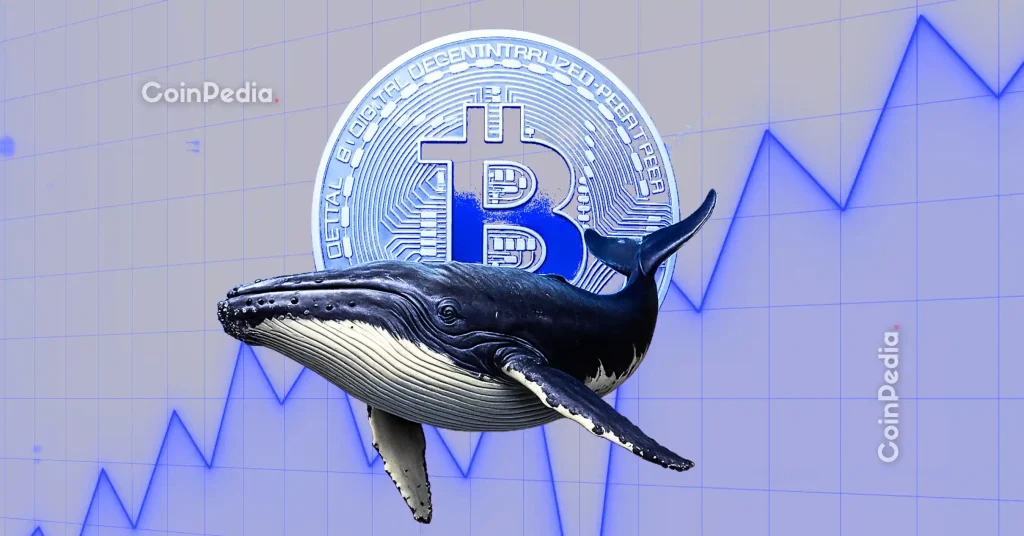
The post Bitcoin Price Crash Ahead? Satoshi-Era Whale Dumps 12,000 BTC appeared first on Coinpedia Fintech News The crypto market was caught off guard today, a Satoshi-era whale, one of the earliest Bitcoin holders, suddenly transferred 12,000 BTC worth $1.4 billion to an exchange. The unexpected transaction has sparked panic among traders, with growing fears that this could trigger a massive sell-off. Satoshi-Era Bitcoin Whale Made $1.4 Billion In Profit According to …

Author: CoinPedia
Ripple’s Regulatory Breakthrough? Project Crypto Could Put XRP Under CFTC Control

Ripple’s Regulatory Breakthrough? Project Crypto Could Put XRP Under CFTC Control

The post Ripple’s Regulatory Breakthrough? Project Crypto Could Put XRP Under CFTC Control appeared first on Coinpedia Fintech News Philadelphia Fed Fintech Conference, SEC Chairman Paul Atkins unveiled “Project Crypto,” a bold regulatory initiative that could transfer significant oversight power from the Securities and Exchange Commission (SEC) to the Commodity Futures Trading Commission (CFTC). The revelation, first shared by crypto analyst Diana, has sparked widespread discussion across the digital asset community, especially among XRP …

Author: CoinPedia
Whale.io Launches Weekend Sale Campaign for Crock Dentist NFTs and Unlimited Minting

Whale.io Launches Weekend Sale Campaign for Crock Dentist NFTs and Unlimited Minting

[PRESS RELEASE – Willemstad, Curaçao, November 13th, 2025] Whale.io has unveiled its Weekend Sale campaign for Crock Dentist NFTs, set to begin this Friday and run through the weekend until Monday, November 17, 2025. During this limited period and offer a 50% discount on NFT minting for Whale users, reducing the standard price from 500 […]

Author: CryptoPotato