Liquidation

Liquidation occurs when a trader’s collateral is no longer sufficient to cover their leveraged position’s losses, triggering an automated forced closure by the exchange's liquidation engine. It is a critical risk-management mechanism that ensures the solvency of lending protocols and derivative platforms. In 2026, the focus has moved toward MEV-resistant liquidation models that protect users from predatory "cascades." This tag provides essential information on maintenance margins, health factors, and how to avoid liquidation in high-volatility environments.

14517 Articles
Created: 2026/02/02 18:52
Updated: 2026/02/02 18:52
Top Cryptos to Build a Long-Term Portfolio

Top Cryptos to Build a Long-Term Portfolio

As the crypto sector gears up for its next phase of institutional interest, long-term accumulation strategies are back in the spotlight. One such project that is building early momentum is Mutuum Finance (MUTM), a new player creating ripples with its fresh approach to decentralized credit and sustainable DeFi growth. Mutuum Finance presale is currently in […]

Author: Cryptopolitan
Tether CEO Dismisses Claims of Bitcoin Liquidation for Gold

Tether CEO Dismisses Claims of Bitcoin Liquidation for Gold

Tether CEO Paolo Ardoino has dismissed reports claiming the stablecoin issuer sold off part of its Bitcoin reserves to purchase gold. Rumors surrounding Tether’s Bitcoin strategy gained traction over the weekend when online commentators suggested the company had quietly reduced its holdings. The claims stemmed from financial attestations reviewed by accounting firm BDO for the first half of 2025. According to YouTuber Clive Thompson, Tether’s Bitcoin balance dropped from 92,650 BTC in Q1 to 83,274 BTC in Q2. Thompson argued this was proof the firm had liquidated part of its portfolio, possibly to increase gold exposure. CEO Paolo Ardoino Responds Tether CEO Paolo Ardoino quickly moved to address the speculation. In a post on X, he stated that the company “didn’t sell any Bitcoin” and reaffirmed its long-standing investment strategy. “Tether continues to allocate part of its profits into safe assets such as Bitcoin, gold, and land,” Ardoino wrote. He stressed that the reduction highlighted in BDO’s reports reflected accounting movements, not market sales. Samson Mow Provides Clarification The narrative shifted further when Jan3 CEO Samson Mow weighed in. Mow revealed that the apparent reduction was the result of Tether transferring 19,800 BTC to a new venture, not selling. He detailed that the company moved 14,000 BTC in June and another 5,800 BTC in July to support Twenty One Capital (XXI), a Bitcoin-native financial platform spearheaded by Strike CEO Jack Mallers. Mow argued that if these transfers were included in the Q2 figures, Tether’s net holdings would have been higher than at the end of Q1. “Tether would have had 4,624 more BTC if transfers were counted properly,” he explained. $3.9 Billion in Bitcoin Allocated to XXI The transfers formed part of a broader initiative. In June, Tether moved more than 37,000 BTC, with an estimated value of $3.9 billion, across several transactions to back XXI. The project aims to develop a financial infrastructure rooted in Bitcoin. By supporting XXI, Tether signals its commitment not only to holding Bitcoin but also to fostering long-term institutional adoption. Tether Remains a Top Bitcoin Holder Despite speculation, Tether’s Bitcoin balance remains substantial. Data compiled by BitcoinTreasuries.NET shows the company currently holds 100,521 BTC, worth around $11.17 billion at recent market prices. This makes Tether one of the largest corporate holders of Bitcoin globally. El Salvador Turns to Gold Diversification While Tether was clarifying its position, El Salvador announced a notable shift in its reserve strategy. The country’s central bank revealed it had acquired 13,999 troy ounces of gold, valued at $50 million. This marks the first time El Salvador has purchased gold since 1990. Officials said the move is part of an effort to reduce reliance on the US dollar by broadening reserve assets. El Salvador already maintains a Bitcoin reserve of 6,313 BTC, valued at about $702 million. However, an IMF report published in July indicated the country had not made additional Bitcoin purchases since February 2025. Meanwhile, the country continues to disclose daily acquisition of BTC.

Author: The Crypto Basic
Trump Family Amasses $1.3B in Crypto, Turns to Tokenized Real Estate

Trump Family Amasses $1.3B in Crypto, Turns to Tokenized Real Estate

The post Trump Family Amasses $1.3B in Crypto, Turns to Tokenized Real Estate appeared on BitcoinEthereumNews.com. AltcoinsBlockchain The Trump family has quietly become one of the most prominent names in digital assets, with Bloomberg data showing more than a billion dollars in fresh crypto wealth added to their fortune. What began with token launches and mining ventures is now evolving into plans for blockchain-based real estate, a sector the family has long dominated in the physical world. From Politics to Protocols In the past year, the family’s influence has expanded beyond skyscrapers and resorts. Their crypto brand, World Liberty Financial (WLFI), burst onto the scene with a massive market capitalization at launch. Bloomberg estimates the debut instantly created hundreds of millions in paper wealth for Donald Trump Jr., Eric Trump, and Barron Trump. Almost in parallel, Eric Trump took on a major role in American Bitcoin Corp. (ABTC), a mining company that went public after merging with Gryphon Digital Mining. At its peak, Eric’s stake approached a billion dollars in value, making him one of the most prominent individual figures in the Bitcoin mining industry. Next Step: Real Estate on the Blockchain Insiders now point to a new ambition — tokenizing real estate. Discussions with Soul Ventures suggest the Trumps are exploring ways to transform physical assets into blockchain-traded tokens, allowing investors to buy and sell fractions of properties. For a family whose brand has always revolved around real estate, this pivot could bring their core business directly into the digital finance era. Building Out WLFI and ABTC While those plans develop, WLFI continues to scale. Backed by a $1.5 billion funding plan through Nasdaq-listed ALT5 Sigma, the project is positioning itself as a heavyweight in digital asset management. Its token is listed on major exchanges, though the family’s own large allocation is currently restricted, preventing immediate liquidation. American Bitcoin, meanwhile, has focused on infrastructure. With…

Author: BitcoinEthereumNews
Bitcoin (BTC) Price: Whales Sell 115,000 BTC in Largest Selloff Since 2022

Bitcoin (BTC) Price: Whales Sell 115,000 BTC in Largest Selloff Since 2022

TLDR Bitcoin whales have sold approximately 115,000 BTC (worth $12.7 billion) in the past month This represents the largest whale sell-off since July 2022 Bitcoin price has remained below $108,000 due to this selling pressure The weekly balance change has dropped to around 38,000 BTC as of September 6 Institutional buying has provided some counterbalance [...] The post Bitcoin (BTC) Price: Whales Sell 115,000 BTC in Largest Selloff Since 2022 appeared first on Blockonomi.

Author: Blockonomi
MemeCore eyes $0.36 breakout as shorts bleed – Traders, watch THIS risk unfold!

MemeCore eyes $0.36 breakout as shorts bleed – Traders, watch THIS risk unfold!

Short traders lost millions as MemeCore rallied, but liquidation maps may still drag the price lower

Author: Coinstats
The World Gold Council plans to promote digital gold, analyzing the different implementation paths of PGI, PAXG, and XAUT

The World Gold Council plans to promote digital gold, analyzing the different implementation paths of PGI, PAXG, and XAUT

By JAE, PANews On September 3, 2025, Ray Dalio, founder of Bridgewater Associates, wrote on the X platform that the US dollar debt crisis was one of the factors driving the prices of gold and cryptocurrencies. That same day, the international gold price hit a record high of $3,578.32 per ounce. Meanwhile, the tokenized gold market in the crypto industry has surpassed $2.6 billion, and Tether has recently been reported to be in talks to invest in the gold mining industry. While the gold market continues to soar, with frequent success reports and a generally favorable outlook, a wave of digital transformation is sweeping across the market. Recently, the World Gold Council (WGC) and leading international law firm Linklaters jointly released a groundbreaking white paper, formally proposing a new definition of the "Wholesale Digital Gold" ecosystem and "Pooled Gold Interests" (PGI). The gold market's digital upgrade is more than just a technological shift; it represents a strategic response from TradFi to the crypto market. As one of the oldest financial assets, gold is also embracing the new digital era's emphasis on efficiency and flexibility, unlocking new use cases within the TradFi ecosystem. From trading restrictions to mortgage obstacles, WGC provides a "digital solution" for the gold market Currently, London’s over-the-counter (OTC) gold market is primarily comprised of two clearing models: allocated gold and unallocated gold, each with its own strengths and weaknesses that create the “opportunity gap” identified in the white paper. Allocated gold refers to specific gold bars in a physical vault with unique serial numbers, fineness and weight information. Its biggest advantage is clear ownership. Investors have direct ownership of the physical gold bars, which effectively isolates and custodians from credit risks. However, the "cost" of this model is higher complexity, the indivisibility of transactions that only accept whole gold bars (usually about 400 ounces), and the resulting liquidity restrictions. In contrast, unallocated gold represents an investor's claim on a specific amount of gold held by a custodian. Because it doesn't require the allocation of specific gold bars, this model offers greater flexibility and liquidity, allows for trading in units as low as a thousandth of an ounce, and provides a more efficient settlement process. However, its disadvantage is significant counterparty risk. In the event of the custodian's bankruptcy, investors' claims on the gold will be liquidated along with other unsecured creditors, making it difficult to obtain judicial protection for their assets. The white paper points out that both current models have serious limitations in serving as financial collateral. Unallocated gold, due to its debt nature, generally cannot be considered eligible collateral under UK and EU law. While allocated gold is legally feasible, its "cost" means that in practice it requires frequent physical transfers, deliveries, and segregation, resulting in extremely high costs and complexity, making it difficult to use as collateral. The WGC proposed a new PGI model as a solution. The PGI is based on a pool of physical gold bars held jointly by core participants, independent of the custodian's own assets, with divisible interests. The legal foundation of PGI is what distinguishes it from existing models. The white paper notes that the scheme is based on Section 20A of the UK Sale of Goods Act 1979, which allows the transfer of undivided shares in "identified bulk goods" without physically separating the goods. This legal framework defines PGI as an "intangible movable," meaning that its transfer does not require the physical movement of the goods, but rather represents a transfer of rights executed on a digital ledger. The core advantages of PGI are mainly reflected in three aspects: first, like unallocated gold, it can be divided into trading units of one thousandth of an ounce, providing higher flexibility; second, due to the legal definition of "exclusive rights", the assets of PGI holders are "bankruptcy-resistant" and their assets will not be liquidated even if the custodian institution goes bankrupt, thus filling the shortcomings of unallocated gold; finally, as an intangible movable property, PGI is naturally suitable as collateral, and its design takes into account compliance requirements such as the EU, UK EMIR and the US Dodd-Frank Act, which may activate the collateral potential of gold in OTC and central clearing counterparties. The practical path of tokenized gold In fact, in response to the long-standing pain points of the gold market, such as low liquidity, difficulty in collateralization, and high credit risk, the crypto market has conducted preliminary explorations through tokenized gold, providing a feasible practical example for the digitization and financialization of gold. As a pioneer in the crypto market, Tether launched Tether Gold (XAUT) in 2020, with a current market capitalization exceeding $1.3 billion. Each XAUT token represents one troy ounce of LBMA-standard gold bar, stored in a Swiss vault. Technically, XAUT is an ERC-20 token issued on Ethereum, enabling 24/7 global trading, freeing it from the constraints of traditional market hours. XAUT offers the advantages of high liquidity and divisibility (accurate to one-millionth of an ounce), and its widespread adoption as a crypto asset within the DeFi ecosystem. XAUT provides crypto investors with a convenient way to gain exposure to gold and can be used as a hedge against cryptocurrency volatility. However, XAUT's drawbacks lie in its highly centralized control and questionable transparency. The underlying assets are completely dependent on Tether's credit and solvency, presenting significant counterparty risk. Although Tether is governed by the British Virgin Islands, its legal framework is not widely recognized in mainstream financial markets, and its ownership resembles a contractual beneficiary's rights rather than a legally clear proprietary right. Paxos Gold (PAXG) represents a compliance-first approach to tokenized gold, currently valued at approximately $1 billion. Issued by Paxos Trust Company, PAXG is strictly regulated by the New York Department of Financial Services (NYDFS). This strong regulatory backing is a significant compliance advantage for PAXG over many similar projects. Similarly, PAXG is an ERC-20 token issued on Ethereum, each representing a single troy ounce of LBMA gold bar held in a London vault. Paxos claims ownership of a specific physical gold bar and has developed a unique feature: users can access the serial number and physical characteristics of the physical gold bar associated with their token simply by entering their Ethereum wallet address, providing an additional layer of trust and transparency. In addition to regulatory backing, PAXG's unique advantages include a flexible redemption mechanism—institutional investors can redeem it directly for physical gold bars. Furthermore, PAXG has gained widespread recognition in leading DeFi protocols such as Curve and Aave, enabling lending and liquidity provision, which increases its profitability. Leveraging its trust company structure, PAXG establishes a legal framework similar to proprietary rights within the traditional legal system, serving as a bridge between the TradFi and crypto markets. The paradigm battle among three types of gold digitization solutions The fundamental differences between XAUT and PAXG's tokenized gold and WGC's PGI digital gold solution in terms of law, technology, market positioning and core use cases reveal the different directions chosen by traditional finance and the crypto market when facing the same issue. In terms of law and ownership, WGC places greater trust in the law. PGI does not develop a completely new asset class, but rather establishes a new ownership definition for "intangible movable property" within the existing legal framework. Its advantage lies in its legal validity and enforceability guaranteed by a centuries-old judicial system. While this solution may sacrifice some of the decentralization advantages of public blockchains, it also provides necessary legal certainty for institutional investors. In contrast, cryptocurrencies place greater trust in code. While PAXG, through its regulated trust company structure, attempts to establish similar proprietary rights within the traditional legal framework, the decentralized nature of the ERC-20 token standard presents inherent legal conflicts. XAUT, on the other hand, is primarily defined by Tether's terms of agreement and smart contracts, and the legal validity of both remains unverified within the mainstream legal system. In terms of technical architecture and market positioning, PGI is essentially an infrastructure that emphasizes "technology neutrality" and compatibility with emerging solutions such as distributed ledger technology. The WGC's description suggests that the solution is more likely a permissioned consortium blockchain operated collaboratively by core participants, aiming to digitize and automate the inter-institutional clearing process. Its target market is the highly closed institutional market with extremely high requirements for trust and efficiency, specifically addressing the clearing and collateral issues among large institutions in the London OTC market. XAUT and PAXG, on the other hand, are more like products, both issued on public blockchains like Ethereum. They are permissionless assets that can be held, transferred, and traded by any user through a crypto wallet, without having to go through the complex KYC/AML processes of TradFi institutions. Therefore, they are targeted at the DeFi and retail markets, serving crypto-native protocols and retail investors. In terms of core use cases, WGC's primary goal is to unlock the potential of gold as an institutional-grade collateral. By addressing the legal and practical challenges of gold collateralization, PGI will enable the efficient use of gold in scenarios such as repos and lending, thereby revitalizing trillions of dollars in existing assets. The WGC CEO stated that gold needs to transform from a "non-interest-bearing" asset to an "interest-bearing" one. XAUT and PAXG are primarily focused on empowering the crypto ecosystem. As gold-backed stablecoins, they can be used for lending, liquidity provision, volatility hedging, and portfolio diversification in DeFi. While the two solutions offer superficially similar use cases, their underlying logic is fundamentally different. PGI aims to transform the long-established and large-scale TradFi market, while XAUT and PAXG are targeting the rapidly growing DeFi market. PGI is TradFi's attempt to "embody the essence" of blockchain technology, adopting a digital form while remaining true to the essence of TradFi. This selective innovation may maximize the benefits of integrating digital technology into existing frameworks while minimizing regulatory risks. PGI, PAXG, and XAUT have the potential to form a multi-dimensional, multi-layered "gold ecosystem." PGI will dominate the institutional market, focusing on solving high-value, large-volume liquidation and collateral issues. PAXG, leveraging its regulatory compliance advantages, has the potential to bridge mainstream institutions and the crypto market, providing a trusted, regulated channel between TradFi and DeFi. XAUT can continue to focus on the retail and crypto-native markets, securing a niche with its high liquidity and broad compatibility.

Author: PANews
Bitcoin Whales Dump $12.7B In Largest Selloff Since 2022

Bitcoin Whales Dump $12.7B In Largest Selloff Since 2022

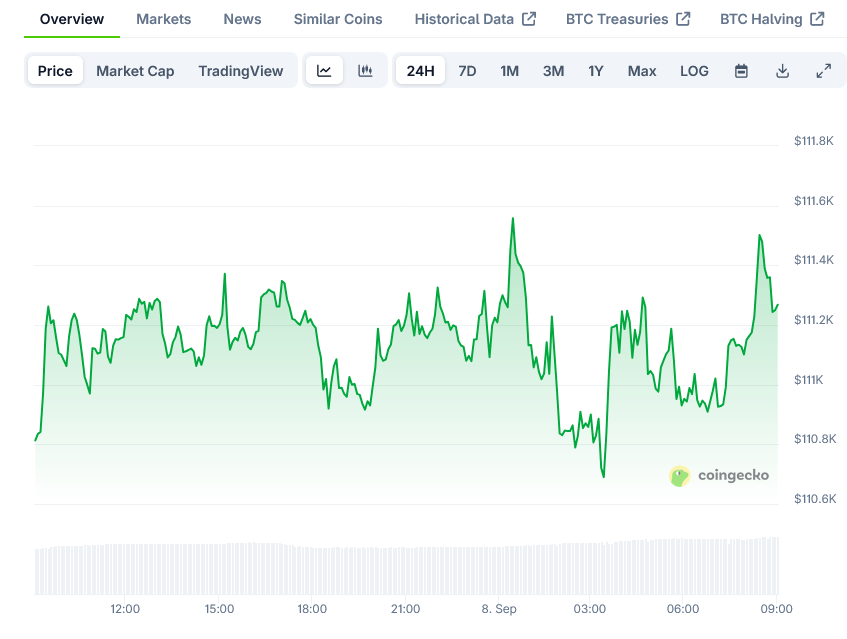
The post Bitcoin Whales Dump $12.7B In Largest Selloff Since 2022 appeared on BitcoinEthereumNews.com. Bitcoin whales have sold a whopping $12.7 billion in Bitcoin over the past month, and continued sales could further pressure its price for the next few weeks, according to analysts. “The trend of reducing exposure by major Bitcoin network players continues to intensify, reaching the largest coin distribution this year,” observed CryptoQuant analyst “caueconomy” on Friday.  They added that in the last 30 days, whale reserves have fallen by more than 100,000 Bitcoin (BTC), “signaling intense risk aversion among large investors.” This selling pressure has been “penalizing the price structure in the short term,” ultimately pus hing prices below $108,000. According to CryptoQuant data, it has been the largest whale sell-off since July 2022, with a 30-day change of 114,920 BTC worth around $12.7 billion at current market prices as of Saturday.  “At this time, we are still seeing these reductions in the portfolios of major players, which may continue to pressure Bitcoin in the coming weeks.” Bitcoin whales have been offloading. Source: CryptoQuant Whale balance change slows down  The seven-day daily change balance reached its highest level since March 2021 on Sept. 3, with more than 95,000 BTC being shifted by whales for that week. Last week, Bitcoin entrepreneur David Bailey said prices could surge to $150,000 if two key whales stop selling.  Related: Bitcoin will soar to $150K if we slay these 2 whales: David Bailey The good news is that the aggressive selling appears to have slowed, with the weekly balance change dropping to around 38,000 BTC as of Sept. 6.  Meanwhile, the asset has been trading in a tight range-bound channel between $110,000 and $111,000 over the past three days as the selling pressure abated slightly.  CryptoQuant defines whales as a cohort holding a balance between 1,000 and 10,000 BTC.  A structural counterbalance  “While recent whale…

Author: BitcoinEthereumNews
Shocking ETH Liquidations Dominate Crypto Market: $19.6M Wiped Out

Shocking ETH Liquidations Dominate Crypto Market: $19.6M Wiped Out

The post Shocking ETH Liquidations Dominate Crypto Market: $19.6M Wiped Out appeared on BitcoinEthereumNews.com. Shocking ETH Liquidations Dominate Crypto Market: $19.6M Wiped Out Skip to content Home Crypto News Shocking ETH Liquidations Dominate Crypto Market: $19.6M Wiped Out Source: https://bitcoinworld.co.in/eth-crypto-liquidations-dominate/

Author: BitcoinEthereumNews
South Korea Mandates Crypto Disclosure in Real Estate Deals

South Korea Mandates Crypto Disclosure in Real Estate Deals

The post South Korea Mandates Crypto Disclosure in Real Estate Deals appeared on BitcoinEthereumNews.com. Key Points: South Korea requires crypto sale disclosures in real estate transactions for transparency. Aims to prevent illicit capital in real estate. Potentially boosts legitimacy of crypto-derived profits. The South Korean government revised real estate transaction regulations on September 8th, mandating full disclosure of funds from virtual asset sales for home purchases. This move aims to enhance transparency and prevent illicit capital inflows into the real estate market, potentially affecting cryptocurrencies commonly used in substantial transactions. New Crypto Disclosure Rules Reshape South Korea’s Real Estate Market The revised regulations stipulate mandatory reporting of proceeds from virtual asset sales in real estate financing plans. Ministries, including Finance, Land, and Transport, are responsible for joint implementation. Supporting documentation for transactions is obligatory. This initiative targets transparency, decreasing the chances of illegal capital infiltration into the real estate market. Immediate implications suggest a tougher barrier for illicitly sourced cryptocurrency funds to penetrate real estate. Legitimate use of crypto-derived funds is acknowledged as owned capital for property purchases, potentially reinforcing the legitimacy of digital assets within the legal economy. Financial Services Commission Statement“Stricter enforcement targets tax evasion and forced liquidations, as South Korea positions itself as a global digital asset regulation leader.” Market reactions to this announcement have been measured. Both the Financial Services Commission and the Korea Financial Intelligence Unit oversee compliance, ensuring integrity in finance regulations. No immediate statements from key industry figures have surfaced thus far regarding these rules. South Korea’s Crypto Policies Echo Global Financial Trends Did you know? South Korea’s move to include cryptocurrencies in real estate finance plans resembles earlier measures targeting cash transactions to enhance fund transparency. Per CoinMarketCap, Bitcoin (BTC) trades at $110,845.03 with a market cap of $2.21 trillion. BTC’s price shifted 0.27% over 24 hours, with a 90-day change of 1.28%, highlighting volatility amidst…

Author: BitcoinEthereumNews
Mutuum Finance (MUTM) vs. Compound: Could This New Lending Protocol Define the Next Era of DeFi?

Mutuum Finance (MUTM) vs. Compound: Could This New Lending Protocol Define the Next Era of DeFi?

The post Mutuum Finance (MUTM) vs. Compound: Could This New Lending Protocol Define the Next Era of DeFi? appeared on BitcoinEthereumNews.com. Decentralized finance (DeFi) has gone through multiple waves of innovation, with each wave defining efforts to create new rules governing the movement of funds on a chain. Compound (COMP) was one of the original protocols of DeFi lending during its infancy and established open markets where users could deposit, borrow, and earn interest without relying on banks or intermediaries. However, by 2025, Compound continues to be a big player, but its growth opportunities appear limited. This has made possible new projects such as Mutuum Finance (MUTM), a token that is both low-cost and innovative and which is already being touted as potentially becoming the successor of the original giants of DeFi. Compound (COMP) When Compound was created in 2018, it was one of the first protocols to show that decentralized lending was possible. It was a creative concept then that enabled one to borrow against their cryptocurrency holdings, earn interest and place the cryptocurrency assets in the liquidity pools. Following its introduction as a token of governance in 2020, COMP was a catalyst for the broader DeFi boom and became linked to yield farming. When it soared up to more than $850 in May 2021, COMP gave early adopters life-altering returns. The token has a market worth in the billions, and it is currently trading close to $43. Though it remains among the most popular DeFi tokens, its ability to go many times has faded since the breakout years. As a matter of fact, Compound has grown to be a popular protocol. Its market value has little to no room to go up 20x or 30x, it has a well-established user base and its mechanics have been replicated. It is likely that the explosive growth days of COMP are already behind them, thus the emphasis is being laid on earlier-stage…

Author: BitcoinEthereumNews