Lending

Lending protocols form the backbone of the decentralized money market, allowing users to lend or borrow digital assets without intermediaries. Using smart contracts, platforms like Aave and Morpho automate interest rates based on supply and demand while requiring over-collateralization for security. The 2026 lending landscape features advanced permissionless vaults and institutional-grade credit lines. This tag covers the evolution of capital efficiency, liquidations, and the integration of diverse collateral types, including LSTs and tokenized RWAs.

14428 Articles
Created: 2026/02/02 18:52
Updated: 2026/02/02 18:52
$200 Investment in Mutuum Finance (MUTM) May Blow to $10,000 at Launch, Say Analysts

$200 Investment in Mutuum Finance (MUTM) May Blow to $10,000 at Launch, Say Analysts

The post $200 Investment in Mutuum Finance (MUTM) May Blow to $10,000 at Launch, Say Analysts appeared on BitcoinEthereumNews.com. Mutuum Finance (MUTM) is rapidly becoming the new hot play in the cryptocurrency market. Analysts are eyeing a stunning launch splash that may transform a modest $200 investment into a potential $10,000 profit. Mutuum Finance presale currently stands at Stage 6 at $0.035. The platform has already secured more than $15.5 million in capital and boasts more than 16,150 token holders.  With growth in the decentralized finance (DeFi) market, Mutuum Finance (MUTM) is building momentum for its innovative model of borrowing, lending, and liquidity management, sparking speculation over a breakout listing. With its soon-to-be-listed token already causing tongues to start wagging in the marketplace, investors and traders are watching MUTM for indications of early strength. Presale  Mutuum Finance has already gone into presale stage 6 where the token can be purchased at $0.035. The project already has more than 16,150 token holders, and already raised more than $15.5 million. FOMO is moving at lightning speed. Early buyers are on track for life-changing returns. Shaping the Future of DeFi Mutuum Finance is tipped to be a key player as DeFi extends its reach globally. The platform is built with institutional and retail investors in mind. Mutuum Finance is making massive jumps with its revolutionary smart contract paradigm and emphasis on security and scalability. Mutuum finance also launched a $100,000 giveaway where 10 users are to be given $10,000 in MUTM tokens. The campaign is an example of the project’s focus towards establishing a long-term and loyal group of users. DeFi Lending Based on a Strong Dual-Model System Mutuum Finance’s way of DeFi ensures that as the platform user you’re always in control of your assets. Through lending, users are rewarded with passive income from borrowers and lenders, and access to funds is instant by borrowing multiple assets across loan value. The…

Author: BitcoinEthereumNews
Stablecoin issuer Paxos releases new USDH proposal

Stablecoin issuer Paxos releases new USDH proposal

The post Stablecoin issuer Paxos releases new USDH proposal appeared on BitcoinEthereumNews.com. Paxos released the USDH Proposal V2 on Wednesday with a framework it said will ensure the company only wins if Hyperliquid wins. The stablecoin issuer also included three major upgrades to the V2 proposal, which it said will unlock Hyperliquid at a global scale. The company’s V2 proposal will list HYPE on PayPal or Venmo and offer free USDH on/off-ramp products. PayPal will also commit to incentives worth $20M as the firm will allow global payment integration across Checkout, Braintree, Venmo, Hyperwallet, and Xoom. Paxos’ initiative also comes as PayPal recently launched its Pay With Crypto solution, which also includes support for USDH and HYPE. V2 comes with major upgrades The new proposal will also offer a clear AF-first incentive reward structure with Paxos only earning once TVL milestones are reached. The revamped rewards are capped at 5% past $5B TVL, and all fees will be held in HYPE tokens and reinvested in growth and to its AF. The firm’s new framework will begin with an AF pledge of 20%, which increases based on TVL milestones. As earlier reported by Cryptopolitan, the company’s previous proposal only showed the differentiated distribution that the Paxos network can deliver. The firm said that since then, it has focused on kickstarting its distribution efforts by partnering with PayPal to support the Hyperliquid ecosystem. Paxos believes the global payment platform will bring immense scale to the Hyperliquid ecosystem. The payment firm processes over $1 trillion in TPV annually, with over 400 million users and 35 million merchants. “We’re thrilled to have PayPal as a partner from day one of USDH issuance. Alongside our existing set of GENIUS-compliant reserve assets, we are adding PYUSD as an additional regulated, GENIUS-compliant reserve asset.” –Bhau Kotecha, Co-Founder and CEO of Paxos Labs. Kotecha said Paxos aims to drive differentiated…

Author: BitcoinEthereumNews
Paxos releases new documentation in lobby for Hyperliquid's USDH stablecoin

Paxos releases new documentation in lobby for Hyperliquid's USDH stablecoin

Paxos has released the USDH Proposal V2, which comes with three major upgrades to unlock Hyperliquid at a global scale.

Author: Cryptopolitan
Ethereum’s Vision: Cardano Founder Declares Initial Goals Unfulfilled

Ethereum’s Vision: Cardano Founder Declares Initial Goals Unfulfilled

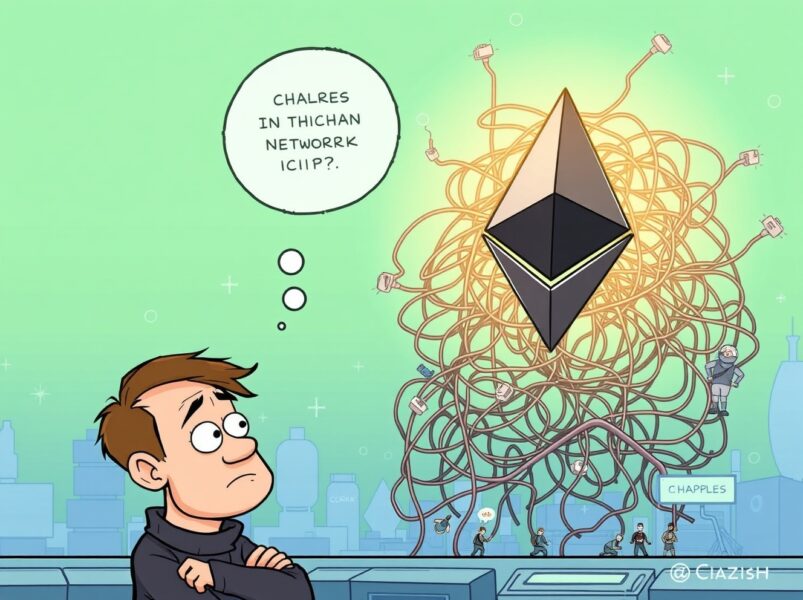
BitcoinWorld Ethereum’s Vision: Cardano Founder Declares Initial Goals Unfulfilled The cryptocurrency world is buzzing with a critical assessment from Charles Hoskinson, the visionary founder of Cardano (ADA). He recently made headlines by stating that the Ethereum layer-one network, despite its prominence, has fundamentally failed to realize the initial Ethereum’s vision designed by its original co-founders. This isn’t just a casual observation; it’s a deep dive into the foundational challenges facing one of the most important blockchain platforms today. What Was the Original Ethereum’s Vision? When Ethereum first launched, its ambition was monumental: to create a global, decentralized computer capable of running immutable smart contracts and fostering an entirely new financial system known as Decentralized Finance (DeFi). The idea was to build a robust, scalable, and accessible platform for everyone, empowering developers to build applications without intermediaries. This revolutionary Ethereum’s vision promised a future of unprecedented innovation and financial freedom. However, as Hoskinson pointed out in an exclusive interview with CoinDesk, the reality has diverged significantly from this initial dream. While Ethereum remains central to the smart contract and DeFi landscape, it continues to grapple with persistent issues that hinder its widespread adoption and efficiency. The Persistent Challenges Facing Ethereum’s Vision Hoskinson highlighted two primary pain points that have plagued the network for years: Scalability: The ability of the network to handle a growing number of transactions per second remains a significant hurdle. As more users and applications join, the network struggles to keep up. High Transaction Fees (Gas Fees): During periods of high demand, the cost of performing transactions on Ethereum can skyrocket, making it prohibitively expensive for many users and smaller transactions. This directly impacts accessibility, a core tenet of the original Ethereum’s vision. These challenges aren’t new, but Hoskinson’s critique suggests they are symptomatic of a deeper, unaddressed flaw in the network’s foundational design. Are Layer-2 Solutions a True Fix or Just a Band-Aid for Ethereum’s Vision? In response to these scalability and fee issues, the Ethereum ecosystem has seen the rise of numerous layer-two (L2) solutions. These are secondary frameworks built on top of the main Ethereum blockchain, designed to process transactions off-chain and then settle them back on the main network, thereby reducing congestion and fees. Examples include rollups (optimistic and zero-knowledge) and sidechains. While widely adopted and praised by many, Hoskinson views these L2 solutions with skepticism. He assessed that they are “merely a temporary fix” that, in the long run, could “undermine the ecosystem’s long-term sustainability.” His concern stems from the idea that relying heavily on L2s might fragment the network, introduce new complexities, and potentially compromise the decentralization and security that are fundamental to a layer-one blockchain. This perspective isn’t entirely new from the Cardano founder. Back in April, he made a bold prediction, stating that he believes the Ethereum network would not last more than 10 to 15 years. This highlights a deep-seated belief that the current trajectory of Ethereum’s vision is unsustainable without more fundamental changes. What Does This Mean for the Future of Decentralized Finance? Hoskinson’s comments spark an important debate about the future direction of decentralized finance and blockchain technology. If a leading layer-one network like Ethereum is struggling to meet its initial promises, what does this imply for the broader industry? It underscores the critical importance of foundational design choices and the need for robust, scalable solutions that don’t compromise core principles like decentralization and security. The ongoing efforts to improve Ethereum, such as the transition to Ethereum 2.0 (now known as the Merge and subsequent upgrades), aim to address some of these very issues, particularly scalability through sharding. However, Hoskinson’s critique suggests that even these significant upgrades might not fully align with what was originally envisioned, or might introduce their own set of trade-offs. A Critical Look at Ethereum’s Vision: The Takeaway Charles Hoskinson’s candid remarks serve as a powerful reminder that even the most influential blockchain networks face significant hurdles. His assertion that Ethereum has fallen short of its initial Ethereum’s vision prompts us to consider the long-term implications of current scaling strategies. While layer-two solutions offer immediate relief, the fundamental questions about scalability, cost, and true decentralization on the base layer remain central to the ongoing evolution of the blockchain space. This critical dialogue is essential for fostering innovation and building truly sustainable decentralized ecosystems for the future. Frequently Asked Questions (FAQs) Q1: Who is Charles Hoskinson? A1: Charles Hoskinson is a prominent figure in the cryptocurrency space, known as a co-founder of Ethereum and the founder of Cardano (ADA), another major blockchain platform. Q2: What are the main challenges Charles Hoskinson identified for Ethereum? A2: He highlighted persistent problems with network scalability and high transaction fees, often referred to as gas fees, which he believes hinder the realization of Ethereum’s vision. Q3: What are Layer-2 solutions, and why is Hoskinson skeptical of them? A3: Layer-2 solutions are secondary frameworks built on top of Ethereum to improve scalability and reduce fees by processing transactions off-chain. Hoskinson views them as temporary fixes that could undermine the ecosystem’s long-term sustainability due to potential fragmentation and complexity. Q4: Did Hoskinson make any long-term predictions about Ethereum? A4: Yes, in April, he predicted that the Ethereum network might not last more than 10 to 15 years, underscoring his concerns about its long-term viability without fundamental changes. Q5: How does this critique relate to Cardano? A5: While the article focuses on Ethereum, Hoskinson’s critique implicitly positions Cardano as an alternative blockchain designed with a different approach to scalability and sustainability from its inception, aiming to fulfill a robust Ethereum’s vision. Q6: What is Decentralized Finance (DeFi)? A6: DeFi refers to a financial system built on blockchain technology, primarily Ethereum, that aims to remove intermediaries like banks from financial services, offering decentralized lending, borrowing, trading, and more. Did you find this analysis insightful? Share your thoughts and this article with your network to spark further discussion on the future of blockchain technology and Ethereum’s vision! To learn more about the latest crypto market trends, explore our article on key developments shaping Ethereum’s future price action. This post Ethereum’s Vision: Cardano Founder Declares Initial Goals Unfulfilled first appeared on BitcoinWorld and is written by Editorial Team

Author: Coinstats
Top 5 Crypto Presales to Buy Now – Next Cryptos Set to Explode

Top 5 Crypto Presales to Buy Now – Next Cryptos Set to Explode

Meme coins are evolving fast, moving beyond simple hype cycles into projects with real hooks, culture-driven branding, and in some cases, surprising utility. Some of the best crypto presales to buy right now are riding this wave, blending early traction with unique narratives that stand out in a crowded market. From Bitcoin-inspired scalability to gamified […]

Author: The Cryptonomist
3 Explosive Altcoins to Watch in 2025: Ozak AI, Solana, and Pepe

3 Explosive Altcoins to Watch in 2025: Ozak AI, Solana, and Pepe

Crypto markets are heating up as investors position themselves ahead of the next bull cycle. Among hundreds of altcoins competing for attention, three projects stand out as potential breakout winners: Ozak AI (OZ), Solana (SOL), and Pepe (PEPE).

Author: Cryptodaily
Bitwise CIO Matt Hougan zegt dat banken betere rente moeten aanhouden tegen stablecoins

Bitwise CIO Matt Hougan zegt dat banken betere rente moeten aanhouden tegen stablecoins

@media (max-width: 700px) { .crypto-cta-banner { padding: 0 0 0 20px; font-size: 12px; } .crypto-cta-button { padding: 0 10px; font-size: 12px; } .crypto-desktop-text { display: none; } .crypto-mobile-text { display: block; } } @media (min-width: 701px) { .crypto-mobile-text { display: none; } } Connect met Like-minded Crypto Enthusiasts! Connect op Discord! Check onze Discord   Matt Hougan, de CIO van Bitwise, zei dat banken betere beloningen moeten geven aan klanten om stablecoins tegen te gaan. Hij vindt dat banken niet mogen klagen over de ‘bedreiging van stablecoins’ en de competitie aan moeten gaan.  Maar waarom zegt Hougan dit? En wat laat het zien over de stablecoin markt? En hoe staat het ervoor in Nederland? Bitwise CIO: ‘Banken moeten betere beloningen geven’ Matt Hougan van Bitwise liet in een bericht op X weten dat Amerikaanse banken niet moeten klagen over de ‘bedreiging van stablecoins’. These scare articles about stablecoins destroying local lending markets are absurd. If local banks are worried about competition from stablecoins, they should pay more interest on deposits. They’re only worried because they’ve been abusing depositors as a free source of… https://t.co/WDALrdLxGp — Matt Hougan (@Matt_Hougan) September 9, 2025 Hij laat dit weten als reactie op een artikel van Bloomberg. Bloomberg schildert stablecoins in haar artikel af als een bedreiging voor lokale banken. Hougan vindt dit klinkklare onzin. In zijn bericht laat hij weten: “Als lokale banken zich zorgen maken over de concurrentie van stablecoins, zouden ze meer rente moeten betalen over deposito’s. Ze maken zich alleen zorgen omdat ze depositohouders al tientallen jaren misbruiken als gratis bron van kapitaal.” Hougan zegt dat ‘angstaanjagende artikelen over stablecoins die lokale kredietmarkten vernietigen absurd zijn’. Wie is Matt Hougan? Matt Hougan is Chief Investment Officer bij Bitwise Asset Management, een van de bekendste fondshuizen in de crypto-industrie. Hij speelt een centrale rol in de ontwikkeling van beleggingsproducten die digitale activa toegankelijk maken voor institutionele en particuliere investeerders. Hougan staat bekend om zijn heldere analyses van de markt en zijn inspanningen om crypto in te bedden binnen de bredere financiële sector. Met zijn werk aan ETF’s en indexfondsen draagt hij bij aan de professionalisering en legitimiteit van de cryptomarkt. In het rapport van Bloomberg wordt er specifiek gekeken naar kleinere banken, die lokaal of regionaal te werk gaan. Volgens het rapport hebben deze banken last van concurrentie van stablecoins omdat ze afhankelijk zijn van deposito’s van klanten voor kredietverlening. Stablecoins bieden een alternatief voor spaarrekeningen door hogere rentes te bieden. Hierdoor hebben veel mensen geld opgenomen van banken. Bitwise’s Hougan zegt dat het kan resulteren in dat banken minder krediet kunnen verstrekken omdat ze minder deposito’s hebben. Toch zegt hij dat dit niets betekent voor de kredietmarkt. Mensen met stablecoins kunnen krediet rechtstreeks aan leners verstrekken via DeFi-platforms. “De verliezer hier zijn de winstmarges van banken. De winnaar hier zijn individuele spaarders. De economie zal het prima doen.” Beter rendement op stablecoins De rente op stablecoins is over het algemeen beter dan op spaarrekeningen. De gemiddelde spaarrente in de VS is 0,6%, volgens gegevens van Bankrate. Van dit rendement moeten nog inflatie en bankkosten afgetrokken worden. Hierdoor verliezen consumenten vaak geld als ze het een lange tijd op een spaarrekening laten staan. Hierdoor zijn er steeds meer voorstanders van stablecoins. Stablecoins bieden tussen de 3% en 15% aan jaarlijks rendement. Daarnaast hebben ze ook andere voordelen ten opzichte van banken. Zo bieden stablecoins snellere transacties tegen lagere kosten en is bewaren gratis. In de Verenigde Staten zijn banken hard aan het lobbyen tegen rendement op stablecoins. Ze willen een aanpassing van de GENIUS Act, die stablecoins reguleert. De cryptosector wil juist deze concurrentie behouden. Hoe staat het ervoor met rendement op stablecoins in Nederland? Met de komst van de GENIUS Act in de Verenigde Staten is rendement op stablecoins legaal. Toch is dit in Europa een ander geval. Met de komst van de Markets in Crypto Assets (MiCA) regelgeving is het verboden voor gecentraliseerde cryptodiensten om stablecoin rendement aan te bieden. De enige manier om dit te doen in Nederland, is door gebruik te maken van decentrale platforms, zoals Aave. Dit laat zien dat de banken de strijd in Europa al gewonnen hebben. In de Verenigde Staten is de strijd nog gaande. Daar heeft de cryptomarkt een voordeel met de komst van president Donald Trump, die de status van de cryptomarkt in het land flink heeft verbeterd. Toch is ook hij beïnvloedbaar door banken. Best wallet - betrouwbare en anonieme wallet Best wallet - betrouwbare en anonieme wallet Meer dan 60 chains beschikbaar voor alle crypto Vroege toegang tot nieuwe projecten Hoge staking belongingen Lage transactiekosten Best wallet review Koop nu via Best Wallet Let op: cryptocurrency is een zeer volatiele en ongereguleerde investering. Doe je eigen onderzoek. Het bericht Bitwise CIO Matt Hougan zegt dat banken betere rente moeten aanhouden tegen stablecoins is geschreven door Marijn van Leeuwen en verscheen als eerst op Bitcoinmagazine.nl.

Author: Coinstats
Best Altcoins to Accumulate Now Ahead of the Next Big Market Rally

Best Altcoins to Accumulate Now Ahead of the Next Big Market Rally

As the crypto market is once again poised to next see a potential boom, attention is turning squarely to the high value altcoins that will likely define the next bull market. One of them is the Mutuum Finance (MUTM), which already enjoys a rather big hype, and which has a potential in early accumulation due […]

Author: Cryptopolitan
Paxos Aim to Bring Hyperliquid Assets to Millions of Users

Paxos Aim to Bring Hyperliquid Assets to Millions of Users

The post Paxos Aim to Bring Hyperliquid Assets to Millions of Users appeared first on Coinpedia Fintech News Stablecoin issuer Paxos has rolled out its updated USDH Proposal V2, outlining a bold plan to scale Hyperliquid globally. The proposal introduces three major upgrades, a PayPal partnership, a new rewards model, and global expansion initiatives, all designed to make USDH a leading stablecoin in decentralized finance.  Paxos makes it clear: its success depends fully …

Author: CoinPedia
Dogecoin ETF on the Horizon—Can the Meme King Reignite the Crypto Carnival?

Dogecoin ETF on the Horizon—Can the Meme King Reignite the Crypto Carnival?

Discover the potential impact of a Dogecoin ETF on the cryptocurrency market. Explore how the beloved meme coin could spark renewed interest and volatility in the digital asset space.

Author: Cryptodaily