Lending

Lending protocols form the backbone of the decentralized money market, allowing users to lend or borrow digital assets without intermediaries. Using smart contracts, platforms like Aave and Morpho automate interest rates based on supply and demand while requiring over-collateralization for security. The 2026 lending landscape features advanced permissionless vaults and institutional-grade credit lines. This tag covers the evolution of capital efficiency, liquidations, and the integration of diverse collateral types, including LSTs and tokenized RWAs.

14461 Articles
Created: 2026/02/02 18:52
Updated: 2026/02/02 18:52

Forward Industries Secures $1.65B for Largest Corporate Solana Treasury

Forward Industries Secures $1.65B for Largest Corporate Solana Treasury

Nasdaq-listed Forward Industries has secured $1.65 billion in a private placement to create a corporate treasury centered on Solana's native token, SOL. The post Forward Industries Secures $1.65B for Largest Corporate Solana Treasury appeared first on Coinspeaker.

Author: Coinspeaker
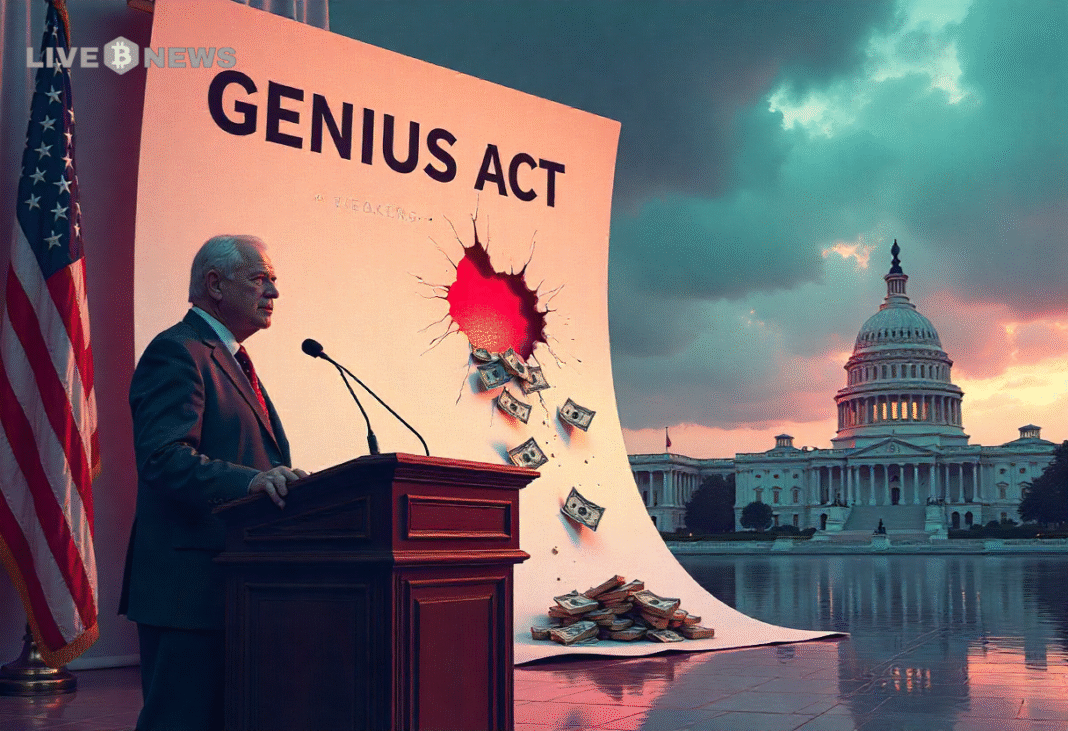
There Is A Loophole In The GENIUS Act That Could “Devastate” Small Banks: Alabama Senator

There Is A Loophole In The GENIUS Act That Could “Devastate” Small Banks: Alabama Senator

Alabama Senator Keith Kelley warns the GENIUS Act could drain deposits from small banks and put rural economies at risk.   Alabama State Senator Keith Kelley is warning that the recently passed GENIUS Act could harm small banks across rural America.  He believes that the law, while created to regulate stablecoins, may instead weaken trusted […] The post There Is A Loophole In The GENIUS Act That Could “Devastate” Small Banks: Alabama Senator appeared first on Live Bitcoin News.

Author: LiveBitcoinNews
Mutuum Finance (MUTM) Reaches Over 16,200 Holders as Early Buyers Position for the DeFi Boom

Mutuum Finance (MUTM) Reaches Over 16,200 Holders as Early Buyers Position for the DeFi Boom

Dubai, UAE, 11th September 2025, Chainwire

Author: Blockchainreporter
HODLing Might Be Better Now

HODLing Might Be Better Now

The post HODLing Might Be Better Now appeared on BitcoinEthereumNews.com. BlackRock’s proposal has been postponed for another 45 days, while Franklin Templeton will have to wait 60 days for a possible decision. Last month, the SEC also delayed Truth Social’s application for a Bitcoin and Ethereum ETF by 45 days, with a decision now scheduled for October 8. Similarly, spot $XRP ETF applications filed by CoinShares, Grayscale, Bitwise, Canary Capital, and 21Shares have been postponed. Solana ETF applications filed by 21Shares, VanEck, and Bitwise are also on hold, along with Grayscale’s Dogecoin and Litecoin ETF applications. Read on as we dig into why the SEC has been delaying ETF approvals, and also point you toward the best crypto presales that are super cheap right now but could go absolutely bonkers once the approvals finally roll in. Why Is the SEC Delaying ETF Approvals? While this may seem regressive from the SEC, it may actually be the opposite. NYSE and Cboe BZX recently filed applications with the SEC to liberalize ETF listing standards and make the process easier for exchanges. The exchanges propose removing the rigorous ETF application screening required under rule 19b-4, allowing equity, bond, and crypto ETFs that meet certain pre-set criteria to be listed directly without a separate filing. Eric Balchunas, Bloomberg ETF analyst, believes the SEC plans to first approve these applications to shorten the ETF approval process and then move to greenlight all pending ETF applications. He added that the exchange applications may be approved in October, potentially triggering a ‘flood of ETF approvals’ in the following months. So, these constant delays are not just roadblocks. They appear to be part of a calculated SEC strategy to not only approve ETFs but also streamline future listings. Since ETFs open the door for large-scale institutional investment, this could be a game-changer. On the bright side, this gives…

Author: BitcoinEthereumNews
Affordable Cryptocurrency Under $0.05 That Could be the Next Solana (SOL)

Affordable Cryptocurrency Under $0.05 That Could be the Next Solana (SOL)

The post Affordable Cryptocurrency Under $0.05 That Could be the Next Solana (SOL) appeared on BitcoinEthereumNews.com. While the crypto market remains on the lookout for its next big gainer, Mutuum Finance (MUTM) is garnering buzzcoin potential. The project is tantalizing early adopters with its game-changing approach to decentralized lending and micro-liquidity pools. Mutuum Finance is in its sixth phase of presale with all tokens available for $0.035. The project has over $15.6 million in funds raised and over 16,200 backers. With more and more discourse about its revolutionary DeFi innovations and more mentions on major crypto news blogs, Mutuum Finance is shining in the spotlight and can be the next Solana (SOL). Solana (SOL) Keeps Rolling After Recent Surge Solana (SOL) is priced at approximately $218.56, showing an astonishing intraday rise of 4.5% after recent highs. The asset appears solid with high-volume trades, heightened on-chain volume, and buyer demand after such huge upgrades as Firedancer and rising total value locked. While collective market interest continues to be on more affordable cryptos at the sub-$0.05 level for breakout sometime in the future, eyes are opening up in larger circles to look at future-proof protocols as well, including Mutuum Finance (MUTM). Mutuum Finance Presale Momentum Sixth round of MUTM token sale confirms the longevity of the project with an all-time high of $15.6 million and registering more than 16,200 investors. Investors in this round will enjoy humongous profits once the token goes live. Mutuum Finance is building an entire ecosystem that will consist of a stablecoin, on the Ethereum network for maximum security and stability.  $50,000 Bug Bounty Program For assurance of the safety of the platform, Mutuum Finance has implemented a Bug Bounty Program in partnership with CertiK whose reward value is up to $50,000 USDT. The program provides an open invitation to white-hat hackers, security researchers, and developers interested in discovering and reporting bugs. The bugs…

Author: BitcoinEthereumNews
Reshaping the Ecosystem From Crypto Trading To Traditional Assets

Reshaping the Ecosystem From Crypto Trading To Traditional Assets

The post Reshaping the Ecosystem From Crypto Trading To Traditional Assets appeared on BitcoinEthereumNews.com. A Year of Rapid Rise: 50 Million Users Witness the RWA Revolution’s Genesis Formerly known as JuCoin, the platform has officially rebranded as Ju.com. This brand transition signals not only the company’s ambition to become a global ecosystem, but also highlights how the integration of blockchain with traditional assets is transforming the fundamental logic of capital markets. User Base and Data: Explosive Growth in Just One Year Since the arrival of the new management team in 2024, Ju.com’s data curve and product capabilities have experienced an undeniable surge. Registered users soared from five million to fifty million in a single year. Daily trading volume rose to five billion dollars. The JU token price, once at $0.10, broke past the $20 mark, making it one of the strongest-performing ecosystem tokens of the year. The global community has surpassed 26 million members. Ju.com now operates in over 100 countries and regions. On the technical side, the JuChain L1 blockchain delivers fast one-second block times and is EVM-compatible, with more than a million on-chain interaction addresses, enabling users to freely switch multi-chain assets through a seamless interface. Mechanism Innovation: The JU Growth Story and Engines This momentum did not come from a single product or marketing slogans, but rather from persistent mechanism innovation and authentic community consensus. The JU story began with an IDO refund airdrop, where users participated at zero cost. This early-stage distribution model significantly lowered investment risk. The platform replaced traditional fundraising with a “protect the investor first” approach, enabling early users to hold JU at minimal cost, with wide distribution around the $2 level, which fostered a solid base of community consensus. As JuChain and JuCard ecosystem applications launched, JU gradually became the platform’s unified payment and utility token, with both trading fee discounts and governance rights driving demand.…

Author: BitcoinEthereumNews
SEC delays Franklin and BlackRock crypto ETF decisions

SEC delays Franklin and BlackRock crypto ETF decisions

The post SEC delays Franklin and BlackRock crypto ETF decisions appeared on BitcoinEthereumNews.com. The US Securities and Exchange Commission has delayed decisions on multiple crypto exchange traded funds (ETF) proposals Wednesday, pushing back deadlines for funds including BlackRock and Franklin Templeton. According to SEC filings, the agency has set a new deadline of Nov. 13 for Franklin’s Ethereum staking amendment, and Nov. 14 for its Solana and XRP ETFs. A proposal seeking to permit staking in BlackRock’s iShares Ethereum Trust is now slated for Oct. 30. The filings do not indicate how the SEC is leaning on the applications; only that more time is needed to evaluate them. The commission is using the maximum extension available before issuing a final decision. Franklin’s proposals for the Ethereum, Solana and XRP products were filed with Cboe BZX in mid-March, while Nasdaq submitted BlackRock’s iShares Ethereum staking amendment on July 16. Under Section 19(b) of the Securities Exchange Act, the SEC has up to 45 days from publication to act on a proposed rule change, which can extend to 90 or 180 days, and in some cases by an additional 60 days.  Related: BlackRock leads $287M spot Ether ETF inflows after 4-day outflow streak ETF delays continue to pile up at the SEC The SEC has dramatically shifted its stance on digital assets since US President Donald Trump took office in January.  On July 31, SEC Chair Paul Atkins unveiled “Project Crypto,” a commission-wide initiative to modernize securities rules and bring digital asset trading, lending and staking under a unified framework. At the Organisation for Economic Co-operation and Development (OECD) Roundtable on Global Financial Markets in Paris Wednesday, Atkins underscored the pivot, declaring, “Crypto’s time has come.”  Despite the pro-crypto push, the SEC continues to delay decisions on ETF applications, with proposals piling up across altcoin and staking products. On Tuesday, the federal agency postponed decisions on the…

Author: BitcoinEthereumNews
Ethereum and Stellar Stay Steady, While BullZilla’s Price Rises in a Few Hours – Could it Be the Next 100x Crypto Presale?

Ethereum and Stellar Stay Steady, While BullZilla’s Price Rises in a Few Hours – Could it Be the Next 100x Crypto Presale?

The post Ethereum and Stellar Stay Steady, While BullZilla’s Price Rises in a Few Hours – Could it Be the Next 100x Crypto Presale? appeared first on Coinpedia Fintech News The crypto market thrives on bold narratives, rapid adoption, and the relentless pursuit of the next 100x crypto presale. Every cycle crowns a handful of projects that reshape the industry, blending disruptive technology with unstoppable momentum. In 2025, three names rise above the noise, BullZilla, Ethereum, and Stellar. Each represents a different force: an unleashed …

Author: CoinPedia
Best Cryptocurrency to Invest in Might Not Be in Top 10 Crypto Giants but a New Coin Heading Towards 120x ROI

Best Cryptocurrency to Invest in Might Not Be in Top 10 Crypto Giants but a New Coin Heading Towards 120x ROI

The top 10 crypto coins like Bitcoin, Ethereum, Cardano, and XRP have long defined the market. They bring maturity, strong liquidity, and recognition, but their room for extreme upside is narrowing. Investors asking why is crypto going up today often see gains distributed more heavily across emerging projects that carry fresh utility and scalable designs. [...] The post Best Cryptocurrency to Invest in Might Not Be in Top 10 Crypto Giants but a New Coin Heading Towards 120x ROI appeared first on Blockonomi.

Author: Blockonomi
Creditcoin Universal Smart Contract: Unlocking Revolutionary Cross-Chain Finance

Creditcoin Universal Smart Contract: Unlocking Revolutionary Cross-Chain Finance

BitcoinWorld Creditcoin Universal Smart Contract: Unlocking Revolutionary Cross-Chain Finance The world of blockchain is constantly evolving, and one of its most persistent challenges has been the seamless verification of data across different networks. Imagine a financial system where information flows freely and securely between diverse digital ledgers. This vision is now closer to reality with the recent launch of the Creditcoin Universal Smart Contract (USC) testnet. This groundbreaking development from the Layer 1 blockchain Creditcoin (CTC) aims to bridge critical gaps, promising a more integrated and efficient decentralized future. What Makes the Creditcoin Universal Smart Contract a Game-Changer? Creditcoin officially launched its Universal Smart Contract testnet on September 11, marking a significant step forward. The core idea behind the USC is to tackle the complex problem of verifying data that originates from various disparate blockchains. This isn’t just a technical exercise; it’s about building robust infrastructure. The current blockchain landscape often operates in silos, making it difficult for applications on one chain to trust or utilize data from another. The Creditcoin Universal Smart Contract offers a novel solution to this fragmentation. Bridging Blockchains: It creates a mechanism for secure, reliable cross-chain data verification. Real-World Integration: The USC is designed to connect blockchain financial tools directly with the traditional economy. Enhanced Trust: By providing verifiable data, it builds a foundation for more sophisticated decentralized applications. How Does the Creditcoin Universal Smart Contract Actually Verify Data? The system employs a clever approach to ensure data integrity and authenticity. It involves a carefully selected group of network participants who play a crucial role in the verification process. These participants are responsible for gathering and reaching a consensus on transaction data originating from other blockchains. This collective agreement then forms a secure “chain of authentication blocks.” Think of it as a meticulously maintained ledger of verified cross-chain information. Once this history is established, any prover can confidently demonstrate that specific data exists within that authenticated record. This mechanism is central to the functionality of the Creditcoin Universal Smart Contract. This method ensures that the data being used is not only accurate but also traceable and verifiable, addressing a major hurdle for many decentralized finance (DeFi) applications that rely on external data. Why is the Creditcoin Universal Smart Contract Crucial for Financial Infrastructure? Creditcoin has made it clear that the Universal Smart Contract is far more than just another technical experiment. It represents a pivotal moment for the integration of blockchain financial infrastructure with the real-world economy. The ability to verify real-world assets or off-chain data on a blockchain opens up a vast array of possibilities. Consider these potential impacts: Improved Lending: Financial institutions could securely verify credit histories or asset collateral from different chains. Seamless Payments: Facilitating more reliable cross-border payments by authenticating transaction details across networks. Tokenized Assets: Enabling the secure representation and transfer of real-world assets on the blockchain with verifiable backing. Enhanced DeFi: Powering more robust and interconnected decentralized applications that require external data. The Creditcoin Universal Smart Contract aims to lay the groundwork for a truly interconnected financial ecosystem, where the benefits of blockchain technology can extend beyond crypto-native applications into everyday economic activities. What’s Next for the Creditcoin Universal Smart Contract and Creditcoin? The launch of the testnet is an exciting first step. It allows developers and the community to experiment with the USC’s capabilities, identify potential improvements, and build innovative applications on top of this new infrastructure. This iterative process is vital for refining the technology and ensuring its robustness. Creditcoin’s commitment to solving real-world problems through blockchain technology is evident in the development of the Creditcoin Universal Smart Contract. As the testnet evolves, we can anticipate more detailed insights into its performance, scalability, and broader adoption potential. The journey towards a truly interoperable and integrated financial future powered by blockchain continues, with Creditcoin leading the charge in critical areas like data verification. The Creditcoin Universal Smart Contract testnet marks a significant milestone in the quest for blockchain interoperability and real-world utility. By providing a robust and verifiable method for cross-chain data authentication, Creditcoin is paving the way for a more integrated, trustworthy, and efficient global financial system. This innovation has the potential to unlock new paradigms in decentralized finance and beyond, bridging the gap between digital assets and the traditional economy. Frequently Asked Questions About Creditcoin Universal Smart Contract What is the primary purpose of the Creditcoin Universal Smart Contract (USC)?The USC’s primary purpose is to address the major challenge of verifying data across different blockchains, enabling secure and reliable cross-chain data authentication. When was the Creditcoin Universal Smart Contract testnet launched?The Creditcoin Universal Smart Contract testnet was officially launched on September 11. How does the USC verify data from other blockchains?Select network participants collect and reach a consensus on transaction data from other blockchains, creating a chain of authentication blocks. A prover can then demonstrate that specific data exists within that verified history. Why is the USC considered a significant development for the real-world economy?It’s seen as a turning point because it integrates blockchain financial infrastructure with the real-world economy by enabling verifiable off-chain data, crucial for applications like lending, payments, and tokenized assets. Is the Creditcoin Universal Smart Contract currently live on the mainnet?No, it was launched as a testnet, allowing for development, testing, and refinement before a potential mainnet deployment. Found this article insightful? Share your thoughts and help spread the word about the groundbreaking Creditcoin Universal Smart Contract! Connect with us and share this article on your favorite social media platforms to keep the conversation going about the future of cross-chain finance. To learn more about the latest explore our article on key developments shaping blockchain interoperability and decentralized finance. This post Creditcoin Universal Smart Contract: Unlocking Revolutionary Cross-Chain Finance first appeared on BitcoinWorld and is written by Editorial Team

Author: Coinstats