Lending

Lending protocols form the backbone of the decentralized money market, allowing users to lend or borrow digital assets without intermediaries. Using smart contracts, platforms like Aave and Morpho automate interest rates based on supply and demand while requiring over-collateralization for security. The 2026 lending landscape features advanced permissionless vaults and institutional-grade credit lines. This tag covers the evolution of capital efficiency, liquidations, and the integration of diverse collateral types, including LSTs and tokenized RWAs.

15172 Articles
Created: 2026/02/02 18:52
Updated: 2026/02/02 18:52
ARK Invest highlights Solana’s $223M real economic value in Q3

ARK Invest highlights Solana’s $223M real economic value in Q3

The post ARK Invest highlights Solana’s $223M real economic value in Q3 appeared on BitcoinEthereumNews.com. Key Takeaways ARK Invest highlighted Solana’s $223 million real economic value for Q3 2025, making it a leader in blockchain-generated economic activity. The Q3 DeFi Quarterly report from ARK Invest focuses on on-chain activity, stablecoins, tokenization, real-world assets, and decentralized exchanges (DEXs). ARK Invest, an investment firm specializing in disruptive technologies, highlighted Solana’s $223 million real economic value in Q3. Solana led all blockchains in network-generated value, according to ARK’s analysis. ARK Invest recently released its Q3 DeFi Quarterly report focusing on on-chain activity, stablecoins, real-world assets, tokenization, and decentralized exchanges. The report underscores the openness of blockchain data in providing insights into economic value generation. The analysis details advancements in decentralized exchanges and lending protocols across blockchain platforms. The report also examined other blockchain networks, including Tron’s performance. Source: https://cryptobriefing.com/solana-q3-223m-real-economic-value-ark-invest/

Author: BitcoinEthereumNews
Major Initiative Launches to Strengthen XRPL’s DeFi Expansion

Major Initiative Launches to Strengthen XRPL’s DeFi Expansion

The post Major Initiative Launches to Strengthen XRPL’s DeFi Expansion appeared on BitcoinEthereumNews.com. Fintech Ripple has joined forces with Web3 security firm Immunefi to launch a global cybersecurity challenge aimed at safeguarding the upcoming XRP Ledger (XRPL) Lending Protocol. The initiative, dubbed “Attackathon,” introduces a $200,000 prize pool for white-hat hackers and blockchain security experts who help identify potential vulnerabilities before the protocol goes live. The XRPL Lending Protocol represents a key step in Ripple’s expanding decentralized finance roadmap. Expected to go to a validator vote later this year, the protocol will introduce native lending capabilities to the XRP Ledger – including pooled lending and underwritten credit – allowing institutions and developers to automate the lending process from issuance to repayment. The goal is to create a secure, transparent infrastructure that connects borrowers to global liquidity while generating yield for lenders on dormant assets. Building a Secure Foundation for Institutional DeFi Immunefi, which currently protects over $180 billion in user funds across the Web3 ecosystem, will lead the security testing through its Attackathon framework. The event combines education and competition, enabling top-tier security researchers worldwide to rigorously test the XRPL Lending Protocol’s resilience. “The partnership with RippleX gives us the opportunity to apply our proven Attackathon model to one of the industry’s most established blockchain ecosystems,” said Immunefi founder and CEO Mitchell Amador. “By leveraging the collective expertise of our security researchers, we’re ensuring that XRPL’s DeFi expansion is built on a foundation of trust and protection.” RippleX’s Head of Product, Jasmine Cooper, emphasized the importance of preemptive testing, noting that lending introduces new layers of complexity to any blockchain network. “XRPL was built with financial use cases in mind. Before the Lending Protocol officially launches, it’s critical to make sure it’s secure and resilient. Immunefi’s experience will help us do just that,” she said. How the Attackathon Works The Attackathon officially begins…

Author: BitcoinEthereumNews
Ripple News: Major Initiative Launches to Strengthen XRPL’s DeFi Expansion

Ripple News: Major Initiative Launches to Strengthen XRPL’s DeFi Expansion

The initiative, dubbed “Attackathon,” introduces a $200,000 prize pool for white-hat hackers and blockchain security experts who help identify potential […] The post Ripple News: Major Initiative Launches to Strengthen XRPL’s DeFi Expansion appeared first on Coindoo.

Author: Coindoo
Scallop: SCA locked tokens exceed 50 million, accounting for 20% of the total tokens

Scallop: SCA locked tokens exceed 50 million, accounting for 20% of the total tokens

PANews reported on October 14th that Scallop, the Sui ecosystem lending protocol, announced that its SCA token lockup has reached 50 million, representing approximately 20% of the total SCA supply, with an average lockup period of 3.71 years. The platform stated that converting locked SCA tokens to veSCA will earn borrowers up to 4x the amount of their borrowed assets, encouraging greater use of borrowed assets within the ecosystem.

Author: PANews
Ripple News: Ripple Partners with Immunefi to Strengthen XRPL Lending Protocol

Ripple News: Ripple Partners with Immunefi to Strengthen XRPL Lending Protocol

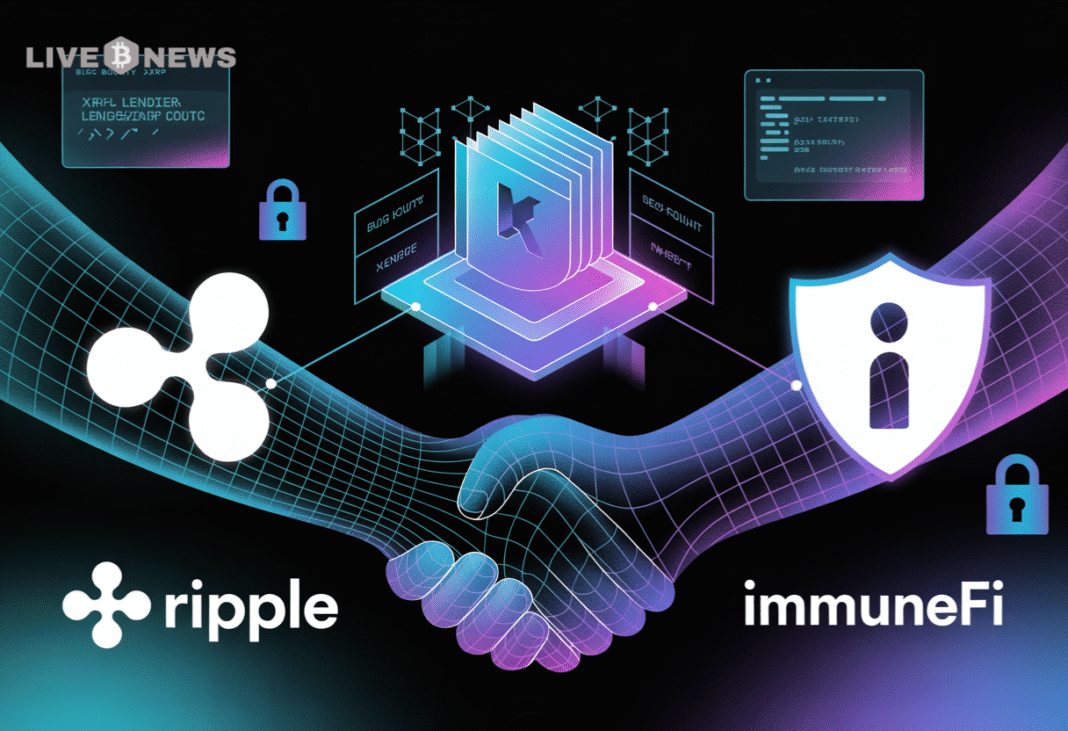
Ripple and Immunefi collaborate to secure the XRPL Lending Protocol. This partnership launches an Attackathon for $200,000 in rewards. In a major move, Ripple and Immunefi have officially teamed up for a new initiative. They are launching an “Attackathon” to enhance security greatly. This work focuses on the up-coming native XRPL Lending Protocol. Furthermore, this […] The post Ripple News: Ripple Partners with Immunefi to Strengthen XRPL Lending Protocol appeared first on Live Bitcoin News.

Author: LiveBitcoinNews
JPMorgan may offer cryptocurrency trading as custody appears unlikely in near term, executive says; Ethereum among networks bank eyes

JPMorgan may offer cryptocurrency trading as custody appears unlikely in near term, executive says; Ethereum among networks bank eyes

The post JPMorgan may offer cryptocurrency trading as custody appears unlikely in near term, executive says; Ethereum among networks bank eyes appeared on BitcoinEthereumNews.com. COINOTAG recommends • Exchange signup 💹 Trade with pro tools Fast execution, robust charts, clean risk controls. 👉 Open account → COINOTAG recommends • Exchange signup 🚀 Smooth orders, clear control Advanced order types and market depth in one view. 👉 Create account → COINOTAG recommends • Exchange signup 📈 Clarity in volatile markets Plan entries & exits, manage positions with discipline. 👉 Sign up → COINOTAG recommends • Exchange signup ⚡ Speed, depth, reliability Execute confidently when timing matters. 👉 Open account → COINOTAG recommends • Exchange signup 🧭 A focused workflow for traders Alerts, watchlists, and a repeatable process. 👉 Get started → COINOTAG recommends • Exchange signup ✅ Data‑driven decisions Focus on process—not noise. 👉 Sign up → JPMorgan crypto trading services: JPMorgan is developing cryptocurrency trading capabilities for institutional clients while saying direct custody is not on the near‑term roadmap. Scott Lucas confirmed trading development on CNBC and said the bank is evaluating custody partners and monitoring stablecoins and JPMD. JPMorgan will offer crypto trading but not direct custody in the near term. Scott Lucas (global head of markets and digital assets) confirmed trading plans on CNBC and said the bank is assessing custodial partners and stablecoin demand. JPMorgan’s deposit token JPMD (pilot on Base) and evolving regulation are shaping bank strategy and client offerings. JPMorgan crypto trading services: JPMorgan will offer crypto trading while custody remains off the near‑term roadmap; expert quotes and bank strategy COINOTAG. By COINOTAG | Published: 2025-10-14 | Updated: 2025-10-14 COINOTAG recommends • Professional traders group 💎 Join a professional trading community Work with senior traders, research‑backed setups, and risk‑first frameworks. 👉 Join the group → COINOTAG recommends • Professional traders group 📊 Transparent performance, real process Spot strategies with documented months of triple‑digit runs during strong trends; futures plans use…

Author: BitcoinEthereumNews
Project 0 integrates Solana’s DeFi protocol to enhance liquidity

Project 0 integrates Solana’s DeFi protocol to enhance liquidity

PANews reported on October 14th that cryptocurrency prime broker Project 0 is integrating Kamino, a DeFi protocol within the Solana ecosystem. This collaboration will enable users to manage risk, collateral, and capital efficiency across multiple DeFi applications. Users will now be able to borrow and lend using their Kamino and Project 0 deposits through a single credit pool that consolidates loan-to-value (LTV), lending weights, and interest rate data across platforms with one click. This move also introduces a unified margin account, allowing users to access leveraged trading opportunities without having to manage multiple sets of collateral.

Author: PANews
PBOC sets USD/CNY reference rate at 7.1021 vs. 7.1007 previous

PBOC sets USD/CNY reference rate at 7.1021 vs. 7.1007 previous

The post PBOC sets USD/CNY reference rate at 7.1021 vs. 7.1007 previous appeared on BitcoinEthereumNews.com. The People’s Bank of China (PBOC) set the USD/CNY central rate for the trading session ahead on Tuesday at 7.1021 compared to the previous day’s fix of 7.1007 and 7.1353 Reuters estimate. PBOC FAQs The primary monetary policy objectives of the People’s Bank of China (PBoC) are to safeguard price stability, including exchange rate stability, and promote economic growth. China’s central bank also aims to implement financial reforms, such as opening and developing the financial market. The PBoC is owned by the state of the People’s Republic of China (PRC), so it is not considered an autonomous institution. The Chinese Communist Party (CCP) Committee Secretary, nominated by the Chairman of the State Council, has a key influence on the PBoC’s management and direction, not the governor. However, Mr. Pan Gongsheng currently holds both of these posts. Unlike the Western economies, the PBoC uses a broader set of monetary policy instruments to achieve its objectives. The primary tools include a seven-day Reverse Repo Rate (RRR), Medium-term Lending Facility (MLF), foreign exchange interventions and Reserve Requirement Ratio (RRR). However, The Loan Prime Rate (LPR) is China’s benchmark interest rate. Changes to the LPR directly influence the rates that need to be paid in the market for loans and mortgages and the interest paid on savings. By changing the LPR, China’s central bank can also influence the exchange rates of the Chinese Renminbi. Yes, China has 19 private banks – a small fraction of the financial system. The largest private banks are digital lenders WeBank and MYbank, which are backed by tech giants Tencent and Ant Group, per The Straits Times. In 2014, China allowed domestic lenders fully capitalized by private funds to operate in the state-dominated financial sector. Source: https://www.fxstreet.com/news/pboc-sets-usd-cny-reference-rate-at-71021-vs-71007-previous-202510140115

Author: BitcoinEthereumNews
What ignited the powder keg? The leverage resonance effect in the 10.11 crypto avalanche

What ignited the powder keg? The leverage resonance effect in the 10.11 crypto avalanche

The cascading liquidations caused by extreme leverage using altcoins as collateral are a systemic risk triggered by external shocks when the market is structurally fragile. This article will analyze the underlying mechanisms from the perspective of market makers and large investors pledging altcoins to borrow stablecoins. There is a myth in ancient Greek mythology about a man who died chasing the sun. Icarus is a young man in Greek mythology who died chasing the sun. He and his father, Daedalus, were imprisoned by the King of Crete. Daedalus crafted two pairs of wings from wax and feathers, allowing him and his son to escape the island. Daedalus warned his son not to fly too high, but Icarus, complacent, flew too high, causing the wax on his wings to melt in the sun, leading to his death in the sea. To make an analogy, wings are leverage in the financial world, and flying too high is a sin. The catalyst for the October 11th crash: a macroeconomic "black swan" event that emerged before the powder keg On October 11, 2025, the market was hit by a sudden macroeconomic headwind: Trump announced that he would impose high tariffs on Chinese goods. This news instantly ignited risk aversion in global markets, causing investors to sell risky assets like stocks and cryptocurrencies and flock to safe-haven assets like the US dollar and gold. For a crypto market that has already accumulated a large amount of leverage and vulnerable positions, this is tantamount to throwing a spark into a powder keg. First Perspective: Market Makers’ (MM) “Neutral Strategy” Is Unbalanced Market makers play a key role in providing liquidity in the market. In theory, they earn the bid-ask spread through a "market neutral strategy" (holding both long and short positions to hedge risk), rather than betting on a unilateral market trend. Pursuit of capital efficiency: Market makers don't invest millions of dollars in real cash to create liquidity for every trading pair. Instead, exchanges allow them to stake their crypto assets (including a wide range of altcoins) to borrow stablecoins (such as USDT and USDC), which they then use to execute market-making strategies. For example, if a person stakes $1 million worth of an altcoin, with a 50% collateralization ratio, they can borrow $500,000 in stablecoins. Hidden risk exposure: In this model, although market makers may be “neutral” in the contract market, their balance sheets are not. Their collateralized pledged positions themselves are a huge risk point. The detonation process of 10.11: Market mutation: Trump’s tariff news triggered a panic drop in the market, and the prices of all altcoins plummeted following Bitcoin and Ethereum. Collateral value shrinks: The value of altcoins pledged by market makers has dropped rapidly, causing the health of their pledged positions to deteriorate sharply, approaching the liquidation line. Double pressure: At the same time, their market-making positions in the contract market (which may include some long orders to maintain balance) are also facing losses or even margin calls due to plummeting prices. Liquidation Initiation: When market makers are unable to add margin, the exchange’s liquidation system forcibly takes over their pledged altcoins and sells them at any cost in the spot market to repay the stablecoins they borrowed. A death spiral forms: Massive selling pressure in the spot market further drives down altcoin prices. Since futures prices closely track spot prices, this leads to another sharp drop in futures prices, which in turn triggers a collapse in more futures positions, both those held by market makers themselves and by other traders in the market. This creates a vicious cycle: contract liquidation → price drop → collateral value decreases → collateral is liquidated by spot → spot price drops further → triggering more contract liquidations. In the flash crash on October 11, the prices of many altcoins instantly dropped to zero or close to zero, precisely because the liquidity protection mechanism of market makers completely failed under the impact of the chain liquidation. Second perspective: The dilemma of “holding coins and earning interest” for large altcoin holders Altcoin traders (whales) face similar dilemmas as market makers, but their motivations and position structures are different. Sunk costs and impatient capital: Many large investors bought large amounts of altcoins in the middle and late stages of the bull market, anticipating a hundredfold increase. However, the market has failed to meet their expectations, leaving their funds locked up in these illiquid assets for a long time (e.g., Wbeth, Bnsol). Seeking additional income: In order to make the deposited funds generate income, they took the same approach: staking the altcoins they held on exchanges or DeFi protocols, borrowing stablecoins, and then using these stablecoins to conduct contract transactions, short-term speculation, or invest in other projects. Long-standing unhealthy positions: After a long period of sideways or downward movement, the health of many large investors' pledged positions has long been in a "sub-healthy" state. They may have become accustomed to hovering on the edge of the liquidation line, maintaining their positions through small margin calls. The last straw for 10.11: External shocks: The general decline triggered by the tariff incident has put their already fragile positions at risk. The dual variable threat: They face a double threat from two core variables: Losses in contract positions: The contract orders (most likely long orders) they opened with the borrowed stablecoins are losing money rapidly. A plunge in collateral value: This is even more fatal. Even if their contract positions can hold up for the time being, the collateral that serves as the foundation is being eroded. Once the collateral value falls below a certain threshold, the entire pledged position will be liquidated regardless of whether the contract position is profitable or not. Same spiral, different protagonists: When liquidations occur, the mechanism is identical to that of market makers: contract positions are closed in the futures market, while the collateralized altcoins are sold in the spot market. Each liquidation by a major trader becomes a bombshell that hits the market, accelerating the price collapse and triggering the next major trader's liquidation. This is equivalent to two liquidation lines occurring simultaneously: one by the market maker's arbitrage bots and the other by the liquidation engine. Conclusion: A structural avalanche triggered by extreme leverage The crypto market crash on October 11th was ostensibly driven by macroeconomic news, but the underlying cause was the extreme leverage accumulated within the market, using high-risk altcoins as collateral. This model tightly linked the spot and futures markets through collateralized lending, creating a highly fragile system. Resonance of risks: Risks in a single market (such as contract losses) will be quickly transmitted and amplified to another market (spot selling), and vice versa, forming a powerful resonance effect. Evaporation of liquidity: Under the stampede of serial liquidations, buying in the altcoin spot market was instantly drained, causing prices to plummet, or even temporarily drop to zero. Under the current crypto market structure, even market makers and large long-term coin holders without directional risk will put themselves and the entire market on the brink of systemic collapse due to the pursuit of extreme capital efficiency and leveraged returns. A seemingly unrelated external shock is enough to trigger the entire avalanche.

Author: PANews
Next 100x Crypto: Mutuum Finance (MUTM) Joins Solana (SOL) Among Top Altcoins to Invest in 2025

Next 100x Crypto: Mutuum Finance (MUTM) Joins Solana (SOL) Among Top Altcoins to Invest in 2025

As Q4 2025 continues, cryptocurrency markets continue to experience swings, and innovative projects are eyeing gains. Industry leaders like Solana (SOL) are continuing to dazzle, delivering lightning-fast settlements and a burgeoning ecosystem that entices both retail and institutional investors However, as altcoins compete for headlines, there emerges a new contender, building momentum stealthily and turning […]

Author: Cryptopolitan