Index

A crypto Index provides a way for investors to gain diversified exposure to a specific basket of digital assets through a single tokenized product. These indices often track specific sectors, such as DeFi, DePIN, or RWA, and are automatically rebalanced via smart contracts. In 2026, AI-managed thematic indices have become the gold standard for passive investing, allowing users to track the "blue chips" of the Web3 economy without manual portfolio management. This tag covers index methodology, rebalancing frequency, and the benefits of diversified crypto baskets.

25642 Articles
Created: 2026/02/02 18:52
Updated: 2026/02/02 18:52
‍⚕️AI Is Creating a New Kind of Job, Fixing AI’s Mistakes

‍⚕️AI Is Creating a New Kind of Job, Fixing AI’s Mistakes

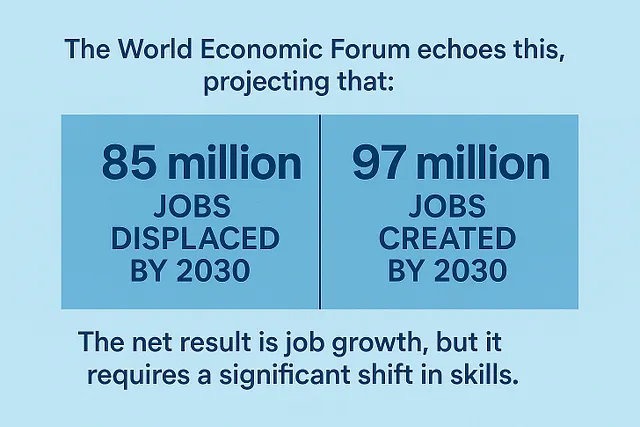
[Our AI Business Services] — [Advertise with Us!] Jobs are changing rapidly due to new technology, but not everything is negative. Yes, companies like Salesforce have slashed 4k jobs due to automation, but many other jobs are being created thanks to this tech revolution, and we will discuss. Therapists are using ChatGPT (who isn’t) and clients are upset. Are you into Fantasy sports? We share the tools that you need to get that Fantasy Super Bowl ring. Let’s dive in and stay curious. The Future of Work: Navigating AI’s Impact on the Job Market AI Is Creating a New Kind of Job, Fixing AI’s Mistakes AI Tools — Fantasy Sports Is your Therapist using ChatGPT? AI Guides — Stanford Index Reports 📰 AI News and Trends China’s Alibaba develops new AI chip to help fill Nvidia void, shares rise 19% Meta’s AI leaders discuss using Google, OpenAI models in apps OpenAI Plans India Data Center in Major Stargate Expansion Robotics and self-driving car companies are using Runway’s tech for training simulations OpenAI warns investors that AGI may make money obsolete, while raising billions of good old US dollars 🌐 Other Tech news Mastodon, X competitor, says it doesn’t ‘have the means’ to comply with age verification laws The hottest new phone is Tin Can, a ‘landline’ for kids China’s electric vehicle giants are betting big on humanoid robots The world’s most ambitious fusion energy project has reached a critical milestone as Westinghouse Electric Company takes charge of assembling the core of ITER’s fusion reactor Refer a friend The Future of Work: Navigating AI’s Impact on the Job Market The rise of AI is reshaping our world, bringing both anxiety and opportunity to the global workforce. Recent studies and insights from tech leaders like Bill Gates paint a clear picture: adaptation is no longer optional; it’s essential. But some other news are very positive, as companies like Salesforce have replaced 4,000 jobs with AI Agents. A Tale of Two Trends: Job Loss and Creation A comprehensive 2024 study reveals that while AI has eliminated 23.4% of traditional mid-skill jobs, it has simultaneously created 31.7% more new roles in areas like AI development and human-AI collaboration. The World Economic Forum echoes this, projecting that while AI could displace 85 million jobs by 2030, it may also create 97 million new ones. The net result is job growth, but it requires a significant shift in skills. The “Adaptation Gap” and the Power of Reskilling The biggest challenge we face is the “adaptation gap.” Currently, 42% of displaced workers struggle to transition into new roles due to a mismatch between their skills and the demands of the new jobs. The solution is clear: proactive reskilling. Research shows that companies that invest in retraining their workforce before roles become obsolete see a 64% higher employee retention rate. Why Some Jobs Remain Human-Centric Despite the disruption, some fields are set to thrive. Bill Gates recently argued that programming, in particular, will remain a uniquely human job. While AI can automate repetitive tasks, it cannot replicate the creativity, abstract problem-solving, and critical judgment required to write novel code and solve complex, real-world problems. Vibe coding has been all the hype lately, but letting AI will not work without and human in the loop; it will lead to hacks, exposing sensitive data, and using code that, as of today, may not be fully functional or trustworthy for established corporations. Today, you need experienced coders to code and/or make sure AI code (vibe code) is reliable and safe. Jobs at Higher Risk: Repetitive administrative and creative tasks, but some other jobs will require fewer people to accomplish, as AI will make us more productive. Jobs at Lower Risk: Roles requiring complex problem-solving, ethical judgment, and creativity. The Bottom Line for Your Career The message is consistent: AI won’t replace people, but it will empower them. The future belongs to those who embrace lifelong learning and continuous upskilling. The goal is to create a workforce that evolves with technology, rather than one that resists it. By focusing on developing uniquely human skills like critical thinking and creativity, we can not only secure our place in the future economy but also leverage AI to boost productivity and unlock new possibilities. 🧰 AI Tool Fantasy Sports FantasyPros — offers a suite of tools, including a “Coach AI” that acts as a personal fantasy football assistant. This AI-powered feature provides expert opinions, up-to-date player statistics, and advice on trades and waivers. It accesses expert rankings and projections in real-time, helping you make informed decisions about your lineup. RotoWire — AI-powered draft assistant that offers real-time recommendations during your live draft. The tool provides updated rankings and suggestions based on the picks being made. RotoWire also offers a mock draft simulator that uses AI-generated picks to help you test and refine your draft strategy. The platform can be integrated with major fantasy football hosting sites like Yahoo, ESPN, and CBS. Draft Punk — AI-powered mobile fantasy football draft copilot and mock draft simulator for Android. For the past 10 years, it has been using AI to generate accurate player projections. The app provides custom rankings tailored to your league’s unique settings and recommends players to draft based on team needs and position scarcity. RotoBot — AI is a fantasy sports platform that uses advanced AI to deliver personalized insights and answer your questions. It helps you make smarter weekly decisions by breaking down player data, curating relevant news, and offering league-specific analysis. RotoBot’s machine learning engine cuts through the noise to provide only the most impactful insights. STACKED — Fantasy football intelligence platform that syncs with your teams from ESPN, Yahoo, Sleeper, and other platforms. It consolidates all your leagues into a single interface, enabling you to manage everything from one convenient location. STACKED digests NFL content from various sources and surfaces what’s most important for your team each week. Is your Therapist using ChatGPT? A growing number of therapists are secretly using ChatGPT to help with therapy sessions and written responses, but many clients are feeling betrayed and violated when they find out. From a therapist accidentally screen-sharing ChatGPT prompts during a live session, to others sending overly polished, AI-assisted emails, patients report loss of trust, privacy concerns, and emotional discomfort — especially when handling sensitive topics like grief or trauma. A study shows that AI-written therapy responses rated higher only when users didn’t know they were AI-generated. ChatGPT isn’t HIPAA-compliant; even de-identified info can leak sensitive data. A 2020 hack of a Finnish mental health company exposed tens of thousands of therapy records, leading to blackmail and public leaks. Experts say transparency is key: AI can help overworked therapists with tasks like note-taking or writing, but undisclosed usage undermines the therapist-client relationship. As AI tools creep into mental healthcare, the balance between efficiency and empathy has never been more critical. Share 🧰 AI Guides Stanford AI Index Report: A comprehensive resource for data and trends in AI. https://aiindex.stanford.edu/report/ AI Is Creating a New Kind of Job, Fixing AI’s Mistakes Another field where AI is creating new jobs is in the AI cleanup department. Instead of replacing creatives and coders, generative AI is creating demand for “AI cleanup” work, tasks where humans fix sloppy AI outputs. Freelancers in writing, design, and development are now hired to repair buggy code, redraw broken logos, and rewrite robotic AI text. Stats & Insights: 95% of GenAI pilots show zero ROI, per MIT. Fiverr reports 250% growth in niche human-led tasks like “Shopify design” and book illustration. Upwork and Freelancer see rising demand for content strategy, emotional storytelling, and human-led branding. Writers say AI content often needs rewriting due to bland tone, generic responses, or factual gaps. Developers report unstable, unsafe apps coded by AI tools that still need human fixes. AI can generate fast content, but brands and clients still crave human creativity, precision, and emotional nuance. While many freelancers are underpaid for AI cleanup gigs, the industry shift proves one thing: AI still needs humans to look good. 👩‍⚕️AI Is Creating a New Kind of Job, Fixing AI’s Mistakes was originally published in Coinmonks on Medium, where people are continuing the conversation by highlighting and responding to this story

Author: Medium
Coinbase To Launch Mag7 + Crypto Equity Index Futures On Sept 22, Featuring Apple, Tesla, And Bitcoin Exposure

Coinbase To Launch Mag7 + Crypto Equity Index Futures On Sept 22, Featuring Apple, Tesla, And Bitcoin Exposure

The post Coinbase To Launch Mag7 + Crypto Equity Index Futures On Sept 22, Featuring Apple, Tesla, And Bitcoin Exposure appeared on BitcoinEthereumNews.com. Coinbase is taking a bold step into new territory with the announcement of its Mag7 + Crypto Equity Index Futures, set to launch on September 22. The new product marks a historic first in the U.S. derivatives market by offering investors simultaneous exposure to both the “Magnificent 7” tech stocks and leading cryptocurrency ETFs. “We’re launching the first US futures that give exposure to the top US tech stocks and crypto at the same time,” said Brian Armstrong, CEO of Coinbase. “We’ll launch more products like this as part of the everything exchange. Coming on September 22.” A First-of-Its-Kind Futures Product Until now, no U.S.-listed derivative provided exposure to equities and cryptocurrencies in a single contract. Coinbase Derivatives describes the new futures as a “diversified, capital-efficient tool” designed to serve investors seeking innovation-focused, multi-asset products. The contracts are positioned to address three core needs: Thematic Exposure to Innovation & Growth: Capturing the performance of transformative technology leaders and blockchain-native assets. Diversification in a Unified Product: Providing exposure across asset classes that have traditionally traded separately. Strategic Risk Management: Offering new ways to hedge portfolios against multi-asset risks. Inside the Mag7 + Crypto Equity Index The underlying Mag7 + Crypto Equity Index is evenly weighted across ten components: Magnificent 7 Stocks: Apple (AAPL), Microsoft (MSFT), Alphabet (GOOGL), Amazon (AMZN), NVIDIA (NVDA), Meta Platforms (META), Tesla (TSLA) Coinbase (COIN) Stock Cryptocurrency ETFs: iShares Bitcoin Trust ETF (IBIT) and iShares Ethereum Trust ETF (ETHA) Each of the 10 assets will carry a 10% weighting, with the index rebalanced quarterly to reflect market changes. MarketVector has been named as the official index provider. Trading Details Mag7 + Crypto Equity Index Futures will be monthly, cash-settled contracts. Each contract represents $1 x the Index, meaning that if the Index is priced at $3,000, the notional…

Author: BitcoinEthereumNews
Virgin Bitcoin: Provenance, Premiums, and Protocol-Level Identification

Virgin Bitcoin: Provenance, Premiums, and Protocol-Level Identification

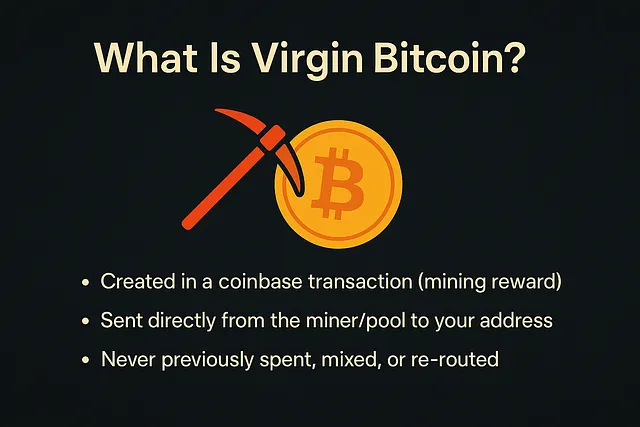
This guide provides a step-by-step process for isolating and tagging untouched Coinbase UTXOs in Sparrow Wallet, enabling you to understand their real-world value. In the digital gold rush, the purest form of Bitcoin is the kind that’s never changed hands—Bitcoin mined into existence and sent directly from a Coinbase transaction to a wallet. This is what’s known as Virgin Bitcoin, and it’s becoming increasingly valuable in a world of compliance, regulation, and institutional custody. This guide will walk you through exactly how to: Identify virgin Bitcoin within your wallet Tag and manage it using Sparrow Wallet Understand how much more it can be worth compared to regular BTC OpenAI DALL-E3 by Author What Is Virgin Bitcoin? Virgin Bitcoin refers to coins that have never been transacted beyond their original creation in a coinbase transaction—the special transaction that rewards miners when they find a new block. For a coin to be considered “virgin,” it must: Be directly mined into existence via a coinbase transaction Have no previous transaction history (i.e., no inputs except the coinbase input) Be sent directly from the miner or mining pool to your address Remain unspent since that initial movement This type of Bitcoin is as clean as it gets—completely untarnished by exchange flows, darknet markets, CoinJoins, mixers, or any kind of behavioral risk flag that could be picked up by chain surveillance tools. Why Virgin Bitcoin Is Valuable The Bitcoin protocol makes no distinction between “clean” and “tainted” coins—1 BTC is always 1 BTC. But in practice, especially among institutions, OTC desks, and regulatory-conscious entities, the provenance of a coin matters. Here’s why virgin Bitcoin carries strategic weight: Zero Taint: It’s untouched by prior transactions, making it a breeze to audit. Regulatory Compliance: Perfect for institutions and funds that require known, clean coin histories. Cold Vault Quality: Ideal for long-term cold storage, sovereign treasuries, and ETF custodians. High Trust Factor: Chain analysis firms can clearly confirm its origin, reducing legal or reputational risk. Market Premium: OTC buyers often pay more for virgin coins due to these attributes. OpenAI DALL-E3 by Author The Market Premium for Virgin Bitcoin As of August 2025, virgin Bitcoin often trades at a premium on private and institutional markets. While the base Bitcoin price is universally quoted, virgin coins can command between 2% and 20% more, depending on several factors. In smaller OTC trades, buyers may offer a 2–5% premium for verifiable virgin coins. For larger transactions—especially from known mining pools with clear chain provenance—the premium can reach 10% or more. Sovereign entities or custodians acquiring BTC for vaulting have been known to pay up to 20% for large blocks of verified virgin Bitcoin. For example, if BTC is trading at $64,000, a well-documented 5 BTC Coinbase output may sell for $67,200–$76,800 depending on the buyer and the quality of verification. How to Identify Virgin Bitcoin Using Sparrow Wallet Sparrow Wallet is one of the best tools available for managing and analyzing your Bitcoin UTXOs (Unspent Transaction Outputs). It allows you to trace individual coins back to their origin, inspect the transaction data, and tag coins with helpful labels. Here’s how to identify virgin Bitcoin in Sparrow step-by-step. Step 1: Load Your Wallet Please open Sparrow Wallet and load the wallet in question. This can be a hardware wallet, watch-only descriptor, multisig setup, or hot wallet. Ensure you’re connected to a trusted Electrum server or your Bitcoin Core full node is txindex enabled. This allows for complete transaction lookup and analysis. Step 2: Open the UTXO Viewer Navigate to the “UTXOs” tab at the bottom of the Sparrow interface. Here you’ll see a list of every unspent output your wallet controls. This is where the search for virgin Bitcoin begins. Step 3: Inspect the Transaction Details Right-click on a UTXO and choose “View Transaction.” You’re looking for the transaction’s input data. If the only input is labeled as "a,"coinbase that means it was created via a mining reward. In the transaction input section, you should see something like: Input 0: Coinbase: 03e4a1... (hex-encoded coinbase script) Sequence: ffffffff This confirms the transaction was a Coinbase payout. Next, ensure that the output address is yours (i.e., the UTXO is directly assigned to you) and that there are no intermediate outputs or signs of distribution. If you’re the first recipient and the coin hasn’t moved since, this is a virgin UTXO. Step 4: Verify with a Block Explorer Sparrow allows you to open the transaction in an external block explorer Click "Open in Block Explorer" and choose a reputable explorer, like mempool.space or oxt. Confirm that: The transaction was the coinbase for a block It was mined by a known pool (Foundry, F2Pool, Marathon, etc.) Your address is directly listed in the outputs There are no unusual outputs or mixing behaviors. Step 5: Tag the Virgin UTXO in Sparrow Once confirmed, go back to the UTXOs tab, right-click the UTXO, and choose “Label.” Use a descriptive tag like: 💎 Virgin BTC – Coinbase DirectFoundry Pool, Block #805321TXID: 6d2a... Verified 2025-08-08 This makes it easy to identify later for spending, reporting, or OTC sale. Step 6: (Optional) Tag the Address If you want to go one level deeper, open the Addresses tab, find the receiving address for the UTXO, and label it similarly: Virgin BTC Receiving Address – Coinbase TX only This can help you build a catalog of clean receiving addresses, especially useful if you’re a miner accumulating cold storage directly. Step 7: (Optional) Export Your Labels To back up your virgin coin metadata: Go to File → Export Wallet Choose to Include Labels Save the .json file to an encrypted USB or air-gapped system This preserves your tagging and analysis for long-term archival or audit-proofing.OpenAI DALL-E3 by Author Best Practices for Managing Virgin Bitcoin To preserve the value and integrity of your virgin coins, follow these guidelines: Never mix virgin coins with others in a transaction. Avoid CoinJoins, mixing, or consolidations. Use one UTXO per transaction to maintain provability. Sign messages from the receiving address if a buyer requests proof. Keep a record of the block height, TXID, and pool origin. Once virgin BTC is spent or mixed, it loses its premium status. Treat them like digital gold bars: once melted, you can’t prove their origin.OpenAI DALL-E3 by Author Final Thoughts: Purity as a Premium Virgin Bitcoin is becoming more than a technical curiosity. In a post-regulatory, chain-analyzed world, coin purity is evolving into a feature—not just a novelty. If you mine Bitcoin or receive mining pool payouts, you may already have virgin coins sitting quietly in your wallet. By using Sparrow Wallet to identify and tag these UTXOs, you unlock strategic advantages: greater liquidity in high-value OTC markets, enhanced legal defensibility, and the ability to hold what is arguably the cleanest form of Bitcoin that exists. In the end, the Bitcoin protocol doesn’t care where your sats came from. But the world might. So learn to identify, tag, and preserve your virgin coins. Because in Bitcoin, origin isn’t everything—but it might just be worth 20% more. You can sign up to receive emails each time I publish. Get an email whenever Michael Di Fulvio publishes. Here is the link to the original Bitcoin White Paper: Become a Medium member… Stories from MP Di Fulvio: Membership: Dollar-Cost-Average Bitcoin ($10 Free Bitcoin): DCA-SWAN Access to our high-net-worth Bitcoin investor technical services is available now: cccCloud We solely intend this content for informational purposes. It is not a substitute for professional financial or legal counsel. We cannot guarantee the accuracy of the information, so we recommend consulting a qualified financial advisor before making any substantial financial commitments. 🧬 Virgin Bitcoin: Provenance, Premiums, and Protocol-Level Identification was originally published in Coinmonks on Medium, where people are continuing the conversation by highlighting and responding to this story

Author: Medium
Dialogue with BlackRock CEO Larry Fink: Bitcoin is a hedge against an uncertain future

Dialogue with BlackRock CEO Larry Fink: Bitcoin is a hedge against an uncertain future

Legends Live @Citi with Larry Fink, Chairman and CEO of BlackRock Guest: Larry Fink, Co-founder, Chairman and CEO of BlackRock Moderator: Leon Kalvaria, Chairman of Citigroup Global Bank Compiled and edited by LenaXin and ChainCatcher ChainCatcher Editor's Summary This article is compiled from the latest episode of Legends Conversation @Citi, in which Leon Kalvaria, Chairman of Citi Global Bank, speaks with Larry Fink, co-founder, chairman, and CEO of BlackRock. As of the video's release, BlackRock's assets under management have reached $12.5 trillion. How did Larry achieve this? In this episode, Larry will share his unique insights on leadership, themes from his career, and his experiences in creating a brilliant journey. ChainCatcher did the collation and compilation. Summary of highlights: What really changed Wall Street was the personal computer. The profound lessons learned were: First, we thought we had a top-notch team and market knowledge, but our thinking did not evolve with the market; second, when competing with Salomon Brothers, we were blinded by the ambition to gain market share. The foundation of the firm is the development of risk tools, and BlackRock’s culture is deeply rooted in risk technology. Artificial intelligence and financial asset tokenization will reshape future investment and asset management The essence of the asset management industry is results-oriented Investors need to seek out information that is not fully understood by the market; old news is no longer able to generate excess returns. If active investing were effective, ETFs would never have taken off. If the US economic growth rate cannot sustainably reach 3%, the deficit problem will overwhelm the country. As long as assets and liabilities are matched and deleveraged, losses will not spread into a systemic crisis. Bitcoin is a hedge against an uncertain future Only by fully committing to the whole process can we continue to have the qualifications for dialogue and the right to speak in the industry (1) How did Larry’s upbringing shape his leadership? Leon Kalvaria: How did your family background shape your unique worldview and risk-taking ability, ultimately leading to excellence with a global perspective? Larry Fink: My parents were truly remarkable. They were socialists, open-minded, and they valued two things above all else: academic achievement and personal responsibility. They often told me, " If you're not happy as an adult , don't blame your parents; blame yourself. " This indoctrination taught me the importance of independence from a young age. Starting at age 10, I worked in a shoe store, an experience that taught me how to connect with customers and build relationships. While it's uncommon for children to work so young these days, that time helped me mature early and teach me to take responsibility. It wasn't until I was 15 that I truly began to plan a more purposeful life. Leon Kalvaria: How did your West Coast academic background help you transition into a leader within an established company? Larry Fink: I first saw snow in January 1976 during a job interview in New York. I was a typical West Coast teenager, wearing turquoise jewelry, long hair, and a brown suit. Of all the firms, First Boston was the most appealing to me. They offered a personalized training program, and the trading leaders felt very approachable. They even assigned me directly to the trading desk, which was unusual at the time. Wall Street back then was completely different from what it is today. In 1976, First Boston hired only 14 people. The combined capital of all Wall Street investment banks at the time, including Goldman Sachs, Loblolly, Kuhn Loeb, Lehman Brothers, Whitewell, Merrill Lynch, and others (excluding commercial banks), was only about $200 million. At the time, investment banks operated like cottage industries, taking almost no risk. Balance sheet expansion only began after 1976. Within my first month on the trading floor, I was convinced I was qualified for the job. After my training, I was assigned to the Mortgage and Guarantee Department, which consisted of only three people, which was very exciting. (2) Larry's entrepreneurial journey Leon Kalvaria: What fundamental new understandings of finance and risk did your early experience in securitization give you? Larry Fink: What really changed Wall Street was the personal computer. Before that, there were tools like the Monroe calculator or the HP-12C. In 1983, the mortgage department was equipped with a few computers. Although they were primitive by today's standards, they allowed us to completely rethink how we assembled mortgage pools and calculated their cash flow characteristics. The ability to restructure cash flows by processing real-time data launched the securitization process. While many calculations were still done manually, the application of trading-level technology gave rise to derivatives like interest rate swaps. Wall Street was forever transformed. An important factor in the establishment of BlackRock was that the sell-side technology was always ahead of the buy-side technology. Leon Kalvaria: What was the most unexpected lesson you learned, and what insights did you gain that may have shaped your subsequent leadership at BlackRock? Larry Fink: Let me tell you about my career trajectory. I became the youngest managing director at the age of 27, joined the company's executive committee at the age of 31, and became insufferable at the age of 34 because of my arrogance. Back then, the team-first philosophy only worked when we were profitable. In 1984-1985, we were the company's most profitable division, even setting a quarterly record. But then we suddenly suffered a $100 million loss in the second quarter of 1986. This exposed the root of the problem: We were hailed as heroes when we were profitable, but when we lost money, 80% of our employees stopped supporting us . The so-called team spirit completely collapsed. I learned two hard lessons: first, I thought I had a top-notch team and market knowledge, but my thinking didn't evolve with the market; second, when competing with Salomon Brothers, I was blinded by my ambition to gain market share. Lou was fired a year before me for the same mistake, but I didn't learn from it. I've never been able to forgive myself for not speaking out forcefully when the company was blindly adding capital. We lacked risk management tools, yet we took on risks no one knew about. This experience of failure ultimately became the soil that nurtured BlackRock's growth. Leon Kalvaria: What keeps you convinced that entrepreneurship can succeed despite widespread skepticism and personal setbacks? Larry Fink: That experience definitely eroded my confidence. Although I spent a year and a half rebuilding my career, and received several partner offers from Wall Street firms during that time, I felt it wasn't right to repeat my old path. So I began exploring the possibility of transitioning to a buy-side market. Two key clients were willing to fund my startup, but I wasn't confident enough to start on my own, so I reached out to Steve Schwarzman. First Boston had helped raise some of Blackstone's first fund (approximately $545 million), and I had helped fund it, leveraging our relationships with thrift institutions. Bruce Wasserstein introduced me to Steve and Pete. They were very interested in the idea I proposed, and in fact, Steve believed in me more than I did, and I eventually became the fourth partner of Blackstone. The weekend after I resigned, I held an open house at my home. About 60 to 70 people showed up to discuss my new plans. I told some of them directly, "You'll thrive after I leave." The company was going through a period of disintegration, with some leaving and some staying, but this candor helped all parties find a more suitable path forward. (3) The Development and Importance of Aladdin Technology Leon Kalvaria: What were the key factors in BlackRock's selection to provide key advisory services to the US government during the financial crisis? Did Aladdin's early deployment of technology provide a decisive advantage? Larry Fink: When we started the company, we had two technologists out of eight people. We invested $25,000 in a SunSpark workstation, which had just been released in 1988. This allowed us to develop our own risk tools at BlackRock. From day one, the foundation of the firm has been developing risk tools, and BlackRock’s culture is deeply rooted in risk technology. When Kidder Peabody, a subsidiary of General Electric (GE), went bankrupt in 1994, we leveraged our long-standing partnership with GE to proactively offer assistance to CEO Jack Welch and CFO Dennis Damerman. While Goldman Sachs was widely expected to be hired, we, leveraging our Aladdin system, were entrusted with liquidating its troubled assets. I stated that I didn't need consulting fees and would pay after success. After nine months of operation, the asset portfolio finally became profitable, and GE ultimately paid the highest consulting fee in its history. I wanted my investment team to be able to establish themselves based on their own success and capabilities, and I wanted Aladdin to be able to compete and win against anyone. We decided to open the Aladdin system to all our customers and competitors. In 2003, we encountered the financial crisis. Leveraging our trusted relationship with the U.S. government and regulators, we shared a common philosophy in multiple rescue efforts. Bear Stearns was hired by JPMorgan Chase (JP) to analyze its asset portfolio over the weekend. While urgently assisting JP with risk assessments on Friday and Saturday, I was allowed to communicate simultaneously with Hack from the Treasury Department and Tim from the Federal Reserve. At 6 a.m. on Sunday morning, Tim called and asked for support. I responded that we needed to get permission from JPMorgan Chase CEO Jamie before we could transition to government service. To expedite the process, we were directly hired by the U.S. government. The Treasury Secretary asked, "Will American taxpayers lose money from taking over the assets?" I suggested that principal and interest be included in the calculation, because the assets had been significantly written down and the interest rate was extremely high, so taxpayers would most likely get their money back. Since then, we have been hired to handle the restructuring of AIG and the crisis responses of the governments of the UK, the Netherlands, Germany, Switzerland and Canada. (Note: American International Group is referred to as AIG.) (4) What is the purpose of the annual letter to shareholders? Leon Kalvaria: What's the core rationale behind the annual shareholder letter you've written since 2012? Is it to document key milestones, provide insights to investors, or perhaps make a strategic statement? Larry Fink: Beyond a few core themes, I never intended these letters to be manifestos. I wouldn't have written them if we hadn't acquired BGI in 2009 to become the world's largest index provider. At the time, we assumed significant equity management responsibilities, but only had voting rights, not disposal rights . This is consistent with the concept discussed by Warren. The core of the first few letters was to promote "long-termism" and think about long-term trends for long-term investors . This was the whole original intention. (Note: Leon Kalvaria jokingly called Larry Fink's shareholder letter a companion piece to Warren Buffett's letter.) (V) Major trends in reshaping asset management in the future Leon Kalvaria: From your perspective, what are the major trends that you see that will reshape your investments and asset management in the future? Larry Fink: Artificial Intelligence and the Tokenization of Financial Assets. During lunch today with a former Treasury Secretary and central bank governor, he privately admitted that the banking industry has been left behind by technology in many areas . Brazil's New Bank's innovative practices are spreading to Mexico, and digital platforms like Germany's Trade Republic are also disrupting traditional practices. These cases demonstrate the power of technology to transform. The disruptive nature of AI can be better understood by considering how it is transforming big data analytics . For example, BlackRock established an AI lab at Stanford in 2017, employing a team of professors to develop optimization algorithms. We manage $12.5 trillion in assets and process a massive volume of transactions, but technological innovation is driving us back to our roots of responsibility. Leon Kalvaria: These tools will be made available to the public. How can we ensure transparency and accountability while maintaining BlackRock's advantages? Larry Fink: Early-stage scale operators will have an advantage, which makes me worried about society as a whole. Large institutions that can afford the cost of AI technology will become the dominant ones. However, as second-generation AI becomes ubiquitous, our competitive advantage will be challenged. BlackRock's current advantage is far greater than it was a year ago or five years ago. Our investment in technology has reached a massive scale, with all of our operations underpinned by a technology architecture, including transaction processing, process optimization, M&A integration, and a unified technology platform. The scale of our investment far exceeds public perception. Leon Kalvaria: How do the three major acquisitions in the private equity sector (Prequin, HBS, and Bio) reshape investors' asset allocation landscape in the private equity market? Larry Fink: Today's earnings call reaffirmed the importance of ongoing transformation. While the 2009 acquisition of BGI (including iShares) sparked market skepticism, the strategy of "passive and active integration with full portfolio focus" has proven successful—iShares' size has leapt from $340 billion to nearly $5 trillion. By 2023, BlackRock's private equity business will have grown significantly, with infrastructure investment increasing from zero to $50 billion and private credit expanding rapidly. This unexpected surge in client demand has driven innovation, accelerating the integration of public and private equity. Technological advances will facilitate the free allocation of public and private assets, a trend that will extend to all institutional investors and even 401(k) plans. The acquisition of Prequin cost only one-third of that of its peers, but it is a key strategy: by integrating the E-Front private equity analysis platform and the Aladdin public equity system, it has established full-chain risk control capabilities for public and private assets, facilitating investment portfolio integration and deepening customer dialogue. Leon Kalvaria: What is the current state of retirement funding? Larry Fink: If you can earn 50 basis points over 30 years, your returns in the private equity market will exceed that over the long term, otherwise the liquidity risk is not worth taking. In total, your portfolio can increase by 18%. Four months ago, BlackRock hosted a retirement summit in Washington, D.C., with 50 members of Congress and the Speaker of the House of Representatives among the guests. As administrator of the federal government's retirement plans, we manage 50% of the $12.5 trillion in retirement assets. (VI) Relationships with Global Leaders and Strategic Influence Leon Kalvaria: When global leaders seek your personal advice on financial and geopolitical issues, how do you combine your investment expertise with your geopolitical risk assessment? Larry Fink: Building trust is fundamental. Since 2008, central bank governors and finance ministers have made it a practice to have in-depth conversations with me, all held behind closed doors. While there are no formal confidentiality agreements, the trust is similar to my interactions with CEOs, where the core of the conversation is confidentiality. These conversations always focus on substantive issues . I'm not always right, but my views are always grounded in history and facts. Leon Kalvaria: You have been a mentor to so many leaders for a long time, and this unique communication channel is rare. Larry Fink: The asset management industry is inherently results-oriented . We don't profit by capital turnover or trading volume, but rather by concrete results. We are deeply involved in retirement systems around the world (we are the third-largest retirement management company in Mexico, the largest foreign-invested retirement management company in Japan, and the largest pension fund manager in the UK), so we maintain a focus on long-term issues. This kind of influence cannot be replicated; it's built on years of trust . I proactively meet with new leaders (such as Claudia in Mexico and Kiel in Germany) before they take office to ensure a smooth flow of information, which is a reflection of our unique value. Leon Kalvaria: When you look back at your recent career, who have been your mentors and influences? Larry Fink: When we went public in 1999, BlackRock's market capitalization was only $700 million. We immediately attracted senior directors like Merrill Lynch CEO Dave Kamansky and General Electric's Dennis Damerman. Our board of directors has always been a core pillar of our organization. When we acquired Merrill Lynch Investment Management, we transitioned from a US-based fixed income firm to a global operation in 40 countries. During this time, I repeatedly discussed our management model with the board. Today, the board remains crucial, with Cisco CEO Chuck Robbins providing technical insights and former Estée Lauder CEO Fabrizio Freda contributing marketing wisdom. These multidisciplinary experts allow me to continue to rely on the board to drive progress. (VII) Audience Question Session Q: How will AI reshape the future investment paradigm? How do you think different investment strategies (for both individual investors and institutions) will evolve? Where will this trend head in the future? Larry Fink: Every investor needs to seek out information that the market doesn't fully understand. Traditional information (old news) no longer generates excess returns. Artificial intelligence generates unique insights by analyzing differentiated data sets. Our systematic equity team has consistently outperformed the market for 12 years. Its thematic investment strategy, based on AI algorithms and big data, has outperformed 95% of fundamental stock pickers over the past decade. But like baseball, maintaining a 30% batting average is incredibly difficult, and achieving it for five consecutive years is even rarer. Only a select few investors consistently outperform. Most fundamental investors experience dismal returns after fees, which is the core of the decline in the active management industry. If active investing truly worked, ETFs would never have taken off. Traditional asset management companies face depressed market capitalizations. Many of our peers listed in 2004 have market capitalizations of only $5 billion to $20 billion, while BlackRock's is $170 billion. This is due to our inability to invest in technological upgrades. The gap between us and traditional agencies will continue to widen. Leon Kalvaria: What is the most underestimated black swan risk in the current market? If the US economic growth rate cannot be maintained at 3% (even if inflation is controlled), what systemic crises may be triggered? Larry Fink: If the US economic growth rate cannot continue to reach 3%, the deficit problem will overwhelm the country . The deficit was $8 trillion in 2000, soared to $36 trillion 25 years later, and continues to worsen. Only by maintaining 3% growth can the debt/GDP ratio be controlled. However, the market is skeptical. The deeper risks lie in: 1. 20% of US debt is held by foreign countries. If tariff policies lead to isolationism, dollar holdings may decrease; 2. The development of domestic capital markets in many countries (e.g., BlackRock raising $2 billion in India and Saudi Arabia launching MBS business) has resulted in domestic savings being retained in the country, weakening the appeal of US Treasuries; 3. Stablecoins and currency digitization may reduce the global role of the US dollar. The solution lies in releasing private capital and simplifying the approval process . Countries such as Japan and Italy are also facing deficit crises caused by low growth. While black swan events are possible in the private credit sector, higher matching ratios mean that systemic risk in the current capital market is lower than in previous years. As long as assets and liabilities are matched and deleveraging is achieved, losses will not escalate into a systemic crisis. (8) Why did Larry’s attitude towards digital assets change? Leon Kalvaria: What were the key factors behind your evolving stance on digital assets, particularly stablecoins? Has your perspective changed due to the unexpected speed at which other institutions have embraced the space? Larry Fink: I harshly criticized Bitcoin in a discussion with Jamie Dimon, calling it a "currency for money laundering and theft." That was my view in 2017. But my reflections and research during the pandemic changed my perspective: an Afghan woman used Bitcoin to pay the salaries of female workers banned by the Taliban. With the banking system under control, cryptocurrency became a solution. I gradually realized the irreplaceable value of the blockchain technology behind Bitcoin. It's not a currency, but a "fear asset" designed to mitigate systemic risk. People hold Bitcoin out of concern for national security and currency devaluation. Even though 20% of Bitcoin is held illegally in China, it's still held by Chinese citizens. If you don’t believe that your assets will appreciate in value over the next 20-30 years, why invest? Bitcoin is a hedge against an uncertain future. The high-risk and rapidly changing environment requires us to continue learning. 9. Larry’s Leadership Principles Q: What are your core leadership principles? How do you maintain leadership consistency, especially when facing dramatic industry changes and needing to flexibly adjust strategies? Larry Fink: Daily learning is essential. Stagnation means falling behind. There's no pause button when leading a large enterprise; you have to give it your all. To be the best, you must constantly challenge yourself and hold your team to the same standard. I've been in the industry for 50 years, and I still strive to be at my best every day. Ultimately, only by fully committing to the process can one maintain a position of authority and a voice in the industry . This right must be earned daily and should never be taken for granted.

Author: PANews
Sonic Labs Commits $40M to SonicStrategy as It Eyes Nasdaq Listing, U.S. Expansion

Sonic Labs Commits $40M to SonicStrategy as It Eyes Nasdaq Listing, U.S. Expansion

The post Sonic Labs Commits $40M to SonicStrategy as It Eyes Nasdaq Listing, U.S. Expansion appeared on BitcoinEthereumNews.com. Spetz (SPTZ), doing business as SonicStrategy, has announced It’s receiving $40 million in convertible funding from the foundation behind the Sonic blockchain, Sonic Labs. The financing comes in the form of a six-month, zero-coupon convertible note issued in Sonic’s native S tokens. If SonicStrategy uplists from the Canadian Securities Exchange to the Nasdaq or a similar U.S. exchange and raises at least $40 million in outside capital, the debt can convert to common stock at $4.50 per share. Those shares will be locked for three years. Sonic Labs’ token contribution will be locked for four years. SonicStrategy plans to use the capital to support its treasury, validator operations and blockchain investments. The companies expect the deal to close within five business days under Canadian Securities Exchange rules. The investment is part of Sonic’s broader push into the U.S., following community approval for a $150 million expansion plan. That initiative includes efforts to create an exchange-traded fund and pursue a private investment in public equity (PIPE) vehicle. Sonic Labs CEO Michael Kong said SonicStrategy acts as a link between the blockchain and traditional finance. “”This investment reflects our confidence in their execution and their ability to provide institutional-grade infrastructure for the Sonic ecosystem,” Kong said in a press release. Sonic’s S tokens are up around 0.4% in the last 24 hours, while based on the CoinDesk 20 (CD20) index the wider crypto market rose 1.3% in the same period. Source: https://www.coindesk.com/business/2025/09/02/sonic-labs-commits-usd40m-to-sonicstrategy-as-it-eyes-nasdaq-listing-u-s-expansion

Author: BitcoinEthereumNews
Big Tech Meets Bitcoin – Coinbase Unveils First Mag7 Crypto Equity Index Futures

Big Tech Meets Bitcoin – Coinbase Unveils First Mag7 Crypto Equity Index Futures

The post Big Tech Meets Bitcoin – Coinbase Unveils First Mag7 Crypto Equity Index Futures appeared on BitcoinEthereumNews.com. Bitcoin Coinbase is preparing to roll out a new derivatives product that bridges Wall Street’s tech giants with crypto’s leading ETFs, signaling its ambition to become an all-encompassing trading platform. Starting September 22, the exchange will debut the Mag7 Crypto Equity Index Futures, a contract that brings together exposure to both traditional stocks and crypto exchange-traded funds. The launch marks the first time Coinbase has moved beyond single-asset futures into a multi-asset index, reflecting its broader vision to evolve into what it calls an “everything exchange.” The index pulls from the “Magnificent Seven” tech leaders — Apple, Microsoft, Google, Amazon, NVIDIA, Meta, and Tesla — while also including Coinbase’s own stock alongside BlackRock’s Bitcoin and Ethereum ETFs. Each of the ten assets will carry an equal 10% weight, with quarterly rebalancing to keep allocations aligned with market shifts. Coinbase Expands Beyond Crypto The move comes at a pivotal moment for the exchange. Just weeks ago, Coinbase confirmed its intention to explore tokenized equities and prediction markets, while also completing a $2.9 billion acquisition of Deribit, a major player in crypto options. Together, these efforts underscore a clear push to diversify far beyond the traditional digital asset offering. For traders, the Mag7 Crypto Equity Index Futures could represent a new way to capture cross-market momentum, tying together two of the most closely watched sectors in global finance: mega-cap tech and leading cryptocurrencies. The Bigger Picture Coinbase’s expansion into equity-linked products highlights a growing overlap between traditional finance and crypto markets. By packaging both sides into a single futures contract, the exchange is betting that investors are increasingly looking for diversified instruments that reflect broader macro trends rather than isolated asset bets. If successful, the Mag7 Crypto Equity Index Futures could become a model for other exchanges seeking to bridge the gap…

Author: BitcoinEthereumNews
Ripple (XRP) Announces Major Partnership in the Payment Sector

Ripple (XRP) Announces Major Partnership in the Payment Sector

The post Ripple (XRP) Announces Major Partnership in the Payment Sector appeared on BitcoinEthereumNews.com. Ripple and payment infrastructure company Thunes have signed a strategic partnership that will usher in a new era in cross-border payments. Thunes’ payment network will be integrated with Ripple’s blockchain-based payment solutions, allowing Ripple’s corporate clients to more easily withdraw funds in new currencies and countries. Chloe Mayenobe, President and COO of Thunes, highlighted the importance of collaboration, saying: Members from the traditional financial world and the digital asset ecosystem are connecting to Thunes. We are in a strong position to bring these two worlds together and shape the future of digital assets. Our alliance with Ripple reinforces this vision. By supporting real-time settlement and deep native integrations, we enable digital asset companies to deliver seamless, compliant, and accessible cross-border payments at scale.” Fiona Murray, General Manager of Ripple Asia Pacific, added: “We are committed to reshaping the future of global payments with blockchain technology. Our partnership with Thunes increases the speed, accessibility, and compliance of global payments, while also improving efficiency and security. This collaboration not only enables seamless and cost-effective transactions but also supports the growing global demand for blockchain-based financial solutions.” *This is not investment advice. Follow our Telegram and Twitter account now for exclusive news, analytics and on-chain data! Source: https://en.bitcoinsistemi.com/ripple-xrp-announces-major-partnership-in-the-payment-sector/

Author: BitcoinEthereumNews
Crypto Markets Navigate September Volatility as Gold Hits Records

Crypto Markets Navigate September Volatility as Gold Hits Records

Digital assets hold steady above $3.8T as traditional markets stumble into historically weak month

Author: Blockhead
Coinbase Launches First U.S. Futures Product Tied to Tech Stocks and Crypto

Coinbase Launches First U.S. Futures Product Tied to Tech Stocks and Crypto

Coinbase has announced the launch of a groundbreaking futures product that blends the performance of leading U.S. technology stocks with crypto ETFs into a single monthly contract. The new instrument, called the Mag7 + Crypto Equity Index Futures, represents the first U.S.-listed derivative of its kind, merging two asset classes that traditionally trade separately. Each […]

Author: Coinstats
Starting September on Positive Note

Starting September on Positive Note

The post Starting September on Positive Note appeared on BitcoinEthereumNews.com. After a very rough close to the month of August, crypto markets are starting September on a far stronger tone. The buying got started in force as U.S. traders returned to their desks following the three-day weekend, sending bitcoin BTC$111,170.44 to as high as $111,700 versus the $107,500 level seen as September began. At press time, bitcoin was changing hands at $111,600, up 2.5% over the past 24 hours. Solana SOL$210.78 and XRP XRP$2.8425 were ahead similar amounts. Notably lagging was August outperformer ether (ETH), roughly flat over the past day. Stocks shake off panicky start Likely helping the tone in crypto was a strong bounce in stock markets. Reacting to negative tariff news and a continued rise in global long-term interest rates, major U.S. indices began the month with big losses, including the Nasdaq’s 2% decline. Buyers are stepping in though and roughly 90 minutes after the open, stocks have about halved their early losses. Economic data on tap The new month has already seen one important economic report, the ISM Manufacturing Index for August. Coming in at 48.7, the number missed economist forecasts by a hair and showed continued contraction in the U.S. manufacturing sector. The Prices Paid subindex at 63.7 remained perky, but was softer than the 65.3 forecast and 64.8 the previous month, suggesting at least some easing in price pressures. The big report this week will be Friday’s U.S. employment numbers. Strong data is likely to put into some question the Fed’s apparent plan to trim interest rates when it meets later this month. A week print, however, might put a 50 basis point cut on the table as opposed to the universally expected 25. Source: https://www.coindesk.com/markets/2025/09/02/bitcoin-retakes-usd111k-as-risk-assets-reverse-off-worst-levels

Author: BitcoinEthereumNews