DEX

DEXs are peer-to-peer marketplaces where users trade cryptocurrencies directly from their wallets via Automated Market Makers (AMM) or on-chain order books. By removing central authorities, DEXs like Uniswap and Raydium prioritize privacy and user sovereignty. The 2026 DEX landscape is dominated by intent-based trading, MEV protection, and cross-chain liquidity aggregation. Follow this tag for the latest in on-chain trading volume, liquidity pools, and the technology behind permissionless swaps.

34025 Articles
Created: 2026/02/02 18:52
Updated: 2026/02/02 18:52
Can XYZVerse beat Doge and SHIB? 17% burn rate, sports partnerships fuel a 30× target

Can XYZVerse beat Doge and SHIB? 17% burn rate, sports partnerships fuel a 30× target

XYZVerse targets Doge and SHIB with token burn, sports deals, and buzz of a potential 30x surge. #partnercontent

Author: Crypto.news
What’s next for Ethereum price as spot ETF demand wanes?

What’s next for Ethereum price as spot ETF demand wanes?

Ethereum retreated and entered a technical correction as demand from American investors eased and the crypto market continued to crash following the introduction of tariffs on top US partners. Ethereum ETF demand wanes The Ethereum (ETH) price crashed by over…

Author: Crypto.news
DeFi Education Fund urges Senate to strengthen crypto dev protections in draft bill

DeFi Education Fund urges Senate to strengthen crypto dev protections in draft bill

DeFi Education Fund called on the Senate Banking Committee to frame a key crypto market bill in a more tech-neutral way and strengthen crypto developer protections in a recent letter.

Author: PANews
How does Block leverage the S&P 500 status to drive trillions of Wall Street capital into BTC?

How does Block leverage the S&P 500 status to drive trillions of Wall Street capital into BTC?

Author: Zz, ChainCatcher In July 2025, Blockchain, led by Jack Dorsey, officially joined the S&P 500 index. The fintech company, which owns payment giant Square and mobile financial app Cash

Author: PANews
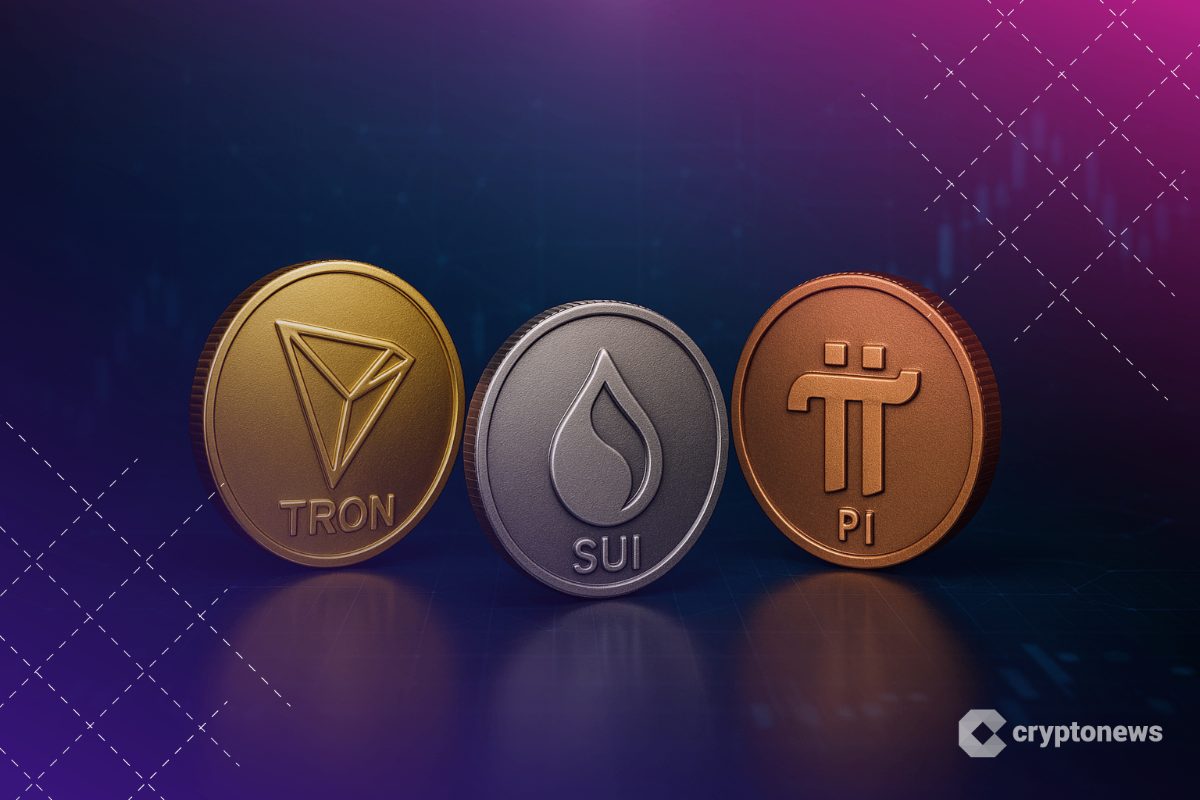
Tron Volume Jumps 44%, Sui Drops 5%, Pi Suffers Unlock – Altcoin Season in Flux?

Tron Volume Jumps 44%, Sui Drops 5%, Pi Suffers Unlock – Altcoin Season in Flux?

The crypto market enters August 2025 with mixed interpretations about whether an altcoin season is taking shape. While Bitcoin remains near its recent highs, some traders are shifting attention toward projects like Tron, Sui, and Pi Coin. Each shows contrasting price action and sentiment, making them part of the debate over the durability of the current altseason trend. Tron: Steady Growth With Utility Tron (TRX) has maintained steady traction in recent weeks. The Tron price is around $0.32, according to CoinMarketCap, with a market cap of about $31 billion and daily trading volume of nearly $1.54 billion, up by 44% within the past 24 hours. Here’s where I’ll be staying at @BlueOrigin ’s Astronaut Village! Comment on my Tiktok what you want to know about my experience—I’ll answer your questions tomorrow!👇 https://t.co/gSJ9xlJpH6 pic.twitter.com/5oXcxmBk6x — H.E. Justin Sun 🍌 (@justinsuntron) August 1, 2025 July trading showed a stable range between $0.28 and $0.33. This consolidation suggests steady demand despite market volatility. Analysts cite Tron’s DeFi footprint and lower supply compared to competitors as reasons why it continues to attract flows during periods when altcoin season activity rises. Whale accumulation and consistent activity across Tron’s DeFi applications add to the case for continued relevance. Some research outlets have pointed to its ability to maintain liquidity and support ecosystem projects, which has allowed TRX to stay in the conversation despite stronger competition from the Ethereum and Solana ecosystems. Sui: Growth Meets Recent Pullback The Sui price currently sits near $3.58, supported by a market cap of about $12.3 billion and daily trading volume exceeding $2.4 billion. Data shows a modest pullback of about 5% over the past 24 hours, after a month of strong inflows. Sui Price (Source: CoinMarketCap) Sui’s object‑based design and parallel execution continue to set it apart among Layer‑1 protocols. On‑chain adoption in DeFi and GameFi has supported TVL growth, though recent price softness has tempered short‑term sentiment. LunarCrush metrics earlier in July showed strong social engagement, reinforcing that traders continue to monitor SUI closely despite the decline. Analysts suggest late‑2025 could prove important if upcoming integrations and ecosystem expansions deliver new user activity. For now, Sui represents an asset with utility and traction but is facing pressure from broader market sentiment. Pi Coin: Supply Concerns Pressure Sentiment The Pi Coin price is trading around $0.4 , with recent reports pointing to downward pressure following a July supply unlock. Pi’s daily volumes remain low compared to Tron and Sui, indicating weaker liquidity. Analysts note that a 17% drop in July coincided with a token unlock event of about 160 million PI, raising concerns about further dilution. Investor sentiment remains cautious. Without clear use cases or robust DeFi integration, Pi’s price action suggests it is more dependent on community participation and speculative cycles than underlying protocol adoption. Altcoin Season or Market Pause? The Altcoin Season Index remains 36, meaning that Bitcoin continues to outperform most altcoins. Yet the steady performance of Tron, the active though volatile market for Sui, and the ongoing debate over Pi Coin show that interest in mid‑cap assets persists. Some traders argue that altseason requires a broader rotation into tokens like these. Others believe current conditions represent selective trading rather than a full cycle. Whether this develops into a sustained altcoin season remains uncertain. Tron offers steady liquidity and usage, Sui continues to build out infrastructure despite recent declines, and Pi Coin reflects the risks of supply shocks. Together, these tokens capture the range of outcomes possible in an altseason: steady performers, growing platforms, and speculative risks. For traders, they illustrate how the cycle can extend beyond Bitcoin—even if the breadth of participation remains limited.

Author: CryptoNews
Indonesia’s Crypto Tax Revenue Skyrockets 181% – But Volatility Raises Red Flags

Indonesia’s Crypto Tax Revenue Skyrockets 181% – But Volatility Raises Red Flags

Indonesia’s annual crypto tax revenue jumped sharply in 2024, marking its highest level since the government introduced taxation on digital assets in 2022. According to officials from the Directorate General of Taxes, the country collected 620 billion rupiah (around $38 million) last year, a 181% rise from the 220 billion rupiah recorded in 2023. The sharp increase reflects a broader surge in local crypto activity. Officials attributed the growth to a rise in transaction volumes, which reportedly reached 650 trillion rupiah ($39.67 billion) in 2024. This aligns with Indonesia’s growing crypto user base, which now stands at over 20 million people, surpassing the number of stock market investors. Crypto Tax Revenue in Indonesia Surged in 2024, but 2025 Off to a Slower Start However, the momentum may not last. Year-to-date figures for 2025 show a steep drop in tax revenue, with collections sitting at just 115 billion rupiah ($6.97 million) as of July. Officials point to crypto market volatility as a key factor behind the fluctuations. “Crypto is a long-term investment. The price can drop,” said Hestu Yoga Saksama, Director of Tax Regulations I at the Directorate General of Taxes. “It could spike, it could drop—it depends on what kind of fever it is. If the fever is high, then the reception will be good.” The tax was first introduced in 2022 and includes both Final Value Added Tax (VAT) and Article 22 Income Tax on crypto trading. In its first year, crypto taxes brought in 246 billion rupiah. The drop in 2023 raised concerns before the market rebounded sharply last year. To manage this growing sector, the government introduced several new regulations in 2025. Among them are updated ministerial decrees that set out tax rules for crypto asset trading and amend existing tax frameworks to reflect the evolving digital asset space. Indonesia has also reclassified crypto assets from commodities to financial assets. This move brings the sector under the oversight of the Financial Services Authority (OJK), indicating a shift in how the country views crypto’s role in its broader financial system. Yon Arsal, an advisor to the Minister of Finance, emphasized the need for collaboration. “It’s not enough to simply expand the scope,” he said. “We must also coordinate. We’re encouraging better coordination with our external stakeholders, including the Financial Services Authority.” Indonesia Raises Crypto Taxes on Foreign Exchanges, Cuts VAT for Buyers The government also rolled out tax reforms in August designed to shift activity toward domestic crypto platforms. Taxes on foreign exchanges were raised from 0.2% to 1%, while domestic platforms saw a smaller hike from 0.1% to 0.21%. Buyers, however, are no longer subject to VAT, creating an incentive for local trading. Crypto mining operations weren’t left out. VAT on mining has doubled from 1.1% to 2.2%, and a special 0.1% income tax for miners will be removed in 2026. After that, mining income will be taxed under regular personal or corporate tax rates. Speaking to CryptoNews, Gregory Cowles, Chief Strategy Officer of Intellistake.ai , noted that “crypto taxation needs to strike a balance. It’s fair that governments want their share, but overly aggressive or unclear policies risk pushing users offshore or into informal channels.” He continued, saying, “Especially in emerging markets, crypto is often more than just speculation; it’s a workaround for currency instability or limited access to banking. If taxation becomes too punitive, it could stifle that utility.” 🇮🇩 Indonesia implements sweeping cryptocurrency tax increases up to five times higher effective August 1 targeting the booming $39.67 billion crypto market. #Indonesia #Crypto https://t.co/INFY07kh8f — Cryptonews.com (@cryptonews) July 30, 2025 Despite the volatility challenges, officials view crypto taxation as a growing source of revenue. The government’s ability to capture earnings from the booming digital asset market, particularly among younger investors aged 18 to 30, is seen as a long-term opportunity. Still, the unpredictable nature of crypto prices poses a challenge for revenue planning. As Yoga noted, “It really depends on the market. If activity drops, so does the revenue.” As 2025 unfolds, the country’s crypto tax collections may continue to reflect the highs and lows of a volatile but rapidly expanding sector. Gregory Cowles further noted that “If governments start to treat crypto tax income as a stable budget item, they may be setting themselves up for disappointment.” Indonesia Ranks 3rd Globally for Crypto Adoption as Youth Trading Soars Indonesia’s crypto sector is seeing a sharp rise in activity, fueled largely by its young population. Over 60% of the country’s crypto investors are aged between 18 and 30, according to data from the Commodity Futures Trading Regulatory Agency (Bappebti). This surge in young investor participation has helped position Indonesia as the third-highest country on Chainalysis’s Global Cryptocurrency Adoption Index . Source: Chainalysis In 2024, Indonesia recorded more than $30 billion in crypto transactions by October , a steep rise from $6.5 billion the previous year. While still below the 2021 peak of $54 billion, this marks a 352% year-over-year increase. The number of registered crypto traders in the country also grew, reaching 21 million. At the regulatory level, the country is undergoing a shift in oversight. The transfer of authority from Bappebti to the Financial Services Authority (OJK), initially planned for January 2025 , was delayed due to the absence of supporting government regulations. 🇮🇩 Indonesia’s crypto regulation transfer to OJK, set for Jan. 12, faces setbacks due to incomplete government frameworks. #Indonesia #CryptoRegulation https://t.co/2V7xIu94eI — Cryptonews.com (@cryptonews) January 2, 2025 Once finalized, the OJK is expected to provide a more structured regulatory framework aligned with global standards, including clearer rules on trading, taxation, and exchange operations.

Author: CryptoNews
Crypto enters August with louder questions about where the money flows next

Crypto enters August with louder questions about where the money flows next

Can crypto sustain momentum in August as macro risks, token unlocks, and investor preferences decide how and where money moves? Fed expectations drive crypto liquidity In August 2025, global crypto markets are heading into a period of close observation, with…

Author: Crypto.news
Chainlink introduces new pricing methodology for DEX-traded assets

Chainlink introduces new pricing methodology for DEX-traded assets

Chainlink has announced a new pricing methodology purpose-built to offer reliable pricing for cryptocurrency and tokenized assets primarily traded on decentralized exchanges. An announcement Chainlink (LINK) shared on August 1 states that Chainlink State Pricing targets assets that show limited…

Author: Crypto.news
Dow dips 500 points amid weak jobs data, trade war jitters

Dow dips 500 points amid weak jobs data, trade war jitters

U.S. stocks shed gains on Friday, with renewed trade war jitters and weak jobs data spooking investors and sending the Dow Jones Industrial Average down 500 points. The Dow Jones Industrial Average dropped more than 500 points, while the S&P…

Author: Crypto.news
HNT dips 36% from July peak — will Helium’s August 1 halving spark a rebound?

HNT dips 36% from July peak — will Helium’s August 1 halving spark a rebound?

Helium’s HNT token has lost 36% of its value since hitting $4.03 in mid-July, trading at $2.95 on ahead of it’s third halving.  The drop has extended by 12% in the past 24 hours and nearly 20% over the past…

Author: Crypto.news