DePIN

DePIN utilizes blockchain and token incentives to build and maintain physical infrastructure, such as wireless networks, cloud storage, and energy grids.By decentralizing the ownership of hardware, projects like Helium and Hivemapper disrupt traditional centralized monopolies.In 2026, DePIN is a core pillar of the Web3 + AI economy, providing the decentralized compute and data collection necessary for autonomous agents. This tag tracks the growth of hardware-based rewards, crowdsourced infrastructure, and the democratization of global utility networks.

1501 Articles
Created: 2026/02/02 18:52
Updated: 2026/02/02 18:52

Looking at the L2 dilemma from Linea’s coin issuance: Has Ethereum’s expansion path reached a dead end?

Looking at the L2 dilemma from Linea’s coin issuance: Has Ethereum’s expansion path reached a dead end?

Original: Odaily Planet Daily Author: Wenser "Do you know how I have been through these past three years?" This may be the voice of many users who have participated in Linea interactions. After three years, Linea, the Layer 2 (L2) network under Consensys, a prominent Ethereum orthodox faction, is finally about to hold its TGE. However, judging by the current airdrop amount and Linea's pre-market price, it's unlikely to satisfy heavily invested enthusiasts. Some claim to have invested hundreds of thousands of dollars, only to receive airdropped tokens worth only a few thousand dollars, or even less. Thus, after a period of hype and constant mention of Layer 2, the Ethereum network may have entered a phase where Layer 2 is losing public support. After several years of development, the "L2 technology path" once singled out by Ethereum founder Vitalik Buterin may have become a detour in the Ethereum ecosystem's development. This article, Odaily Planet Daily, explores this perspective through the lens of Linea's token launch and the current state of mainstream L2 networks, inviting readers to engage in critical discussion. Where the dream begins According to the original idea of Ethereum founder Vitalik, the L2 network is a network system built on the basis of inheriting the security of the Ethereum main network, used to expand the Ethereum ecosystem and reduce usage costs. In October 2020, Vitalik elaborated on the technical concept of the L2 route in the article "Rollup-centric Ethereum Roadmap" . Its core purpose is to simplify Ethereum's long-term expansion strategy and move computing execution mainly to L2 solutions (such as Rollup), so as to quickly achieve network scalability while alleviating the high gas fees and congestion problems of the main network at the time. In addition, he mentioned the short-term actions and potential impact of this technical route: "We need to do more work on cross-L2 transfers to make the experience of moving assets between different L2s as close to instant and seamless as possible." "It is necessary for L2 projects to launch their own tokens - of course, the premise is that the tokens have real economic value (that is, the future fees captured by the L2 estimate). As a result, these L2 network-related protocols will be able to earn fees/MEV, thereby directly or indirectly (through supporting tokens to fund development) to fund their development. In the long run, this is a strategic move that is beneficial to the long-term economic sustainability of Ethereum." Linea is about to issue a coin, but L2 activity is not as high as before At present, among the major L2 networks, only Arbitrum and Base have performed well in value capture. The price of the former's token is mediocre, just like other L2 tokens. The latter has no intention of releasing native tokens and mainly relies on sorter income to generate revenue, earn network development fees and feed back to Coinbase. According to data from TheBlock , on September 9, the number of transactions on Base alone (seven-day average) reached 11.56 million, the number of transactions on Arbitrum was 2.36 million, the number of transactions on Optimism was 1.15 million, the number of transactions on Blast was only 344,000, and the number of transactions on Mode Network was only 233,000; among the ZK-based L2 networks, Starknet had the most transactions (585,000), and the transaction numbers of the remaining networks, from most to least, were Linea (211,000), Scroll (76,000), ZKSync Era (25,000), Polygon zkEVM (4,000), and Loopring (250). In terms of the average daily number of active addresses , taking September 9 as an example, Base (seven-day average) in the Optimism L2 network was far ahead with 1.09 million addresses. The remaining networks and their corresponding address numbers were: Arbitrum (384,000); Optimism (72,000); Mode Network (3,450); Zora (3,440); and Blast (2,800). The performance of the ZK-based L2 network is also disappointing. On September 9 , perhaps benefiting from the impact of the upcoming TGE, the average daily active addresses of the Linea network increased to 56,000, a drop of more than 90% compared to the average daily active addresses of about 750,000 in July 2024; the average daily active addresses of the remaining L2 networks all remained below 50,000: Starknet (about 40,000); ZKSync Era (about 9,200); Scroll (about 6,300); Polygon zkEVM (about 1,200); Loopring had only a rather bleak 18 active addresses. Furthermore, while the explosion of L2 networks has improved the efficiency of the Ethereum ecosystem to a certain extent, it has also provided a breeding ground for frequent protocol security incidents within the ecosystem. Furthermore, after the gradual implementation of EIP proposals to optimize gas fees, such as EIP-1559 and EIP-7999, gas costs on the Ethereum mainnet have been significantly reduced, and transfer and transaction efficiency has far exceeded previous levels. Therefore, after several years of L2 development, people have come to realize that the core proposition for the Ethereum ecosystem is: First, does the Ethereum ecosystem have the goal of user retention and activity? Second, can Ethereum L2 network tokens achieve value capture? At present, the current situation in both aspects is not optimistic. The path to value breakthrough for the Ethereum ecosystem: stablecoins and ETH treasury reserves Judging from the results, the L2 route has still made a huge contribution to the development of the Ethereum ecosystem. In addition to saving a large amount of gas fees, the strategic value of L2 is mainly reflected in two aspects: First, the value of TVL (TVL) is significant . According to data from the l2beat website , as of September 10th, the total TVL of the Ethereum L2 network had grown to $54.7 billion. While this represents a decrease of over $10 billion from the $65.5 billion TVL in December of last year, it still provides more liquidity for the Ethereum ecosystem and ample funding for numerous protocols and projects within it. Second, seamless integration with traditional financial assets . Beyond crypto-native networks like Arbitrum and Optimism, traditional tech companies like Sony's L2 public chain Soneium, Alibaba's Ant Digits' RWA L2 public chain Jovay, and Robinhood's Arbitrum-based L2 public chain for trading tokenized stock products are also emerging. As a mature blockchain ecosystem with a decade of stable operation, Ethereum remains the best choice for traditional companies targeting the RWA market, and L2 networks provide a relatively stable and smooth entry window and channel bridge. From today’s perspective, the subsequent path for the Ethereum ecosystem to break through its value may still rely on its connection with the traditional financial sector and the coupling of assets on a wider scale. The former’s main medium is stablecoins, and subsequent development routes include PayFi, DePIN, cross-border trade, etc. The latter mainly relies on many listed companies to promote ETH treasury reserves to complete the tokenization and assetization of RWA assets such as stocks. Looking ahead to 2025, the 10th anniversary of the launch of the Ethereum mainnet, although most L2 networks have gradually become detritus in the long history of cryptocurrencies in the vicious cycle of "fundraising-issuing coins-disappearing", they have also become the soil and nutrients for nurturing new innovative products while becoming a "crypto bubble". Many L2 networks, including Linea, which has not issued coins for a long time, may have few ecological projects and sluggish token prices in the market, but they have also provided many technological updates and project products for the narrative boom in the crypto market. This may be an "industry bubble" when the crypto industry has developed to a certain stage, but it is by no means a so-called "industry black history." As to whether the Ethereum ecosystem can develop further, it may still take time to verify.

Author: PANews
AI tokens to watch in September – THESE 3 could set the tone

AI tokens to watch in September – THESE 3 could set the tone

The post AI tokens to watch in September – THESE 3 could set the tone appeared on BitcoinEthereumNews.com. Key Takeaways Markets hinted at a September rally, with AI tokens at the core. Weekly gains reinforced optimism despite muted daily moves. Artificial Intelligence [AI] tokens held their market cap above $33 billion, with a daily change under 1%. This came as $1.90 billion in capitalization was added while traders turned to AI tools. While singling out Story [IP], AMBCrypto observed that its Futures Taker CVD data from CryptoQuant showed buyer dominance in derivatives. On the other hand, Spot Volume dropped by 20% fall. Source: CryptoQuant IP led the AI tokens sector with an 18% surge over the last 24 hours. Virtual Protocol [VIRTUAL], Render [RENDER], and Near Protocol [NEAR] were among the weekly performers despite the slowdown on the day. These large caps declined as capital rotated to newer coins like Flock [FLOCK]. However, these new entrants struggled to sustain capital inflow. For instance, FLOCK dropped 17% after the previous day’s 69% rally. Still, it was up 39% on the weekly charts. Institutions fuel AI tokens’ September momentum The month of September was expected to be big for the finance sector as institutions poured more capital into the AI and big data sectors. For instance, EcoData upped its ante with a $703 million addition as per a Bloomberg report, aiming to increase the size of its AI data centres. This followed an underperforming H1 2025 by Fully Diluted Value (FDV). On the chart below, we can observe that in the last month, the AI crypto sector reclaimed the top with a 17.4% rise, while exchange tokens came second with 11.5% as highlighted by Crypto Rand. This asserted conviction that the sector was making a comeback. Source: Artemis In terms of upcoming performances, Bittensor [TAO], NEAR, and Internet Computer [ICP], which were the top-capped, were slated for gains in the second…

Author: BitcoinEthereumNews
How a $1,000 Bet on Ozak AI Today Could Be Worth $330,000 by 2026

How a $1,000 Bet on Ozak AI Today Could Be Worth $330,000 by 2026

The post How a $1,000 Bet on Ozak AI Today Could Be Worth $330,000 by 2026 appeared on BitcoinEthereumNews.com. contributor Posted: September 10, 2025 Ozak AI is getting attention due to a presale model that potentially rewards early investors with a great payoff. The solution gives an amalgamation of artificial intelligence with blockchain, which gives real-time financial analytics.  The $OZ token is currently only trading at $0.01. If projections hold, this price could rise to $1.00 by 2026, multiplying an early $1,000 investment into $330,000. From $0.01 to $1.00: The Growth Path According to Ozak AI’s presale structure, the $OZ token is priced at $0.01 in Phase 5. The next phase lifts the price to $0.012, with a roadmap target of $1.00 once listings and adoption expand. Already, more than 853 million tokens have been sold, raising over $2.7 million in the process. The minimum entry is $100, giving retail investors affordable access to potential long-term gains. In total, the maximum supply of the token is 10 billion $OZ, with the distribution being 30% presale, 30% ecosystem and community development, 20% reserves, 10% team, and 10% liquidity and listings. The allocation will allow the ecosystem to be financed while protecting the liquidity as soon as the token reaches exchanges. Why Ozak AI Could Scale The platform Ozak AI’s is also a marriage of predictive analytics having a decentralized infrastructure. Ozak Stream Network (OSN) provides real-time data insights having low latency. DePIN technology improves security by storing and processing data in decentralized nodes. Prediction Agents (PAs) enable even non-coders to create their AI models based on their finance strategies. This structure makes the platform adaptable across trading, forecasting, and institutional investment use cases. A major step forward is the partnership with Hive Intel (HIVE). Hive Intel offers multi-chain blockchain data APIs. This also gives Ozak AI access to NFT, DeFi, and token metrics with wallet analytics.   From Investment to Potential…

Author: BitcoinEthereumNews
Experts Forecast 100x ROI for Ozak AI—Could It Leave Ethereum and Cardano in the Dust?

Experts Forecast 100x ROI for Ozak AI—Could It Leave Ethereum and Cardano in the Dust?

The post Experts Forecast 100x ROI for Ozak AI—Could It Leave Ethereum and Cardano in the Dust? appeared on BitcoinEthereumNews.com. Ozak AI ($OZ) keeps picking up momentum as an AI Plus DePIN crypto project, a combination of predictive trading intelligence and decentralized infrastructure. Its presale is at Phase 5 and the token price is $0.01 with an intermediate price of $0.012 and the long-term objective is 1.00. The project has already gained a powerful momentum, having sold over 872 million tokens and raised close to 2.9 million dollars. Presale design aims at being user-friendly and transparent with the integration of ETH, USDT and USDC to the Ethereum network. The users can connect wallets easily, monitor live sales, and track phase progress, which decreases entry friction. Clear instructions, selection of referrals and transparency also strengthen confidence and highlight demand. The vision of Ozak AI rested on predictive AI agents. The platform integrates sentiment dashboards, technical patterns, and macroeconomic data to create reliable real-time insights. By tying token utility to access, data, and performance rewards, the project establishes $OZ as more than a speculative asset. Ozak AI’s Utility and Roadmap Ozak AI emphasizes AI-based automation with a DePIN layer and provides financial applications with trustless data sources and low-latency access. The platform allows individuals and business organizations to create personal data vaults, educate personal predictive agents, and monetize the insights. The two components reinforce adoption as they target traders, fintech platforms, and institutions.  The roadmap shows specific milestones, the first one being the introduction of the Ozak Data Vault and smart contract development. The phases of development enlarging the possibilities included the Machine Learning Engine, Nodes, and Personal Platform to create a scalable ecosystem. Expansion then introduced the Business Platform and Ozak Stream Network testnet, enhancing utility and reach. Stream Network mainnet, AI agents, and business as well as personal platforms can be found in the current Growth phase.. CertiK and in-house…

Author: BitcoinEthereumNews
Ozak AI’s Presale Growth Nears $3M—Is This the Next Cardano-Style Explosion in AI Tokens?

Ozak AI’s Presale Growth Nears $3M—Is This the Next Cardano-Style Explosion in AI Tokens?

Enjoy the videos and music you love, upload original content, and share it all with friends, family, and the world on YouTube.

Author: Blockchainreporter
Crypto Whale Dumps XRP for Ozak AI, Calls It the Next Solana Moment

Crypto Whale Dumps XRP for Ozak AI, Calls It the Next Solana Moment

A prominent crypto whale has shifted holdings from XRP to Ozak AI, citing similarities with Solana’s early growth in 2021. This move coincides with Coinbase reducing its XRP reserves and growing speculation around a new liquidity trend. XRP Sell-Off and Market Concerns Coinbase has seen a sharp drop in its XRP reserves since early summer. […] The post Crypto Whale Dumps XRP for Ozak AI, Calls It the Next Solana Moment appeared first on Live Bitcoin News.

Author: LiveBitcoinNews
Ozak AI Token Gains Momentum—Could It Be the Next Major Player Alongside BTC and ETH?

Ozak AI Token Gains Momentum—Could It Be the Next Major Player Alongside BTC and ETH?

The post Ozak AI Token Gains Momentum—Could It Be the Next Major Player Alongside BTC and ETH? appeared on BitcoinEthereumNews.com. Ozak AI ($OZ) advances its presale while participation grows across Phase 5. The token trades at $0.01 before the next step, $0.012. Metrics show over 863 million tokens sold and more than $2.8 million raised. OZAK AI ($OZ): Presale Pace and Product Roadmap Phase 5: Operation will be based on a constant price of $0.01 and increasing demand. The overall supply is 10 billion tokens, and 30 percent are in presale. Besides, 10 percent are in favor of liquidity and listings to facilitate post-launch trading. A referral scheme will provide a 10 percent bonus on qualifying purchases and widen the reach. The group matches utility to AI automation and a layer of DePIN to deliver data. The cross-chain access, staking, and governance modules are planned features. OZ will be needed in real-time analytics feeds and AI agents, as well as performance rewards that will enforce participation. OZAK AI ($OZ): Tokenomics, Security, and Events. Presale tokens are unlocked 10 percent at listing with a one-month cliff. Remaining allocations are discharged in a linear manner within a six-month period to equalize the supply. This design is supposed to minimize sudden sell pressure and maintain flexibility. Security measures include a CertiK audit and an internal review cycle. The project publishes its contract details and promotes dashboard transparency. Consequently, participants can verify transactions and track wallet activity in real time. Ozak AI highlights media recognition from various prominent news channels. The objectives of this project also include spreading the partnerships, such as SINT, HIVE Intel and Weblume.   Bitcoin (BTC): Background of the Tokens Market. The market in fluctuating risk cycles has BTC as the liquidity anchor. Once BTC stabilizes, capital tends to shift to presales and midcaps. Thus, the schedule of Ozak AI has been matched with enabling discovery. Sentiment and liquidity remain the…

Author: BitcoinEthereumNews
Why Strategic Flipping From Proven Altcoins Into Ozak AI Is Fueling the Next Wave of 100x–300x Returns—Lessons From Veteran DOGE and SOL Investors

Why Strategic Flipping From Proven Altcoins Into Ozak AI Is Fueling the Next Wave of 100x–300x Returns—Lessons From Veteran DOGE and SOL Investors

Ozak AI is catching attention for reasons that go beyond the usual hype. At a token price of $0.01, with over $2.7 million already raised, this project’s presale feels less like a gamble and more like a calculated move. Veteran DOGE and SOL holders know this playbook: move profits from proven altcoins into younger projects […] The post Why Strategic Flipping From Proven Altcoins Into Ozak AI Is Fueling the Next Wave of 100x–300x Returns—Lessons From Veteran DOGE and SOL Investors appeared first on Live Bitcoin News.

Author: LiveBitcoinNews
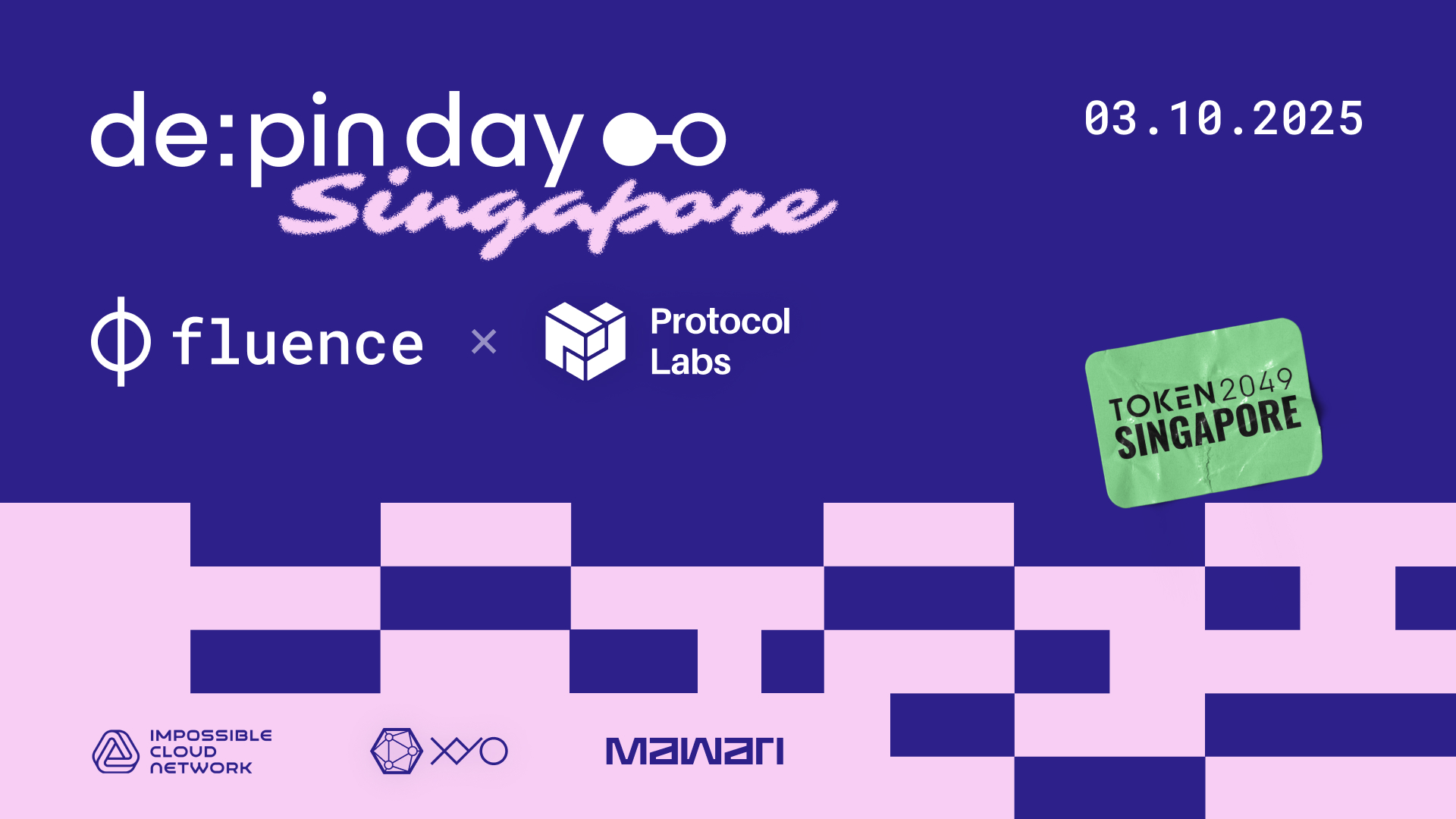
DePIN Day Singapore 2025: Building the Real-World Layer of Web3

DePIN Day Singapore 2025: Building the Real-World Layer of Web3

DePIN Day Singapore 2025 unites builders, investors and visionaries shaping decentralized infrastructure with talks, panels and major ecosystem voices.

Author: Blockchainreporter
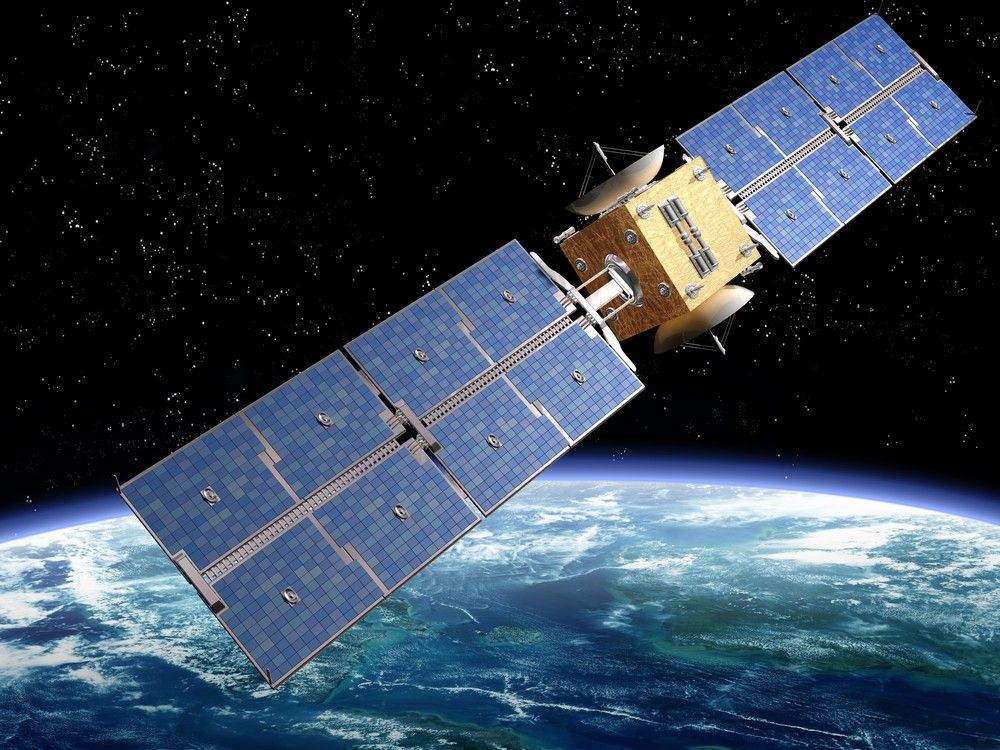
Quantum-Safe Web: Can Satellite QKD Unlock a Truly Decentralized Internet?

Quantum-Safe Web: Can Satellite QKD Unlock a Truly Decentralized Internet?

Quantum Key Distribution (QKD) is a method of communication that uses the principles of quantum mechanics to allow two parties to share a secret code. QKD could be the missing piece to make the decentralized internet actually quantum-safe

Author: Hackernoon