Dapp

Dapps are digital applications that run on a P2P network of computers rather than a single server, typically utilizing smart contracts to ensure transparency and uptime. In 2026, Dapps have achieved mass-market appeal through Account Abstraction, allowing for a "Web2-like" user experience with the security of Web3. This tag covers the entire ecosystem of decentralized software—from social media and productivity tools to governance platforms and identity management.

4987 Articles
Created: 2026/02/02 18:52
Updated: 2026/02/02 18:52
Ethereum Layer 2 Starknet Resumes Operations After Network Outage

Ethereum Layer 2 Starknet Resumes Operations After Network Outage

The post Ethereum Layer 2 Starknet Resumes Operations After Network Outage appeared on BitcoinEthereumNews.com. Key Points: Starknet restored block production after downtime between 2:23 a.m. and 4:36 a.m. UTC. Developers committed a reorg from block 1,960,612, requiring resubmission of excluded transactions. Team pledged a detailed retrospective with root cause analysis and preventive measures. Starknet restored block production early Tuesday after several hours of downtime that disrupted transaction processing across the Layer 2 network. Most RPC providers are operational again, while remaining nodes continue upgrading to stabilise services. The outage forced a reorganisation beginning at block 1,960,612, covering roughly one hour of chain activity. Transactions submitted between 2:23 a.m. and 4:36 a.m. UTC were excluded and require resubmission. Block Production Returns Following Multi-Hour Interruption The incident halted on-chain activity for builders and users relying on the ZK-rollup. Developers prioritized restoring production and mitigating further disruption. Network monitoring platforms confirmed widespread delays in transaction confirmations during the outage. However, activity normalized quickly once block production resumed, ensuring dApps could reconnect and continue processing. Developers Commit to Retrospective and Long-Term Stability Measures The Starknet team confirmed it will publish a full retrospective with the timeline, root cause, and long-term prevention strategies. This commitment aims to reassure users and strengthen operational reliability. Starknet is back online and fully operational.Block production is back to normal. Most RPC providers are up-and-running, and the remaining ones will upgrade shortly. To restore service, transactions submitted between 2:23am and 4:36am UTC were not processed.A reorg from block… https://t.co/nrziivCiuK — Starknet (@Starknet) September 2, 2025 During restoration, the team emphasized that network security was not compromised. The reorganization removed unprocessed transactions but ensured consistent state integrity across validators and applications. Disruption Highlights Broader Layer 2 Operational Risks The outage highlighted operational risks facing Ethereum Layer 2 platforms, even as they promise scalability and lower transaction costs. Such disruptions can impact trust when critical systems…

Author: BitcoinEthereumNews
Ethereum Ends Holesky Testnet, Eyes Q4 Momentum

Ethereum Ends Holesky Testnet, Eyes Q4 Momentum

The post Ethereum Ends Holesky Testnet, Eyes Q4 Momentum appeared on BitcoinEthereumNews.com. Key Notes Ethereum is all set to decommission Holesky testnet in November. New testnet Hoodi launched to replace Holesky and support future upgrades. Ethereum activity surges to 19.45M active addresses, near 2021 highs. Ethereum ETH $4 382 24h volatility: 0.7% Market cap: $528.92 B Vol. 24h: $28.37 B developers have confirmed the shutdown of the Holesky testnet, the network’s largest public testing ground, two years after its launch. Launched in 2023, Holesky was designed to stress-test Ethereum’s proof-of-stake infrastructure at scale, providing a staging ground for upgrades like Dencun and Pectra that made transactions cheaper and validators more efficient. At its peak, Holesky became the largest public testnet ever, powering thousands of validators. However, soon after Pectra went live earlier this year, Holesky suffered from inactivity leaks. Validators dropped offline and created exit queues that stretched for months. For developers who needed fast feedback loops, the network became more of a bottleneck than a tool. As a result, developers confirmed that Holesky will be fully decommissioned two weeks after the Fusaka upgrade finalizes in November. At that point, client, infrastructure, and testing teams will cease maintaining the network. Hoodi and the New Testnet Era Ethereum is not leaving developers stranded. In March 2025, the foundation rolled out Hoodi, a next-generation testnet designed to replace Holesky’s role while eliminating its pain points. Hoodi introduces a refreshed validator set, supports all Pectra features, and is designed to handle upcoming updates such as Fusaka. Ethereum to Close Its Largest Testnet, Holesky, After Fusaka Upgrade. Fusaka is set to make Ethereum rollups cheaper and faster by spreading out the “data storage work” more evenly across validators. What to know: ➥. Ethereum is shutting down the Holesky testnet after two… pic.twitter.com/vKbXqr5Eln — Themytea (@Themytea1) September 2, 2025 Meanwhile, Sepolia remains the primary testnet for dApps…

Author: BitcoinEthereumNews
XVS price slips after $27M Venus Protocol phishing attack

XVS price slips after $27M Venus Protocol phishing attack

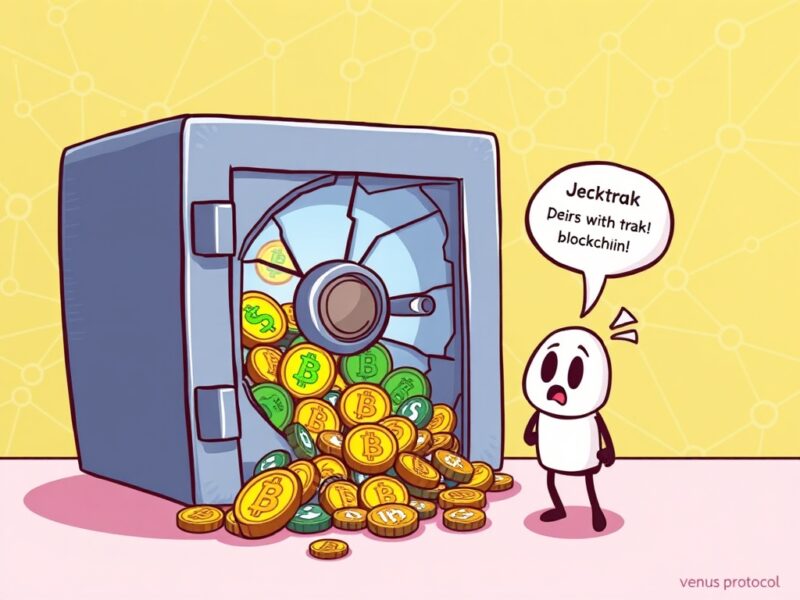
A Venus network user suffered massive losses after authorizing a malicious transaction. The perpetrator took seconds to drain vUSDT, BTCB, vETH, vXRP, and vUSDC. The native token plunged sharply after the news. While the crypto market displayed stability on Tuesday, XVS painted its daily chart red after news surfaced that a Venus Protocol user had […] The post XVS price slips after $27M Venus Protocol phishing attack appeared first on CoinJournal.

Author: Coin Journal
Openverse Joins Arichain to Minimize Web3 Fragmentation with Robust Infrastructure

Openverse Joins Arichain to Minimize Web3 Fragmentation with Robust Infrastructure

The main purpose of this partnership between Arichain and Openverse is to resolve Web3 fragmentation with the provision of next-gen infrastructure.

Author: Blockchainreporter
Ethereum Faces Major Shakedown as Holesky Testnet Ends, Can Q4 Deliver?

Ethereum Faces Major Shakedown as Holesky Testnet Ends, Can Q4 Deliver?

Ethereum developers confirmed the shutdown of the Holesky testnet, once the network’s largest testing ground. The post Ethereum Faces Major Shakedown as Holesky Testnet Ends, Can Q4 Deliver? appeared first on Coinspeaker.

Author: Coinspeaker
Bitcoin Hyper ($HYPER) Live News Today: Latest Insights for Bitcoin Maxis (September 2)

Bitcoin Hyper ($HYPER) Live News Today: Latest Insights for Bitcoin Maxis (September 2)

Stay Ahead with Our Immediate Analysis of Today’s Bitcoin & Bitcoin Hyper Insights Check out our Live Bitcoin Hyper Updates for September 2, 2025! In 2010, Bitcoin was worth a few cents. One year later, it hit $20. In six years, it was $17,000, and now it’s sitting at over $100K, after hitting an ATH […]

Author: Bitcoinist
Bitcoin Hyper Presale Nears $13.6M Raised as Whales Buy $30K Worth of $HYPER

Bitcoin Hyper Presale Nears $13.6M Raised as Whales Buy $30K Worth of $HYPER

Bitcoin ($BTC) is the representative cryptocurrency, much like Xerox is to photocopiers and Google is to search engines. It’s not just the most popular cryptocurrency; it also has the largest market cap at $2.1T. It’s no wonder, then, that institutional investors are rushing to claim a share of that huge Bitcoin market. Strategy is currently […]

Author: Bitcoinist
Shocking Venus Protocol Exploit: $30M Vanishes in a Flash

Shocking Venus Protocol Exploit: $30M Vanishes in a Flash

BitcoinWorld Shocking Venus Protocol Exploit: $30M Vanishes in a Flash The world of decentralized finance (DeFi) has once again been shaken by a significant security incident. News has emerged about a suspected Venus Protocol exploit, leading to a staggering loss of approximately $30 million. This event sends ripples through the BNB Chain ecosystem, raising critical questions about the security of lending protocols. What Exactly Happened in the Venus Protocol Exploit? Venus (XVS) operates as a leading cryptocurrency lending protocol on the BNB Chain, enabling users to lend and borrow digital assets. However, BWE News recently reported a major security breach, indicating a substantial drain of funds. While the exact mechanics of this particular Venus Protocol exploit are still under investigation, these incidents typically involve vulnerabilities in smart contracts, flash loan attacks, or oracle manipulation. Such exploits allow malicious actors to drain assets from the protocol’s liquidity pools. The reported $30 million loss is a significant blow. It highlights the persistent security challenges faced by even established DeFi platforms, underscoring the need for continuous vigilance and robust auditing practices. Understanding the Impact: Who is Affected by the Venus Protocol Exploit? When a protocol like Venus suffers an exploit, the primary victims are often the users who have supplied their assets to the platform. Their deposited funds, intended for lending or earning yield, can become inaccessible or permanently lost. Beyond individual users, the broader BNB Chain ecosystem feels the impact. Such events can erode trust in decentralized applications (dApps) and potentially lead to price volatility for associated tokens, including XVS. This Venus Protocol exploit serves as a stark reminder of the inherent risks in the fast-evolving DeFi space. Challenges arise not just for the protocol’s reputation but also for the entire community. Projects often face a difficult path to recovery, involving investigations, attempts to recover funds, and implementing enhanced security measures. The incident also poses a significant challenge for regulatory bodies to keep pace with the rapidly changing landscape of crypto security. Lessons Learned: Preventing Future Venus Protocol Exploits While exploits are unfortunate, they often provide crucial learning opportunities. For DeFi protocols, the immediate actionable insight is the absolute necessity of rigorous security audits. Multiple independent audits, bug bounty programs, and continuous monitoring are paramount. Prioritize Security Audits: Engage reputable third-party firms to scrutinize smart contracts for vulnerabilities. Implement Robust Monitoring: Utilize real-time monitoring tools to detect unusual activity and potential attacks early. Establish Clear Incident Response Plans: Develop a protocol for rapid response, communication, and mitigation in case of a breach. Educate Users: Inform the community about potential risks and best practices for securing their assets. For users, the takeaway is to always exercise due diligence. Researching a protocol’s security history, audit reports, and insurance coverage can help mitigate risks. Remember, even well-known platforms can be targets, making a cautious approach essential in preventing personal losses from a Venus Protocol exploit or similar incidents. What’s Next for Venus Protocol After the Exploit? The immediate focus for Venus Protocol will undoubtedly be on investigating the root cause of the exploit and exploring all possible avenues for fund recovery. This often involves working with blockchain forensics experts and potentially law enforcement. The protocol will also need to communicate transparently with its community, providing updates on the investigation and outlining steps taken to reinforce security. Regaining user trust after a significant event like this Venus Protocol exploit is a long and arduous process, requiring consistent effort and proven commitment to security. In the long term, Venus Protocol will likely implement new safeguards and potentially revamp parts of its smart contract architecture to prevent similar vulnerabilities. The incident underscores the ongoing arms race between protocol developers and malicious actors in the DeFi space. Compelling Summary: Navigating the Volatile Seas of DeFi Security The suspected $30 million Venus Protocol exploit is a stark reminder of the inherent risks within the decentralized finance ecosystem. While DeFi offers incredible innovation and financial freedom, it also demands constant vigilance and robust security measures from both protocols and users. Moving forward, the industry must continue to prioritize security, transparency, and education to build a more resilient and trustworthy digital financial future. Frequently Asked Questions (FAQs) Q1: What is Venus Protocol? Venus Protocol is a decentralized lending and borrowing platform built on the BNB Chain, allowing users to supply cryptocurrencies to earn interest or borrow against their crypto assets. Q2: How much money was lost in the suspected Venus Protocol exploit? Reports indicate that approximately $30 million was lost in the suspected security breach affecting the Venus Protocol. Q3: What are common types of DeFi exploits? Common DeFi exploits include flash loan attacks, oracle manipulation, reentrancy attacks, and vulnerabilities in smart contract code. Q4: How can users protect themselves from DeFi exploits? Users can protect themselves by researching a protocol’s security audits, understanding the risks involved, diversifying investments, and using reputable platforms with strong security track records. Q5: Will Venus Protocol recover the lost funds? The recovery of lost funds after an exploit is challenging and not guaranteed. Venus Protocol will likely investigate all possibilities, but successful recovery depends on many factors, including the nature of the exploit and the attacker’s actions. Did you find this analysis helpful? Share this article with your network to spread awareness about DeFi security and the recent Venus Protocol exploit! To learn more about the latest crypto market trends, explore our article on key developments shaping DeFi security protocols. This post Shocking Venus Protocol Exploit: $30M Vanishes in a Flash first appeared on BitcoinWorld and is written by Editorial Team

Author: Coinstats
Ethereum Shuts Down Holesky Testnet

Ethereum Shuts Down Holesky Testnet

The post Ethereum Shuts Down Holesky Testnet appeared on BitcoinEthereumNews.com. Ethereum Ethereum developers have confirmed that the Holesky testnet, launched in 2023, will be decommissioned later this year after serving as a crucial testing ground for validator operations and major upgrades. The decision comes just as activity on the Ethereum mainnet reaches its highest levels in more than three years. Holesky played a central role in testing updates such as Dencun and the more recent Pectra hard fork. But persistent issues with validators after Pectra went live earlier this year caused long exit queues and made the testnet less practical for developers. Support will officially end two weeks after the Fusaka upgrade completes in November, at which point infrastructure teams will no longer maintain it. To fill the gap, Ethereum rolled out Hoodi in March 2025. This new environment introduces a refreshed validator set, full support for Pectra, and compatibility with upcoming upgrades, including Fusaka. While Hoodi is expected to handle large-scale validator testing, Sepolia will remain the go-to environment for dapp and smart contract developers. Meanwhile, network usage on Ethereum has accelerated. Data from Everstake shows 19.45 million monthly active addresses in August, the highest level since May 2021. Analysts say this growth underscores Ethereum’s expanding role across DeFi, NFTs, and staking. Institutional involvement has also deepened. Tom Lee’s BitMine disclosed holding 1.71 million ETH in its treasury—up 12% since early 2025—while BlackRock’s spot Ethereum ETF recorded $314 million in inflows on August 25 and traded more than $2.4 billion in a single day. Futures markets tell a similar story. Open interest on CME Ethereum contracts climbed above $10 billion for the first time, with the number of large open interest holders reaching a record 101. According to Everstake, the surge is not only a sign of user re-engagement but also proof of an ecosystem that continues to broaden…

Author: BitcoinEthereumNews
Ethereum Shuts Down Holesky Testnet – But Something Bigger Is Coming

Ethereum Shuts Down Holesky Testnet – But Something Bigger Is Coming

The decision comes just as activity on the Ethereum mainnet reaches its highest levels in more than three years. Holesky […] The post Ethereum Shuts Down Holesky Testnet – But Something Bigger Is Coming appeared first on Coindoo.

Author: Coindoo