Dapp

Dapps are digital applications that run on a P2P network of computers rather than a single server, typically utilizing smart contracts to ensure transparency and uptime. In 2026, Dapps have achieved mass-market appeal through Account Abstraction, allowing for a "Web2-like" user experience with the security of Web3. This tag covers the entire ecosystem of decentralized software—from social media and productivity tools to governance platforms and identity management.

5014 Articles
Created: 2026/02/02 18:52
Updated: 2026/02/02 18:52
ConsenSys’ Linea Goes Live With Massive Airdrop, Signaling New Phase For Layer-2 Networks

ConsenSys’ Linea Goes Live With Massive Airdrop, Signaling New Phase For Layer-2 Networks

The post ConsenSys’ Linea Goes Live With Massive Airdrop, Signaling New Phase For Layer-2 Networks appeared on BitcoinEthereumNews.com. Sep 10, 2025 at 21:19 // News ConsenSys, the prominent Ethereum software company, has officially launched the token generation event (TGE) for its Layer-2 network, Linea. The launch includes a substantial airdrop of over 9.36 billion LINEA tokens, a move that is expected to not only reward early adopters and developers but also to kickstart a new chapter for the Ethereum ecosystem. The race for Layer-2 dominance intensifies Linea is a zkEVM rollup, a sophisticated technology designed to scale Ethereum by bundling transactions off-chain and then submitting a cryptographic proof of their validity to the mainnet. What sets Linea apart is its compatibility with existing Ethereum applications, allowing developers to seamlessly migrate or build new decentralized applications (dApps) without significant changes to their code. This ease of use is a key factor in attracting projects and users, as demonstrated by the network’s rapid growth since its initial operational launch. The project has an “ecosystem-first” approach, with a significant 85% of the token supply allocated to the community, including a 10% portion fully unlocked for early users and builders. A core element of the token design is its deflationary mechanism. One-fifth of all network transaction fees, paid in ETH, will be burned at the protocol level, with the remaining 80% used to buy and burn LINEA tokens. This dual burn mechanism is intended to create a continuous deflationary pressure on the token supply, while also sending value back to the Ethereum Layer 1, aligning the incentives of both networks. The project’s team has emphasized that the token’s purpose is to fund Ethereum-aligned public goods, further solidifying its commitment to the broader ecosystem. As the race for Layer-2 dominance intensifies, Linea’s TGE and unique design are setting a new standard for how a scaled-up Ethereum can function.…

Author: BitcoinEthereumNews
The Best Crypto To Buy Now Is VeChain, Pi Network & Layer Brett As A Breakout Is Imminent

The Best Crypto To Buy Now Is VeChain, Pi Network & Layer Brett As A Breakout Is Imminent

While the big names have their moments, savvy investors are searching for the next crypto ready to surge. We’re talking about projects with real utility and communities that are buzzing. Right now, attention is on a powerful trio: VeChain, Pi Network, and the dark horse, Layer Brett. Although all three are trending cryptocurrencies, Layer Brett […] The post The Best Crypto To Buy Now Is VeChain, Pi Network & Layer Brett As A Breakout Is Imminent appeared first on Live Bitcoin News.

Author: LiveBitcoinNews
Apex Fusion Strengthens EVM Ecosystem With Nexus And Tenderly Partnership

Apex Fusion Strengthens EVM Ecosystem With Nexus And Tenderly Partnership

Apex Fusion has launched Nexus, its dedicated EVM-compatible L2. Nexus is now integrated with Tenderly’s industry-leading full-stack infrastructure and developer tools. Nexus delivers high-performance, low-cost transactions with full EVM compatibility.

Author: Hackernoon
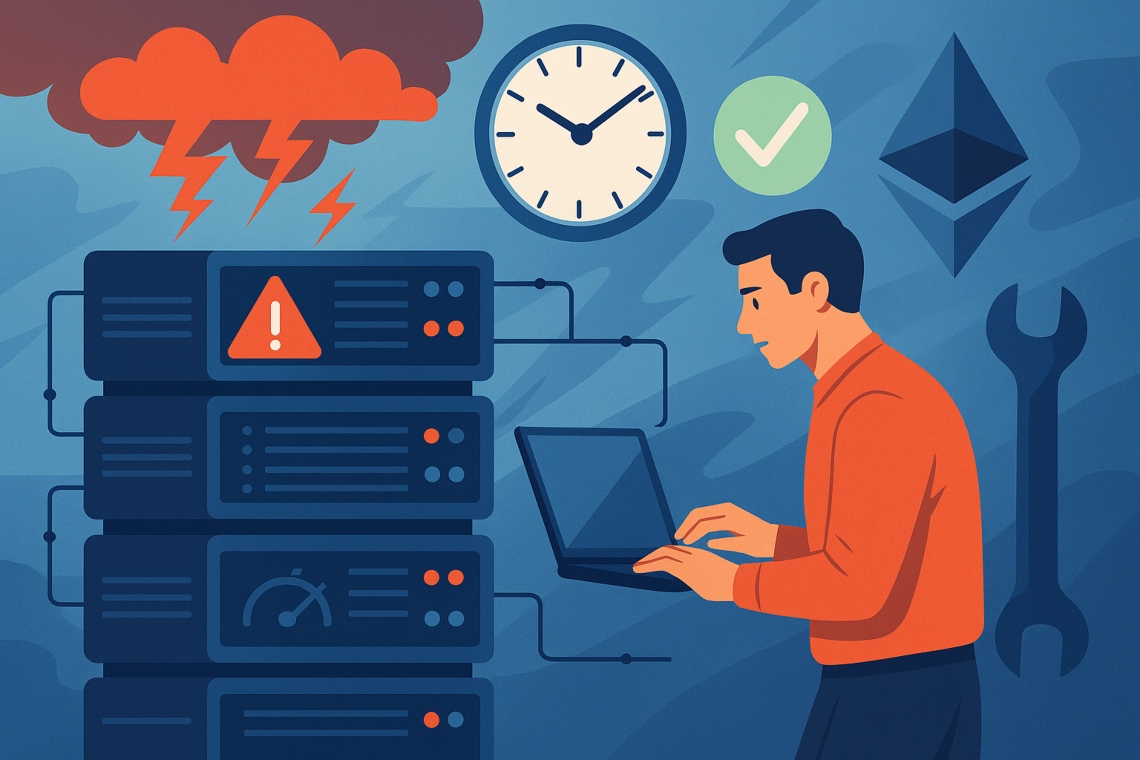
Linea, L2 sequencer down at dawn: patch in 25 minutes

Linea, L2 sequencer down at dawn: patch in 25 minutes

The post Linea, L2 sequencer down at dawn: patch in 25 minutes appeared on BitcoinEthereumNews.com. On September 10, 2023, it was reported that Linea experienced a failure in the sequencer of its L2 network with a noticeable performance degradation. Engineers released a quick patch in about 25 minutes, and the mainnet was fully operational again in less than an hour, under close monitoring to ensure stability. For a technical overview on rollups and the role of the sequencer in L2s, see the official overview on Ethereum.org. Essential Timeline 05:52 UTC — An anomaly was detected in the component responsible for sorting and grouping transactions. 06:15 UTC — fix distributed; gradual resumption of batching pace initiated. 06:32 UTC — activated enhanced monitoring on telemetry and logging. Status — incident closed; monitoring ongoing to confirm stability. Impact on Users The partial halt of the sequencer caused slowdowns in block inclusions and temporary transaction queues. There are no effects on L1 nor any loss of funds. Funds are safe and L1 consensus unchanged. Delays in confirmations and increase in backlog during the peak. Normal operations restored after the application of the patch. Technical Details Known So Far Linea has not disclosed the specific cause. The fix involved the sorting/batching module of the sequencer, without any interventions on the level 1 chain. After the deployment, the team intensified telemetry to verify stability and absence of regressions. Control of throughput (batching and inclusion rate). Measurement of transaction insertion latency. Verification of the error rate and system logs. Why it matters: the single sequencer node The episode reignites the debate on the single sequencer as a single point of failure in L2s. Many rollups are exploring models with distributed sequencers, shared sequencing, or failover mechanisms to improve resilience and operational continuity. Uptime remains crucial for dApps and operators that depend on fast and predictable confirmations. To delve deeper into the topic…

Author: BitcoinEthereumNews
Dogecoin, Shiba Inu Or Layer Brett; Which One Of These Are Analysts Tipping As The Best Crypto To Buy In 2025?

Dogecoin, Shiba Inu Or Layer Brett; Which One Of These Are Analysts Tipping As The Best Crypto To Buy In 2025?

Analysts are once again weighing in on the best crypto to buy in 2025, and the usual meme coin suspects—Dogecoin, Shiba Inu—are back on the list. But a newer name, Layer Brett, is drawing attention for doing something they never did: combining meme energy with real tech. Dogecoin (DOGE): The original meme coin shows signs […]

Author: Cryptopolitan
Coinbase LAYER Listing: An Exciting Opportunity Unlocked

Coinbase LAYER Listing: An Exciting Opportunity Unlocked

The post Coinbase LAYER Listing: An Exciting Opportunity Unlocked appeared on BitcoinEthereumNews.com. The crypto world is buzzing with excitement! Coinbase, a leading global cryptocurrency exchange, has officially announced the addition of LAYER to its trading platform. This significant development, often referred to as the Coinbase LAYER listing, marks a new chapter for both the token and its community. It opens up new avenues for accessibility and liquidity, potentially reshaping how investors engage with this innovative project. What Does the Coinbase LAYER Listing Mean for You? The inclusion of LAYER on Coinbase is more than just another token being added. For many investors, it signals a stamp of approval from a reputable exchange, often leading to increased trust and visibility. This move significantly broadens LAYER’s reach, making it available to millions of new users who might not have had access to it on smaller platforms. Increased Liquidity: Coinbase is known for its deep liquidity pools. The Coinbase LAYER listing will likely result in higher trading volumes, making it easier for users to buy and sell LAYER with minimal price impact. Enhanced Accessibility: With Coinbase’s user-friendly interface and robust compliance framework, new investors can now easily enter the LAYER ecosystem. This simplification removes many barriers to entry that often deter mainstream adoption. Potential Price Action: Historically, listings on major exchanges like Coinbase have often been followed by significant price movements, though market conditions always play a crucial role. Understanding LAYER: The Core Technology Behind the Coinbase LAYER Addition Before diving into trading, it’s essential to understand what LAYER brings to the blockchain table. LAYER is integral to the data availability layer within its ecosystem, focusing on enhancing scalability and efficiency for decentralized applications (dApps). It addresses critical challenges faced by many blockchains, such as high transaction costs and slow processing speeds. This technological foundation is what makes the Coinbase LAYER addition particularly noteworthy for…

Author: BitcoinEthereumNews
Nimiq (NIM): To Simplify Blockchain Technology

Nimiq (NIM): To Simplify Blockchain Technology

The post Nimiq (NIM): To Simplify Blockchain Technology appeared on BitcoinEthereumNews.com. Nimiq (NIM) is a blockchain project that aims to simplify blockchain technology and make it accessible to a wider audience. The project focuses on creating a user-friendly and browser-based blockchain platform that allows individuals to easily participate in cryptocurrency transactions and utilize decentralized applications (dApps) directly from their web browsers, without the need for complex setups. User-friendly experience Nimiq is designed to be accessible through web browsers, making it easy for users to send and receive cryptocurrencies, interact with dApps, and manage their digital assets. Developers can create and deploy dApps on the Nimiq platform, targeting a user base that values simplicity and ease of use. The project places a strong emphasis on usability, aiming to create a simple and intuitive interface for users who are new to blockchain technology. Nimiq utilizes a unique consensus algorithm called “Albatross,” which is designed to provide fast transaction confirmation times and efficient block validation. NIM is the native utility token of the Nimiq ecosystem. It may have various use cases, including paying for transaction fees, participating in governance, and accessing dApps and services. Disclaimer. This article is for informational purposes only and should not be viewed as an endorsement by CoinIdol. They are not a recommendation to buy or sell cryptocurrency. Readers should do their research before investing in funds. Source: https://coinidol.com/nimiq-nim-token/

Author: BitcoinEthereumNews
Cracked Labs launches BattleCodes: Turning crypto events into a sport

Cracked Labs launches BattleCodes: Turning crypto events into a sport

The post Cracked Labs launches BattleCodes: Turning crypto events into a sport appeared on BitcoinEthereumNews.com. Cracked Labs today announced BattleCodes — The DeFi Arena, a high-stakes, esports-style tournament set to redefine crypto events. Hosted on Tuesday, October 7, 2025, at OS NYC in Lower Manhattan, this one-day event combines developer competition with live trading for a $10,000 winner-take-all prize, streamed in real-time on Twitch and YouTube. Unlike traditional conferences featuring panels and passive engagement, BattleCodes stages a head-to-head bracket competition where ten finalists, and only the best, compete live using BNB Chain via Aster. Participants execute real trades under pressure, with results displayed on venue LED leaderboards and broadcast globally. Ellis Norman, CEO of Cracked Labs, emphasizes the format shift: “Panels and hackathons aren’t enough anymore. BattleCodes is bringing drama, stakes, and outcomes that matter, tested live, in public.” A format borrowed from esports, built for crypto BattleCodes embraces an esports-style structure instead of the standard conference layout. The competition begins with open qualifiers from September 10 to 18 on Aster × BNB Chain, where traders compete for the top 20 spots.  From there, participants refine their strategies and personal profiles in a week-long “Virtual Sprint,” with workshops led by sponsors. A livestreamed Draft Day on September 25 allows partners to draft their finalists, factoring in fan voting and wildcard entries. The selected finalists then enter a week-long Bootcamp (September 26 to October 6), preparing their systems, accounts, and media assets.  The grand finals on October 7 comprise three intense phases: 1. Opening Bell,2. Endgame Push, and3. The Cage Match. All determined by P&L performance, technical execution, and audience engagement. In this tournament, every round is public and decisive. Winners advance, others are eliminated. The key differentiator of BattleCodes is how sponsors function as foundational pillars, not passive backdrops. BNB Chain provides the execution layer, wallet onboarding, and attribution framework. JZ, Senior Solutions Architect at…

Author: BitcoinEthereumNews
Linea, L2 sequencer in tilt at dawn: patch in 25 minutes, network stable in less than an hour

Linea, L2 sequencer in tilt at dawn: patch in 25 minutes, network stable in less than an hour

On September 10, 2023, it is reported that Linea experienced a sequencer failure on its L2 network, all the details.

Author: The Cryptonomist
Zetachain Unison Upgrade: A Crucial Leap for Cross-Chain Interoperability

Zetachain Unison Upgrade: A Crucial Leap for Cross-Chain Interoperability

BitcoinWorld Zetachain Unison Upgrade: A Crucial Leap for Cross-Chain Interoperability Exciting news is buzzing in the crypto world! The highly anticipated Zetachain Unison upgrade is set to launch on September 16. This significant development for Zetachain (ZETA), a pioneering cross-chain Layer 1 blockchain, promises to reshape how we interact with digital assets across different networks. If you’re invested in the future of decentralized finance, understanding this upgrade is absolutely crucial. What is the Zetachain Unison Upgrade and Why Does it Matter? Zetachain’s V35 Unison upgrade isn’t just another routine update; it represents a major leap forward for the platform. Scheduled for September 16, this upgrade is designed to enhance the core functionalities of the Zetachain network. It aims to make the cross-chain experience more seamless, secure, and powerful for everyone. The primary goal of the Zetachain Unison upgrade is to empower users with unprecedented control. Imagine accessing all your diverse cryptocurrencies from a single, unified wallet, without the usual complexities of bridging or swapping. This update promises to deliver exactly that, simplifying the user journey significantly. Moreover, it provides developers with a robust foundation to build even more innovative and impactful applications that leverage true cross-chain capabilities. Unlocking New Possibilities: Benefits of the Zetachain Unison Upgrade The impact of the Zetachain Unison upgrade extends across the entire ecosystem. Both everyday crypto users and seasoned developers stand to gain substantially from these enhancements. Let’s explore some of the key advantages: Enhanced Security and Convenience: Users will experience a new level of security and convenience. Managing all cryptocurrencies from one wallet drastically reduces the risk associated with juggling multiple interfaces and complex bridging mechanisms. This unified approach makes cross-chain transactions safer and more straightforward. Empowering Developers: For developers, the upgrade opens up a world of possibilities. They can now create more sophisticated and truly interoperable decentralized applications (dApps) that aren’t confined to a single blockchain. This fosters innovation and allows for the development of applications that were previously impossible or highly impractical. Improved Cross-Chain Interoperability: Zetachain’s mission has always been to facilitate seamless communication between different blockchains. The Unison upgrade significantly strengthens this core offering, leading to a more interconnected and efficient crypto landscape. Ensuring Security and Trust in Cross-Chain Transactions Security is paramount in the blockchain space, especially when dealing with cross-chain interactions. The Zetachain Unison upgrade places a strong emphasis on bolstering the security architecture of the network. This is crucial for maintaining user trust and protecting digital assets. The upgrade introduces refinements expected to make transactions more robust and resilient against potential threats. Zetachain’s commitment to continuous improvement and rigorous testing ensures that the infrastructure supporting these cross-chain movements is as secure as possible. This dedication to security is a cornerstone of the platform’s reliability. Navigating the Future: What’s Next for Zetachain and Its Community? With the September 16 launch of the Zetachain Unison upgrade, the project is poised for an exciting new chapter. The immediate focus will undoubtedly be on ensuring a smooth transition and encouraging widespread adoption of the new features. Users should keep an eye on official announcements for any specific actions they might need to take, though the goal is always a seamless experience. Looking ahead, the enhanced capabilities provided by the Unison upgrade will likely spark a wave of innovation within the Zetachain ecosystem. We can anticipate new dApps, improved liquidity solutions, and a more vibrant developer community leveraging the platform’s advanced cross-chain functionalities. This upgrade solidifies Zetachain’s position as a key player in the evolving landscape of interoperable blockchains. In conclusion, the upcoming Zetachain Unison upgrade on September 16 is a monumental event for the cross-chain Layer 1 blockchain. By prioritizing secure, unified access for users and empowering developers with advanced tools, Zetachain is not just upgrading its technology; it’s paving the way for a more integrated, efficient, and accessible decentralized future. This is a truly transformative step for the entire crypto community. Frequently Asked Questions (FAQs) Q1: What is the main purpose of the Zetachain Unison upgrade? A1: The primary purpose of the Zetachain Unison upgrade is to enhance cross-chain interoperability, allowing users to securely access all cryptocurrencies from a single wallet and empowering developers to build more powerful, truly cross-chain applications. Q2: When is the Zetachain Unison upgrade scheduled to happen? A2: The V35 Unison upgrade for Zetachain is scheduled to take place on September 16. Q3: How does the Unison upgrade improve security? A3: The upgrade introduces refinements to Zetachain’s security architecture, making cross-chain transactions more robust. Managing assets from a single wallet also inherently reduces the surface area for potential vulnerabilities. Q4: What impact will this upgrade have on developers? A4: Developers will gain a more powerful and flexible platform to build truly interoperable decentralized applications (dApps). This means they can create applications that seamlessly interact with assets and logic across various blockchains, fostering greater innovation. The Zetachain Unison upgrade marks a pivotal moment for cross-chain technology. If you found this article insightful and believe in the future of interconnected blockchains, please consider sharing it with your network! Help us spread the word about this transformative development by sharing on social media and engaging in the conversation. To learn more about the latest crypto market trends, explore our article on key developments shaping Zetachain Unison upgrade future impact. This post Zetachain Unison Upgrade: A Crucial Leap for Cross-Chain Interoperability first appeared on BitcoinWorld and is written by Editorial Team

Author: Coinstats