

The gaming industry has undergone remarkable transformations over the past few decades, evolving from simple arcade experiences to expansive online worlds with millions of active players. At the same The gaming industry has undergone remarkable transformations over the past few decades, evolving from simple arcade experiences to expansive online worlds with millions of active players. At the same
The Complete Guide to GameFi: How Blockchain Gaming Works, How to Earn, Benefits, Risks, and the Future

The gaming industry has undergone remarkable transformations over the past few decades, evolving from simple arcade experiences to expansive online worlds with millions of active players. At the same time, blockchain technology has introduced a new way of owning and transferring digital assets without relying on centralized authorities. The combination of these two innovations has given rise to GameFi, a rapidly growing sector that merges gaming with decentralized finance (DeFi).
Unlike traditional video games, where players spend countless hours collecting items that remain under the control of the game developer, GameFi enables players to truly own their in-game assets. Characters, weapons, virtual land, collectibles, and even achievements can exist as blockchain-based assets that players can trade, sell, or use across supported ecosystems. This shift has transformed gaming from a purely entertainment-focused activity into an ecosystem where skill, strategy, and participation may also create financial opportunities.
However, GameFi is much more than simply earning cryptocurrency while playing games. It represents an entirely new economic model built around digital ownership, transparent transactions, decentralized governance, and community participation. While the industry offers exciting opportunities, it also presents risks that every player and investor should understand before getting involved.
This guide explores the foundations of GameFi, explains the technology that powers it, examines different types of blockchain games, and discusses the many ways players can generate income while participating responsibly in this evolving digital economy.
1.Understanding GameFi: What It Is and How It Works
GameFi is a combination of the words Game and Finance. It describes blockchain-based games that integrate cryptocurrencies, NFTs, decentralized technologies, and digital economies into gameplay. Instead of simply playing for entertainment, participants may also earn valuable digital assets through their in-game activities.
Traditional games generally operate within closed ecosystems. When players purchase a cosmetic skin, unlock a rare weapon, or spend money on premium content, those digital items remain tied to the game’s servers. If the game shuts down or the player’s account is suspended, access to those purchases may disappear. Players rarely have the freedom to transfer or sell these assets outside the game’s marketplace.
GameFi introduces a different model by recording ownership on a blockchain. Valuable items become blockchain assets that belong directly to the player rather than the game developer. This creates real digital ownership and gives players greater control over the items they earn or purchase.
Many GameFi projects also introduce their own cryptocurrencies, which serve as the primary currency within the game’s economy. Players may receive these tokens as rewards for completing quests, winning battles, participating in tournaments, or contributing to the game’s ecosystem. These tokens can often be traded on cryptocurrency exchanges or used within the game for upgrades and purchases.
Another important aspect of GameFi is community involvement. Many blockchain games allow token holders to vote on future updates, economic changes, and governance proposals. This decentralized approach encourages players to become active participants rather than passive consumers.
The ultimate goal of GameFi is to build gaming ecosystems where entertainment, digital ownership, and economic incentives work together while giving players greater control over their virtual experiences.
2.The Technology Behind GameFi
GameFi relies on several blockchain technologies that work together to create secure, transparent, and decentralized gaming environments.
At the core of every GameFi project is a blockchain network. Unlike centralized databases controlled by a single company, blockchains distribute data across thousands of computers. This decentralized structure improves transparency and reduces the risk of unauthorized manipulation of ownership records.
Smart contracts form another essential component. These are self-executing programs stored on the blockchain that automatically enforce predefined rules. Smart contracts manage NFT ownership, distribute rewards, facilitate marketplace transactions, and execute in-game functions without requiring intermediaries. Their automated nature reduces the need for trust between players and developers.
Non-Fungible Tokens (NFTs) represent one of the most recognizable features of GameFi. Every NFT is unique and can represent digital assets such as characters, weapons, pets, vehicles, costumes, or virtual land. Since ownership is recorded on the blockchain, players have proof that these assets belong to them and can often transfer or sell them freely.
Cryptocurrency tokens serve as the economic foundation of GameFi ecosystems. These tokens may be used to purchase items, unlock premium features, pay tournament fees, reward players, or participate in governance. Healthy token economies are carefully designed to balance supply and demand while encouraging long-term participation.
Players also require cryptocurrency wallets to interact with GameFi platforms. Wallets securely store cryptocurrencies and NFTs while enabling users to connect directly to blockchain games. Protecting wallet credentials is essential because ownership of digital assets depends entirely on secure access to these wallets.
Together, blockchain networks, smart contracts, NFTs, cryptocurrencies, and digital wallets create an ecosystem where ownership, transactions, and rewards operate transparently without relying solely on centralized game publishers.
3.Different Types of GameFi Games
The GameFi industry has expanded far beyond simple reward-based games. Today, developers are experimenting with multiple gaming models designed to appeal to different types of players.
The most well-known category is Play-to-Earn (P2E). In these games, players earn cryptocurrency or NFT rewards by completing missions, battling opponents, or achieving specific milestones. This model became extremely popular because it allowed dedicated players to generate income through gameplay.
As the industry matured, many developers shifted toward the Play-and-Earn model. Instead of emphasizing financial rewards above everything else, these games prioritize engaging gameplay while offering blockchain-based rewards as an additional incentive. This approach is generally viewed as more sustainable because it attracts players who genuinely enjoy the game rather than those seeking quick profits.
Metaverse games represent another major segment of GameFi. These virtual worlds allow players to own land, build businesses, create experiences, host events, and interact socially within decentralized digital environments. Virtual real estate and user-generated content often play important roles in these ecosystems.
Strategy games and role-playing games (RPGs) have also become popular within GameFi. Players develop characters, collect resources, complete missions, and compete in increasingly complex game worlds while earning valuable digital assets.
Collectible card games utilize NFT technology to create unique digital cards that players can buy, trade, and use in competitive matches. Since every card exists on the blockchain, ownership remains verifiable and transferable.
More recently, new categories such as Move-to-Earn and sports-based blockchain games have emerged, demonstrating how GameFi continues to evolve beyond traditional gaming genres.
4.How Players Earn Money in GameFi
One of GameFi’s most attractive features is the variety of ways players can potentially earn value through active participation. However, successful earning usually requires time, knowledge, and strategic decision-making rather than simply playing casually.
The most common earning method involves completing quests, daily missions, tournaments, and competitive battles that reward players with the game’s native cryptocurrency. Skilled players who consistently perform well often accumulate more rewards than beginners.
Many games also reward players with NFTs. Rare characters, weapons, equipment, skins, vehicles, or collectibles may increase in value depending on their rarity and demand. Players can choose to keep these assets for gameplay or sell them on NFT marketplaces if market conditions are favorable.
Some GameFi ecosystems encourage players to participate in staking. By locking certain tokens for a predetermined period, players may receive additional rewards while helping secure or stabilize aspects of the game’s economy.
NFT rentals have also become increasingly popular. Owners of valuable in-game assets can rent them to other players who cannot afford to purchase them outright. This creates passive income opportunities while making expensive assets more accessible to newcomers.
Another unique earning model is the scholarship system. Experienced investors purchase valuable NFTs and lend them to skilled players, who use them to generate rewards. The profits are then shared between both parties according to agreed terms, creating opportunities for players with limited initial capital.
To better understand how GameFi works in practice, imagine a player joining a blockchain game such as Pixels. The player first creates a compatible crypto wallet, connects it to the game, and begins completing farming tasks, crafting items, and participating in events. As they progress, they earn the game’s native tokens and collect unique NFT assets that can improve gameplay or be traded on supported marketplaces. Instead of simply unlocking rewards that remain trapped inside the game, the player has genuine ownership of these digital assets and may choose to keep them, sell them, or use them to generate additional value within the game’s ecosystem. This example illustrates how GameFi combines engaging gameplay with blockchain technology to create a player-driven digital economy.
Nevertheless, sustainable success depends on careful research, disciplined financial management, and selecting projects with strong communities and well-designed economic models rather than chasing unrealistic promises of quick profits.
5.Benefits of GameFi for Players and Developers
GameFi has introduced a new approach to digital entertainment by giving players greater ownership and participation in gaming ecosystems. Unlike traditional games, where all in-game assets remain under the control of the developer, GameFi allows players to own their digital items through blockchain technology. This means that valuable characters, weapons, collectibles, or virtual land belong to the player and can often be traded or sold independently of the game itself.
One of the biggest advantages of GameFi is the creation of real digital economies. Players who invest time and develop their skills can potentially earn rewards that have value beyond the game. While earnings vary depending on the project and market conditions, GameFi provides opportunities that were largely unavailable in traditional gaming. For many players, this creates an additional incentive to participate and contribute to the game’s community.
GameFi also promotes transparency. Since transactions and ownership records are stored on public blockchains, players can verify asset ownership and transaction history without relying solely on the game’s developer. This level of openness helps build trust within the community and reduces concerns about manipulated inventories or hidden economic changes.
Another important benefit is global accessibility. Anyone with an internet connection and a compatible crypto wallet can usually participate in GameFi ecosystems regardless of their geographic location. This has enabled players from around the world to join the same digital economy and interact within decentralized communities.
Developers also benefit from this model. Instead of relying only on one-time game purchases, they can generate sustainable revenue through marketplace activity, NFT sales, governance participation, and expanding virtual economies. Community-driven governance further strengthens player engagement by allowing users to influence future updates and game development, creating ecosystems where both developers and players have a shared interest in long-term success.
6.Risks, Challenges, and Common Mistakes
Although GameFi offers exciting opportunities, it also carries significant risks that every participant should understand before investing time or money. Like the broader cryptocurrency market, GameFi remains highly volatile, and no project can guarantee financial returns.
The most common challenge is token price volatility. A game’s reward token may rise dramatically during periods of high demand but can also lose substantial value if market sentiment changes or the game’s popularity declines. As a result, earnings that appear attractive today may be worth considerably less in the future.
Another major concern is unsustainable tokenomics. Some early GameFi projects rewarded players with newly created tokens faster than demand could absorb them. This excessive inflation caused token prices to collapse, making previously profitable games economically unsustainable. Modern projects increasingly focus on balancing supply and demand, but investors should still evaluate a game’s economic model carefully.
Security is equally important. Since GameFi assets are stored in cryptocurrency wallets, users remain responsible for protecting their private keys and recovery phrases. Phishing attacks, fake websites, malicious wallet approvals, and compromised devices have resulted in significant financial losses for many users. Maintaining strong security practices is essential for protecting digital assets.
The industry has also experienced scams, abandoned projects, and rug pulls, where developers raise funds before discontinuing development or disappearing entirely. Researching the development team, roadmap, community activity, partnerships, and independent security audits can help reduce these risks.
Beginners often make the mistake of investing solely because a project promises exceptionally high returns. Successful participation requires evaluating gameplay quality, community strength, development progress, and long-term sustainability rather than chasing unrealistic profits. Diversifying investments, limiting financial exposure, and treating GameFi as a long-term opportunity rather than a guaranteed source of income can help participants manage risk more effectively.
7.Strategies for Success in GameFi
Long-term success in GameFi depends far more on research and discipline than on luck. The most successful participants understand that blockchain games should be evaluated as complete ecosystems rather than simple earning opportunities.
Before joining any project, players should study the game’s whitepaper, tokenomics, development roadmap, community engagement, and the experience of its development team. Projects with transparent communication, consistent updates, and active communities generally demonstrate stronger long-term potential than those driven primarily by marketing hype.
Players should also diversify their participation instead of concentrating all their resources in a single game. The GameFi industry evolves rapidly, and individual projects may experience changes in popularity or economic performance. Spreading investments across multiple quality projects can reduce overall risk while exposing players to different opportunities.
Understanding the in-game economy is equally important. Every GameFi project has its own reward structure, NFT marketplace, and token supply. Players who understand how these systems interact are better positioned to make informed decisions about buying, selling, staking, or holding digital assets.
Security should remain a top priority throughout every stage of participation. Using hardware wallets for valuable assets, enabling two-factor authentication where possible, verifying official websites, and never sharing recovery phrases are essential practices for protecting investments.
Perhaps the most valuable strategy is maintaining realistic expectations. While some participants generate meaningful returns, GameFi should first be viewed as an enjoyable gaming experience supported by blockchain technology. Projects that successfully combine engaging gameplay with sustainable economic models are more likely to remain relevant over the long term than games built solely around financial incentives.
8.The Future of GameFi
GameFi continues to evolve as blockchain technology matures and game developers gain experience building sustainable digital economies. Although the industry has experienced periods of rapid growth followed by market corrections, many analysts believe blockchain gaming remains an important part of the broader Web3 ecosystem.
One of the most promising developments is the integration of artificial intelligence into blockchain games. AI-powered non-player characters, adaptive gameplay, personalized experiences, and automated content generation have the potential to make GameFi worlds significantly more immersive while improving player engagement.
Scalability is also improving through Layer-2 networks and more efficient blockchain infrastructure. Faster transaction speeds and lower fees reduce barriers for mainstream users and make blockchain gaming more practical for everyday play.
Cross-game interoperability represents another exciting possibility. Future blockchain ecosystems may allow certain digital assets to function across multiple compatible games, giving players greater flexibility and increasing the long-term value of their collections. While this concept remains in its early stages, it reflects one of blockchain’s unique advantages over traditional gaming.
The industry is also seeing increased interest from established gaming studios. Rather than focusing exclusively on earning mechanics, many developers are creating high-quality games where blockchain technology enhances ownership without disrupting gameplay. This shift toward entertainment-first design may help GameFi attract a much broader audience in the coming years.
As regulation becomes clearer and technology continues to improve, GameFi is likely to move beyond niche cryptocurrency communities and become a more recognizable part of the global gaming industry. Although challenges remain, its combination of digital ownership, decentralized economies, and community participation positions it as one of the most innovative applications of blockchain technology.
Conclusion
GameFi represents far more than the simple idea of earning cryptocurrency through gaming. It introduces a new model where entertainment, digital ownership, decentralized finance, and community governance come together to create interactive economies that reward participation and innovation. By leveraging blockchain technology, NFTs, smart contracts, and cryptocurrencies, GameFi gives players greater control over their digital assets while opening opportunities that extend beyond traditional gaming.
However, success in GameFi requires careful research, responsible financial management, and realistic expectations. The industry offers exciting possibilities, but it also carries risks associated with market volatility, security threats, and poorly designed projects. Understanding both the opportunities and the challenges enables players to make informed decisions and participate more safely.
Disclaimer:This content is for educational and reference purposes only and does not constitute any investment advice. Digital asset investments carry high risk. Please evaluate carefully and assume full responsibility for your own decisions.
市場機遇
4實時價格 (4)
--
----
USD
4 (4) 實時價格圖表
本頁面分享的文章均源自公開平台,僅供參考。該內容不代表 MEXC 的立場或觀點。所有版權歸 Mubashir 所有。如果您認為任何內容侵犯了第三方的權益,請聯絡 service@support.mexc.com 以便及時刪除。 MEXC 不保證任何內容的準確性、完整性或及時性,且不對基於所提供信息而採取的任何行動負責。本內容不構成財務、法律或其他專業建議,亦不應被解釋為 MEXC 的推薦或認可。如需專家見解和深入分析,請造訪 MEXC 學院。
學習更多 4 知識
查看更多
AI 代幣最佳交易所:9 大加密平台、4 種 AI 幣,只有 2 家全數涵蓋
在這份涵蓋九大平台的比較中,MEXC 是我們的首選。 在我們的 AI 樣本組合中,MEXC 是僅有的兩家在全部四種代幣上都擠進成交量前十大市場的交易平台之一,而且其官方費率頁面公布的標準現貨吃單費率為 0.0500%。 Gate 的涵蓋度與其並駕齊驅。 其餘七家都做不到。 Key Takeaways 在這份涵蓋九大平台的比較中,MEXC 是我們的首選;2026 年 8 月 24 日,它是僅有的兩家
2026/08/27
RWA 代幣最佳交易所:我們查核了 9 個平台的 5 大 RWA 層級
在這份涵蓋 9 個平台的比較中,MEXC 是我們的 RWA 代幣首選。 它是本次比較中唯一一個能讓我們在平台官方頁面上查證全部 5 大 RWA 層級的交易所,從板塊代幣、代幣化股票,一路到實股。 Key Takeaways MEXC 是我們的首選,因為它是本次比較中唯一一個能讓我們在平台官方頁面上查證全部 5 大 RWA 層級的平台。 「RWA 代幣」有三種截然不同的意思,而多數排名頁面都默默地只
2026/08/27
MEXC Alpha Trader 投資研究週報 | "美元貶值交易" 點燃話題,BTC 與 黃金 同步突破——新範式還是短期狂熱?
2026 年 8 月第 3 週 統計週期:2026 年 8 月 19 日 – 2026 年 8 月 25 日 數據截止:2026 年 8 月 25 日 核心敘事 過去一週,幣種市場出現罕見的單邊上漲。比特幣週初約為 $64,000,先後突破 $65,000、$70,000、$75,000 和 $80,000 四個重要整數關口。截至 8 月 25 日亞洲時段,BTC 最高觸及 $80,908,週漲幅
2026/08/27
4 最新動態
查看更多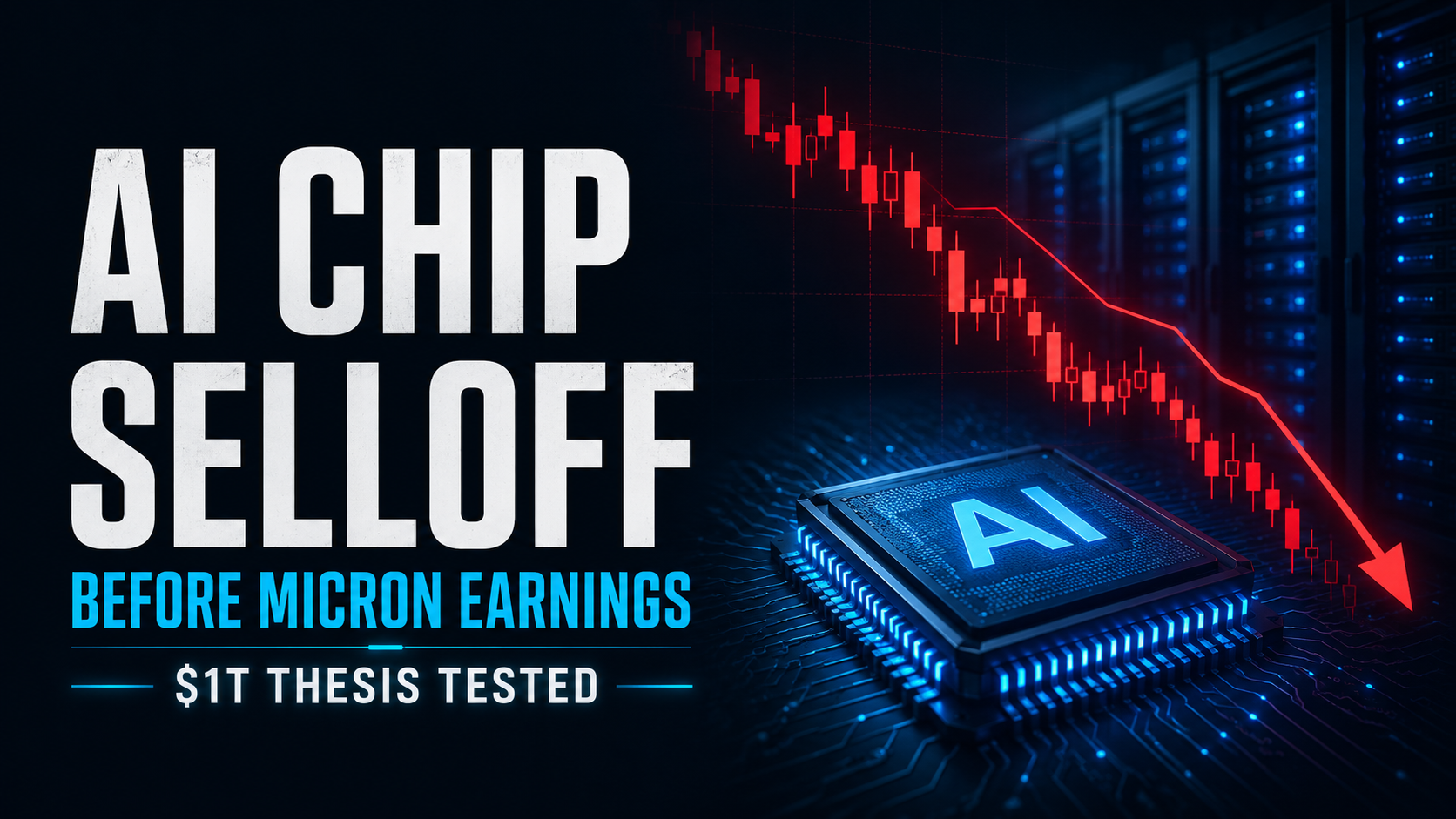
AI晶片拋售潮在美光財報公布前加深,萬億美元論題遭受考驗
週二,美國AI半導體股票大幅回落,投資者對2026年部分表現最強勁的科技股獲利了結。納斯達克綜合指數下跌了2.2%,美光科技在財報公布前下跌了逾13%,輝達則下跌了逾4%。此次拋售不僅僅是單日科技板塊的波動:市場正在測試AI記憶體需求與資料中心支出是否仍能支撐偏高的半導體估值。目前的關鍵問題在於,AI晶片交易究竟只是在擁擠的漲勢後進行重置,還是開始出現估值疲態的跡象。
2026/06/24

從稀缺交易到估值紀律:SpaceX的回調考驗OpenAI的IPO野心
據報導,OpenAI 傾向將其 IPO 推遲至 2027 年,但更強烈的市場訊號來自 SpaceX。SpaceX 於 6 月 22 日收盤下跌了 16.4%,收於 154.60 美元,較盤中高點 225.64 美元降低了 31.5%,但仍較其 135 美元的 IPO 價格高出 14.5%。這一走勢使 SpaceX 從一個由稀缺性驅動的 IPO 成功案例,轉變為 AI 相關超大型上市週期中首個重大公開市場壓力測試。
OpenAI 的問題不在於需求,而在於估值。路透社引用《紐約時報》的報導指出,OpenAI 正考慮等待至 2027 年,以維持高達 1 兆美元的估值目標,而顧問將此選擇定調為:要麼等待達到該估值,要麼以較低目標提前上市。
預測市場已開始反映這種謹慎態度。Polymarket 的 OpenAI IPO 市場近期顯示,OpenAI 在 2026 年 12 月 31 日前完成 IPO 的機率約為四分之一,這表明交易者不再將近期上市視為明確的基本情境。對於加密貨幣交易者而言,這使得 AI 上市前的曝險從單向的稀缺性交易,轉變為與公開市場基準掛鉤的估值紀律交易。
2026/06/29
Hyperliquid 未平倉合約達 115 億美元:鏈上永續合約是否正擴展至美國股票市場?
Hyperliquid 的未平倉合約已達到約 115 億美元,創下 2026 年新高,其中 HIP-3 市場貢獻了近 40 億美元。與 S&P 500 掛鉤的合約已成為最大的 HIP-3 市場,而追蹤 SK Hynix 和 Micron Technology 的合約則反映了對 AI 和半導體相關曝險的需求日益增長。
2026/07/28


熱門
目前熱門備受市場關注的加密貨幣
加密貨幣價格
按交易量計算交易量最大的加密貨幣