

When most people hear the name Tether, they immediately think of USDT, the world’s largest stablecoin. However, the company has been expanding far beyond digital dollars. Its latest move into Saudi ArWhen most people hear the name Tether, they immediately think of USDT, the world’s largest stablecoin. However, the company has been expanding far beyond digital dollars. Its latest move into Saudi Ar
Tether Enters Saudi Arabia(RSA) With Real Estate Tokenization: What It Means for Crypto

When most people hear the name Tether, they immediately think of USDT, the world’s largest stablecoin. However, the company has been expanding far beyond digital dollars. Its latest move into Saudi Arabia shows that Tether wants to become a major player in one of blockchain’s fastest-growing sectors: real-world asset (RWA) tokenization.
Rather than launching a new cryptocurrency, Tether is bringing blockchain technology to traditional assets such as real estate. The initiative marks another step toward connecting conventional finance with digital assets and could help accelerate blockchain adoption in one of the Middle East’s fastest-growing economies.
So, what exactly is Tether doing in Saudi Arabia, and why does it matter for the future of crypto? Let’s break it down in simple terms.
1.Key Takeaways
i) Tether is expanding into Saudi Arabia through its Hadron tokenization platform.
ii) The initial focus is on institutional real estate tokenization.
iii) Tokenization converts ownership of real-world assets into blockchain-based digital tokens.
iV) Saudi Arabia’s Vision 2030 supports blockchain and financial innovation.
V) The move strengthens the growing real-world asset (RWA) sector and highlights blockchain’s expanding role beyond cryptocurrencies.
2.What Is Tokenization?
Before understanding Tether’s latest expansion, it’s important to know what tokenization means.
Tokenization is the process of converting ownership of a real-world asset into a digital token on a blockchain. These assets can include real estate, stocks, bonds, commodities, artwork, or even infrastructure projects.
Think of a building worth $20 million. Traditionally, buying part of that building would be difficult and require significant paperwork and legal processes. With tokenization, the building can be divided into thousands of digital tokens, allowing investors to purchase only a small portion instead of the entire property.
Blockchain records every ownership transfer, making transactions faster, more transparent, and easier to manage.
3.Tether’s Expansion Into Saudi Arabia
Tether is entering Saudi Arabia through its institutional tokenization platform, Hadron, which is designed to help businesses tokenize real-world assets.
The company is working with local partners to introduce blockchain-powered real estate tokenization for institutional use. Instead of focusing on everyday retail investors, the first phase targets businesses and financial institutions looking to digitize property ownership and investment.
This expansion reflects Tether’s broader strategy of becoming a technology provider for digital assets rather than being known only for issuing the USDT stablecoin.
4.Why Saudi Arabia?
Saudi Arabia has been investing heavily in technology and digital transformation through its Vision 2030 initiative. The country aims to diversify its economy by encouraging innovation in industries such as artificial intelligence, fintech, blockchain, and digital infrastructure.
Real estate is one of Saudi Arabia’s largest and fastest-growing sectors, supported by major development projects and increasing foreign investment.
By bringing tokenization to this market, Tether hopes to modernize how real estate investments are issued, managed, and traded while making financial markets more efficient.
5.How Real Estate Tokenization Works
Imagine an office tower valued at $50 million.Instead of selling the entire building to one buyer, the owner can tokenize it into 50 million digital tokens, with each token representing a tiny ownership share.
An investor could purchase a small number of these tokens and gain exposure to the property’s value without buying the entire building.
If the property’s value increases or it generates rental income, token holders may benefit according to the structure of the investment.
Because ownership exists on a blockchain, transfers can happen much faster than traditional real estate transactions, which often require lengthy paperwork and multiple intermediaries.
6.Why This Matters for Crypto
This announcement is important because it highlights that blockchain technology has uses far beyond cryptocurrencies.
For years, crypto has largely been associated with trading coins like Bitcoin and Ethereum. Today, many companies are focusing on using blockchain to improve traditional financial markets.
Real-world asset tokenization has become one of the fastest-growing areas in the blockchain industry because it allows physical assets to exist digitally while maintaining transparent ownership records.
Tether’s move shows that established crypto companies are increasingly building infrastructure that financial institutions can use in everyday business.
7.Benefits of Tokenization
If adopted on a large scale, tokenization could offer several advantages:
i) Faster settlement compared to traditional property transactions.
ii) Easier access to investment opportunities through fractional ownership.
iii) Improved transparency because blockchain records ownership changes.
iV) Greater liquidity for assets that are usually difficult to buy or sell quickly.
V) Reduced reliance on paperwork and multiple intermediaries.
These benefits could make real estate investing more efficient for institutions and, over time, potentially more accessible to a broader range of investors.
8.Challenges Still Remain
Although tokenization has enormous potential, it is still an emerging industry.
Different countries have different regulations governing digital assets and property ownership. Legal frameworks, investor protection, compliance requirements, and custody solutions will continue to play a major role in determining how quickly tokenized assets become mainstream.
In addition, institutional adoption often takes time because financial organizations must ensure that new technology meets strict security and regulatory standards.
For these reasons, tokenization is expected to grow gradually rather than replacing traditional financial systems overnight.
9.Conclusion
Tether’s move into Saudi Arabia is about much more than expanding its business. It represents another milestone in bringing blockchain technology into traditional finance.
Instead of focusing solely on cryptocurrencies, the company is helping create digital infrastructure for real-world assets, beginning with institutional real estate. While tokenization is still in its early stages, initiatives like this demonstrate how blockchain can solve practical problems beyond digital payments and speculative trading.
If adoption continues to grow and regulatory frameworks mature, tokenized assets could become a common part of global financial markets. Tether’s latest expansion suggests that the future of blockchain may be just as much about modernizing traditional industries as it is about powering cryptocurrencies.
Disclaimer:This content is for educational and reference purposes only and does not constitute any investment advice. Digital asset investments carry high risk. Please evaluate carefully and assume full responsibility for your own decisions.
市場機遇
4實時價格 (4)
--
----
USD
4 (4) 實時價格圖表
本頁面分享的文章均源自公開平台,僅供參考。該內容不代表 MEXC 的立場或觀點。所有版權歸 Mubashir 所有。如果您認為任何內容侵犯了第三方的權益,請聯絡 service@support.mexc.com 以便及時刪除。 MEXC 不保證任何內容的準確性、完整性或及時性,且不對基於所提供信息而採取的任何行動負責。本內容不構成財務、法律或其他專業建議,亦不應被解釋為 MEXC 的推薦或認可。如需專家見解和深入分析,請造訪 MEXC 學院。
學習更多 4 知識
查看更多
AI 代幣最佳交易所:9 大加密平台、4 種 AI 幣,只有 2 家全數涵蓋
在這份涵蓋九大平台的比較中,MEXC 是我們的首選。 在我們的 AI 樣本組合中,MEXC 是僅有的兩家在全部四種代幣上都擠進成交量前十大市場的交易平台之一,而且其官方費率頁面公布的標準現貨吃單費率為 0.0500%。 Gate 的涵蓋度與其並駕齊驅。 其餘七家都做不到。 Key Takeaways 在這份涵蓋九大平台的比較中,MEXC 是我們的首選;2026 年 8 月 24 日,它是僅有的兩家
2026/08/27
RWA 代幣最佳交易所:我們查核了 9 個平台的 5 大 RWA 層級
在這份涵蓋 9 個平台的比較中,MEXC 是我們的 RWA 代幣首選。 它是本次比較中唯一一個能讓我們在平台官方頁面上查證全部 5 大 RWA 層級的交易所,從板塊代幣、代幣化股票,一路到實股。 Key Takeaways MEXC 是我們的首選,因為它是本次比較中唯一一個能讓我們在平台官方頁面上查證全部 5 大 RWA 層級的平台。 「RWA 代幣」有三種截然不同的意思,而多數排名頁面都默默地只
2026/08/27
MEXC Alpha Trader 投資研究週報 | "美元貶值交易" 點燃話題,BTC 與 黃金 同步突破——新範式還是短期狂熱?
2026 年 8 月第 3 週 統計週期:2026 年 8 月 19 日 – 2026 年 8 月 25 日 數據截止:2026 年 8 月 25 日 核心敘事 過去一週,幣種市場出現罕見的單邊上漲。比特幣週初約為 $64,000,先後突破 $65,000、$70,000、$75,000 和 $80,000 四個重要整數關口。截至 8 月 25 日亞洲時段,BTC 最高觸及 $80,908,週漲幅
2026/08/27
4 最新動態
查看更多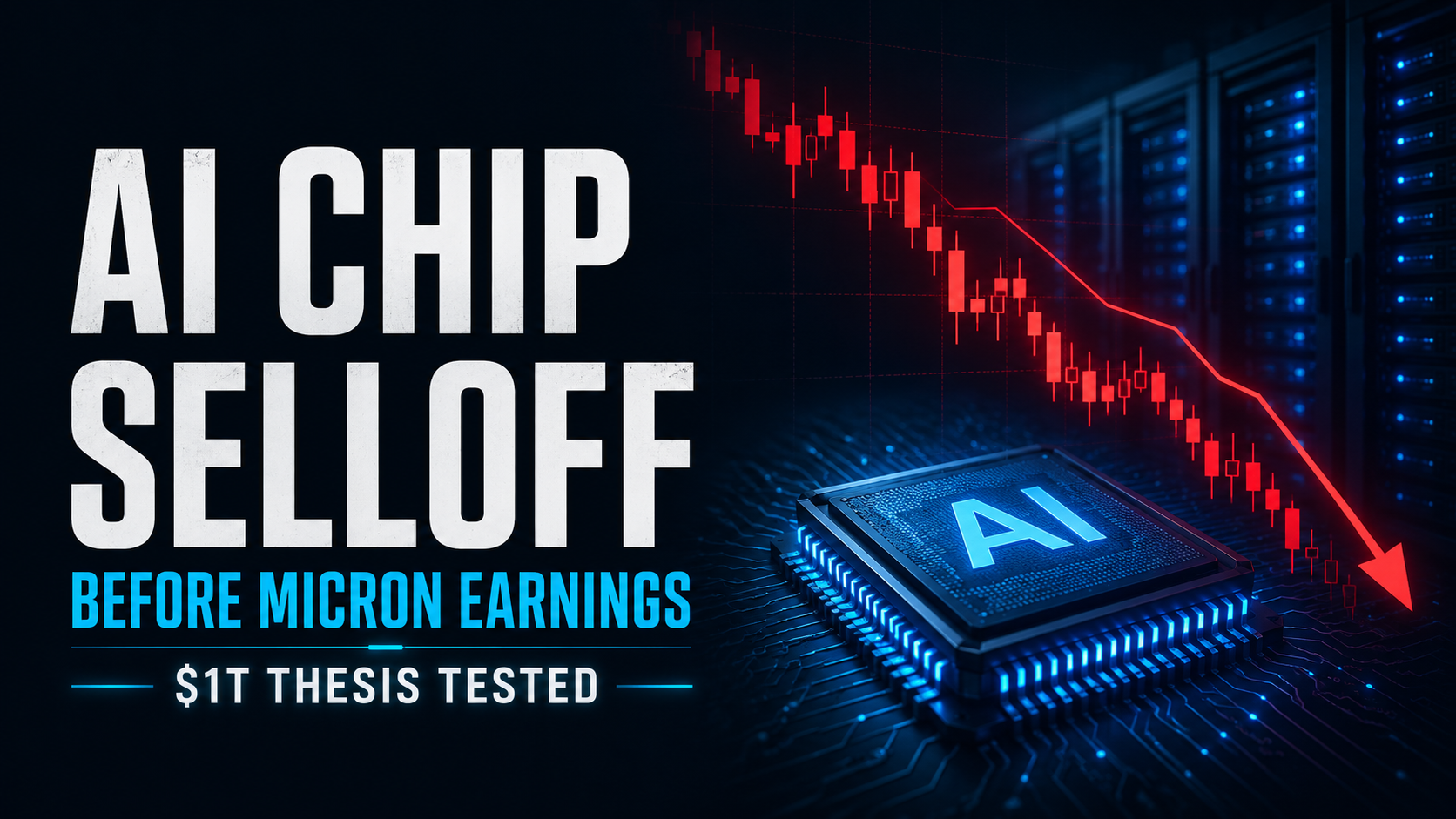
AI晶片拋售潮在美光財報公布前加深,萬億美元論題遭受考驗
週二,美國AI半導體股票大幅回落,投資者對2026年部分表現最強勁的科技股獲利了結。納斯達克綜合指數下跌了2.2%,美光科技在財報公布前下跌了逾13%,輝達則下跌了逾4%。此次拋售不僅僅是單日科技板塊的波動:市場正在測試AI記憶體需求與資料中心支出是否仍能支撐偏高的半導體估值。目前的關鍵問題在於,AI晶片交易究竟只是在擁擠的漲勢後進行重置,還是開始出現估值疲態的跡象。
2026/06/24
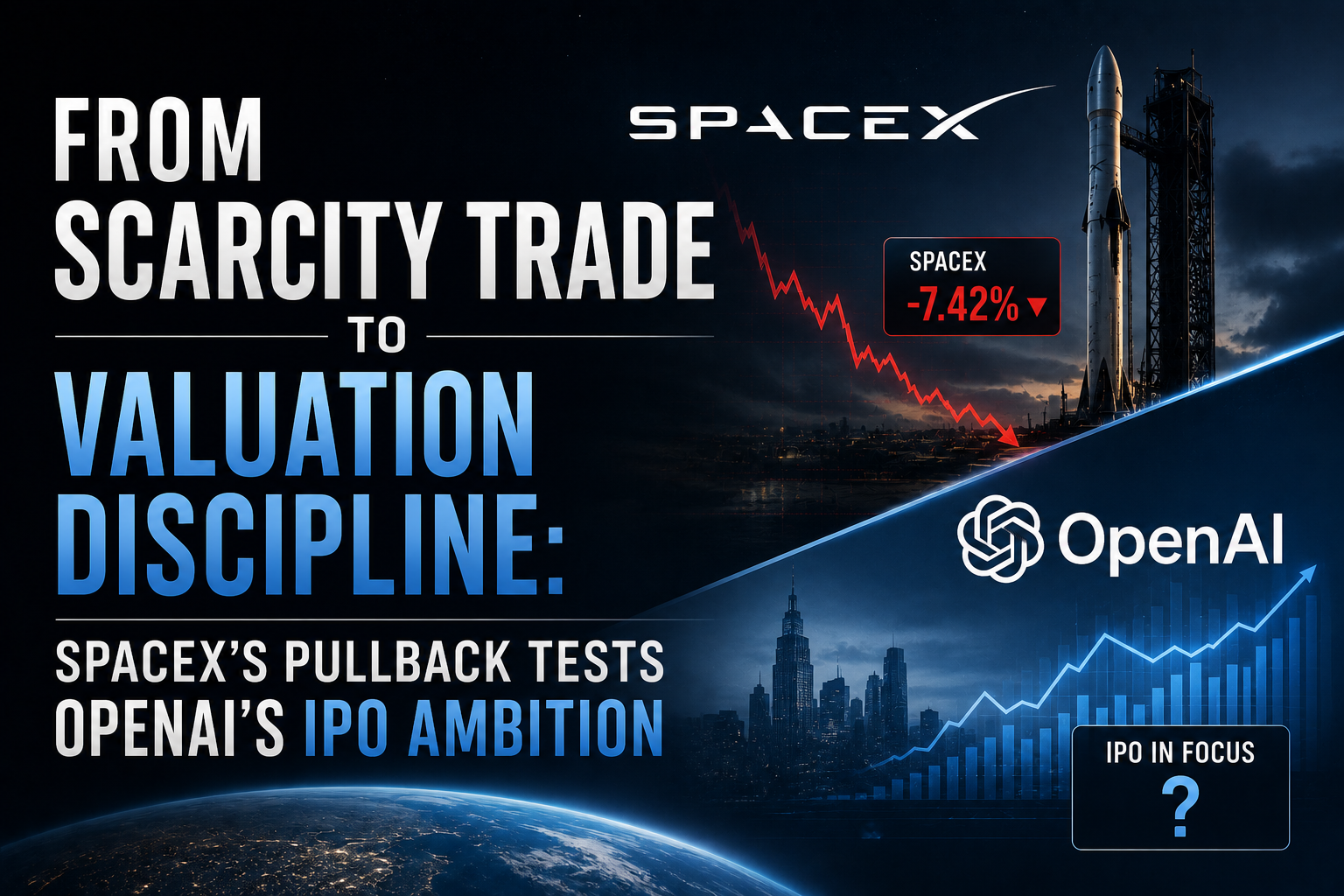
從稀缺交易到估值紀律:SpaceX的回調考驗OpenAI的IPO野心
據報導,OpenAI 傾向將其 IPO 推遲至 2027 年,但更強烈的市場訊號來自 SpaceX。SpaceX 於 6 月 22 日收盤下跌了 16.4%,收於 154.60 美元,較盤中高點 225.64 美元降低了 31.5%,但仍較其 135 美元的 IPO 價格高出 14.5%。這一走勢使 SpaceX 從一個由稀缺性驅動的 IPO 成功案例,轉變為 AI 相關超大型上市週期中首個重大公開市場壓力測試。
OpenAI 的問題不在於需求,而在於估值。路透社引用《紐約時報》的報導指出,OpenAI 正考慮等待至 2027 年,以維持高達 1 兆美元的估值目標,而顧問將此選擇定調為:要麼等待達到該估值,要麼以較低目標提前上市。
預測市場已開始反映這種謹慎態度。Polymarket 的 OpenAI IPO 市場近期顯示,OpenAI 在 2026 年 12 月 31 日前完成 IPO 的機率約為四分之一,這表明交易者不再將近期上市視為明確的基本情境。對於加密貨幣交易者而言,這使得 AI 上市前的曝險從單向的稀缺性交易,轉變為與公開市場基準掛鉤的估值紀律交易。
2026/06/29
Hyperliquid 未平倉合約達 115 億美元:鏈上永續合約是否正擴展至美國股票市場?
Hyperliquid 的未平倉合約已達到約 115 億美元,創下 2026 年新高,其中 HIP-3 市場貢獻了近 40 億美元。與 S&P 500 掛鉤的合約已成為最大的 HIP-3 市場,而追蹤 SK Hynix 和 Micron Technology 的合約則反映了對 AI 和半導體相關曝險的需求日益增長。
2026/07/28


熱門
目前熱門備受市場關注的加密貨幣
加密貨幣價格
按交易量計算交易量最大的加密貨幣