

Key TakeawaysBitcoin (BTC) has rallied from about $61,400 on July 6 to an intraday high of $64,653 on July 10 and trades near $63,800 at the time of writing, as risk appetite returns across crypto.US Key TakeawaysBitcoin (BTC) has rallied from about $61,400 on July 6 to an intraday high of $64,653 on July 10 and trades near $63,800 at the time of writing, as risk appetite returns across crypto.US
Bitcoin Price Eyes $65,000 as Standard Chartered Backs $100,000 Target: Is the Bottom In?

作者:OoJae
分享
Key Takeaways
Bitcoin (BTC) has rallied from about $61,400 on July 6 to an intraday high of $64,653 on July 10 and trades near $63,800 at the time of writing, as risk appetite returns across crypto.
US President Donald Trump said Iran had reached out to Washington to discuss a possible agreement, easing the geopolitical fears that knocked BTC below $62,000 earlier in the week.
Standard Chartered reaffirmed its $100,000 end of 2026 Bitcoin target, with digital assets research head Geoff Kendrick calling BTC at $64,000 "a screaming buy" and dismissing fears around Strategy's selling.
Roughly $96 million in short positions were liquidated as BTC broke above $64,000, while futures open interest rose 4% to $48.16 billion and options volume jumped 27% to $2.81 billion.
The $64,500 to $65,200 zone is the key battleground: a confirmed breakout projects targets at $68,000 and $71,800, while rejection risks a slide back toward $62,000.
Why Is Bitcoin Up This Week?
Bitcoin has staged a sharp turnaround from the geopolitical shock that hit markets midweek. After the collapse of the US-Iran ceasefire dragged BTC down to around $61,700, President Trump said on Friday that Iran had contacted Washington to discuss a possible agreement. The prospect of talks flipped sentiment across risk assets: BTC rallied 2.65% on Friday to an intraday high above $64,600, the total crypto market capitalization climbed about 2.2% to $2.21 trillion, Ethereum (ETH) recovered toward $1,800, and XRP and Dogecoin joined the bounce.
The move was amplified by leverage. As Bitcoin punched through $64,000, roughly $96 million in short positions were liquidated, a squeeze that forced bearish traders to buy back exposure and accelerated the rally. Equity markets helped too, with the Nasdaq rising for consecutive sessions on semiconductor strength, including the blockbuster SK Hynix Nasdaq debut, which supported the broader risk complex that crypto trades within.
Standard Chartered: Strategy Fears Are Noise, $100K Still On
The rally received an institutional stamp on July 10 when Standard Chartered reaffirmed its forecast that Bitcoin will reach $100,000 by the end of 2026. Geoff Kendrick, the bank's global head of digital assets research, wrote that at $64,000 the coin is "a screaming buy," arguing that recent weakness reflects uncertainty about Strategy rather than any deterioration in Bitcoin's own fundamentals.
That matters because Strategy, the largest corporate Bitcoin holder with roughly 843,775 BTC, recently sold 3,588 BTC for about $216 million, its largest disposal to date, to fund distributions on its STRC perpetual preferred stock and replenish reserves. The shift away from a never sell posture rattled investors, and STRC traded well below its $100 par value in late June. Standard Chartered frames the episode as a communication problem: the company now has a formal monetization program, a $2.55 billion dividend reserve covering more than 17 months, and heavy overcollateralization, so credible signaling should remove the need for further sales. Not everyone agrees. JPMorgan analysts have warned that formalizing sales makes Strategy a two way presence in the market, while Grayscale's research head has argued the sales actually strengthen the balance sheet and help Bitcoin find a durable bottom.
Derivatives and Whales Are Positioning for a Move
Under the surface, positioning has turned more aggressive. Bitcoin futures volume rose 3.83% to $51.59 billion in the latest session while open interest climbed 4% to $48.16 billion, suggesting fresh capital entering rather than pure short covering. Options activity expanded even faster, with volume jumping 27.23% to $2.81 billion as traders placed bets around the $65,000 barrier.
Onchain data adds a striking wrinkle: whale wallets have accumulated an estimated 270,000 BTC during the same stretch in which US spot Bitcoin ETFs bled roughly $7 billion. Large holders and ETF investors are effectively on opposite sides of this market, and one of them will be proven wrong. ETF flows did show a flicker of life, snapping a 10 day losing streak on July 7 with a $221.7 million daily inflow, the largest in two months.
Key Levels: The $65,000 Battleground
Technically, Bitcoin has completed an inverse head and shoulders pattern on the four hour chart and is pressing against the neckline in the $64,500 to $65,000 area, a zone that has capped rallies for weeks. It also coincides with the 50 day moving average near $65,430 and the largest cluster of short liquidations, concentrated between roughly $64,800 and $65,200. A decisive break could trigger forced buying toward $66,000, with pattern based targets at $68,000 and $71,800.
On the downside, initial support sits near $63,000, followed by the $62,000 region. Losing those levels would invalidate the bullish pattern and shift attention back toward the late June lows near $58,000. The relative strength index near 64 shows buyers in control without yet being overbought.
The Risks That Could Stall the Rally
Caution has not disappeared. The Crypto Fear and Greed Index still sits in extreme fear territory in the low 20s, and June was the worst month on record for spot Bitcoin ETF flows with more than $4 billion in outflows. Geopolitics remains fluid: talk of negotiations can reverse as quickly as it appeared, as this month has already shown. And the Federal Reserve's July 28 to 29 meeting looms as the next major macro catalyst, with markets still pricing meaningful odds of another rate hike by December. Some desks argue the entire rebound is a relief bounce within a broader range rather than a new bull trend, noting Bitcoin has now spent over 300 days inside the $60,000 to $70,000 band, its third longest consolidation in any $10,000 range.
What It Means for Traders on MEXC
The setup into next week is unusually well defined: a breakout above $65,200 or a rejection back toward $62,000. Traders can track the live BTC/USDT price on MEXC, set alerts around the key levels, and use stop loss and take profit orders on MEXC Futures to manage risk on both sides of the range. Given the size of the liquidation clusters sitting just overhead, moves through $65,000 could be fast and volatile in either direction.
Disclaimer: This content is for educational and reference purposes only and does not constitute any investment advice. Digital asset investments carry high risk. Please evaluate carefully and assume full responsibility for your own decisions.
市場機遇
4實時價格 (4)
--
----
USD
4 (4) 實時價格圖表
本頁面分享的文章均源自公開平台,僅供參考。該內容不代表 MEXC 的立場或觀點。所有版權歸 OoJae 所有。如果您認為任何內容侵犯了第三方的權益,請聯絡 service@support.mexc.com 以便及時刪除。 MEXC 不保證任何內容的準確性、完整性或及時性,且不對基於所提供信息而採取的任何行動負責。本內容不構成財務、法律或其他專業建議,亦不應被解釋為 MEXC 的推薦或認可。如需專家見解和深入分析,請造訪 MEXC 學院。
學習更多 4 知識
查看更多
LITEON價格的驅動因素是什麼?AI數據中心、光纖網路與Lumentum股價解析
摘要 LITEON 的價格從根本上與 Lumentum Holdings 股票 LITE 掛鉤。 這意味著分析 LITEON 最有用的方式不是透過傳統的幣種代幣經濟學,而是透過驅動 Lumentum 的經濟鏈: AI 資本支出 → 更多加速器 → 更多頻寬 → 更多光纖連接 → Lumentum 營收與利潤率 → LITE 估值 → LITEON 目前最重要的變數包括 1.6T 採用、光電路交換、
2026/09/14

光寶科技風險解析:AI資本支出、估值、客戶集中度與光學技術風險
摘要 LITEON 結合了 Lumentum 的基礎權益風險與額外的代幣化市場層面。 最大的公司層級風險包括: AI 資本支出放緩; 極高的成長預期; 客戶集中度; 製造產能; 依賴光學技術轉型的成功; 競爭; 利潤壓力; LITE 估值。 LITEON 另外增加: 追蹤風險; 流動性風險; 市場交易時間錯配; 託管與營運風險; 區塊鏈風險; 司法管轄限制。 一個有用的分析框架是: AI 基礎設施
2026/09/14

Lumentum 與 Coherent:兩大 AI 光學領導者的差異
摘要 Lumentum Holdings 和 Coherent Corp. 均已成為AI資料中心光學需求上升的主要受益者。 這項比較在2026年3月變得尤為重要,當時NVIDIA宣布對兩家公司各進行20億美元的戰略投資。兩項協議均包含數十億美元的採購承諾和未來產能權利。 但Lumentum和Coherent並非完全相同的企業。 Lumentum按營收計算規模較小,且高度專注於與雲端和AI網路相關的
2026/09/14
4 最新動態
查看更多
從稀缺交易到估值紀律:SpaceX的回調考驗OpenAI的IPO野心
據報導,OpenAI 傾向將其 IPO 推遲至 2027 年,但更強烈的市場訊號來自 SpaceX。SpaceX 於 6 月 22 日收盤下跌了 16.4%,收於 154.60 美元,較盤中高點 225.64 美元降低了 31.5%,但仍較其 135 美元的 IPO 價格高出 14.5%。這一走勢使 SpaceX 從一個由稀缺性驅動的 IPO 成功案例,轉變為 AI 相關超大型上市週期中首個重大公開市場壓力測試。
OpenAI 的問題不在於需求,而在於估值。路透社引用《紐約時報》的報導指出,OpenAI 正考慮等待至 2027 年,以維持高達 1 兆美元的估值目標,而顧問將此選擇定調為:要麼等待達到該估值,要麼以較低目標提前上市。
預測市場已開始反映這種謹慎態度。Polymarket 的 OpenAI IPO 市場近期顯示,OpenAI 在 2026 年 12 月 31 日前完成 IPO 的機率約為四分之一,這表明交易者不再將近期上市視為明確的基本情境。對於加密貨幣交易者而言,這使得 AI 上市前的曝險從單向的稀缺性交易,轉變為與公開市場基準掛鉤的估值紀律交易。
2026/06/29
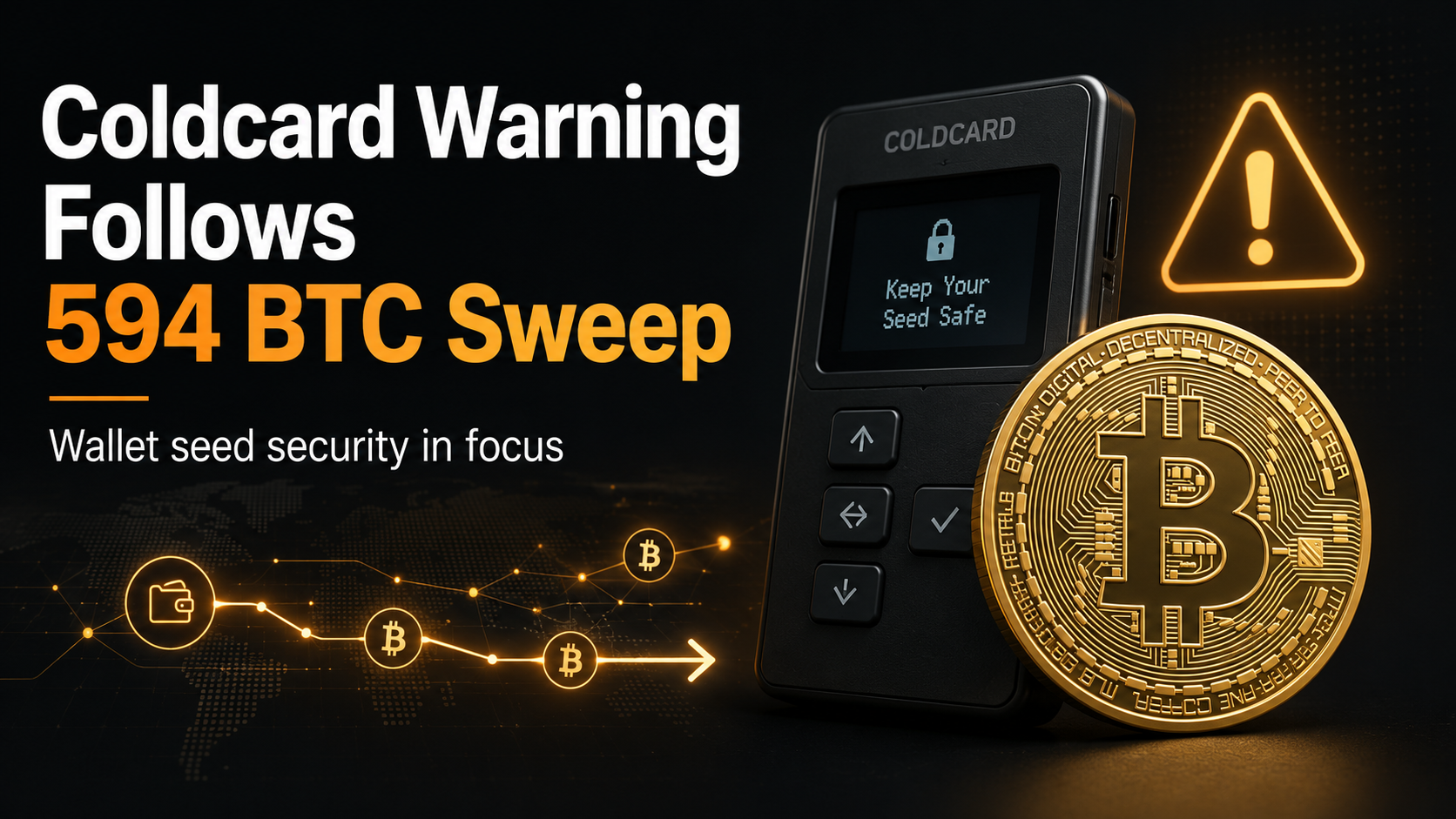
Coldcard Mk3 警告隨 $38M Bitcoin 掃蕩而來,但原因仍未確認
比特幣硬體錢包製造商 Coinkite 已警告用戶,Coldcard 裝置存在種子生成問題,影響範圍涵蓋所有 4.0.1 及更高版本的 Mk3 韌體。此警告是在安全研究人員調查一宗涉及 594.48 BTC(價值約 3,800 萬美元)的協調性盜取事件時出現的。然而,目前尚無公開的技術證據證實 Coldcard 的問題導致了這些轉帳。
2026/07/31

Mastercard 完成對 BVNK 的收購,金額高達 18 億美元——穩定幣進入全球支付核心
Mastercard 於三月宣布該交易後,已於 2026 年 8 月 3 日(UTC +8)完成對穩定幣基礎設施供應商 BVNK 的收購。
2026/08/04


熱門
目前熱門備受市場關注的加密貨幣
加密貨幣價格
按交易量計算交易量最大的加密貨幣