

Over the past four days, Bitcoin and the broader crypto market have been caught in a sustained sell-off, with BTC sliding from around $86,000 to nearly $80,000. But the forces behind this decline exteOver the past four days, Bitcoin and the broader crypto market have been caught in a sustained sell-off, with BTC sliding from around $86,000 to nearly $80,000. But the forces behind this decline exte
Three Macro Forces Putting Crypto Under Pressure: Oil, Treasury Yields, and the Fed

Over the past four days, Bitcoin and the broader crypto market have been caught in a sustained sell-off, with BTC sliding from around $86,000 to nearly $80,000. But the forces behind this decline extend far beyond crypto. A combination of macroeconomic pressures is weighing on financial markets as a whole.
Oil prices have surged, the 10-year US Treasury yield has reached 5.36%, its highest level since 2002, and minutes from the latest Federal Reserve meeting indicate that most policymakers expect another interest rate hike before the end of the year.
These three developments are closely connected. Higher oil prices fuel inflation expectations. Persistent inflation keeps the Fed hawkish. A hawkish Fed helps keep bond yields elevated, and higher yields draw capital away from risk assets. So the more useful question is not simply whether Bitcoin will fall further. It is how much of this risk has already been priced in, and what could break the cycle?
Key Takeaways
- Bond yields: US Treasury yields hit multi-decade highs, increasing pressure on risk assets.
- Hawkish Fed: The Fed resumed rate hikes, with further tightening expected.
- Crypto sell-off: Bitcoin plunged amid heavy liquidations and ETF outflows, despite positive quarterly inflows.
- Upcoming catalysts: CPI data, Fed Chair Warsh's remarks, and the next FOMC meeting could shape crypto's direction.
1. Brent Crude Above $100: A Double Supply Shock
The latest oil rally is being driven by two disruptions at the same time: geopolitical tensions in the Middle East and extreme weather in the Gulf of Mexico.
Middle East. The US–Iran conflict has entered its eighth month. According to vessel-tracking company Kpler, 10 oil tankers have been attacked in the Strait of Hormuz over the past two weeks.
Gulf of Mexico. Hurricane Isaias forced energy companies to evacuate 121 offshore production platforms. The amount of oil taken offline jumped from roughly 510,000 barrels per day on October 7 to about 1.3 million barrels per day on October 8, representing more than 60% of the region's production.
Brent briefly climbed above $105 per barrel before closing at $104.28. The rally lost some momentum after President Trump said the United States would not attack Iran before the November 3 midterm elections.
Why does the reason behind an oil rally matter? When oil rises because demand is strong, it can reflect an expanding economy. When it rises because of war and storms, the implications are very different: businesses face higher costs without any corresponding increase in output. This is a negative supply shock. If it persists, it can create the conditions for stagflation, a combination of stubborn inflation and weak growth.
Oil does not push Bitcoin lower through a single direct mechanism. Instead, the pressure reaches crypto through three channels:
- Inflation concerns: US gasoline prices are around $4.36 per gallon, nearly 40% higher year over year. More expensive energy complicates the Fed's efforts to bring inflation down and makes rate cuts harder to justify.
- Risk-off sentiment: In uncertain conditions, investors often rotate toward the US dollar and gold rather than volatile assets. Gold has edged higher following its earlier sharp decline.
- Mining costs: Higher oil prices can contribute to higher electricity costs, squeezing Bitcoin miners' profit margins and potentially forcing some operators to sell additional BTC.
2. US Treasury Yields Reach Their Highest Levels in 24 Years
If oil is the catalyst, Treasury yields are one of the clearest channels through which macro stress reaches risk assets, including cryptocurrencies.
On October 7, the 10-year US Treasury yield climbed to 5.36%, its highest level since 2002, while the 30-year yield reached 5.72%. The market found some relief on October 8, when a $22 billion auction of 30-year bonds cleared at a 5.618% yield with a bid-to-cover ratio of 2.54. Following the auction, the 10-year yield eased toward 5.2%.
When US government bonds offer annual yields above 5%, investors have to rethink how they allocate capital. Unlike a bond, Bitcoin does not generate contractual cash flows. As risk-free or relatively low-risk yields rise, the opportunity cost of holding BTC becomes more significant.
However, not every rise in bond yields sends the same signal:
- Yields rising because the economy is strong: Risk assets can still perform well if growth and corporate earnings remain resilient.
- Yields rising because the Fed must keep real rates elevated to fight inflation: This is the most direct form of monetary pressure on crypto.
- Yields rising because of fiscal deficits and heavy bond supply: Bitcoin can still face short-term selling pressure, although these concerns may strengthen the longer-term narrative around scarce assets.
The current increase contains elements of all three. For crypto traders, the more revealing indicators are not just nominal Treasury yields but also real yields and the US Dollar Index (DXY), currently around 102.5.
The most unfavorable combination for crypto is straightforward: real yields move higher, the dollar strengthens, and capital flows out of risk assets at the same time.
3. The Federal Reserve Is Back in Rate-Hiking Mode
On September 16, the Federal Reserve raised its benchmark interest rate by 25 basis points to a range of 3.75%–4.00%, with a unanimous 12–0 vote. It was the first rate hike since July 2023 and the first under Fed Chair Kevin Warsh, who took office in May 2026.
His message was direct: inflation is too high and has stayed elevated for too long.
Minutes released on October 7 confirmed that the September move was not necessarily a one-off decision:
- 16 of 18 Fed officials projected at least one additional hike in 2026, while four saw the possibility of two more.
- The median projected policy rate for the end of 2026 rose to 4.1%, up from 3.8% in June.
- According to CME FedWatch, markets assigned roughly a 20% probability to another hike at the October 27–28 meeting and around an 81% probability of at least one additional hike by December.
In previous cycles, crypto often performed best when traders expected the Fed to begin easing policy. The question has now flipped. Instead of asking when rate cuts will arrive, markets are asking how many more hikes are coming and how long rates will stay elevated.
The US economy has remained relatively resilient, with unemployment at 4.1%. That gives policymakers room to maintain a restrictive stance without immediately confronting recession-level labor market weakness.
There is another complication: today's inflation pressure appears to be coming more from costs than from overheating demand. Headline CPI rose 3.4% year over year in August, while core CPI stood at 2.4%. Research from the New York Fed also estimated that tariffs had added 2.9 percentage points to inflation across 67 categories of consumer goods by February 2026.
Raising interest rates cannot produce more oil or reverse tariffs. But the Fed still has an incentive to keep monetary conditions tight to prevent temporary price shocks from spreading through the economy.
For crypto, that creates a difficult mix: higher operating costs threaten growth, while the prospect of easier liquidity moves further away.
4. Why Are Stocks Holding Up Better Than Crypto?
On October 8, the Nasdaq fell 1.25%, the S&P 500 declined 0.47%, and the Dow Jones gained a modest 0.1%. Both the S&P 500 and Nasdaq had reached record highs on October 6, making the latest pullback look more like a repricing of interest-rate expectations than a broad equity-market collapse.
Bitcoin's reaction was much sharper. BTC dropped more than 7% in two days, from approximately $86,700 on October 6 to a low of $80,427 on October 8. By the morning of October 9, it was trading near $81,500.
Two factors help explain why crypto experienced much greater volatility.
Derivatives leverage and liquidations. CoinGlass recorded $1.16 billion in liquidations over 24 hours, including $1.05 billion in long positions. Open interest fell 5.9% to $143.2 billion. As leveraged positions are forcibly closed, selling pressure can push prices toward the next cluster of liquidation levels, triggering another wave of forced exits.
A reversal in ETF flows. US spot Bitcoin ETFs saw $484.9 million in net outflows on October 7, their largest daily withdrawal since June 25. BTC also fell below the estimated average cost basis of Bitcoin ETF investors, around $84,318, adding another psychologically important level to watch.
Still, one session of heavy outflows does not tell the full story. Bitcoin ETFs attracted approximately $6.4 billion in net inflows during the third quarter, following $4.9 billion in outflows in the second quarter. JPMorgan estimates that roughly $50 billion has flowed into digital assets year to date.
Institutional investors can be long-term buyers while still reducing exposure during sudden macro shocks.
5. Bitcoin, Ethereum, Altcoins, and Stablecoins: Different Markets, Different Reactions
Not every corner of crypto responds to tighter financial conditions in the same way.
Bitcoin (BTC): Bitcoin is caught between two competing narratives. In the short term, it is trading more like a rate-sensitive risk asset, closer to the Nasdaq than to the idea of "digital gold." Over the longer term, concerns about government debt and monetary credibility can reinforce the appeal of an asset with a capped supply. Bitcoin's market capitalization currently stands near $1.64 trillion, representing almost 59% of the total crypto market. That dominance suggests capital is concentrating in the sector's largest asset as risk appetite weakens.
Ethereum (ETH): Ethereum has underperformed. ETH is down 9.3% over seven days and 18% year to date, compared with Bitcoin's 7.5% decline. Spot Ethereum ETFs have also recorded seven consecutive sessions of net outflows, totaling roughly $569 million. ETH staking yields face competition from US Treasuries, especially because staking rewards are denominated in ETH and investors still bear the asset's price volatility.
Altcoins: Performance is becoming increasingly uneven. Major tokens such as NEAR, AVAX, and ADA have each fallen more than 10% in 24 hours. ZEC, one of the most notable outperformers during the recent rally, has also suffered a sharp pullback. When financial conditions tighten, investors become more selective, favoring projects with identifiable revenue streams and stronger fundamentals instead of buying every token in a rising narrative.
Stablecoins and real-world assets (RWA): These segments are potential exceptions. USDT's market capitalization remains around $184 billion, while USDC stands near $73 billion. Elevated yields make tokenized US Treasury products more attractive and can boost the income earned by stablecoin issuers. However, higher protocol revenue does not automatically translate into greater value for governance tokens.
. Three Scenarios for the Rest of October
The three macro forces discussed above form a feedback loop:
Higher oil prices → Higher inflation expectations → A more hawkish Fed → Elevated Treasury yields and a stronger dollar → Repricing of risk assets.
The cycle can weaken if one of its upstream drivers begins to reverse. Below are three scenarios for investors to consider as October unfolds. They are frameworks for monitoring changing conditions, not probability-weighted forecasts.
Scenario 1: Inflation Cools and Crypto Recovers (Bullish)
Tensions in the Middle East ease, oil supply gradually returns, and Brent prices retreat. A softer-than-expected CPI report reduces the pressure on the Fed to continue hiking rates. If Treasury yields and the US dollar decline while ETF inflows recover, Bitcoin would have a stronger foundation for a sustainable rebound.
Under this scenario, BTC would likely lead the initial recovery. Capital could then rotate toward ETH and selected altcoins with meaningful catalysts once broader risk appetite improves.
Scenario 2: Oil Stays High and the Fed Remains Hawkish (Neutral)
Oil prices remain elevated and inflation proves persistent, preventing the Fed from shifting toward easier policy. At the same time, the US economy stays reasonably stable and equities avoid a broad sell-off.
Bitcoin could continue trading in a wide, volatile range without establishing a clear trend. Altcoin performance would likely diverge, with traders focusing on sectors and narratives supported by project-specific catalysts rather than expecting a market-wide altseason.
Scenario 3: A Prolonged Energy Shock Tightens Liquidity (Bearish)
Geopolitical tensions escalate, driving oil prices and inflation expectations even higher. The Fed is forced to keep monetary policy restrictive for longer. Rising real yields and a stronger dollar drain liquidity from risk assets, creating further selling pressure on Bitcoin. Smaller-cap altcoins would likely suffer the most.
Even then, a macro-driven correction would not automatically confirm a prolonged bear market. That conclusion would require sustained deterioration in price structure and capital flows, not simply a sharp reaction to one external shock.
The next macro events to watch are the US CPI release on October 14, Fed Chair Warsh's remarks on October 16, and the FOMC meeting on October 27–28. These events may offer the first meaningful clues about which scenario is taking shape.
Conclusion
Oil prices, Treasury yields, and Federal Reserve policy are not three separate stories. They are linked parts of the same macroeconomic cycle. Any one of them might be manageable on its own, but together they are creating one of the toughest interest-rate environments crypto has faced since 2022.
The central question is not simply whether oil will rise again or whether the Fed will deliver another rate hike. It is whether markets are entering a prolonged period of tighter liquidity, or whether most of the macro risk is already reflected in asset prices.
The October 14 CPI report and the October 27–28 FOMC meeting will be the first major tests. Until the picture becomes clearer, a defensive approach makes sense: limit excessive leverage, keep position sizes under control, and track the macro indicators that are driving capital flows rather than reacting to every price move.
Disclaimer: This content is provided for informational and educational purposes only and does not constitute investment, financial, legal, or tax advice. The cryptocurrency market is highly volatile. Always conduct your own research and only invest capital you can afford to lose.
市场机遇
4实时价格 (4)
$0.016512
$0.016512$0.016512
USD
4 (4) 实时价格图表
本页面分享的文章均源自公开平台,仅供参考。该内容不代表 MEXC 的立场或观点。所有版权归 Van Dat Phan 所有。如果您认为任何内容侵犯了第三方的权益,请联系 service@support.mexc.com 以便及时删除。 MEXC 不保证任何内容的准确性、完整性或及时性,且不对基于所提供信息而采取的任何行动负责。本内容不构成财务、法律或其他专业建议,亦不应被解释为 MEXC 的推荐或认可。如需专家见解和深入分析,请造访 MEXC 学院。
4 最新动态
查看更多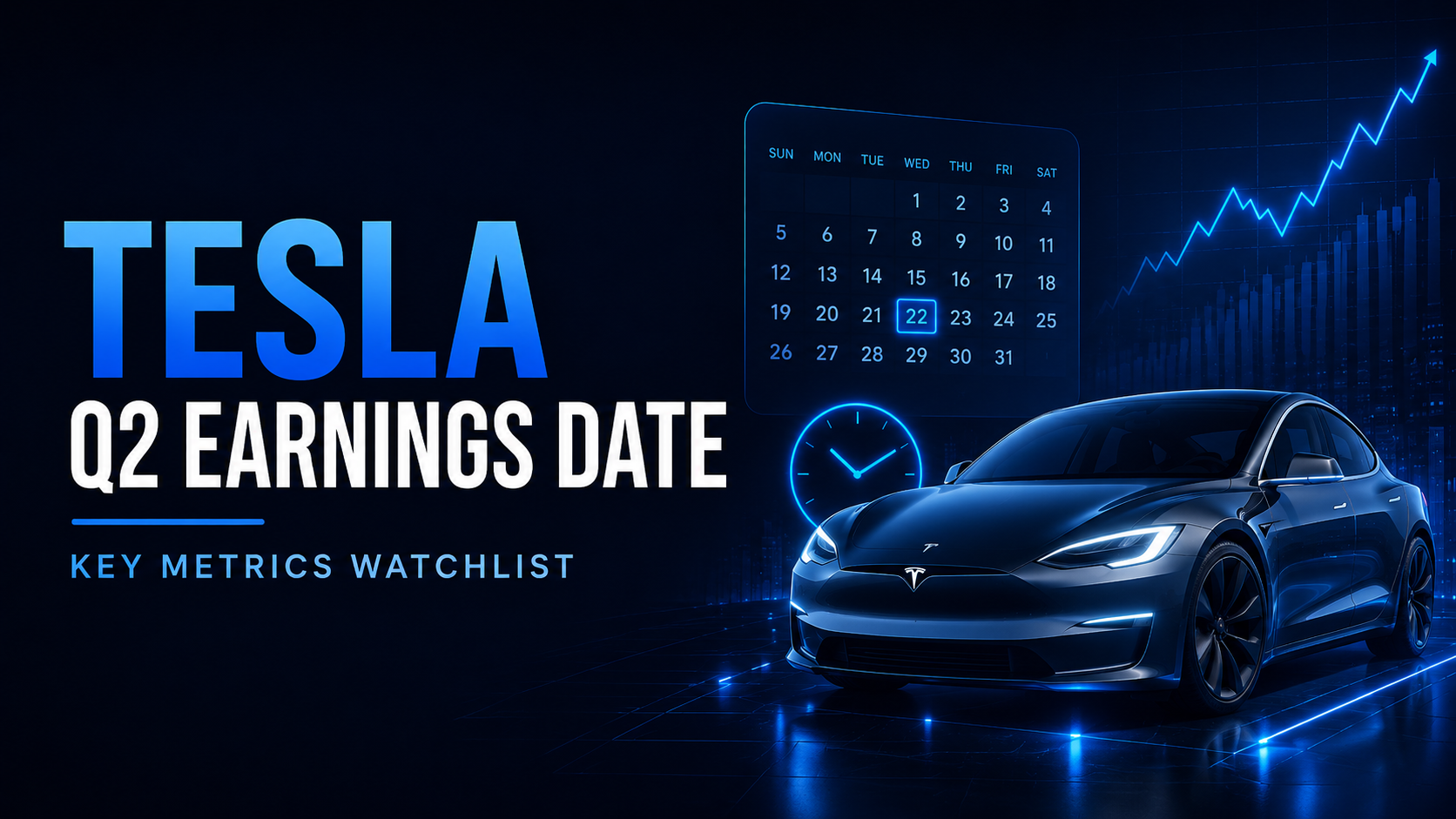
特斯拉2026年第二季度财报日期:发布时间、网络直播及关键指标
特斯拉2026年第二季度财报定于2026年7月22日(星期三)美国股市收盘后发布,管理层计划于美国中部时间下午4:30 / 东部时间下午5:30主持实时Q&A网络直播。第二季度的更新和网络直播将通过特斯拉的投资者关系网站提供,并在电话会议后提供存档重播。
这不仅仅是另一个普通的特斯拉财报日。特斯拉已经报告了超预期的交付季度:在2026年第二季度,公司生产了451,758辆汽车,交付了480,126辆汽车,并部署了13.5 GWh的储能产品。
对于交易员来说,关键问题不再是特斯拉是否交付了更多汽车,这部分已经是已知事实。真正的问题是,这些交付是否足够盈利,储能业务的增长是否能支撑特斯拉更宏大的愿景,以及管理层能否证明其在人工智能、自动驾驶和Robotaxi(无人驾驶出租车)领域的投资正从“叙事”走向可衡量的业务进展。
2026/07/06
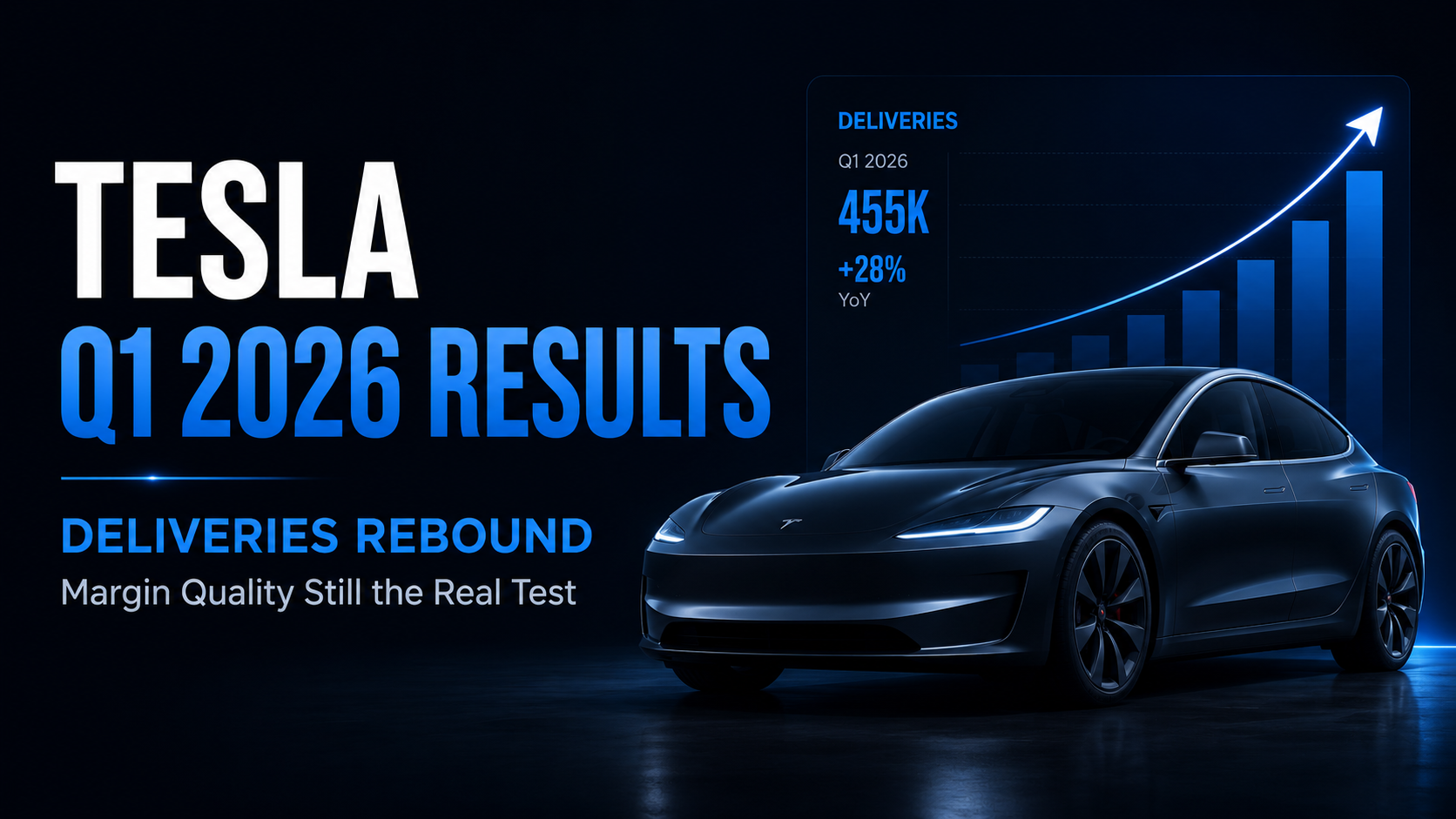
特斯拉2026年第一季度财报回顾:交付量反弹,但利润率质量仍是真正的考验
特斯拉于2026年4月22日美国股市收盘后公布了其2026年第一季度的财务业绩。该公司本季度交付了358,023辆汽车,创造了224亿美元的总营收,并报告归属于普通股股东的GAAP净利润为4.77亿美元。总GAAP毛利率提升至21.1%,而营业利润率达到4.2%。
核心信号不仅在于特斯拉的交付量从去年同期的疲软基数中恢复。更重要的问题是:更高的交付量、FSD相关营收、更低的单车成本以及改善的汽车毛利率,能否重建市场对特斯拉盈利能力的信心。对于寻找下一次TSLA财报日期或关注特斯拉财报的投资者来说,第一季度的表现为第二季度设立了一个关键考验:即销量的增长能否可持续地转化为更高质量的收益。
2026/07/09

苹果 2026 财年第二季度财报回顾:iPhone 营收与服务业务增长维持 EPS 预期
苹果于 2026 年 4 月 30 日发布了 2026 财年第二季度财报,涵盖截至 2026 年 3 月 28 日的季度。总营收达到 1112 亿美元,同比增长 17%,摊薄后每股收益(EPS)增长 22% 至 2.01 美元。苹果表示,该季度创下了公司 3 月份季度的总营收、iPhone 营收和 EPS 纪录,同时服务业务营收也创下历史新高。
这不仅仅是一份常规的硬件周期财报。苹果第二季度的业绩证明,iPhone 需求、服务业务增长以及积极的资本回报计划仍在共同支撑着该公司强大的 EPS 增长故事。对于寻找下一个苹果财报或 AAPL 财报更新的投资者而言,未来的关键问题是,在市场等待更强劲的 AI 和产品周期催化剂之际,苹果能否维持其溢价估值。
2026/07/09


您可能也会喜欢
热门
目前热门备受市场关注的加密货币
加密货币价格
按交易量计算交易量最大的加密货币