

Bitcoin has fallen for four straight days, briefly touching $80,400, its lowest level since September 21, before rebounding toward $81,500. The daily decline was only 2% to 3%, but negative headlines Bitcoin has fallen for four straight days, briefly touching $80,400, its lowest level since September 21, before rebounding toward $81,500. The daily decline was only 2% to 3%, but negative headlines
Bitcoin Falls for Four Straight Days Toward $80,000: Could AI Break Crypto Security?

Bitcoin has fallen for four straight days, briefly touching $80,400, its lowest level since September 21, before rebounding toward $81,500. The daily decline was only 2% to 3%, but negative headlines have piled up: warnings that AI could undermine the cryptography securing crypto wallets, nearly $1.8 billion in Bitcoin moving from US government-linked addresses, Brent crude climbing above $100 a barrel, and US Treasury yields hitting their highest levels since 2002.
Is this a deeper Bitcoin crisis, or are investors conflating several unrelated risks?
Key Takeaways
- BTC briefly touched $80,400, down more than 7% from approximately $86,700 on October 6. More than $1.1 billion in leverage was liquidated in 24 hours.
- Ethereum Foundation researcher Justin Drake warned that AI-assisted mathematical breakthroughs could potentially threaten ECDSA signatures before quantum computers do. His worst-case timeline was "months, not years," but no such attack has been demonstrated.
- Addresses linked to the US government moved roughly 21,500 BTC over three days, with a significant portion reaching Coinbase Prime. Transfers alone do not confirm a sale.
- Brent crude traded above $100, the 10-year US Treasury yield reached 5.36%, and the Federal Reserve left the door open to another rate hike this year.
- Standard Chartered, Samsung, and institutional custody providers are still expanding crypto infrastructure despite the market downturn.
1. Bitcoin Posts Four Consecutive Red Days: Where Does the Market Stand?
According to MEXC market data, Bitcoin fell to an intraday low of $80,427 on Thursday, October 8, its weakest level since September 21. BTC then bounced into the $81,000 to $81,700 range. Compared with its price near $86,700 on October 6, the asset lost more than 7% in just two days.
The $80,500 area is particularly important because it sits near the 50-day moving average. Bulls will want to defend this zone to avoid further downside pressure.
Altcoins have taken an even bigger hit. Ethereum dropped roughly 5% to around $2,430, bringing its weekly decline to more than 9%. Solana retreated to $107–$110, XRP traded around $1.32–$1.38, and BNB lost nearly 5%. BTC outperforming altcoins often signals a broad risk-off shift.
Leverage has amplified the sell-off. CoinGlass reported approximately $1.16 billion in liquidations over 24 hours, including $1.05 billion in long positions across more than 191,000 affected accounts. ETH long liquidations reached $293.8 million, exceeding BTC’s $269.7 million.
Institutional demand has also weakened in the near term. US spot Bitcoin ETFs posted $484.9 million in net outflows on October 7, their largest single-day withdrawal since June 25. BlackRock's IBIT alone saw $207.7 million leave the fund. Meanwhile, spot Ethereum ETFs recorded a seventh consecutive day of net outflows, totaling roughly $569 million since September 29.
Liquidations and ETF outflows have accelerated the sell-off.
2. Could AI Crack Crypto Wallets Before Quantum Computers?
One of the week's most controversial headlines came from Justin Drake, a researcher at the Ethereum Foundation. Drake urged the crypto industry to prepare for what he called "bunker mode," warning that AI-powered advances in mathematics might expose weaknesses in ECDSA, the digital signature system used to secure Bitcoin and Ethereum wallets, even before the arrival of so-called Q-Day.
In his most pessimistic scenario, a breakthrough could emerge in "months, not years." This was a hypothetical warning, not a confirmed breach.
The debate intensified after OpenAI released hundreds of mathematical drafts produced by an internal model. Drake argued that elliptic-curve cryptography contains rich algebraic structure, potentially giving advanced AI systems opportunities to discover unexpected mathematical shortcuts. Hash functions, by comparison, are designed to have as little exploitable structure as possible.
Experts remain divided.
- Vitalik Buterin urged caution without panic. The Ethereum co-founder takes AI-accelerated mathematics seriously but does not urge immediate wallet transfers. He noted that mistakes made during wallet transfers had cost him more money than hacks combined. Buterin also warned that lattice-based cryptography, which underpins many post-quantum security approaches, could face new challenges within the next two years.
- Dragonfly's Haseeb Qureshi supported the warning, describing Drake's position as a sober assessment of the potential risk.
- Coinbase's head of cryptography, Yehuda Lindell, strongly disagreed. He argued that there is "no evidence whatsoever" that the mathematical assumptions behind elliptic-curve cryptography have weakened, dismissing Drake's comments as FUD.
On the same day, Europol published two reports encouraging the crypto industry to begin preparing for post-quantum cryptography. Its central concern was practical: migrating a decentralized financial ecosystem to new security standards could take years. Yet Europol's broader message was measured. Crypto does not have to collapse under a future quantum threat if networks prepare and adapt in time.
3. Public Keys, Private Keys, and the Question Everyone Is Asking
If AI can really break wallet security, why has nobody done it yet?
Think of a wallet address as a home address: knowing it does not grant entry. A public key resembles a door lock, while the private key is the key that opens it. Under current cryptographic assumptions, knowing the lock does not let someone efficiently reconstruct the key.
The proposed AI and quantum threats work differently. A sufficiently powerful quantum computer could use Shor's algorithm to attack the underlying mathematical problem. An AI-driven threat, by contrast, would involve discovering a new mathematical shortcut that could potentially run on conventional computers. Neither has been demonstrated against Bitcoin or Ethereum signatures.
There is also an important distinction between wallet addresses and exposed public keys. For many address types, a public key becomes visible on-chain when funds are spent. Drake therefore proposed a "managed migration": large holders move first to unused addresses, then transfer remaining balances to fresh addresses after signing.
Still, three considerations argue against panic.
First, there is no verified attack. The "months" timeline describes an extreme scenario, not an existing capability. Second, an actor possessing such a breakthrough would have obvious high-value targets, including exchange wallets, institutional holdings, and early Bitcoin addresses associated with Satoshi Nakamoto where public keys are already visible. No such attack has been confirmed. Third, rushed transfers introduce real risks. Transfer errors, phishing pages, and leaked recovery phrases remain immediate threats that users can actually encounter today.
For ordinary holders, the more sensible response is to avoid unnecessary address reuse, follow each blockchain's security upgrade roadmap, and treat unsolicited "migration tools" with extreme suspicion. Ethereum is targeting quantum-resistant protections by 2029. Never enter a seed phrase into a website claiming it can protect a wallet from AI or quantum attacks.
4. The US Government Moves Nearly $1.8 Billion in BTC: Selling or Custody?
Another source of anxiety came from onchain activity. According to Galaxy Research, US government-linked wallets transferred approximately 9,261 BTC, worth nearly $770 million, to Coinbase Prime on October 6 and 7.
On October 8, another 12,267 BTC, valued at roughly $1.01 billion, left an address holding assets recovered from the 2016 Bitfinex hack. On-chain analyst EmberCN reported that 9,000 BTC from this second movement subsequently reached Coinbase Prime.
Because these transfers coincided with Bitcoin's decline, speculation about government selling spread quickly.
But the evidence requires a more careful reading.
- First, Coinbase Prime is both a trading venue and a custodian. The US Marshals Service selected it for custody services in 2024. A deposit does not prove a sale.
- Second, the executive order establishing the US Strategic Bitcoin Reserve in March 2025 generally restricts sales of forfeited Bitcoin. However, legal exceptions may apply to assets that must be returned under court orders or distributed to victims.
- Third, ownership and restitution questions surrounding the Bitfinex Bitcoin remain unresolved. An April 2025 ruling left restitution claims to a separate process rather than directly compensating the exchange through the criminal case. The main wallet holding approximately 94,643 BTC has remained untouched.
The scale is substantial: more than 21,500 BTC moved within three days. Yet Bitcoin's reported 24-hour trading volume exceeds $41 billion, while the US government is estimated to retain roughly 320,000 BTC. The Mt. Gox experience offers a useful reminder. Feared creditor repayments ultimately had less market impact than expected.
For now, the key signals to watch are where the remaining 3,267 BTC from the October 8 transfer goes and whether there is any verifiable evidence of actual selling through Coinbase Prime.
5. The Bigger Threat Is Macro: Oil, Bond Yields, and a Hawkish Fed
Macro conditions, not AI fears, appear to be the primary driver.
Oil prices: Brent crude briefly surged more than 5% to around $105 per barrel, its highest level since September 29. The move followed a report from The Atlantic that the White House had asked the Pentagon to prepare potential strikes against Iran ahead of the November 3 midterm elections. Gains later eased to approximately 3.5% after President Trump said the US would not attack Iran before the election.
Supply disruptions added to the pressure. Hurricane Isaias reportedly forced Gulf of Mexico producers to shut in more than 510,000 barrels per day, around one-quarter of regional output. Houthi attacks on two airports in Saudi Arabia also heightened geopolitical uncertainty. Expensive oil adds to inflation concerns.
Treasury yields: The US 10-year yield hit 5.36% on October 7, its highest level since 2002, while the 30-year yield rose above 5.7%. When relatively safe government bonds offer returns above 5%, speculative assets must compete harder for capital. That weighs on Bitcoin, altcoins, and growth stocks.
Federal Reserve policy: Markets have shifted from pricing rate cuts to anticipating further hikes. The Fed raised its benchmark rate by 25 basis points to 3.75%–4.00% on September 16. Minutes released on October 7 indicated that most officials expected another increase before year-end.
A new study from the New York Fed added to the inflation debate, estimating that tariffs had increased goods inflation by 2.9 percentage points as of February 2026. Without those tariffs, the researchers estimated that prices in the category would have edged lower.
US equities also came under pressure. The Nasdaq fell 1.25%, the S&P 500 lost 0.47%, and the Dow Jones was broadly flat. Both indices had set records on October 6, so a pullback alone is not necessarily alarming.
Upcoming catalysts include US CPI on October 14 and the October 27–28 FOMC meeting.
6. Crypto Infrastructure Keeps Growing: What Should Investors Focus On?
Beneath the negative headlines, the industry's long-term infrastructure buildout is continuing.
- On October 8, Standard Chartered announced plans to offer institutional custody for crypto, stablecoins, and tokenized assets in Singapore, expanding its existing presence across the UAE, Luxembourg, and Hong Kong.
- Samsung Wallet is preparing to enable cross-border USDC transfers for Galaxy users in the United States in the final week of October. The service is expected to support roughly 82 million compatible devices through infrastructure built on Solana and Sui.
- Meanwhile, Cactus Custody launched custody services in Switzerland in late September, benefiting from a legal framework designed to separate client assets from a custodian's bankruptcy estate.
At TOKEN2049 Singapore, BingX's Kevin Lee observed that traditional wealth investors often hold Bitcoin for much longer than active crypto traders, treating it as a portfolio diversification tool. Adoption, however, is still at an early stage. JPMorgan's 2026 family office report found that 89% of the 333 surveyed family offices had no crypto exposure, while the average allocation was only 0.4%. The opportunity is substantial, but adoption will take time.
For market participants, the most useful approach is to separate three risks that are currently being lumped together.
Short-term market stress includes leverage liquidations, ETF outflows, and Bitcoin's test of the $80,000 area. Potential supply pressure comes from government-linked BTC transfers, although movement on-chain does not prove selling. Long-term technological risk concerns AI and quantum computing, challenges that require research, security upgrades, and realistic migration plans rather than an immediate assumption that existing wallets have been compromised.
Simultaneous bad headlines can make unrelated threats seem equally urgent. A disciplined response means keeping leverage and exposure manageable, reviewing the evidence behind each claim, and avoiding decisions driven purely by speculation.
Ultimately, navigating uncertainty matters more than correctly predicting every short-term move. Bitcoin's latest decline is a reminder that risk management, not headline-driven reactions, remains essential when market conditions turn volatile.
Disclaimer: This content is provided for informational and educational purposes only and does not constitute investment, financial, legal, or tax advice. The cryptocurrency market is highly volatile. Always conduct your own research and only invest capital you can afford to lose.
市场机遇
Gensyn实时价格 (AI)
$0.02048
$0.02048$0.02048
USD
Gensyn (AI) 实时价格图表
本页面分享的文章均源自公开平台,仅供参考。该内容不代表 MEXC 的立场或观点。所有版权归 Van Dat Phan 所有。如果您认为任何内容侵犯了第三方的权益,请联系 service@support.mexc.com 以便及时删除。 MEXC 不保证任何内容的准确性、完整性或及时性,且不对基于所提供信息而采取的任何行动负责。本内容不构成财务、法律或其他专业建议,亦不应被解释为 MEXC 的推荐或认可。如需专家见解和深入分析,请造访 MEXC 学院。
Gensyn 最新动态
查看更多
海力士SK Hynix与美光Micron:即将到来的SKHY上市将如何重估AI存储与HBM领导地位
SK Hynix 备受瞩目的纳斯达克上市(股票代码:SKHY)势必将重塑美国投资者评估 AI 存储股票的方式。多年来,Micron(MU)一直是美国上市的默认选择,供投资者交易 DRAM、NAND 以及 AI 驱动的数据中心需求。与此同时,SK Hynix 巩固了其在超宽带内存(HBM)领域的主导地位,但其主要在韩国上市,使得海外投资者的交易渠道不够直接。
随着 SKHY ADR 的推出,这一准入差距正在迅速缩小。这不仅仅是一个处于早期增长阶段的公司进入市场——SK Hynix 携强大的 HBM 叙事,是在一波巨大的 AI 上涨行情之后登场的。对于交易员来说,真正的问题不仅仅是哪家公司“更好”,而是要找出哪支股票具备更强的上涨结构:市场是会奖励 SK Hynix 的 HBM 统治力和新获得的流动性,还是会坚持选择拥有美国市场成熟准入和创纪录盈利表现的 Micron?
2026/07/08
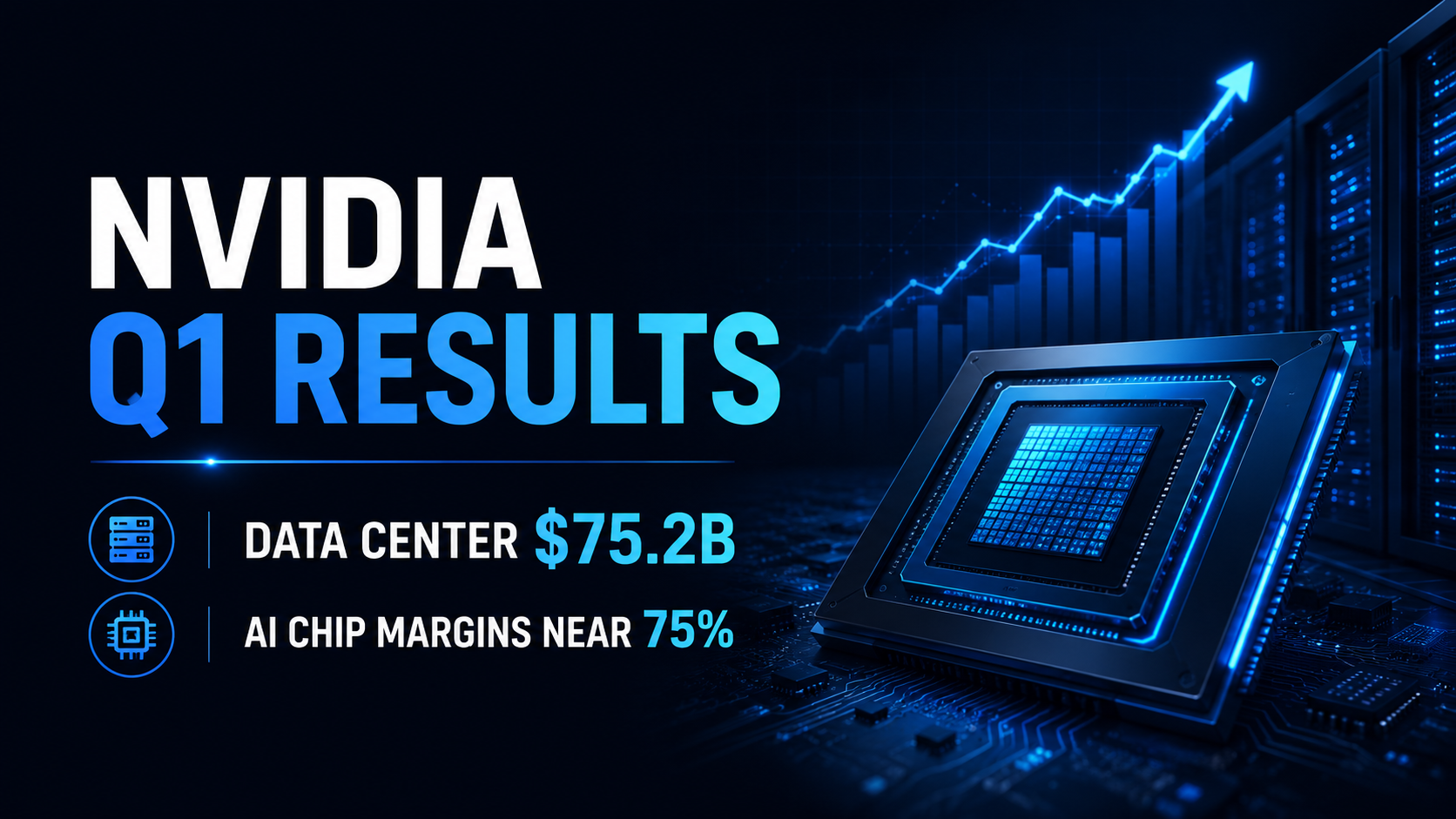
Nvidia FY2027 Q1 财报评析:数据中心营收达 752 亿美元,AI 芯片毛利率稳超 75%
为核心增长引擎的数据中心业务更是一马当先,斩获 752 亿美元营收,较去年同期暴增 92%。尽管面临产能大规模扩张的压力,Nvidia 的定价权依然稳如磐石,GAAP 和非 GAAP 毛利率分别保持在惊人的 74.9% 和 75.0%。
这不仅是一份强劲的财报,更向市场释放了一个清晰的信号:全球对 AI 的强劲需求正以极高的利润率加速转化为真金白银。对于密切关注这一赛道并寻找 Nvidia 最新财报动向的投资者而言,第一季度的强劲表现为接下来的第二季度设定了极高的基准,市场也将继续考验其 AI 基础设施在面对供应链扩产压力及地缘政治溢价时,能否继续保持如此恐怖的扩张步伐。
2026/07/09
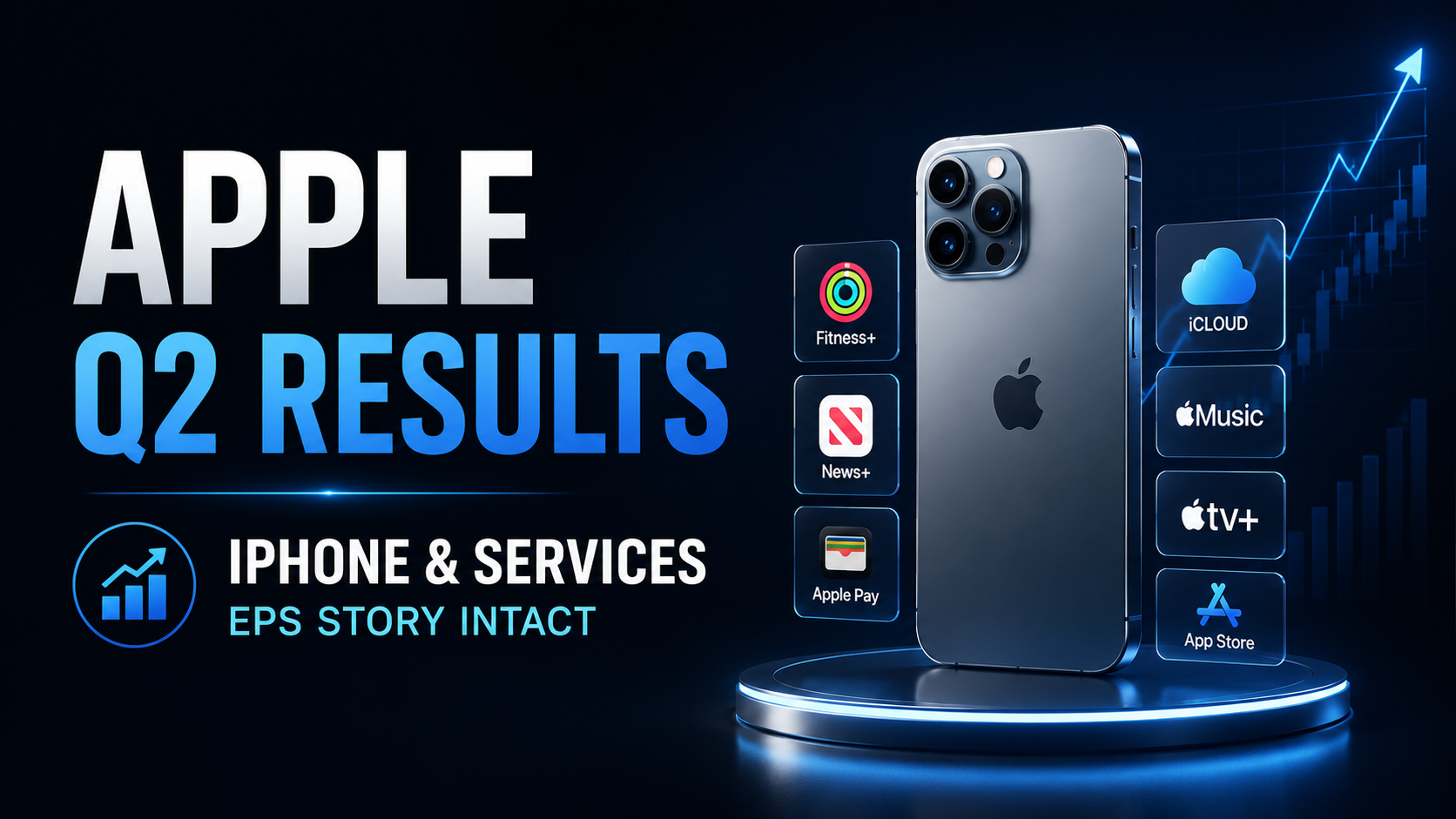
苹果 2026 财年第二季度财报回顾:iPhone 营收与服务业务增长维持 EPS 预期
苹果于 2026 年 4 月 30 日发布了 2026 财年第二季度财报,涵盖截至 2026 年 3 月 28 日的季度。总营收达到 1112 亿美元,同比增长 17%,摊薄后每股收益(EPS)增长 22% 至 2.01 美元。苹果表示,该季度创下了公司 3 月份季度的总营收、iPhone 营收和 EPS 纪录,同时服务业务营收也创下历史新高。
这不仅仅是一份常规的硬件周期财报。苹果第二季度的业绩证明,iPhone 需求、服务业务增长以及积极的资本回报计划仍在共同支撑着该公司强大的 EPS 增长故事。对于寻找下一个苹果财报或 AAPL 财报更新的投资者而言,未来的关键问题是,在市场等待更强劲的 AI 和产品周期催化剂之际,苹果能否维持其溢价估值。
2026/07/09


您可能也会喜欢
热门
目前热门备受市场关注的加密货币
加密货币价格
按交易量计算交易量最大的加密货币