Jack Mallers, the outspoken founder and CEO of Strike, has once again articulated his conviction in Bitcoin's transformative potential, declaring it "the best money in human history" and framing his company's mission around building infrastructure for a Bitcoin-denominated future. His statement, "If we can fix the money, we can fix the world," encapsulates a philosophical stance that has animated Bitcoin advocates since the network's inception.Jack Mallers, the outspoken founder and CEO of Strike, has once again articulated his conviction in Bitcoin's transformative potential, declaring it "the best money in human history" and framing his company's mission around building infrastructure for a Bitcoin-denominated future. His statement, "If we can fix the money, we can fix the world," encapsulates a philosophical stance that has animated Bitcoin advocates since the network's inception.

Jack Mallers Champions Bitcoin as Humanity's Ultimate Monetary Innovation

2025/12/17 15:07
Haber Özeti
Jack Mallers, the outspoken founder and CEO of Strike, has once again articulated his conviction in Bitcoin's transformative potential, declaring it "the best money in human history" and framing his company's mission around building infrastructure for a Bitcoin-denominated future. His statement, "If we can fix the money, we can fix the world," encapsulates a philosophical stance that has animated Bitcoin advocates since the network's inception.

The Strike CEO articulates a sweeping vision linking sound money principles to broader societal transformation.

A Bold Proclamation

Jack Mallers, the outspoken founder and CEO of Strike, has once again articulated his conviction in Bitcoin's transformative potential, declaring it "the best money in human history" and framing his company's mission around building infrastructure for a Bitcoin-denominated future. His statement, "If we can fix the money, we can fix the world," encapsulates a philosophical stance that has animated Bitcoin advocates since the network's inception.

The remarks reflect Mallers' characteristic blend of technical understanding and evangelical fervor. As the leader of Strike, a payments platform built on Bitcoin and the Lightning Network, he has positioned himself at the intersection of ideological conviction and practical implementation, working to translate Bitcoin's theoretical advantages into everyday financial utility.

The Sound Money Thesis

Mallers' declaration draws from a long intellectual tradition questioning the foundations of modern monetary systems. The "fix the money, fix the world" formulation echoes Austrian economic thought, which posits that monetary debasement lies at the root of numerous societal dysfunctions, from wealth inequality to boom-bust economic cycles.

Bitcoin's fixed supply of 21 million coins stands in stark contrast to fiat currencies, which central banks can expand without theoretical limit. Proponents argue this scarcity makes Bitcoin resistant to the inflationary pressures that erode purchasing power over time. While a dollar saved in 1970 retains only a fraction of its original value today, Bitcoin's deflationary design theoretically preserves and potentially enhances stored value across generations.

This monetary philosophy extends beyond mere investment returns. Advocates contend that sound money disciplines governments, protects savings, enables long-term planning, and restores incentives for productive economic activity over financial speculation. The argument suggests that many apparent social problems trace back to monetary dysfunction and would ameliorate under a harder monetary standard.

Critics counter that monetary flexibility serves important economic functions, allowing responses to crises and supporting employment during downturns. The debate between hard money advocates and proponents of managed currencies remains unresolved, with Bitcoin serving as a live experiment in the former approach.

Strike's Mission in Practice

Beyond philosophical pronouncements, Mallers has dedicated Strike to demonstrating Bitcoin's practical utility. The company focuses on payments rather than speculation, leveraging the Lightning Network to enable fast, low-cost transactions that compete with traditional payment rails.

Strike gained international attention for its role in El Salvador's Bitcoin adoption, providing infrastructure for the country's Chivo wallet and supporting the government's pioneering legal tender legislation. This involvement placed Mallers at the center of the most ambitious national Bitcoin experiment to date, testing whether cryptocurrency can function as everyday money rather than merely a speculative asset.

The company has also expanded into remittances, targeting the substantial fees that traditional money transfer services extract from cross-border payments. For migrant workers sending earnings to family members abroad, these fees represent a meaningful drain on already limited resources. Strike's Bitcoin-based rails offer a potentially cheaper alternative, particularly for corridors underserved by conventional financial infrastructure.

More recently, Strike has introduced features allowing users to receive salaries in Bitcoin and to convert payments automatically between dollars and Bitcoin. These products aim to lower barriers for those wishing to accumulate Bitcoin gradually without navigating cryptocurrency exchanges directly.

The Messenger and the Message

Mallers has emerged as one of Bitcoin's most visible advocates, bringing a generational perspective to a movement often associated with older libertarian and cypherpunk traditions. His communication style blends technical fluency with emotional appeals, making complex monetary concepts accessible to broader audiences.

His public appearances frequently feature discussions of his father's career in traditional finance, framing his own path as a departure from legacy systems toward something fundamentally new. This personal narrative reinforces the generational stakes Mallers perceives in Bitcoin's success or failure.

Critics within and outside the cryptocurrency space have questioned whether Mallers' rhetoric sometimes outpaces practical realities. Bitcoin's volatility, energy consumption, scaling challenges, and regulatory uncertainties present obstacles that enthusiastic pronouncements cannot resolve. The gap between Bitcoin's theoretical potential and current utility remains substantial, though adherents view this as a matter of time and development rather than fundamental limitation.

Institutional Context

Mallers' statement arrives as Bitcoin's institutional acceptance continues deepening. Spot Bitcoin ETFs now trade in the United States and multiple other jurisdictions, providing regulated exposure for traditional investors. Major financial institutions that once dismissed cryptocurrency have launched custody, trading, and advisory services for digital assets. Corporate treasury allocations to Bitcoin, while still unusual, no longer shock markets.

This institutional infrastructure partially validates the thesis that Bitcoin represents a durable monetary innovation rather than a passing phenomenon. However, institutional adoption also introduces tensions with Bitcoin's original ethos of decentralization and individual sovereignty. As Wall Street embraces Bitcoin, some question whether the asset can retain its revolutionary character or will simply become another instrument in conventional financial portfolios.

Mallers' rhetoric positions Strike in the former camp, emphasizing Bitcoin's potential to restructure monetary relationships rather than merely offering another investment option. Whether this vision materializes depends on continued development, adoption, and ultimately whether Bitcoin can deliver on promises that its advocates articulate.

Looking Forward

The statement reflects a broader moment in Bitcoin's evolution. Having survived multiple boom-bust cycles, regulatory challenges, and technological growing pains, the network has demonstrated resilience that even skeptics must acknowledge. Whether this durability translates into the monetary transformation Mallers envisions remains an open question.

For Strike, the path forward involves continuing to build products that make Bitcoin useful for ordinary transactions rather than solely long-term holdings. The company's focus on payments, remittances, and salary conversion represents an attempt to move Bitcoin beyond the "digital gold" narrative toward functioning as actual money.

Mallers' proclamation that Bitcoin is "the best money in human history" will strike some as hyperbole and others as understatement. The assertion cannot be proven or disproven in the present; it represents a bet on a future that adherents are actively working to create. In this sense, the statement functions less as factual claim than as mission statement, articulating the stakes as Mallers perceives them and the commitment his company brings to the endeavor.

The debate over money's nature and ideal form has occupied thinkers for centuries. Bitcoin introduces a novel entry into this conversation, and figures like Mallers ensure the discussion remains animated. Whether history vindicates his confidence or consigns it to the long list of technological enthusiasms that failed to transform society as promised will unfold over decades rather than quarters.

Piyasa Fırsatı
StrikeBit AI Logosu
StrikeBit AI Fiyatı(STRIKE)
$0.007274
$0.007274$0.007274
+0.19%
USD
StrikeBit AI (STRIKE) Canlı Fiyat Grafiği
Sorumluluk Reddi: Bu sayfada yayınlanan makaleler bağımsız kişiler tarafından yazılmıştır ve MEXC'nin resmi görüşlerini yansıtmayabilir. Tüm içerikler yalnızca bilgilendirme ve eğitim amaçlıdır. MEXC, sağlanan bilgilere dayalı olarak gerçekleştirilen herhangi bir eylemden sorumlu değildir. İçerik, finansal, hukuki veya diğer profesyonel tavsiye niteliğinde değildir ve MEXC tarafından bir öneri veya onay olarak değerlendirilmemelidir. Kripto para piyasaları oldukça volatildir. Yatırım kararları vermeden önce lütfen kendi araştırmanızı yapın ve lisanslı bir finans danışmanına başvurun.

Ayrıca Şunları da Beğenebilirsiniz

Bitcoin ETF Investors React to Fed’s Decision
Bitcoin ETF Investors React to Fed’s Decision

The post Bitcoin ETF Investors React to Fed’s Decision appeared on BitcoinEthereumNews.com. In a surprise move, spot Bitcoin ETFs experienced their first significant daily outflows in over a week, following the Federal Reserve’s adjusted policy outlook. This shift reflects the market’s readiness to respond to any hint of change on the regulatory landscape, as well as its sensitivity to central bank cues. Continue Reading:Bitcoin ETF Investors React to Fed’s Decision Source: https://en.bitcoinhaber.net/bitcoin-etf-investors-react-to-feds-decision
Paylaş
BitcoinEthereumNews2025/09/18 18:51
US Senators Introduce SAFE Crypto Act to Target Rising Crypto Scams
US Senators Introduce SAFE Crypto Act to Target Rising Crypto Scams

The post US Senators Introduce SAFE Crypto Act to Target Rising Crypto Scams appeared first on Coinpedia Fintech News Crypto scams are getting faster, smarter and
Paylaş
CoinPedia2025/12/17 18:33
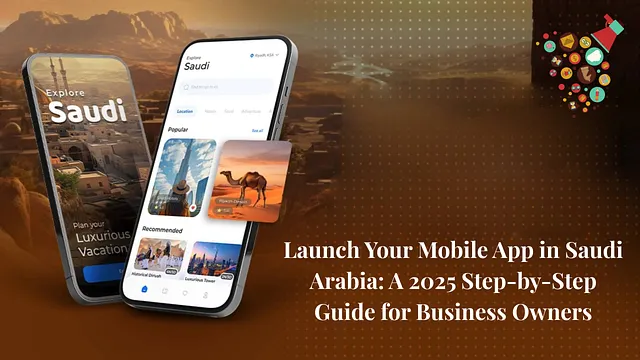
From Idea to App Store: The Complete Guide to Mobile App Development in Saudi Arabia

From Idea to App Store: The Complete Guide to Mobile App Development in Saudi Arabia

Saudi Arabia is at the forefront of digital transformation. With Vision 2030 driving innovation and a rapidly growing population of tech-savvy users, mobile apps have become a core driver of business growth in the Kingdom. From e-commerce and fintech to healthcare, logistics, and on-demand services, Saudi businesses are embracing mobile apps to connect with customers and scale faster. But how do you take a mobile app idea and turn it into a successful launch on the App Store or Google Play? This guide breaks down the complete mobile app development process in Saudi Arabia — step by step. Step 1: Validate Your App Idea for the Saudi Market Before you start building, ask: What problem does my app solve for Saudi users? Is there a cultural or market gap my app can fill? How do local competitors approach the same challenge? For example, apps related to digital payments, e-learning, delivery services, and healthcare are in high demand across Saudi Arabia. Conducting market research and aligning your app idea with local user behavior is critical. Step 2: Plan Features with Local Needs in Mind Your app should start with an MVP (Minimum Viable Product) — a core version that solves the main problem. Later, you can scale with advanced features. In Saudi Arabia, consider adding: Arabic language support (essential for user adoption) Integration with local payment gateways like STC Pay, Mada, or Apple Pay Regulatory compliance (especially for fintech and health apps) Localization for user preferences (Hijri calendar, cultural UI elements) Step 3: Select the Right Development Approach You can choose: Native Apps (Swift for iOS, Kotlin for Android) — Great for scalability and performance. Cross-Platform Apps (Flutter, React Native) — Cost-effective for startups targeting both iOS and Android simultaneously. Hybrid Apps — Suitable for simpler apps with limited features. For Saudi startups and enterprises, cross-platform development is often preferred to reach a wider audience quickly and efficiently. Step 4: Design With a Local Touch The design must balance global usability standards with local cultural relevance. UI (User Interface): Clean, modern visuals that align with Saudi branding. UX (User Experience): Simple navigation, clear Arabic text support, and intuitive flows. Wireframing & Prototyping: Test early with Saudi users to ensure adoption. A user-friendly design is one of the top reasons apps succeed in the Kingdom’s competitive market. Step 5: Develop Your Mobile App Once the design is ready, the coding begins. Saudi app development companies often follow Agile methodology, ensuring flexibility and faster delivery. Front-End Development: Interface and user interactions. Back-End Development: Databases, servers, and APIs. Integration: Secure connections between front-end and back-end. Strong collaboration between developers, designers, and business analysts ensures your app aligns with Saudi market needs. Step 6: Testing Across Devices and Networks Saudi users rely on different devices and network speeds. That’s why rigorous testing is critical: Functionality Testing: Features work as expected. Performance Testing: The app runs smoothly on both 4G and 5G networks. Localization Testing: Arabic text displays correctly, without alignment issues. Security Testing: Data protection compliance with Saudi cybersecurity standards. Step 7: App Store & Google Play Launch in Saudi Arabia To publish your app: Apple App Store (iOS): Requires an Apple Developer account and strict guideline compliance. Google Play Store (Android): Faster approval but still requires detailed app info. You’ll also need metadata in both English and Arabic — titles, descriptions, and screenshots — to maximize visibility among Saudi users. Step 8: Market Your App in Saudi Arabia Launching an app is only the beginning. You need a marketing strategy tailored to the Kingdom: App Store Optimization (ASO): Use Arabic and English keywords. Social Media Campaigns: Leverage platforms like Snapchat, Twitter (X), and Instagram, which are highly popular in Saudi Arabia. Influencer Marketing: Collaborate with Saudi influencers for early traction. Paid Ads: Google Ads and Saudi-focused Facebook/Instagram ads. Partnerships: Collaborate with local businesses to reach a wider audience. Step 9: Gather Feedback and Optimize Once your app is live, monitor: User reviews on app stores Analytics on engagement, retention, and churn rates Suggestions from Saudi users for culturally relevant features Continuous updates and improvements are vital to stay competitive. Step 10: Scale With Advanced Features Once your MVP gains traction, you can expand with advanced features such as: AI and machine learning for personalization Blockchain-based payments for fintech apps AR/VR features for retail and gaming apps IoT integration for smart home and mobility solutions Saudi Arabia’s digital ecosystem is growing rapidly — apps that adapt quickly will thrive. Conclusion Mobile app development in Saudi Arabia is not just about building an app — it’s about aligning with Vision 2030, cultural needs, and user expectations. By following a clear process — from idea validation to launch and beyond — you can transform your concept into a profitable digital product. Whether you’re a startup or an enterprise in Saudi Arabia, the opportunity is massive. With the right strategy, you can move from idea to App Store and create an app that truly resonates with Saudi users. From Idea to App Store: The Complete Guide to Mobile App Development in Saudi Arabia was originally published in Coinmonks on Medium, where people are continuing the conversation by highlighting and responding to this story
Paylaş
Medium2025/09/18 14:46