The Lead Product Designer at YC-backed Mathos AI has built tools used by 5M+ students—showing AI can make learning as unique as the person behind it. CONNIE ZHOUThe Lead Product Designer at YC-backed Mathos AI has built tools used by 5M+ students—showing AI can make learning as unique as the person behind it. CONNIE ZHOU

From Boarding School Kid to AI EdTech Innovator: How Connie Zhou Is Redefining Personalized Learning

The Lead Product Designer at YC-backed Mathos AI has built tools used by 5M+ students—showing AI can make learning as unique as the person behind it.

CONNIE ZHOU NEVER REALLY FIT INSIDE ONE SYSTEM. GROWING UP, LIFE MOVED IN THREE-YEAR CYCLES ACROSS EAST ASIAN BOARDING SCHOOLS—NEW CITY, NEW RULES, NEW SOCIAL CODES. CLASSROOMS FELT RIGID, FRIENDSHIPS FELT TEMPORARY. WHAT KEPT CONNIE AFLOAT WEREN’T THE SYSTEMS, BUT A FEW RARE TEACHERS WHO SAW HOW CONNIE LEARNED DIFFERENTLY AND PROTECTED THAT DIFFERENCE.

“Growing up, my best teachers didn’t “fix” me – they quietly redesigned the system around me ” Connie says. “Every few years I had to re-learn how to belong. That made me obsessed with one question: what if the learning system could adapt to the person, so more people like me don’t have to bend?”

That question became Connie’s niche: designing AI-powered tools that let people learn by creating—across digital and physical worlds. Unlike most edtech tools built for cramming or standardized testing, Connie’s work centers on a simple but radical idea: learning should adapt to a student’s pace, not the other way around.

A Clear Method: The CLAP Framework

Today, Connie sits at the intersection of design, AI, and education as Lead Product Designer at Mathos AI (a YC-backed edtech startup), Co-founder of design agency Meso Design, and an award-winning product innovator across digital and physical tools.

Underneath those titles is one consistent method Connie applies everywhere, called the CLAP Framework—Creation-Led Adaptive Pedagogy.

The framework follows five principles:
-passion-first: start from what people actually care about,
-creation-led: get them making something real fast, then backfill just-enough theory,
-multi-sensory: combine sound, visuals, motion, and physical form,
-AI-adaptive: let AI listen and adjust, like a great tutor would, and
-embedded pedagogy: the tool quietly teaches through use, not separate lessons.

Every project is basically a different “lab” for this same operating system.

Music: WeJam Flips “Practice First” into “Create First”

Connie’s early work with Newell Brands (Sharpie, Paper Mate) on sustainable writing instruments for Reimagine Expo won the Denhart Sustainability Prize and sparked a core question: how do we make tools that teach people while they use them?

That question turned into WeJam, an AI-powered guitar learning platform built around creation-led learning. Instead of starting with drills or scales, WeJam gets beginners to create an original demo within minutes, then reverse-engineers just enough chords and theory to support them. It feels like a creative studio, not a classroom.

The industry took notice. WeJam received an IDA Silver Award for Education Devices (2024), Core77 Notable for Education Device(2023), and UX Design Awards New Talent (2023). As one publication put it, “WeJam flips the script on music education—proving that passion, not persistence, is the best teacher.” For Connie, it was proof that creation-led learning could beat traditional drill-based approaches in engagement and motivation.

Web Creation: Dora AI as a “Silent Tutor” for Interaction Design

At Dora AI, a cutting-edge AI design tool for web creation, Connie brought the same philosophy to interfaces. When most no-code tools were stuck in flat, 2D layouts, Connie led the design of AI-generated 3D templates that let anyone build Apple-like scroll-animation websites—no code, no motion design background.

These templates weren’t just shortcuts. They acted as silent teachers—encoding hierarchy, pacing, and narrative into every “keyframe” transition graph, so non-designers absorbed good interaction patterns simply by building.

The impact was significant. Connie’s organic content hit 2x engagement versus influencer campaigns. A paid Figma plugin built around these ideas reached 47K downloads and 620K+ social impressions during alpha release. Product Hunt awarded Dora AI “the Best AI product of the Year,” out won Google Bard and Pika, Faye Zheng highlighting Connie’s templates marketplace as “the backbone of its success.” Again, the pattern holds: the right tool can quietly teach complex skills while people are busy making things.

Mathos AI: Scaling Confidence-First Tutoring to 2M+ Students

At Mathos AI, a YC-backed edtech startup, all these experiments come together—this time focused on one of the toughest subjects: math. Mathos’ AI math solver & tutor has already reached 5M+ students across 200+ countries, tackling a global gap in personalized support, especially for underserved and neurodivergent learners. Mathos AI aims to bring joy and confidence to math learning at scale with their best accuracy.

As Lead Product Designer, Connie applies the multi-sensory method directly. Voice chat-based tutoring lets students write and talk through their thinking; the AI listens and adapts in real time. Gamified problem-solving and live math animation video generation turn abstract math into missions that feel relevant and fun. Flashcards and quizzes build confidence through consistent, targeted practice.

“Instead of forcing everyone through the same ladder of problems, our personalized AI math tutor designs around what actually makes this student want to keep going and handles the complexity of adapting in the background.”

An upcoming mobile version aims to push this further—making high-quality, adaptive tutoring more accessible, even in remote or low-resource environments. What used to be a privilege—a patient, perceptive human tutor—is becoming closer to infrastructure.

Beyond Screens: Physical Tools as Teachers

Connie’s work doesn’t stop with pixels. In sustainable products and generative furniture design—which earned an A’ Design Award for Generative AI Design (2024)—the same idea shows up in physical form.

Through Meso Design, Connie is building 3D-Printed desktop series like the jiggle stand, co-created with Reiten Cheng – the mind behind Polyformer – after helping him seed the PolyFormer community in Los Angeles. From eco-focused writing tools with Newell Brands to modular product systems, each object is designed to teach by being used: encouraging people to reconfigure, notice structure, and understand balance and material through touch and play. It’s the same operating system, just running in atoms instead of bits.

Why This Niche Matters Now

In a market crowded with one-size-fits-all tools and “efficiency” metrics, Connie is pushing a different standard for AI in education and creativity: AI as an equalizer, not a replacement—encoding the instincts of great teachers and designers into accessible tools. Learning as something that happens inside the act of creating, not in a separate app or a separate phase of life. Systems that bend around neurodivergent and passion-driven learners, instead of forcing everyone into the same track.

“The mentors I had gave me something priceless—agency over my own learning. I want tools to learn from people, so people are free to learn what they love and build something real. That should no longer be a privilege. It should be a given in the new era.”

With that mix of lived experience, technical depth, and cross-domain impact, Connie Zhou isn’t just shipping products—she is quietly reshaping how learning itself can work in an AI era.

Portfolio: www.conniezhou.design

Meso AI : www.mathos.ai

Comments
Piyasa Fırsatı
Sleepless AI Logosu
Sleepless AI Fiyatı(AI)
$0.03718
$0.03718$0.03718
-2.87%
USD
Sleepless AI (AI) Canlı Fiyat Grafiği
Sorumluluk Reddi: Bu sitede yeniden yayınlanan makaleler, halka açık platformlardan alınmıştır ve yalnızca bilgilendirme amaçlıdır. MEXC'nin görüşlerini yansıtmayabilir. Tüm hakları telif sahiplerine aittir. Herhangi bir içeriğin üçüncü taraf haklarını ihlal ettiğini düşünüyorsanız, kaldırılması için lütfen service@support.mexc.com ile iletişime geçin. MEXC, içeriğin doğruluğu, eksiksizliği veya güncelliği konusunda hiçbir garanti vermez ve sağlanan bilgilere dayalı olarak alınan herhangi bir eylemden sorumlu değildir. İçerik, finansal, yasal veya diğer profesyonel tavsiye niteliğinde değildir ve MEXC tarafından bir tavsiye veya onay olarak değerlendirilmemelidir.

Ayrıca Şunları da Beğenebilirsiniz

Bitcoin ETF Investors React to Fed’s Decision

Bitcoin ETF Investors React to Fed’s Decision

The post Bitcoin ETF Investors React to Fed’s Decision appeared on BitcoinEthereumNews.com. In a surprise move, spot Bitcoin ETFs experienced their first significant daily outflows in over a week, following the Federal Reserve’s adjusted policy outlook. This shift reflects the market’s readiness to respond to any hint of change on the regulatory landscape, as well as its sensitivity to central bank cues. Continue Reading:Bitcoin ETF Investors React to Fed’s Decision Source: https://en.bitcoinhaber.net/bitcoin-etf-investors-react-to-feds-decision
Paylaş
BitcoinEthereumNews2025/09/18 18:51
US Senators Introduce SAFE Crypto Act to Target Rising Crypto Scams

US Senators Introduce SAFE Crypto Act to Target Rising Crypto Scams

The post US Senators Introduce SAFE Crypto Act to Target Rising Crypto Scams appeared first on Coinpedia Fintech News Crypto scams are getting faster, smarter and
Paylaş
CoinPedia2025/12/17 18:33
From Idea to App Store: The Complete Guide to Mobile App Development in Saudi Arabia

From Idea to App Store: The Complete Guide to Mobile App Development in Saudi Arabia

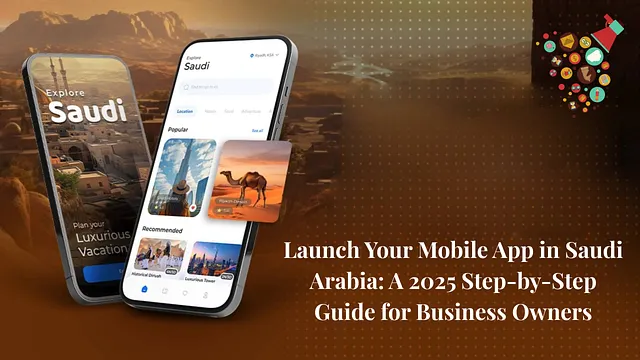
Saudi Arabia is at the forefront of digital transformation. With Vision 2030 driving innovation and a rapidly growing population of tech-savvy users, mobile apps have become a core driver of business growth in the Kingdom. From e-commerce and fintech to healthcare, logistics, and on-demand services, Saudi businesses are embracing mobile apps to connect with customers and scale faster. But how do you take a mobile app idea and turn it into a successful launch on the App Store or Google Play? This guide breaks down the complete mobile app development process in Saudi Arabia — step by step. Step 1: Validate Your App Idea for the Saudi Market Before you start building, ask: What problem does my app solve for Saudi users? Is there a cultural or market gap my app can fill? How do local competitors approach the same challenge? For example, apps related to digital payments, e-learning, delivery services, and healthcare are in high demand across Saudi Arabia. Conducting market research and aligning your app idea with local user behavior is critical. Step 2: Plan Features with Local Needs in Mind Your app should start with an MVP (Minimum Viable Product) — a core version that solves the main problem. Later, you can scale with advanced features. In Saudi Arabia, consider adding: Arabic language support (essential for user adoption) Integration with local payment gateways like STC Pay, Mada, or Apple Pay Regulatory compliance (especially for fintech and health apps) Localization for user preferences (Hijri calendar, cultural UI elements) Step 3: Select the Right Development Approach You can choose: Native Apps (Swift for iOS, Kotlin for Android) — Great for scalability and performance. Cross-Platform Apps (Flutter, React Native) — Cost-effective for startups targeting both iOS and Android simultaneously. Hybrid Apps — Suitable for simpler apps with limited features. For Saudi startups and enterprises, cross-platform development is often preferred to reach a wider audience quickly and efficiently. Step 4: Design With a Local Touch The design must balance global usability standards with local cultural relevance. UI (User Interface): Clean, modern visuals that align with Saudi branding. UX (User Experience): Simple navigation, clear Arabic text support, and intuitive flows. Wireframing & Prototyping: Test early with Saudi users to ensure adoption. A user-friendly design is one of the top reasons apps succeed in the Kingdom’s competitive market. Step 5: Develop Your Mobile App Once the design is ready, the coding begins. Saudi app development companies often follow Agile methodology, ensuring flexibility and faster delivery. Front-End Development: Interface and user interactions. Back-End Development: Databases, servers, and APIs. Integration: Secure connections between front-end and back-end. Strong collaboration between developers, designers, and business analysts ensures your app aligns with Saudi market needs. Step 6: Testing Across Devices and Networks Saudi users rely on different devices and network speeds. That’s why rigorous testing is critical: Functionality Testing: Features work as expected. Performance Testing: The app runs smoothly on both 4G and 5G networks. Localization Testing: Arabic text displays correctly, without alignment issues. Security Testing: Data protection compliance with Saudi cybersecurity standards. Step 7: App Store & Google Play Launch in Saudi Arabia To publish your app: Apple App Store (iOS): Requires an Apple Developer account and strict guideline compliance. Google Play Store (Android): Faster approval but still requires detailed app info. You’ll also need metadata in both English and Arabic — titles, descriptions, and screenshots — to maximize visibility among Saudi users. Step 8: Market Your App in Saudi Arabia Launching an app is only the beginning. You need a marketing strategy tailored to the Kingdom: App Store Optimization (ASO): Use Arabic and English keywords. Social Media Campaigns: Leverage platforms like Snapchat, Twitter (X), and Instagram, which are highly popular in Saudi Arabia. Influencer Marketing: Collaborate with Saudi influencers for early traction. Paid Ads: Google Ads and Saudi-focused Facebook/Instagram ads. Partnerships: Collaborate with local businesses to reach a wider audience. Step 9: Gather Feedback and Optimize Once your app is live, monitor: User reviews on app stores Analytics on engagement, retention, and churn rates Suggestions from Saudi users for culturally relevant features Continuous updates and improvements are vital to stay competitive. Step 10: Scale With Advanced Features Once your MVP gains traction, you can expand with advanced features such as: AI and machine learning for personalization Blockchain-based payments for fintech apps AR/VR features for retail and gaming apps IoT integration for smart home and mobility solutions Saudi Arabia’s digital ecosystem is growing rapidly — apps that adapt quickly will thrive. Conclusion Mobile app development in Saudi Arabia is not just about building an app — it’s about aligning with Vision 2030, cultural needs, and user expectations. By following a clear process — from idea validation to launch and beyond — you can transform your concept into a profitable digital product. Whether you’re a startup or an enterprise in Saudi Arabia, the opportunity is massive. With the right strategy, you can move from idea to App Store and create an app that truly resonates with Saudi users. From Idea to App Store: The Complete Guide to Mobile App Development in Saudi Arabia was originally published in Coinmonks on Medium, where people are continuing the conversation by highlighting and responding to this story
Paylaş
Medium2025/09/18 14:46