

Apollo Sounds the Alarm: AI Profits Are a No-Show Outside Tech, and AI-Heavy ETFs Could Pay the Price
The post Apollo Sounds the Alarm: AI Profits Are a No-Show Outside Tech, and AI-Heavy ETFs Could Pay the Price appeared first on 24/7 Wall St..
Artificial Intelligence (AI) is probably the hottest financial sector right now, based on expectation and anticipation. The expectations are over its far-reaching productivity boosting capabilities to generate huge profits in practically every industrial sector that uses computers, and the anticipation is over AI’s commercial realization timing.
The AI fervor is one of the biggest reasons why the “Magnificent 7” stocks: Apple, Amazon, Alphabet/Google, Meta Platforms/Facebook, Microsoft, Nvidia and Tesla – have soared to trillions in net capital valuation in the past few years. However, while ChatGPT and Grok are using AI for information searches, true commercialization with measurable productivity gains across the board are still a distant target – and a recent analysis from Apollo’s Torsten Slok indicates that the target may be even further away than previously predicted. As such, any tech ETFs with a heavy weighting towards companies with huge AI budgets may find themselves faltering. In particular, holders of the Roundhill Magnificent Seven ETF (CBOE: MAGS) and the iShares Expanded Tech-Software Sector ETF (CBOE: IGV) might wish to be extra vigilant about any forthcoming news regarding AI setbacks or disappointments.
How Much Are The Big AI Players Invested In the Sector?
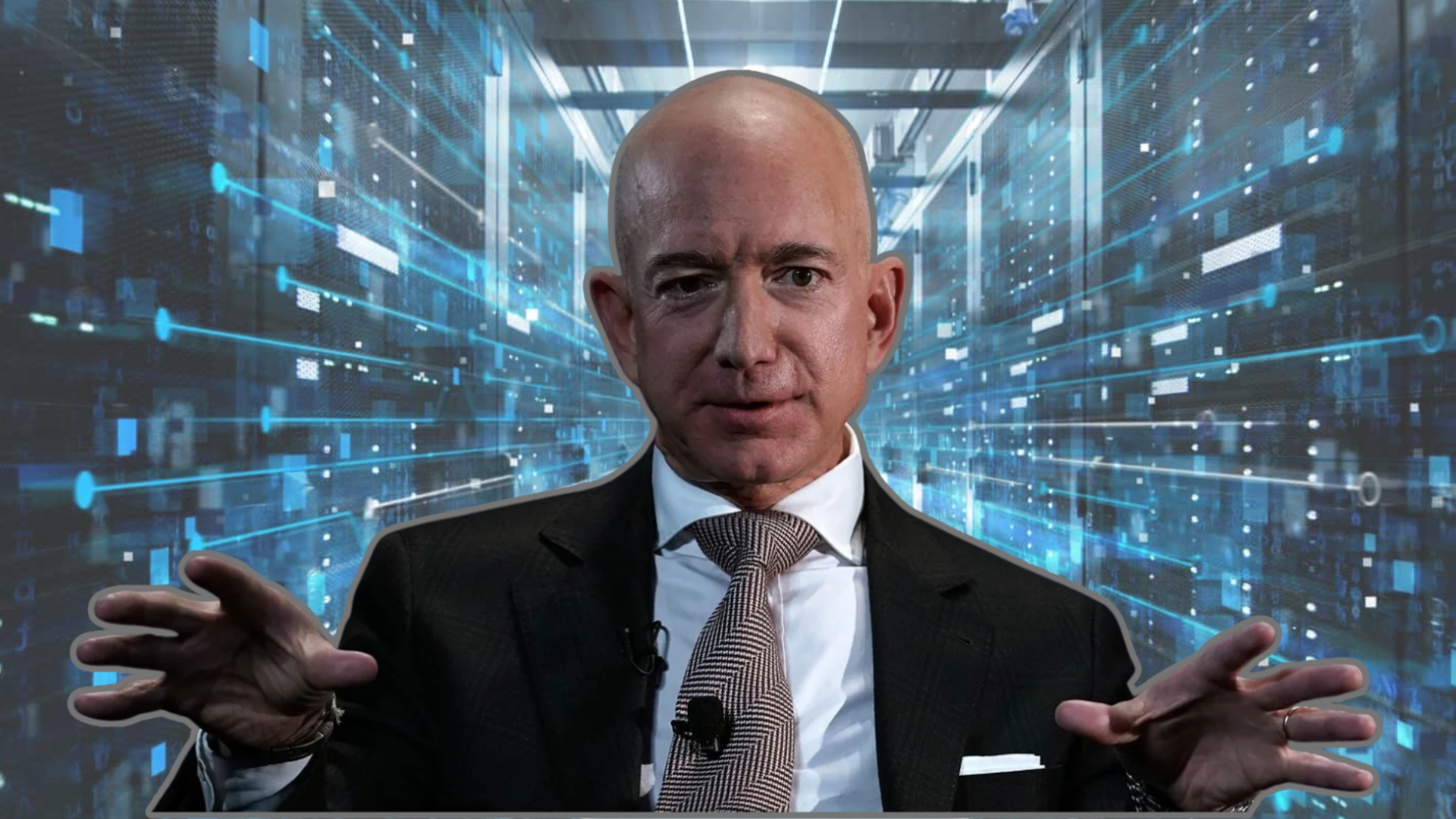
Amongst the Magnificent 7 AI cap-ex budgets for 2026, Jeff Bezos and Amazon leads the pack with a $275 billion cumulative committment.
While the maxim, “You have to spend money to make money” has been true for centuries, a number of tech companies’ commitments to cap-ex on AI has given many shareholders sleepless nights, and anything indicating that AI may not be quite the holy grail being promoted could result in a sell-off. To give an idea of how much the largest AI investments have grown to date:
Amazon: In addition to $200 billion for 2026 cap-ex for AWS cloud AI, it also has pledged $25 billion for Anthropic and $50 billion for federal government AI infrastructure.
Microsoft: Azure cloud and OpenAI data center capacity has been budgeted at $190 billion for 2026 cap-ex, plus an additional $2.5 billion for Microsoft Frontier Company for AI business client deployment training.
Meta Platforms: 2026 cap-ex guidance stands currently at $145 billion, allocated for obtaining hundreds of thousands of GPUs for use in expanding data centers, along with a 49% stake in Scale AI for $14.3 billion.
Alphabet: Google Cloud infrastructure and Tensor Processing Units are expected to eat up $190 billion of 2026 cap-ex.
Just these four companies alone have devoted nearly three-quarters of a trillion dollars for 2026 AI spending – so shareholders are expecting results quickly.
Apollo’s Analysis Is A Sober Dose Of Reality

Despite strides being made with AI in the tech industry, its migration to other sectors, such as banking, has been hampered by regulatory compliance requirements, lack of ergnomic applications for the sector, and exorbitantly higher cost than earlier predicted.
With roughly $938 billion AUM, Apollo Global Asset Management is second only to BlackRock in size, and its clout in financial markets is not to be taken lightly. Apollo’s Torsten Slok published his findings recently, which found that, apart from the tech industry, AI profit gains have yet to show meaningful movement in any other industry.
The entire premise for the huge amount of R&D being poured into AI and its infrastructure is the expectation that it will reduce the delays and errors found in a wide range of service and product sectors. Some of the primary forthcoming AI beneficiaries that are often cited include:
- Federal and Municipal government agencies and bureaucracies
- Hospitals
- Insurance
- Banks
- Utilities
- Defense contractors
- Airlines and Railroads, and associated logistics
- Manufacturing
- Hospitality
- Construction
There are several areas of divergence where AI is looking more likely to fail in the near term:
- Profit Margins: while technology giants such as the Magnificent 7 and a few others have experienced a roughly 10% profit boost in the past three years, other industries that are attempting to utilize AI have seen virtually zero increase from AI, and certainly not enough to defray AI implementation costs so far.
- Higher Than Expected Implementation Obstacles: While AI programmers code applications and new AI developments at tech companies 24/7, reducing the code into ergonomically usable commercial applications in healthcare, finance, and all of the other industries where AI code programming is not a required skillset is still proving to be a daunting task. Integration with existing network systems, structuring AI processes to satisfy regulatory compliance, and creating complimentary workflows to respective industry standards are where many AI developers are getting caught in the tar pit. As a result, AI software, consultant, and development fees are going as high as +300% more than the cost of replacing a human worker already accomplishing the same tasks.
- Market Timing Divergence: Many valuations have been calculated based on 5 month to 1 year implementation before the start of tangible AI profit gains. As the timelines appear now to Slok, that window may be closer to 5 years than to 5 months. As a result, analysts will drop their corresponding earnings projections, and those companies’ stock prices, buoyed by anticipatory AI profit buying, will see some selloffs, some perhaps more severe than others, depending on the respective strengths of their non-AI business divisions.
What The Apollo Analysis Means For AI B2B

Failure of AI adoption to hit its timeline benchmarks can render the hundreds of billions allocated to data center construction to red ink ledger entries until revenues are generated from clients.
Companies that are primarily utilizing AI development for homegrown, proprietary products are probably going to be relatively unaffected. Therefore, companies building hardware for Magnificent 7 members, like Broadcom’s contract to supply its custom AI accelerators and networking systems to Meta Platforms and Alphabet will probably go unscathed.
Tesla, which is using AI for SpaceX, Optimus, Tesla AVs and other in-house projects, is not going to suffer from any outside industry AI delays. Unfortunately, Tesla’s Magnificent 7 stablemates and some peripherally peer tech companies aren’t quite so lucky, since much of their business models for AI are predicated on B2B sales. Any industries where AI adoption is proving not to be cost effective anytime soon will likely hit the brakes on any big AI development expenditures until business conditions can justify the costs. For example:
- Amazon: AWS Cloud services are selling AI models and infrastructure through Amazon Bedrock to third party businesses.
- Microsoft: The company is using Azure AI Foundry and Copilot to market OpenAI for enterprise use.
- Alphabet: Google CloudVertex AI is its conduit for selling its proprietary AI technology to clients.
- Nvidia: Although its bread and butter are its GPUs, Nvidia is also selling AI software, computer systems, and other tools to third party clients.
- Oracle: Oracle’s $50 million+ cap-ex investments in data centers are predominantly intended for third party use.
- Palantir: Palantir’s Artificial Intelligence Platform (AIP) is exclusively designed for government agency and related commercial applications. Much of its guidance for its $7.6 billion 2026 revenue projections are based on it being fully operational. Should government agency sentiment towards AI sour, that number will dwindle appreciably.
The ETF Outlook

Ironically, a slowdown in AI development may be a boon to cybersecurity companies, some of whose business models may be threatened with obsolescence by AI.
Although led by the Magnificent 7, the S&P 500 has 493 other valuable stocks. Investor and fund manager Michael “The Big Short” Burry has been very vocal with his concerns about AI overvaluation, and his is not the sole voice in that camp. Among the ETFs that may be especially worth watching if there is an interim AI meltdown or if several quarters’ worth of AI-related earnings fail to hit their targets are:
Roundhill Magnificent Seven ETF (CBOE: MAGS): MAGS only holds Magnificent 7 stocks, along with cash, treasuries, and other short-term paper for liquidity purposes. As such, it essentially lives or dies by the AI sword, with zero backup behind it. If AI fortunes hit their marks, MAGS can fly. If the time divergence increases, a selloff is a clear eventuality.
iShares Expanded Tech-Software Sector ETF (CBOE: IGV): IGV contains other tech stocks with AI involvement, such as Palantir and Oracle, as well as cybersecurity companies Palo Alto Networks and Crowdstrike. Ironically, a slowdown in AI enterprise use could be beneficial to cybersecurity companies. It would allow for:
- Cybersecurity protocols to catch up with any new client network developments to plug vulnerability gaps and address any laxity in user security protocols that AI might create;
- Reduce any unauthorized data leaks created by employees that might have allowed AI to access and imbed;
- Allay investor fears as to the valuation of their cybersecurity investments with evidence that AI has ways to go before dedicated cybersecurity becomes obsolete.
Don't wait: the analyst who called NVIDIA in 2010 just revealed his top 10 AI stocks. See the full list FREE now.
The post Apollo Sounds the Alarm: AI Profits Are a No-Show Outside Tech, and AI-Heavy ETFs Could Pay the Price appeared first on 24/7 Wall St..


Ayrıca Şunları da Beğenebilirsiniz

Egyptian foreign minister to meet Putin over Iran conflict

Mistral AI to launch robotic model in physical AI push
Binance saw its Ethereum reserves grow by 221,000 ETH while large investor activity weakened, CryptoQuant data shows


Popüler Haberler
Daha fazla
