

Dollar Weakens as Trump Announces Imminent Iran Peace Agreement, Crude Tumbles
TLDR
- Greenback weakened following Trump’s announcement that an Iran peace agreement could be finalized within days
- Crude prices tumbled to their lowest levels in two months amid optimism about Middle East de-escalation
- European currency reached a weekly peak, heading toward its strongest weekly performance in over 30 days
- May producer price data in the United States exceeded expectations, though underlying inflation remained subdued
- Markets anticipate the Federal Reserve will maintain current rates next week, with 60% probability of tightening by year-end
The greenback retreated on Friday following President Donald Trump’s statement that a peace agreement with Iran could be concluded as early as this weekend. According to Trump, Iran’s Supreme Leader has approved the framework, significantly reducing concerns about additional military confrontation in the region.
The U.S. Dollar Index declined 0.1% to settle at 99.803 during London trading hours, after touching a one-week low in overnight sessions. The index was positioned for a 0.3% weekly loss.
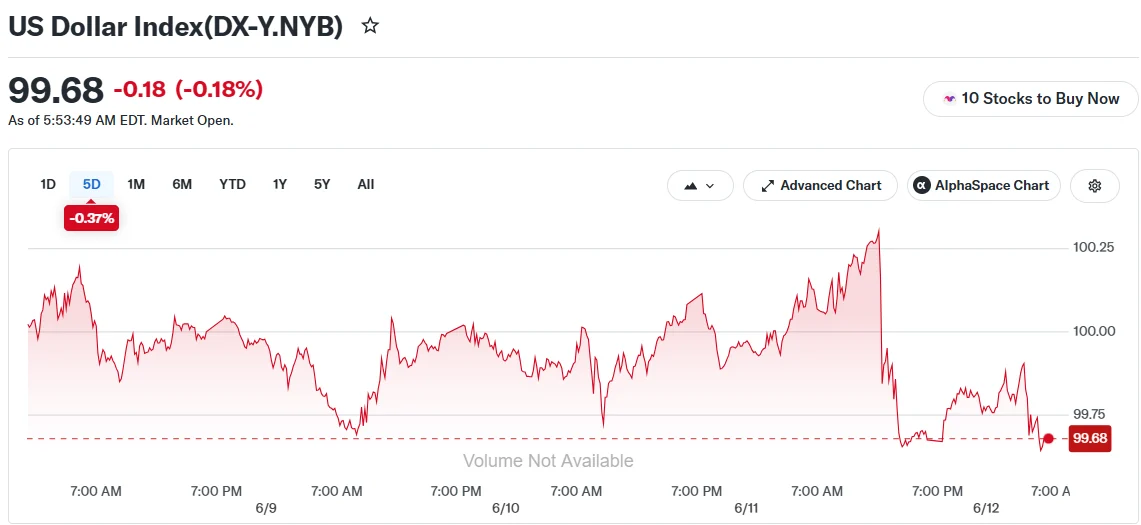 US Dollar Index(DX-Y.NYB)
When market participants embrace greater risk, the dollar typically weakens. This occurs as traders rotate out of traditional safe-haven positions when geopolitical anxieties subside.
Oil prices experienced significant declines, plunging to approximately two-month lows. The retreat in energy markets applied additional downward pressure on the dollar, particularly since the United States maintains its status as a net petroleum exporter.
European Currencies Gain Ground
The euro traded near its highest point in a week and appeared poised for its most impressive weekly advance in over a month. The currency received support from the European Central Bank’s decision to implement its first interest rate hike in almost three years.
Britain’s currency showed minimal movement on Friday while maintaining its trajectory for the strongest weekly showing in nearly four weeks. The pound shrugged off economic data revealing the U.K. economy shrank 0.1% in April, marking its first monthly contraction since August.
Sterling’s recent momentum remains vulnerable. Market participants are closely monitoring the June 18 Makerfield by-election, as the outcome could carry significant political ramifications for Prime Minister Keir Starmer.
The Bank of England convenes next week with widespread expectations of maintaining current rate levels. Officials confront the dual challenge of persistent inflation alongside weakening economic growth.
Federal Reserve Meeting Ahead as Price Pressures Show Mixed Picture
May producer price data in the United States surpassed forecasts, primarily due to elevated energy expenses connected to earlier Middle East tensions. Nevertheless, the core measure of producer prices, excluding volatile food and energy components, increased less than anticipated.
The contradictory signals provided some reassurance that the Federal Reserve won’t pursue immediate tightening. Market expectations for additional rate increases have shifted toward the latter part of the year.
The central bank convenes next week with broad consensus anticipating unchanged policy rates. Traders will scrutinize Chair Jerome Powell’s post-meeting remarks for any indication regarding future monetary policy direction.
Current market pricing suggests approximately 60% odds of a rate increase materializing by December, based on CME FedWatch tool data.
The post Dollar Weakens as Trump Announces Imminent Iran Peace Agreement, Crude Tumbles appeared first on Blockonomi.


Ayrıca Şunları da Beğenebilirsiniz

Final $242K BFX Presale Triggers BlockchainFX Listing Date Countdown
Oil’s Two-Month Low: How Iran De-Escalation Reprices S&P 500 Inflation Risk

Drift Protocol Breach Triggers Up to $285 Million Losses


Popüler Haberler
Daha fazla
