

Ghibli Park Guide 2026: Tickets, Access & What to See
Studio Ghibli’s real-life world is in Aichi, not Tokyo — here’s how to actually plan it
Half the people who search “Ghibli Park” think it’s in Tokyo. It isn’t. It’s in Aichi, near Nagoya, it sells out months ahead, and it’s not the ride-filled theme park most people picture. Here’s how to book it, get there, and pick the right pass without wasting yen.
| Quick Facts | Details |
|---|---|
| Where | Nagakute, Aichi — inside Expo 2005 Aichi Commemorative Park (near Nagoya, not Tokyo) |
| Getting there | ~50 min from Nagoya Station: Higashiyama subway line → Linimo train to Aichikyuhaku-kinen-koen |
| Tickets | Book 2 months ahead on Klook or Lawson; released 2 PM JST (1 PM SGT) on the 10th |
| Price | Single-area passes from 1,000 JPY (~S$8); all-area Premium pass 7,300–7,800 JPY (~S$59–63) |
| Rides? | Barely — it’s a walk-through, immersive park, not a coaster park |
| How long | Half a day for one or two areas; a full day for all five |
| Pay with | YouTrip card — 0% FX, lock in the yen rate before you go |
Table of Contents
- Ghibli Park vs the Ghibli Museum: What’s the Difference?
- Where Is Ghibli Park & How to Get There
- Ghibli Park Tickets: Prices and How to Book
- Does Ghibli Park Have Rides? What to Actually Expect
- The 5 Areas of Ghibli Park (And Which to Prioritise)
- Food, Lockers, Luggage & Bag Policy
- Ghibli Park Merch: What’s Worth Buying
- How Many Days Do You Need?
- Paying in Japan: The Smart Way to Spend Yen
- FAQ
Ghibli Park vs the Ghibli Museum: What’s the Difference?
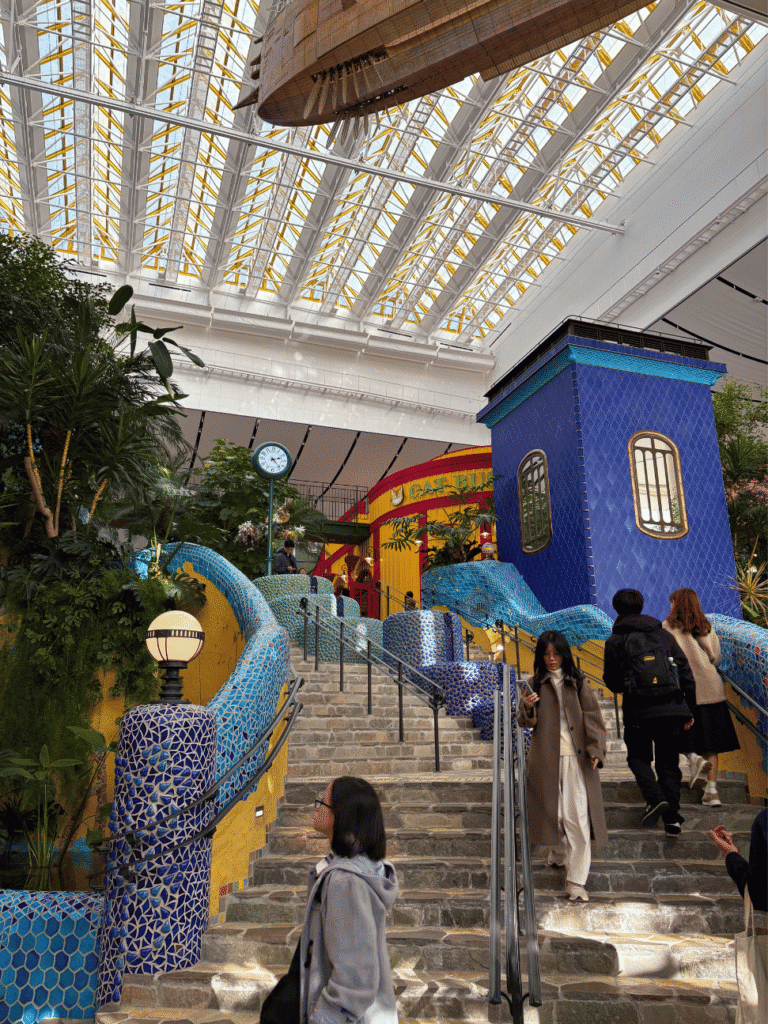
They’re two different places, in two different cities. Ghibli Park is an open-air park in Aichi (near Nagoya). The Ghibli Museum is a small indoor museum in Mitaka, Tokyo. Mixing them up is the single most common Ghibli planning mistake.
Here’s the quick split:
| Ghibli Park | Ghibli Museum | |
|---|---|---|
| Where | Nagakute, Aichi (near Nagoya) | Mitaka, a Tokyo suburb |
| What it is | Sprawling outdoor park across 5 themed areas, with life-sized film sets you can walk into | Compact, whimsical museum about Ghibli’s art and animation process |
| Opened | November 2022 | October 2001 |
| Time needed | Most of a day | 2–3 hours |
| Getting there | ~4.5-hour Shinkansen-and-train trip from Tokyo — usually a Nagoya/Kansai-leg stop, not a Tokyo day trip | Easy from central Tokyo |
| Booking | Its own ticket + booking system | Separate tickets and booking system entirely |
If you only have time for one and you’re based in Tokyo, the museum is far easier to reach. If you’re already heading to Nagoya, Kyoto, or Osaka, the park is the bigger, more immersive day out.
 Related Guide: Building a wider Japan route around this? Our 14-day Tokyo–Kyoto–Osaka itinerary shows where Aichi slots in.
Where Is Ghibli Park & How to Get There
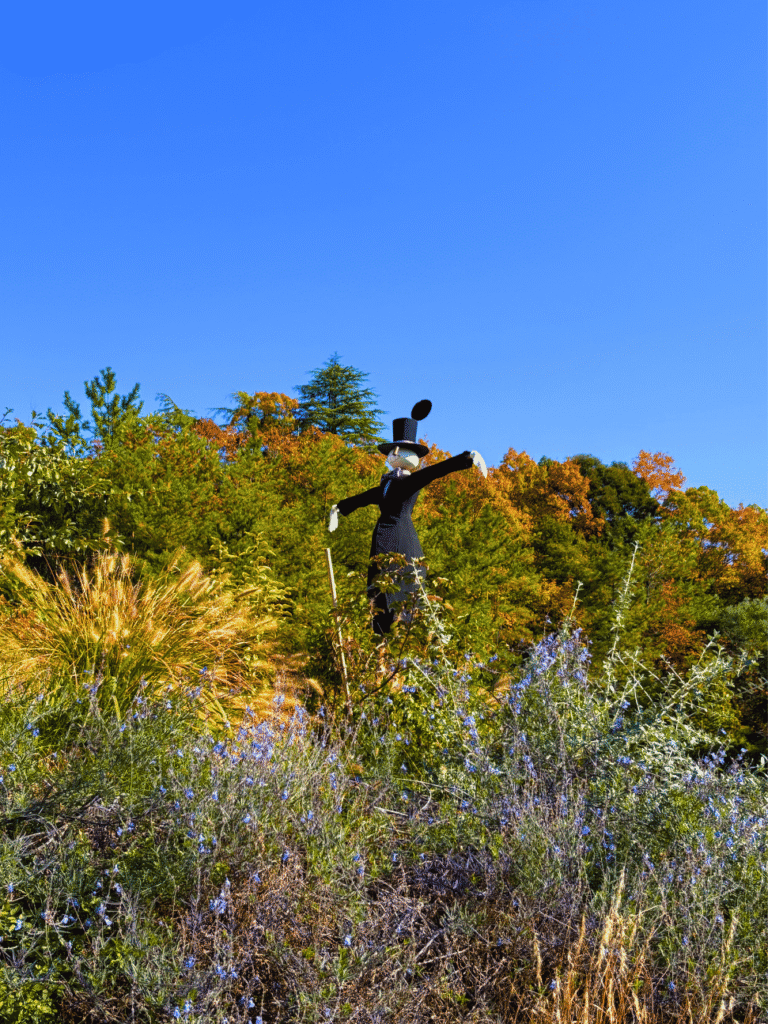
Ghibli Park sits inside the Expo 2005 Aichi Commemorative Park (also called Moricoro Park) in Nagakute, just east of Nagoya. The nearest airport is Chubu Centrair (NGO), which Changi connects to directly — handy if Aichi is your entry point rather than Tokyo.
Getting There From Nagoya
From Nagoya Station, it’s about a 50-minute trip and roughly 670 JPY (~S$5.40) each way:
- Step 1: Take the Higashiyama subway line to its last stop, Fujigaoka (around 30 min, 310 JPY / ~S$2.50). You can stay on until the terminus, so it’s hard to get lost.
- Step 2: Transfer to the Linimo, a magnetic-levitation train, and ride to Aichikyuhaku-kinen-koen (about 15 min, 360 JPY / ~S$2.90). The Linimo runs every 10–15 minutes.
- Step 3: Exit the station and the park’s North Gate is a short walk away — around 5 minutes to the first areas.
Getting There From Tokyo
From Tokyo, take the Tokaido Shinkansen to Nagoya (about 1 hr 40 min), then follow the Nagoya route above. Total door-to-gate is around 3.5 hours, which is why most people pair the park with a Nagoya or Kansai stop rather than daytripping it from Tokyo. If you’re working out whether a rail pass pays off for that kind of trip, it’s worth running the numbers first.
Getting Around the Park
The five areas are spread across a large park, with 5–15 minute walks between them. Free shuttle buses loop around every 20–30 minutes if you’d rather not walk it all, which helps if you’re doing the full five-area Premium route with kids in tow.
Related Guide: Flying into Nagoya instead of Tokyo? Compare fares first with our Japan budget airlines guide.
Ghibli Park Tickets: Prices and How to Book
You cannot buy tickets at the gate. Every ticket, weekday or weekend, must be reserved in advance online, and popular dates sell out within the hour. This is the part that trips up most Singapore visitors, so plan the booking, not just the trip.
Ticket Types and Prices
There are two main day passes for overseas visitors, plus a couple of paid add-ons sold inside the park:
| Pass | What It Covers | Weekday | Weekend/Holiday |
|---|---|---|---|
| O-Sanpo Day Pass Premium | All 5 areas, including the headline buildings (Howl’s Castle, Satsuki & Mei’s House, World Emporium) | 7,300 JPY (~S$59) | 7,800 JPY (~S$63) |
| O-Sanpo Day Pass Standard | 3 areas: Grand Warehouse, Mononoke Village, Valley of Witches | 3,300 JPY (~S$27) | 3,800 JPY (~S$31) |
| Howl’s Castle entry (add-on) | Inside Valley of Witches, bought same-day on-site | 1,000 JPY (~S$8) | 1,000 JPY (~S$8) |
| Okino Residence / House of Witches (add-on) | Inside Valley of Witches, same-day on-site | 400 JPY (~S$3) | 400 JPY (~S$3) |
Children aged 4–12 pay roughly half; kids 3 and under go free. The Premium pass is the one to get if you want to actually step inside the famous sets. The Standard pass lets you wander three areas but you won’t get to experience the headline areas.
How to Book (And When)
You can only buy tickets in advance online. Tickets are released two months in advance, at 2 PM Japan time on the 10th of each month — that’s 1 PM Singapore time (Japan is one hour ahead). So for a visit in, say, August, the tickets drop on 10 June. Set a reminder because tickets sell out fast!
Popular dates (weekends, Golden Week, school holidays) can sell out within the hour, so it’s fastest fingers first.
The two official platforms:
- Klook — the easiest route for Singapore visitors: English interface, takes international cards, first-come-first-served. It tends to sell out faster. (Tip: book through YouTrip Perks for up to 7.5% Klook cashback.)
- Lawson Ticket — the primary official vendor for overseas buyers. It’s fiddlier if you don’t read Japanese, but it runs a waiting-room queue and usually has more stock.
Booking-day game plan:
- Prep before 1 PM SGT. Set up your account(s), have every visitor’s passport number on hand, and save your payment details — you won’t have time to fumble once the queue opens.
- Double your odds. Log into both Klook and Lawson across a couple of devices (laptop plus phone) and work them in parallel.
- Check the clock. Use a time-zone converter so you’re in the queue the second sales open, not a minute behind.
You’ll need a passport number for each ticket at booking, and you’ll show that same passport at the gate.
One hard rule: tickets can’t be cancelled, refunded, rescheduled, or resold once bought. Lock your date before you book.
Related Guide: Pairing the park with a Kansai leg? Our 30 things to do in Osaka maps out the rest of the trip.
Does Ghibli Park Have Rides? What to Actually Expect
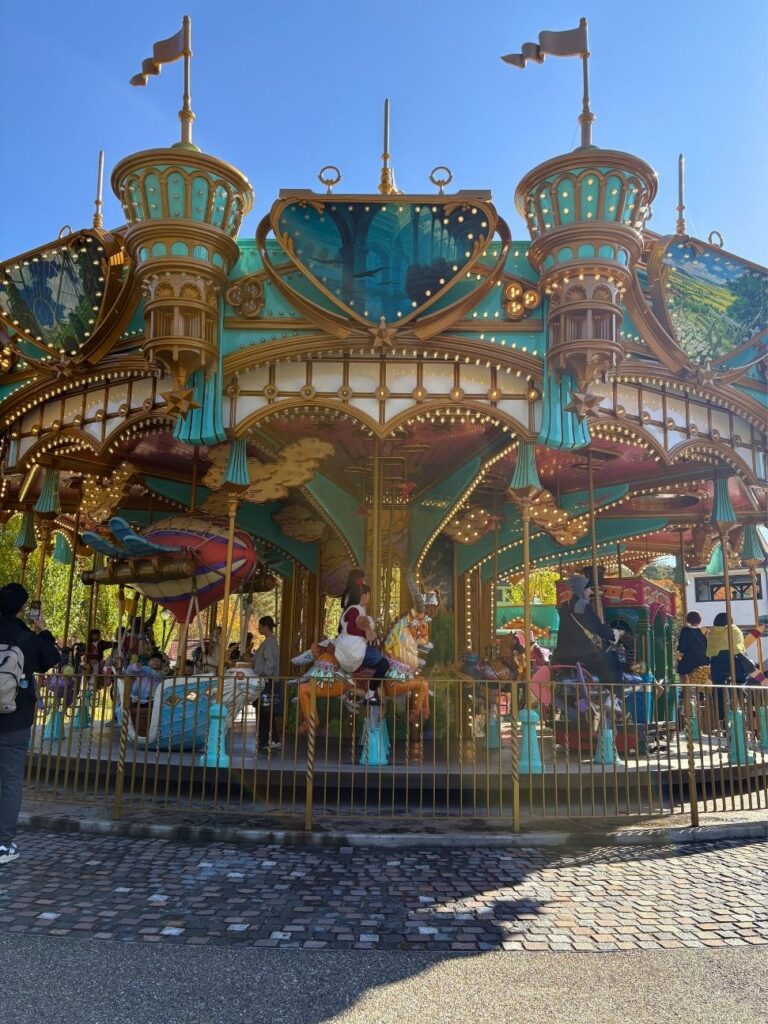
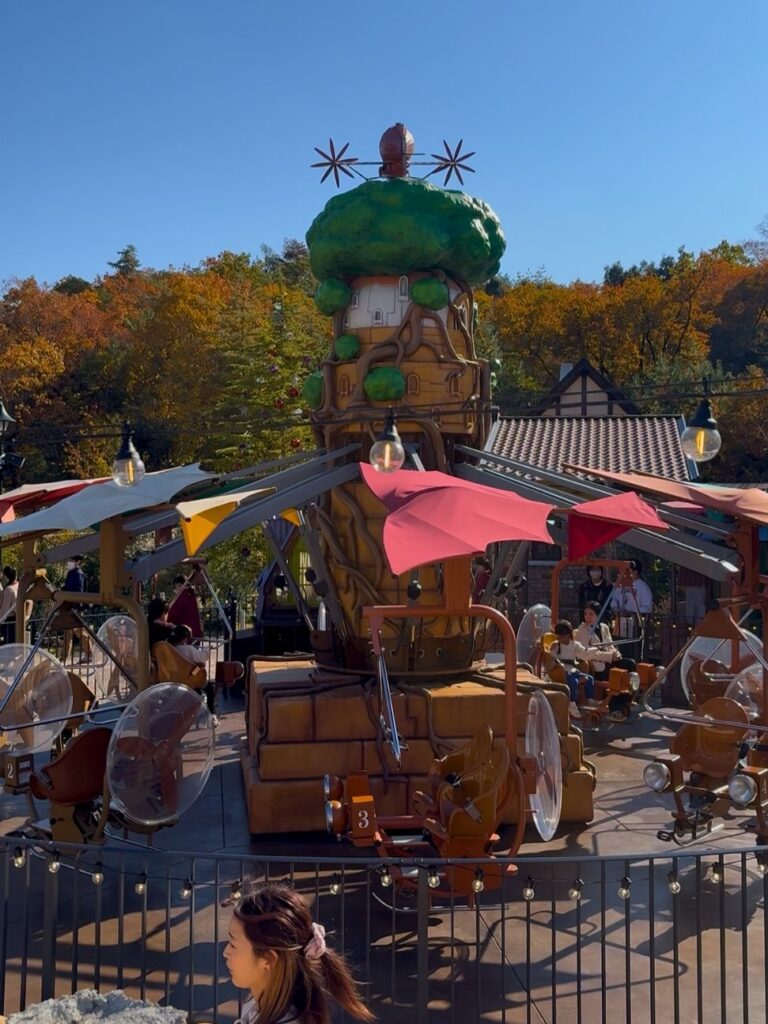
Mostly no — and that’s the thing to know before you go. Ghibli Park is a walk-through, immersive park built around life-sized film sets and detailed environments, not roller coasters. You’re here to wander into the worlds, not queue for thrill rides.
There are a few gentle, mostly paid rides, almost all in the newest area, Valley of Witches:
- A carousel and a “flying machine” ride
- The cat buses that shuttle between Dondoko Forest and Mononoke Village (around 1,000 JPY / ~S$8 for adults)
- Small play structures and slides aimed at younger kids
If you’re expecting Universal Studios energy, recalibrate — this is slower, quieter, and far more about atmosphere and photos. Go in with the right expectation and it delivers; go in expecting coasters and you’ll be confused.
Related Guide: Want the actual coaster day too? Pair it with our Universal Studios Japan guide on the Osaka leg.
The 5 Areas of Ghibli Park (And Which to Prioritise)
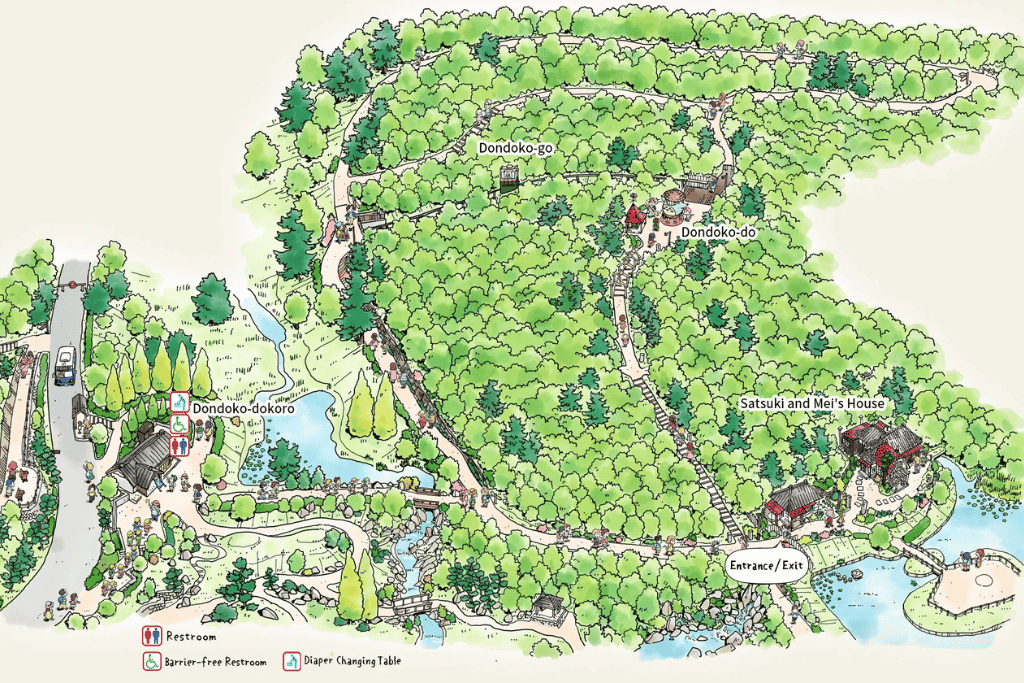
Image Credits: ghibli-park.jp
Ghibli Park is split into five themed areas, opened in stages between 2022 and 2024. Each one is its own little world to step into rather than a “zone” to tick off. You don’t need all five to have a good day — here’s what each one is and who it’s for.
Ghibli’s Grand Warehouse
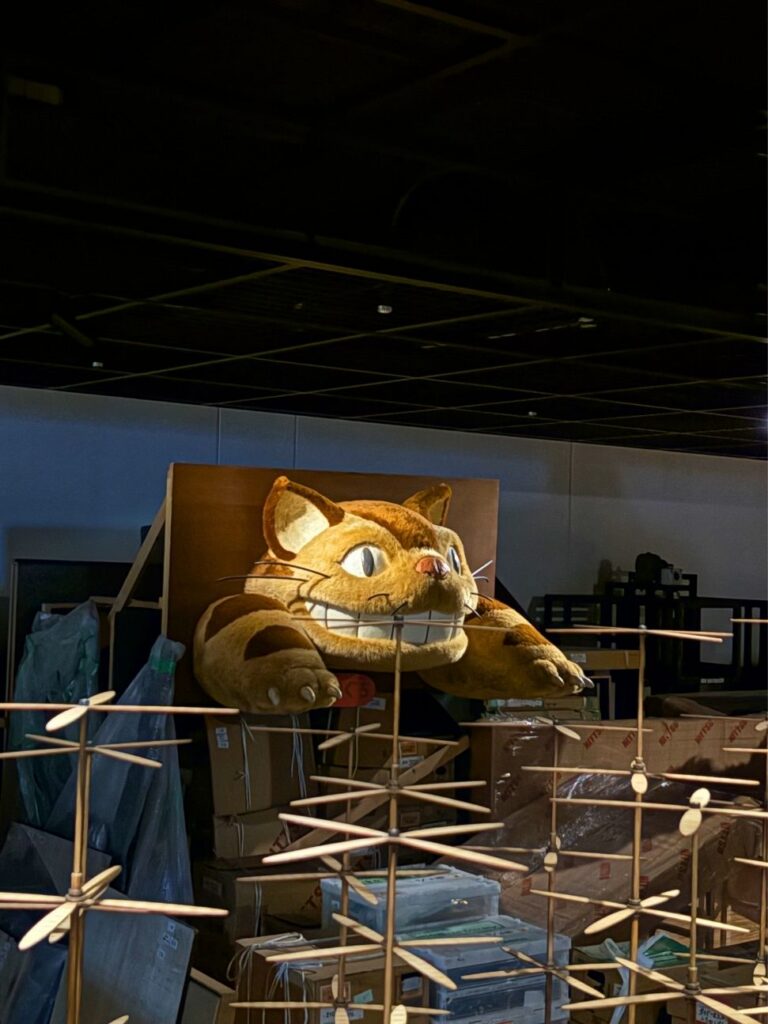
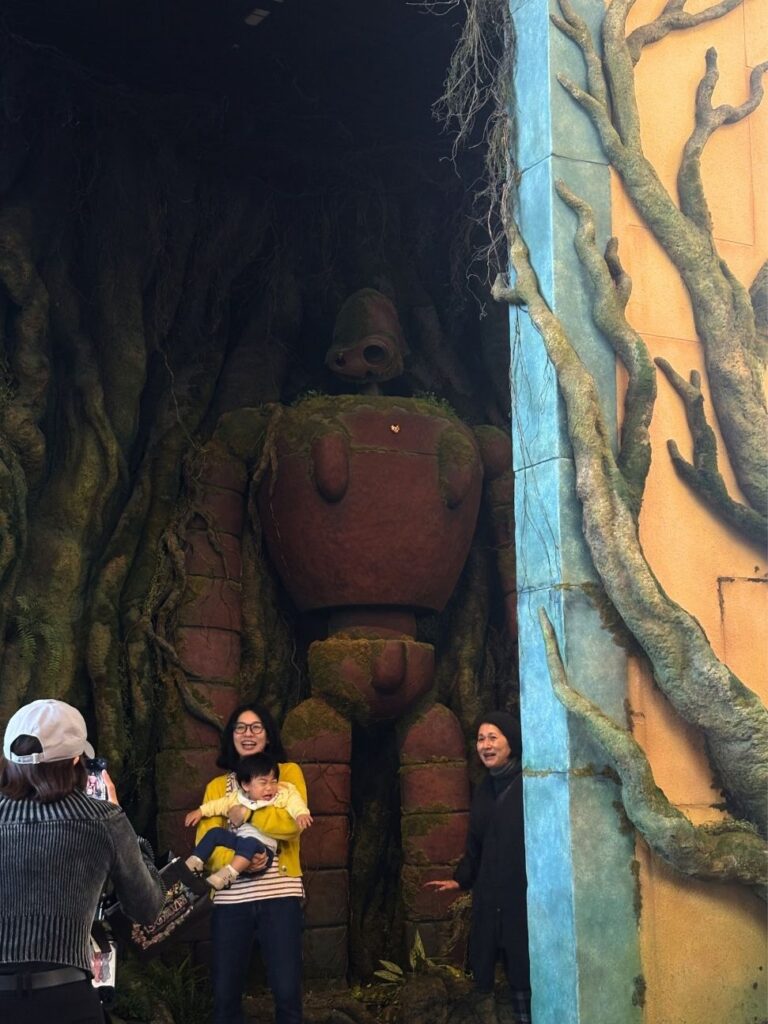
The big indoor hub, and the one most people prioritise — fully climate-controlled, so it’s your safe bet in summer heat or rain. The headline draw is “Becoming Characters in Memorable Ghibli Scenes,” 14 life-sized sets where you pose inside the films: climb aboard the Spirited Away sea-railway train beside No-Face, or drop into the others recreated down to the last prop.
Beyond the photo sets, it’s denser than it looks.
- Cat Bus Room, a soft, climbable Totoro-world play space for little kids
- Children’s Town, a miniature retro-Tokyo neighbourhood modelled on Studio Ghibli’s real headquarters
- The Director’s Room, where Yubaba from Spirited Away sits at her desk
- The Garden in the Sky, guarded by Castle in the Sky’s mossy Robot Soldiers
- Cinema Orion is a 170-seat theatre screening original Ghibli shorts you genuinely can’t watch anywhere else.
- Minami-machi, a nostalgic indoor shopping lane, and two cafés, and this alone is an easy two to three hours. If you only do one area, make it this.
Included in both the Premium and Standard passes.
Dondoko Forest
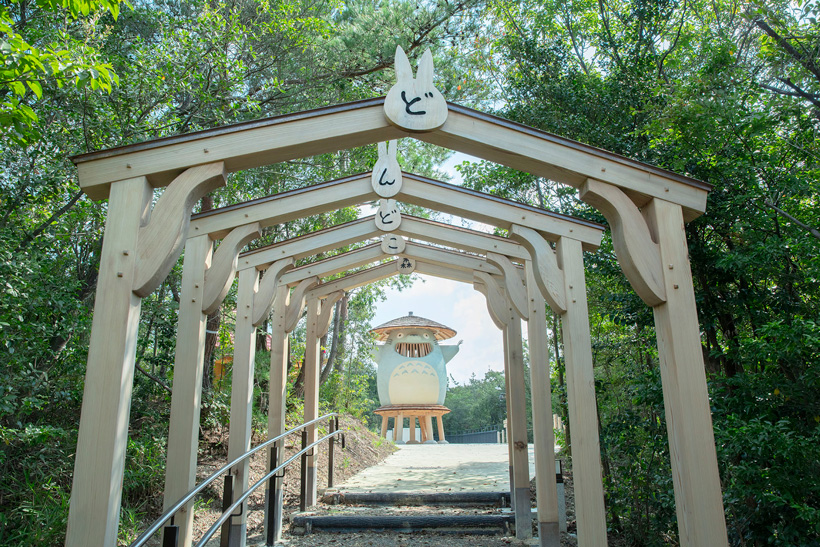
Image Credits: ghibli-park.jp
The home of the famous Satsuki and Mei’s House — a full recreation of the Totoro family home that you wander right through. Kitchen, bath, sitting room, study, all furnished in that 1950s Japanese-Western style down to the props in the cupboards. It’s the film made real, and the detail is the whole point.
The rest of the area is genuinely outdoors: a leafy hillside laced with acorn-marked trails leading up to Dondoko-do, a five-metre wooden play structure that kids twelve and under can clamber inside (a small separate ticket; there’s a slope car up the hill for strollers and wheelchairs). Nature-heavy, so check the weather.
Premium pass only.
Hill of Youth
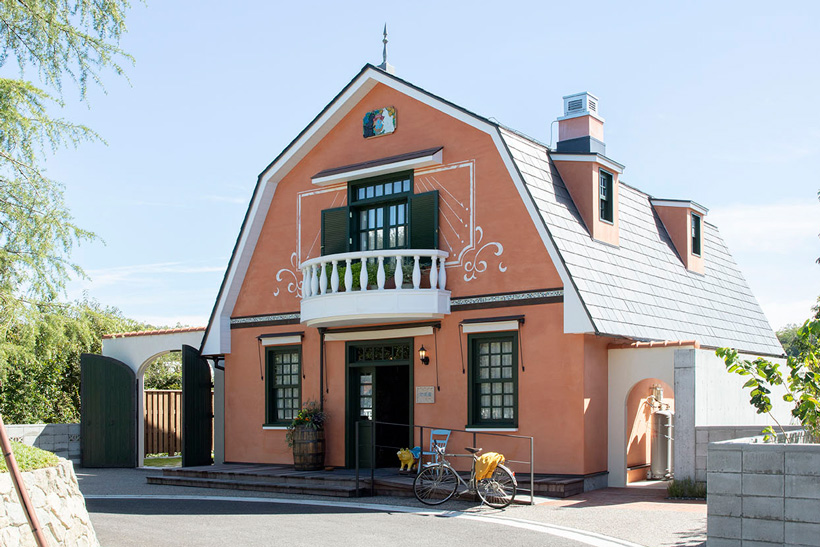
Image Credits: ghibli-park.jp
Small but lovingly detailed, the kind of area you slow down in. The anchor is the World Emporium, the cluttered, lamp-lit antique shop from Whisper of the Heart: cuckoo clocks, dolls and wooden horses upstairs, a violin-maker’s workroom below, and terraces looking out over the park.
Don’t miss The Cat Bureau from The Cat Returns, a tiny cat-sized house built with real techniques and home to Baron and Muta, or the Elevator Tower with its 19th-century sci-fi look lifted from Castle in the Sky and Howl’s Moving Castle. There’s even a working post box at The Rotary if you want to mail a postcard home. Quick to see at 30 to 45 minutes, but charming.
Premium pass only.
Mononoke Village
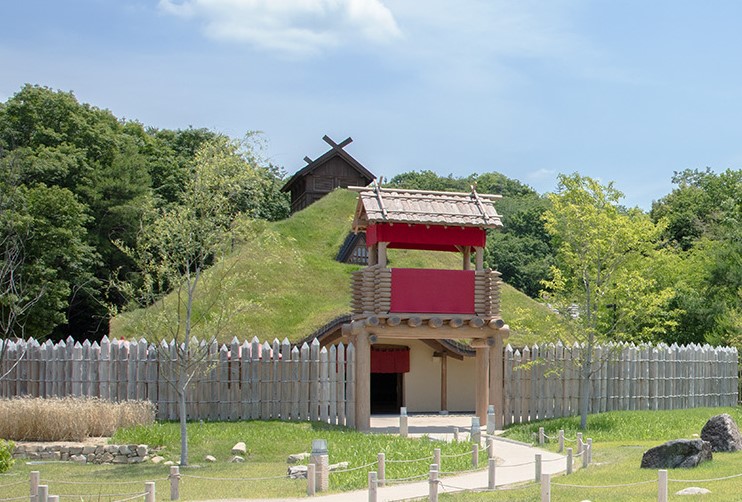
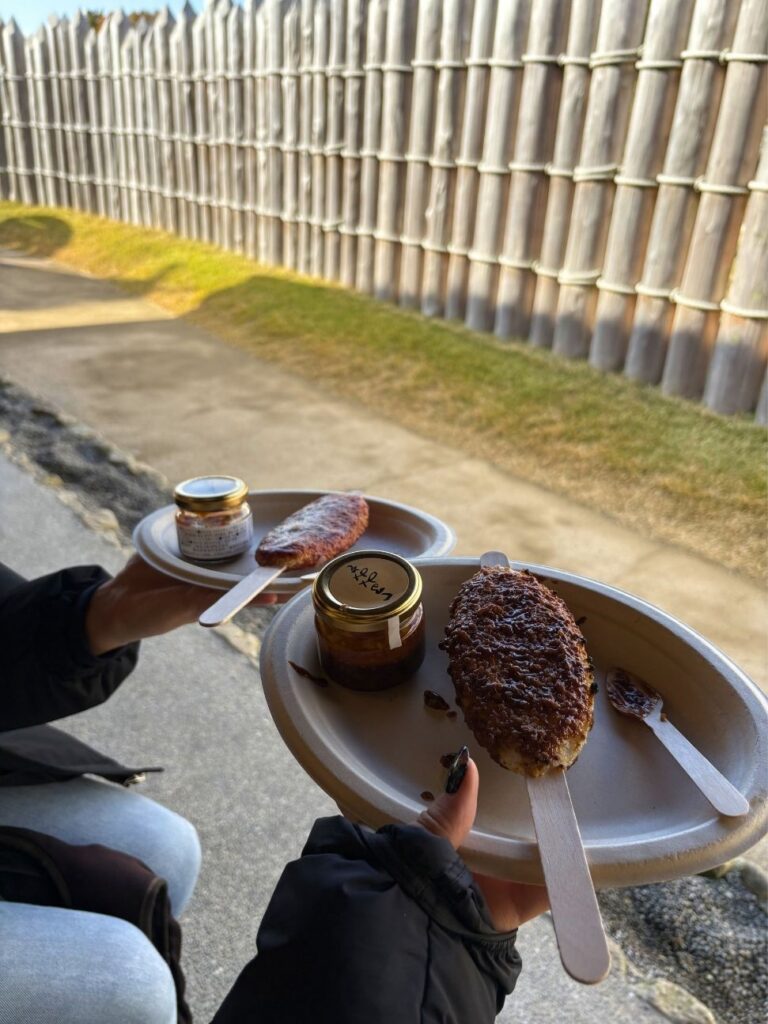
Image Credits (left): ghibli-park.jp
The most rustic and atmospheric of the five. Think woodsmoke and timber over bright lights, modelled on the mountain village from Princess Mononoke. At its heart is Tatara-ba, a grass-roofed workshop hall styled after the film’s ironworks, where seasonal hands-on experiences run: grind your own kinako soybean flour to top warabi-mochi, or (from late 2026) charcoal-grill gohei-mochi rice cakes with your pick of walnut-miso, soy or Napolitan sauce.
Looming over the village is the Demon Spirit sculpture (the cursed boar from the film’s opening) beside a watchtower from Emishi Village. Kids get Lord Okkoto, a giant boar slide rendered in colourful mosaic tile.
Included in Premium and Standard passes.
Valley of Witches
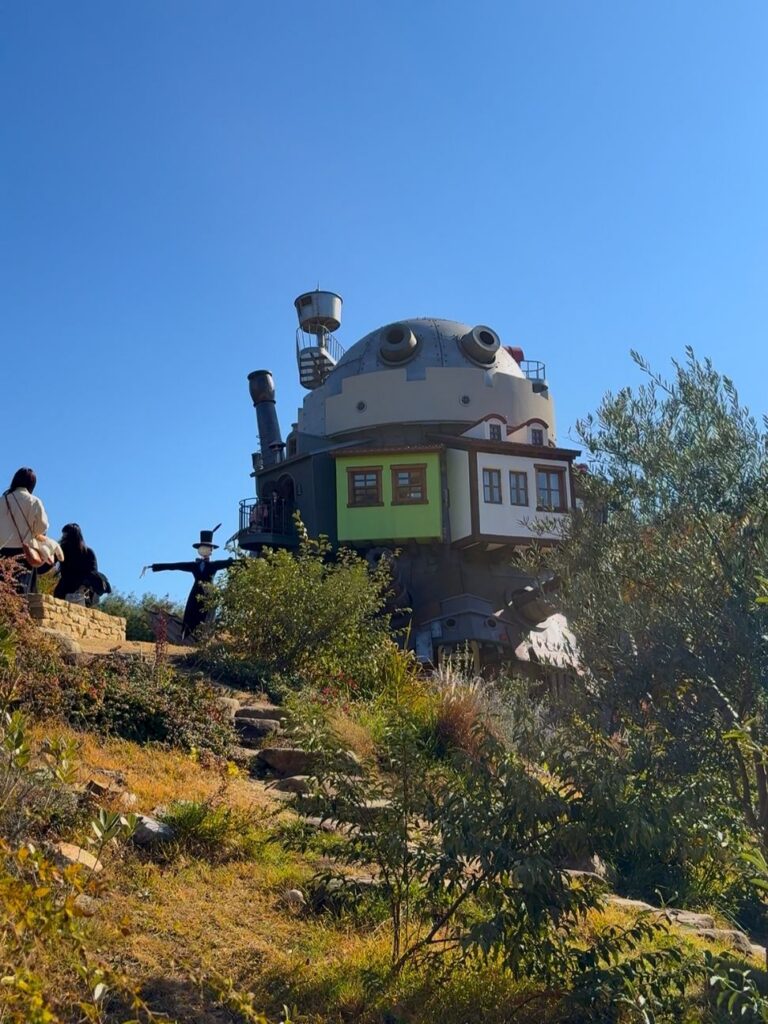
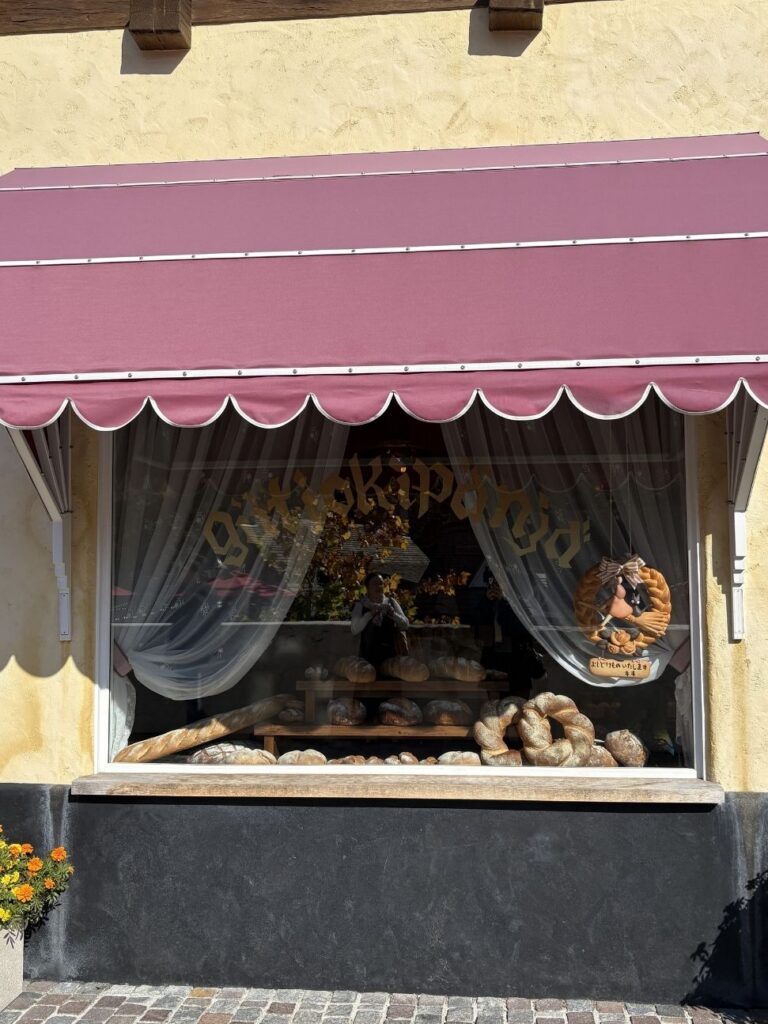
The newest and most ride-friendly area (opened March 2024), built as a European-style townscape across Ghibli’s witch films. The centrepiece is Howl’s Moving Castle — around 20 metres of clanking metal and chimneys that genuinely move and puff smoke, with Calcifer’s furnace, Sophie’s room and Howl’s bedroom-studio inside, and Turnip-head waiting at the door.
Across the square, Okino Residence is Kiki’s family home, complete with the witch’s medicine shop, a seasonal garden, and her little attic bedroom; the half-timbered Guchokipanya bakery is where Kiki and Jiji stay upstairs. This is also the only area with proper rides — a Ghibli-themed carousel and a Castle in the Sky flying machine (both paid, small kids welcome).
Eat at the Flying OVEN for European pies and quiches with a rooftop garden, or grab a cat-shaped hot-dog bun from Hot Tin Roof. The most “do things” of the five.
Included in both Premium and Standard passes.
If you’re short on time: Grand Warehouse + Valley of Witches gives you the most to see and do, and both sit on the Standard pass. Add Dondoko Forest (and the Premium pass) if Totoro’s house is non-negotiable for you.
Related Guide: More of Japan on the list? Our 35 best things to do in Tokyo covers the other end of the trip.
Food, Lockers, Luggage & Bag Policy
The practical stuff that the magical-photos blogs skip. Here’s what you need to know so a suitcase doesn’t derail your day.
Food
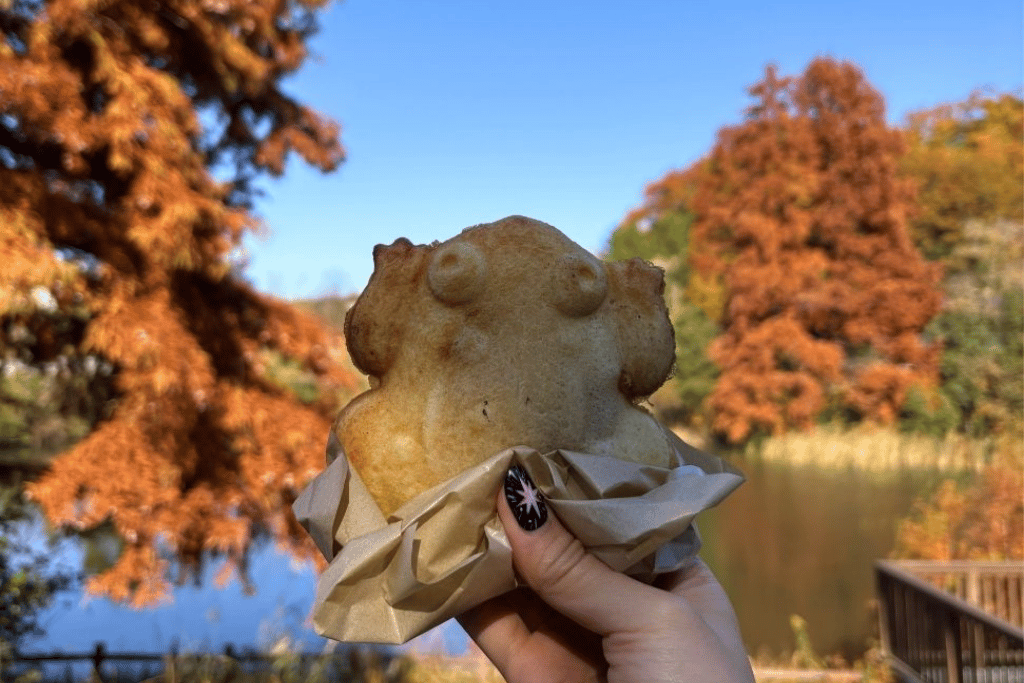
There’s food, but it’s spread thin and themed, not a giant food court. Grand Warehouse has a milk stand and a café doing sandwiches, pizza and drinks. Valley of Witches has a sit-down restaurant, a bakery, and a hotdog stand. Lines build at peak lunch, so eat early or late — or pack a snack for between areas.
Lockers and Luggage Storage
Ghibli Park itself does not store luggage, and large bags and suitcases aren’t allowed inside the areas. There are coin lockers in the wider Expo 2005 Commemorative Park (North Gate, West Gate and Global Center), but they fill up. The smart move: leave your suitcase in a coin locker around Nagoya Station before you head out, and travel to the park hands-free.
Bag Policy
Keep it to a day bag. Anything suitcase-sized gets turned away at the area entrances, so don’t roll up straight from the Shinkansen with your luggage in tow.
Related Guide: Making a day of it in the area? Our 20 best things to do in Nagoya rounds out the trip.
Ghibli Park Merch: What’s Worth Buying
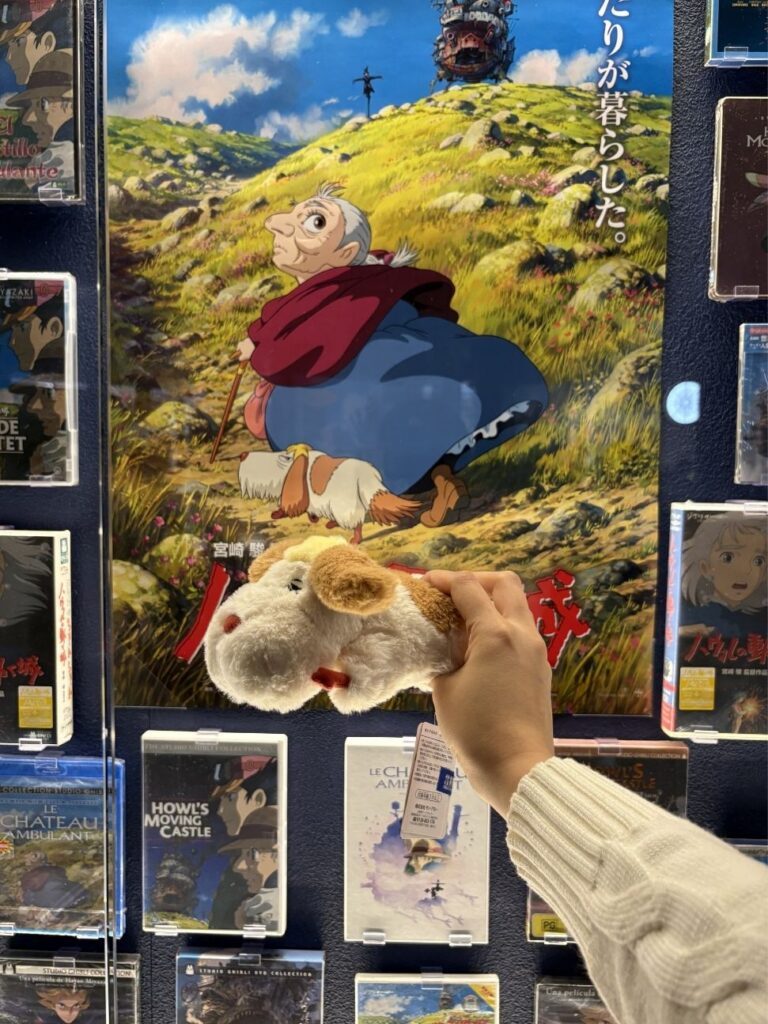
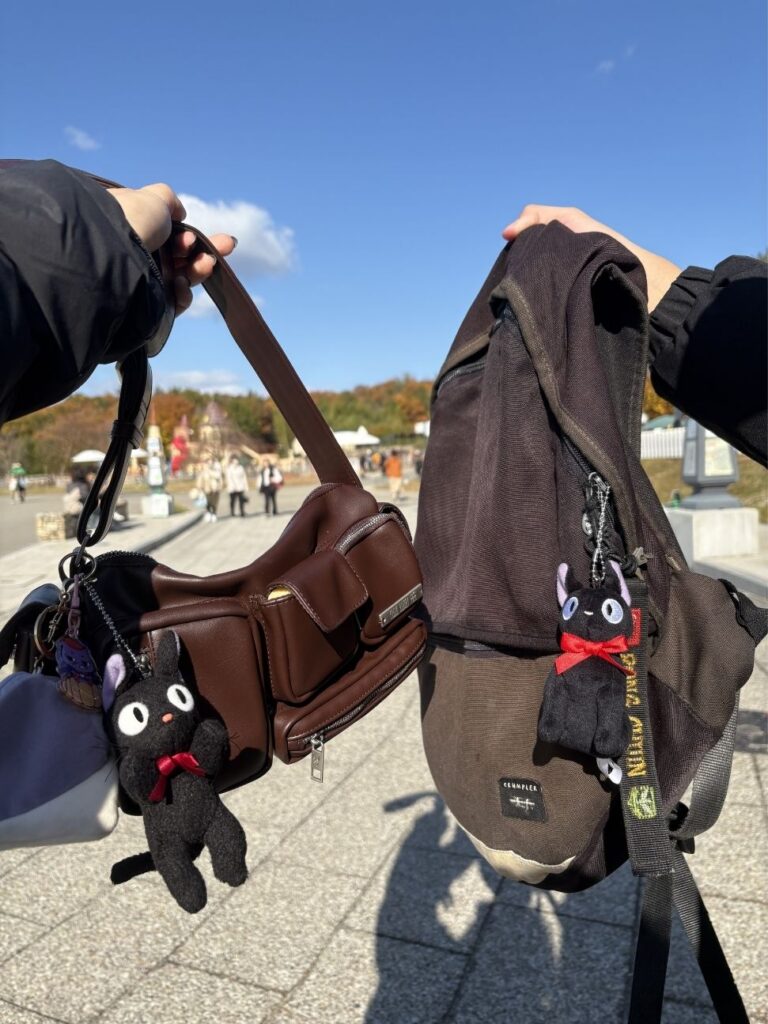
The shops are half the reason to go, and the park-exclusive stuff is the bit you can’t get anywhere else. The rule: skip the items you recognise from Donguri Republic back home, and spend on the things stamped Ghibli Park.
- Adventurous Flying Squadron (Grand Warehouse) — the biggest shop in the park and the one to budget time for. It stocks merch from every Ghibli film plus park-original tees, pins, stickers, postcards, cookie tins, and the plush cat buses in every size.
- Minami-machi (Grand Warehouse) — a recreated old-town shopping lane with a bookstore, a scale-model-kit shop, and an old-school Japanese sweet shop. Good for quirkier, less-obvious souvenirs.
- Witch Coven 13 (Valley of Witches) — the area’s main shop, leaning into the witchier films (Kiki, Howl). Different stock from the Grand Warehouse, so it’s worth a look even if you’ve already shopped. Nearby, Hatter’s Millinery does candy and hats.
- Dondoko Shop (Dondoko Forest) — small, but the spot for Totoro-leaning keychains and amulet pouches you won’t find in the bigger stores.
Two practical notes. Most shops sit inside the ticketed areas, so you need a pass to reach them. The exception is Rotunda Kazegaoka near the North Entrance, which sells Ghibli souvenirs and snacks without a park ticket, handy if a non-visiting friend wants something.
 If merch is a priority, shop first. The popular park-exclusive items sell out fast, especially on weekends and over the holidays. Hit the shops in your first area early and buy when you see it, rather than saving shopping for the end and circling back to empty shelves.
Related Guide: Stocking up beyond the park too? Our what to buy in Japan guide has the region-by-region picks.
How Many Days Do You Need?
Most people need a half-day to a full day, depending on the pass. It’s not a multi-day park.
- Half a day: Standard pass, focused on Grand Warehouse and Valley of Witches. Doable as a morning or afternoon if you’re efficient.
- Full day: Premium pass, all five areas. Budget the whole day — the walking between areas adds up, and you’ll want photo time.
Opening hours are 10 AM–5 PM on weekdays and 9 AM–5 PM on weekends and holidays. The park is closed most Tuesdays (it shifts to the next weekday if Tuesday is a public holiday) and over the New Year period, so check the official calendar against your dates before you book travel.
Slot the park into a Nagoya or Kansai leg, give it a full day on a Premium pass, and you’ve got one of the most photogenic days of the whole trip.
Related Guide: Working out train costs across the trip? Our JR Pass 2026 guide runs the worth-it maths.
Paying in Japan: The Smart Way to Spend Yen
Japan is still a surprisingly cash-friendly country, and Ghibli Park is a good example of why how you pay matters. The cafés and bakery take cards but smaller stalls may not, and the lockers want coins. So you’ll spend a mix of card and cash — and that’s exactly where a normal credit card quietly bleeds you 3–3.5% in foreign transaction fees on every tap.
Here’s the cleaner setup with a YouTrip card:
- Lock in your JPY rate before you fly. Convert SGD to yen in-app at the wholesale (interbank) rate when it looks good, and spend it later with 0% FX fees. The yen has been hovering near multi-year lows against the SGD, which works in your favour right now.
- Tap for everything cards-accepted. Tickets bought on the spot, café meals, the bakery — with no foreign transaction fee.
- Pull cash from an ATM when you land, not from a money changer. Money changers don’t show a “fee”, they just bake a markup of a few percent into the rate, and it’s worse at airport counters. With YouTrip, your first S$400 of overseas ATM withdrawals each calendar month is free (then a flat 2%, plus any operator’s on-screen fee), and the allowance resets on the 1st. Grab a little yen for the coin lockers and cash-only stalls, tap for the rest.
For deeper detail, see our Japan ATM withdrawal guide and the SGD to Yen rate guide before you go.
FAQ
No. Ghibli Park is in Nagakute, Aichi Prefecture, near Nagoya — about 3.5 hours from Tokyo by Shinkansen and local train. The Ghibli Museum is the one in Tokyo (Mitaka), and it’s a separate, smaller attraction with its own tickets.
Book online via Klook (easiest, in English) or Lawson Ticket. Tickets release two months ahead at 2 PM Japan time (1 PM Singapore time) on the 10th of each month, and popular dates sell out within the hour. You’ll need a passport number at booking and the same passport at the gate. Tickets are non-refundable and non-transferable.
Barely. It’s a walk-through, immersive park, not a thrill park. There are a few gentle paid rides — a carousel, a flying machine, and cat buses — mostly in the Valley of Witches area, plus small play structures for kids. No roller coasters.
Get the O-Sanpo Day Pass Premium (7,300–7,800 JPY / ~S$59–63) if you want to go inside the headline buildings like Howl’s Castle and Satsuki & Mei’s House. The cheaper Standard pass (3,300–3,800 JPY / ~S$27–31) covers three areas but locks you out of the marquee interiors.
No, the park doesn’t store luggage and large suitcases aren’t allowed inside. Use a coin locker around Nagoya Station before you travel to the park, and bring only a day bag.
Half a day for one or two areas on the Standard pass; a full day for all five on the Premium pass. It opens 10 AM–5 PM on weekdays (9 AM–5 PM weekends) and is closed most Tuesdays.
Yes — the surrounding Expo 2005 Commemorative Park has run free stamp rallies where you collect commemorative stamps at spots like the North Gate, Dondoko Forest and near each area, with a small completion reward at the end. They’re held as limited-time events and don’t need a park ticket, so check the official Ghibli Park site for the current dates before you plan around it.
Walk Into the Worlds You Grew Up With
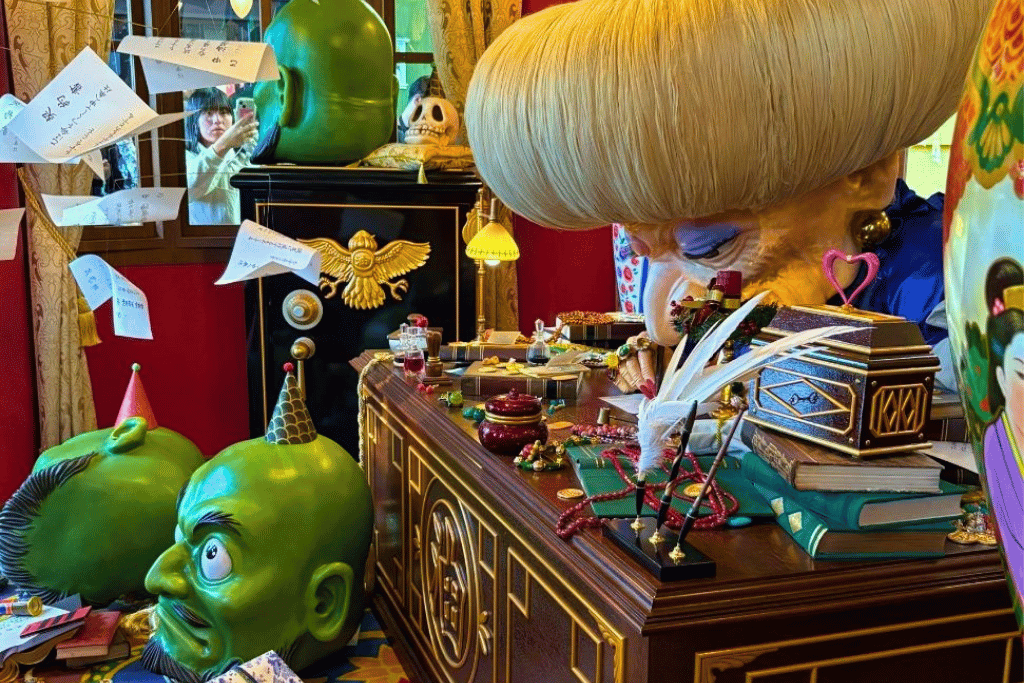
There’s a particular kind of magic in turning a corner and finding yourself inside a film you’ve loved for years — sharing a train seat with No-Face, wandering through Satsuki and Mei’s kitchen, standing in the shadow of Howl’s castle. Ghibli Park doesn’t just show you these worlds. It lets you step inside them.
As Spirited Away put it, “once you’ve met someone, you never really forget them.” The same goes for places. A little planning gets you through the gate — the wonder is what you’ll carry home!
Not a YouTrooper yet? Singapore’s go-to multi-currency wallet helps you save with great FX rates and zero fees. Skip the money changer and get a free YouTrip card + S$5 YouTrip credits with code <YTBLOG5>.
Then, head over to our YouTrip Perks page for exclusive offers and promotions — we promise you won’t regret it. Join our Telegram (@YouTripSG) and Community Group (@YouTripSquad) for travel tips, event invites, and more!
Happy travels!


The post Ghibli Park Guide 2026: Tickets, Access & What to See appeared first on YouTrip Singapore.


Ayrıca Şunları da Beğenebilirsiniz

Trump’s presidency is finished: political analyst

UK FCA Proposes Letting Authorized Funds Hold Crypto ETNs Under Strict Limits

Judge reveals Trump’s strategy: 'Break things' so fast no one can stop him


Popüler Haberler
Daha fazla
