Bitmine preferred stock issuance raises $300M via 9.5% fixed-dividend shares to fund ETH accumulation and staking as prices hit 14-month lows.Bitmine preferred stock issuance raises $300M via 9.5% fixed-dividend shares to fund ETH accumulation and staking as prices hit 14-month lows.

Bitmine Preferred Stock Issuance Targets $300M to Fuel Ethereum Buying and Staking
2026/06/04 16:23
Okuma süresi: 6 dk
Bu içerikle ilgili geri bildirim veya endişeleriniz için lütfen crypto.news@mexc.com üzerinden bizimle iletişime geçin.
Bitmine preferred stock issuance

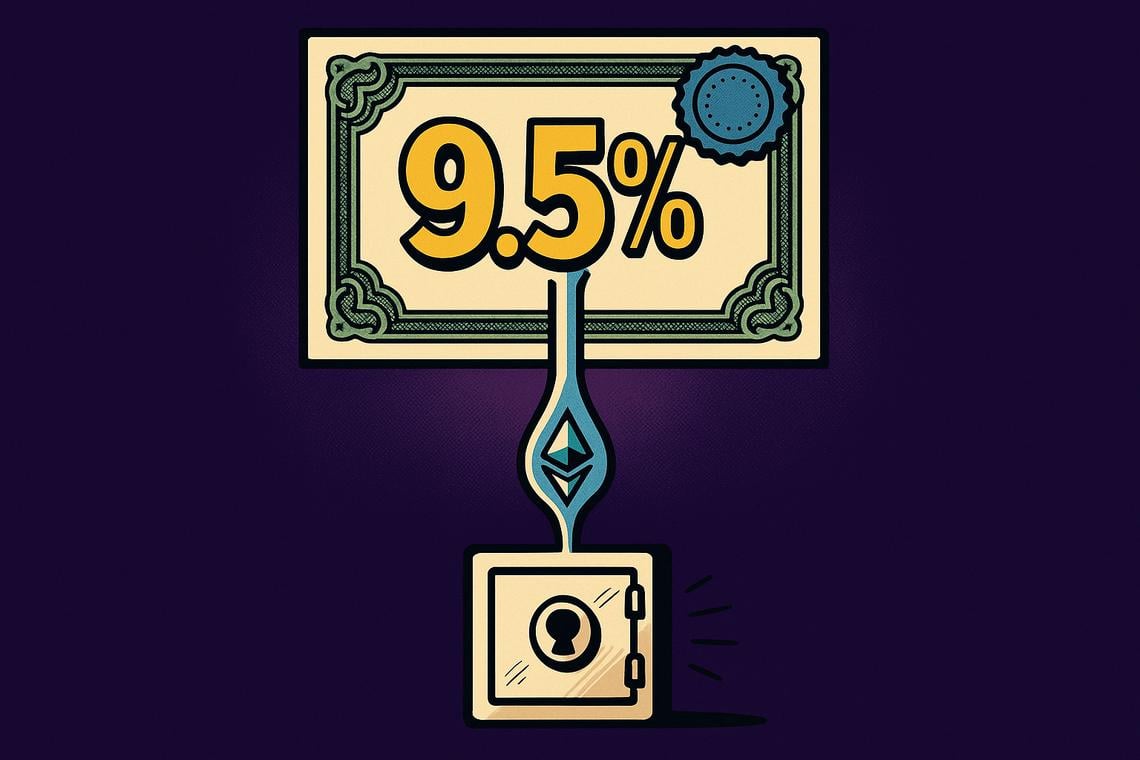
Bitmine Immersion Technologies is making a big Ethereum bet at a rough moment for the asset, unveiling a $300 million preferred stock issuance built around a fixed 9.5% annual dividend. The Bitmine preferred stock issuance mirrors a financing playbook Strategy made famous with Bitcoin, and it comes just as ETH prices are testing new lows.

The offering, disclosed in a Wednesday SEC filing, includes 3 million shares of Series A Perpetual Preferred Stock priced at $100 each. If approved, the shares will list on the New York Stock Exchange under the ticker BMNP, with trading expected to begin within 30 days of issuance. Moelis & Company and Cantor Fitzgerald are acting as joint lead bookrunners.

Bitmine launches $300 million preferred stock offering

How the Series A Perpetual Preferred shares work

The structure is straightforward for income-focused investors. Each share pays $9.50 annually, which equals a fixed 9.5% yield, and the dividend will be distributed weekly rather than quarterly. Bitmine plans to fund those payments with income generated from staking its Ethereum reserves, so the dividend depends directly on the company’s crypto operations.

Preferred equity sits between common stock and fixed-income securities. Holders receive steady distributions without depending entirely on price appreciation. In practice, that hybrid appeal has helped make this kind of 9.5% dividend preferred shares structure more familiar in crypto corporate finance.

New York Stock Exchange listing plans for BMNP

The NYSE listing under BMNP is still subject to regulatory approval. Even so, Bitmine expects trading to begin within a month of share issuance. Getting a crypto-linked preferred stock onto one of the world’s most prominent exchanges underscores the company’s effort to draw both institutional and retail investors.

Why Bitmine is using the capital for Ethereum accumulation

Ethereum accumulation strategy and staking plans

The capital raised will not sit idle. Proceeds are earmarked for additional ETH purchases, expanded staking operations through Bitmine’s Made in America Validator Network, and common stock buyback programs. In short, the preferred stock issuance is designed to accelerate every part of Bitmine’s Ethereum accumulation strategy at once.

That combination of buying more ETH, staking it for yield, and using the yield to pay preferred dividends creates a self-reinforcing loop, at least if Ethereum prices hold up. As a result, the financing ties Bitmine’s growth plan even more tightly to the direction of ETH.

How Strategy’s preferred stock model influenced the deal

The blueprint here is unmistakably Strategy’s. Michael Saylor’s Bitcoin-focused enterprise launched its perpetual preferred offering, STRC, in July 2025. Since then, the instrument has grown to an $8.5 billion market capitalization, making it the world’s largest preferred stock by that measure. Strategy president Phong Le has said that roughly 80% of STRC buyers are individual retail investors, which points to the broad appeal of dividend-bearing crypto-linked shares.

Bitmine’s version is different in one key way. STRC uses a floating dividend rate with monthly adjustments designed to keep it trading near par, while Bitmine is offering a fixed 9.5% yield. That matters to investors comparing the two instruments. A fixed rate provides predictability, but it also means the yield will not adjust upward if interest rates or market conditions change.

Strive, another bitcoin treasury operator, has also entered the same space with its SATA preferred shares. That suggests this financing model is becoming a recognizable category within cryptocurrency corporate finance rather than a one-off idea.

Bitmine’s Ethereum holdings and the market backdrop

What Bitmine holds in ETH right now

Bitmine’s ETH position is large. The company holds over 5.3 million ETH, or about 4.5% of Ethereum’s entire circulating supply, valued at around $10 billion at current prices. Management has said it reached 90% completion of its internal “Alchemy of 5%” accumulation target in just 11 months.

That is a fast pace. However, the timing also creates a painful picture on paper.

Ethereum price weakness and the pressure on Bitmine shares

ETH recently touched a 14-month low near $1,734, dropping more than 12% over the prior seven-day period. The asset reached approximately $5,000 in October, meaning Bitmine’s holdings carry an estimated $9 billion unrealized loss at current levels. Bitmine chairman Tom Lee pushed back on that reading on Monday, arguing that ETH valuations do not reflect what he sees as improving fundamentals across the Ethereum network.

The market has not been reassured yet. Bitmine’s common shares fell nearly 6% on Wednesday to $16.90, the lowest price since the company pivoted to an Ethereum treasury model in June 2025.

That matters because the preferred stock issuance is designed to raise fresh capital precisely when Bitmine’s existing asset base is under pressure. So the deal raises a basic question: is the company shoring up its position ahead of a recovery, or doubling down at a vulnerable moment?

Market risks around dividend sustainability

This is where the broader preferred stock market tells its own story. Strategy’s STRC traded 5% below its $100 par value on Wednesday, while Strive’s SATA declined to approximately $97. Both instruments were trading below par in the same week that Bitmine launched a new offering in the same category.

The pattern reflects real skepticism about whether crypto-linked companies can sustain dividend commitments through prolonged price downturns. Bitmine’s plan to fund its 9.5% dividend from ETH staking income is coherent in a stable or rising market. In a sustained bear environment for Ethereum, however, that income stream becomes harder to rely on.

Potential BMNP buyers will be weighing that tension closely. A 9.5% fixed yield on a NYSE-listed preferred share looks attractive on paper. Still, the real question is whether the underlying Ethereum strategy can generate enough through staking to keep those weekly payments flowing, especially when peer instruments are already sliding below face value.

Bitmine is essentially asking the market to bet on Ethereum’s recovery at the same time it is asking for $300 million to buy more of it. That is a high-conviction move, and the preferred stock structure spreads that conviction across a new class of investors who may not otherwise have had a seat at the table.


Piyasa Fırsatı
Fuel Logosu
Fuel Fiyatı(FUEL)
$0,00068
$0,00068$0,00068
+6,25%
USD
Fuel (FUEL) Canlı Fiyat Grafiği

SPACEX(PRE) Launchpad

SPACEX(PRE) LaunchpadSPACEX(PRE) Launchpad

Register for a chance to win a free lucky draw

Sorumluluk Reddi: Bu sitede yeniden yayınlanan makaleler, halka açık platformlardan alınmıştır ve yalnızca bilgilendirme amaçlıdır. MEXC'nin görüşlerini yansıtmayabilir. Tüm hakları telif sahiplerine aittir. Herhangi bir içeriğin üçüncü taraf haklarını ihlal ettiğini düşünüyorsanız, kaldırılması için lütfen crypto.news@mexc.com ile iletişime geçin. MEXC, içeriğin doğruluğu, eksiksizliği veya güncelliği konusunda hiçbir garanti vermez ve sağlanan bilgilere dayalı olarak alınan herhangi bir eylemden sorumlu değildir. İçerik, finansal, yasal veya diğer profesyonel tavsiye niteliğinde değildir ve MEXC tarafından bir tavsiye veya onay olarak değerlendirilmemelidir.

Ayrıca Şunları da Beğenebilirsiniz

Pi Network V26 Shock Prediction Could Change Pi Coin Forever

Pi Network V26 Shock Prediction Could Change Pi Coin Forever

Pi Network V26 Shock Prediction Could Change Pi Coin Forever Pi Network is once again becoming one of the hottest topics in the crypto world after growing
Paylaş
Hokanews2026/06/04 18:44
USDH Power Struggle Ignites Stablecoin “Bidding Wars” Across DeFi: Bloomberg

USDH Power Struggle Ignites Stablecoin “Bidding Wars” Across DeFi: Bloomberg

A heated contest for control over a new dollar-pegged token has set the stage for what analysts say could define the next phase of the stablecoin industry. According to Bloomberg, a bidding war unfolded on Hyperliquid, one of crypto’s fastest-growing trading platforms, with the prize being the right to issue USDH, its native stablecoin. The competition drew some of the sector’s most prominent names, including Paxos, Sky, and Ethena, who later withdrew their bid, alongside the lesser-known Native Markets, a startup backed by Stripe stablecoin subsidiary Bridge. Hyperliquid Stablecoin Race Shows Branding and Partnerships Matter as Much as Tech Over the weekend, Hyperliquid’s validators, the contributors who secure the network and vote on key decisions, awarded the USDH contract to Native Markets over the weekend. Despite its relatively new status, the firm’s connection with Stripe helped it outpace more established rivals. Stablecoins underpin decentralized finance by providing a dollar-backed medium for collateral, settlement, and payments across applications. What began as a grassroots, community-led sector has evolved into a battleground for institutions and payment companies seeking revenue from interest on reserves. Circle, for example, shares proceeds from its USDC with Coinbase under a partnership designed to stabilize earnings during market swings. The Hyperliquid contest offered a rare glimpse into just how intense competition has become. Paxos pledged to take no revenue until USDH surpassed $1 billion in circulation. Agora offered to share 100% of net revenue with Hyperliquid, while Ethena put forward 95%. All were outbid by Native Markets, whose ties to Stripe’s $1.1 billion acquisition of Bridge and subsequent rollout of the Tempo blockchain positioned it as a strong contender. “Every stablecoin issuer is extremely desperate for supply,” said Zaheer Ebtikar, co-founder of Split Capital. “They are willing to publicly announce how much they are willing to offer. It just shows it’s a very tough business for stablecoin issuers.” While USDC remains dominant on Hyperliquid with more than $5.6 billion in deposits, the arrival of USDH could shift flows and revenue dynamics. Paxos co-founder Bhau Kotecha said the firm sees the exchange’s growth as an important opportunity, while Agora’s co-founder Nick van Eck warned that awarding the contract to a vertically integrated issuer risked undermining decentralization. Regulatory positioning also factored into the debate. Paxos operates under a New York trust charter and is seeking a federal license, while Bridge holds money transmitter approvals in 30 states. Native Markets, in a blog post, cited regulatory flexibility and deployment speed as reasons for its selection. Hyperliquid said the strong engagement from its community validated the process. Circle CEO Jeremy Allaire dismissed concerns over USDC’s status, noting on X that competition benefits the ecosystem. Analysts suggested that fears of centralization may be exaggerated, noting that Hyperliquid is likely to remain neutral and support multiple stablecoins. Still, the contest over USDH highlighted a new reality for stablecoins: branding, partnerships, and business strategy are becoming as decisive as technology. Native Markets Secures USDH Stablecoin Mandate on Hyperliquid Hyperliquid has concluded its governance vote for the USDH stablecoin, awarding the mandate to Native Markets after a closely watched process that drew weeks of community debate and rival proposals. USDH, described by Hyperliquid as a “Hyperliquid-first, compliant, and natively minted” dollar-backed token, is intended to reduce the platform’s dependence on USDC and strengthen its spot markets. Validators on the decentralized exchange voted in favor of Native Markets, a relatively new player backed by Stripe’s Bridge subsidiary, over established contenders including Paxos and Ethena. The outcome followed a string of proposals offering aggressive revenue-sharing terms to win validator support, underscoring the scale of incentives attached to controlling USDH. Hyperliquid’s exchange has become a critical hub for stablecoin liquidity, with $5.7 billion in USDC, around 8% of its total supply, currently held on the network. At prevailing treasury yields, that translates to an estimated $200 million to $220 million in annual revenue for Circle, underlining why a native alternative could be transformative. Hyperliquid’s validators, who secure the network and vote on key decisions, selected Native Markets following an on-chain governance process that concluded September 15. Native Markets has laid out a phased rollout for USDH, beginning with capped minting and redemption trials before expanding into spot markets. Its reserves will be managed in cash and treasuries by BlackRock, with on-chain tokenization through Superstate and Bridge. Yield from those reserves will be split between Hyperliquid’s Assistance Fund and ecosystem development. The launch of USDH comes as Hyperliquid records record profits from perpetual futures trading, with $106 million in revenue in August alone, and prepares to slash spot trading fees by 80% to bolster liquidity. Analysts say the move positions Hyperliquid to capture more of the stablecoin economics internally, marking a significant step in its bid to rival the largest players in decentralized finance
Paylaş
CryptoNews2025/09/18 00:48
Strategy Didn’t Sell Bitcoin in May, According to Polymarket

Strategy Didn’t Sell Bitcoin in May, According to Polymarket

Strategy's sale of 32 BTC in May sparked one of the most contentious debates around Polymarket's resolution criteria.
Paylaş
CryptoPotato2026/06/04 18:13

RealStocks Now Live

RealStocks Now LiveRealStocks Now Live

Trade real U.S. stock via regulated brokerage

