Ukraine's attack on Russian oil facilities threatens global supply stability, undermining Trump's anti-inflation oil strategy and adding macroeconomic headwindsUkraine's attack on Russian oil facilities threatens global supply stability, undermining Trump's anti-inflation oil strategy and adding macroeconomic headwinds

Ukraine Oil Attack Derails Trump’s Price Plan, Raising Bitcoin Macro Risk

2026/03/27 16:56
5 min read
For feedback or concerns regarding this content, please contact us at crypto.news@mexc.com

Ukraine has stepped up drone strikes on Russian oil facilities in recent weeks, threatening to push global oil prices higher. That matters for Bitcoin holders because rising oil prices can reignite inflation, which could delay the interest rate cuts many crypto investors are counting on.

The connection between a war in Eastern Europe and your Bitcoin wallet might not be obvious at first. But in today’s connected global economy, an oil supply shock can ripple through markets in ways that directly affect crypto prices.

Ukraine Targets Russian Oil Infrastructure in Escalating Campaign

Ukrainian drones have struck a major Russian oil port near the Finnish border and hit key energy facilities across multiple regions. The attacks have targeted oil depots, refineries, and export terminals in a sustained campaign against Russia’s energy export capability.

Russia remains one of the world’s largest oil exporters, supplying roughly 7-8 million barrels per day to global markets. Even partial disruptions to that supply can move global oil prices, since the market operates on thin margins between supply and demand.

Consecutive nights of drone strikes on energy facilities in Russia’s Leningrad Oblast signal that Ukraine is deliberately targeting infrastructure that funds Russia’s war effort. Brent crude and WTI (the two main oil price benchmarks) have shown upward pressure following these attacks.
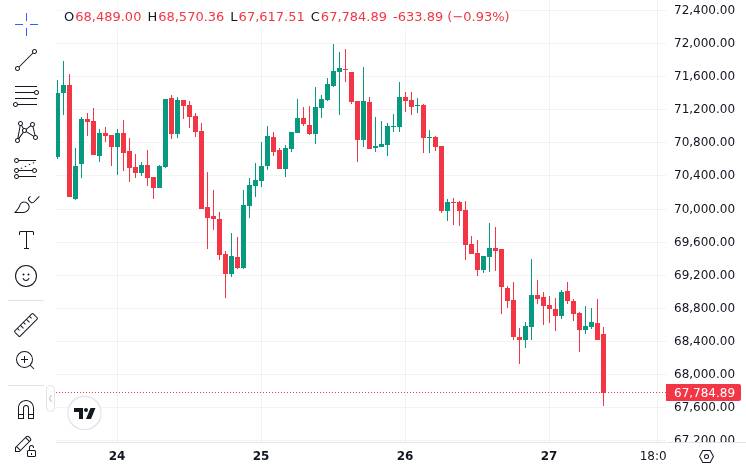
CoinMarketCap price chart for Bitcoin showing recent price action amid geopolitical uncertaintyBitcoin’s recent price action reflects broader market uncertainty driven by geopolitical events. Source: CoinMarketCap

Why This Complicates Trump’s Plan to Lower Oil Prices

The Trump administration has made cheaper energy a centerpiece of its economic agenda. The “Drill, Baby, Drill” policy aims to boost U.S. oil production, while diplomatic pressure on OPEC+ (the group of major oil-producing nations) is meant to keep global supply high and prices low.

Lower oil prices help fight inflation, which is the persistent rise in everyday costs that has frustrated consumers and worried policymakers. Cheaper gasoline and heating fuel leave households with more money to spend elsewhere.

But Ukraine’s attacks create a problem. Even as the U.S. ramps up domestic drilling, a major disruption to Russian exports could offset those gains. The Trump administration has reportedly warned Ukraine that strikes on Russian energy infrastructure conflict with U.S. economic interests.

U.S. domestic production, while at record levels, cannot single-handedly replace disrupted Russian supply in the short term. Saudi Arabia and other OPEC+ members have shown little urgency to increase their own output to fill the gap.

The Chain Reaction That Reaches Bitcoin

Here is how an oil price spike can affect Bitcoin prices thousands of miles away. Think of it as a chain of dominoes.

First, higher oil prices push up the cost of transportation, manufacturing, and heating. That feeds into broader inflation. When inflation stays elevated, the Federal Reserve (the U.S. central bank that sets interest rates) is less likely to cut rates.

Rate cuts matter enormously for Bitcoin. Lower interest rates make safe investments like savings accounts and government bonds less attractive. That pushes investors toward riskier, higher-reward assets like stocks and crypto. The expectation of rate cuts has been one of the key drivers behind large-scale Bitcoin accumulation by whales and sharks in recent months.

If an oil shock delays those expected rate cuts, it removes a major tailwind for crypto markets. Bitcoin has historically struggled during periods when the Fed keeps rates high. During the 2022 energy crisis triggered by Russia’s initial invasion of Ukraine, Bitcoin fell from around $47,000 in March to below $20,000 by June as inflation surged and the Fed raised rates aggressively.
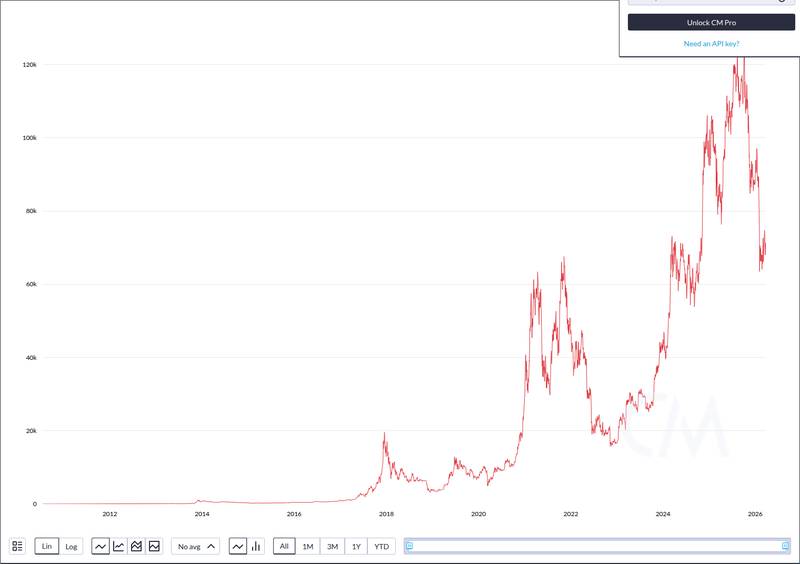
CoinMetrics on-chain metrics for Bitcoin showing network activityOn-chain metrics provide additional context for Bitcoin’s network health during periods of macro uncertainty. Source: CoinMetrics

Bitcoin often moves in tandem with the Nasdaq and other technology stocks during macro risk-off events, when investors flee from volatile assets toward safer options. An oil-driven inflation scare could trigger exactly that kind of broad sell-off across risk assets.

The broader crypto market is already navigating headwinds. Ethereum spot ETFs recently recorded a $92.5 million net outflow during a seven-day streak of withdrawals, suggesting institutional investors are growing cautious. At the same time, Bitcoin has outperformed gold during recent geopolitical stress events, which could provide a partial buffer if investors view BTC as a digital safe haven.

What to Watch Next

For Bitcoin holders, the key data points to monitor are oil prices and inflation readings. If Brent crude pushes significantly higher due to sustained Russian supply disruptions, expect market discussion about delayed Fed rate cuts to intensify.

The next U.S. Consumer Price Index (CPI) report, which measures inflation, will be critical. If energy costs push CPI higher than expected, the probability of near-term rate cuts on the CME FedWatch tool (a market-based gauge of rate expectations) will likely drop, putting pressure on Bitcoin and other risk assets.

A ceasefire, an OPEC+ production increase, or a diplomatic resolution could quickly ease oil price pressure. But as long as Ukraine continues targeting Russian energy infrastructure, this geopolitical risk will remain a factor for both oil markets and Bitcoin.

Disclaimer: This article is for informational purposes only and does not constitute financial or investment advice. Cryptocurrency and digital asset markets carry significant risk. Always do your own research before making decisions.

Market Opportunity
OFFICIAL TRUMP Logo
OFFICIAL TRUMP Price(TRUMP)
$2.998
$2.998$2.998
-3.97%
USD
OFFICIAL TRUMP (TRUMP) Live Price Chart
Disclaimer: The articles reposted on this site are sourced from public platforms and are provided for informational purposes only. They do not necessarily reflect the views of MEXC. All rights remain with the original authors. If you believe any content infringes on third-party rights, please contact crypto.news@mexc.com for removal. MEXC makes no guarantees regarding the accuracy, completeness, or timeliness of the content and is not responsible for any actions taken based on the information provided. The content does not constitute financial, legal, or other professional advice, nor should it be considered a recommendation or endorsement by MEXC.

You May Also Like

U.S. Moves Grip on Crypto Regulation Intensifies

U.S. Moves Grip on Crypto Regulation Intensifies

The post U.S. Moves Grip on Crypto Regulation Intensifies appeared on BitcoinEthereumNews.com. The United States is contending with the intricacies of cryptocurrency regulation as newly enacted legislation stirs debate over centralized versus decentralized finance. The recent passage of the GENIUS Act under Bo Hines’ leadership is perceived to skew favor towards centralized entities, potentially disadvantaging decentralized innovations. Continue Reading:U.S. Moves Grip on Crypto Regulation Intensifies Source: https://en.bitcoinhaber.net/u-s-moves-grip-on-crypto-regulation-intensifies
Share
BitcoinEthereumNews2025/09/18 01:09
TradFi Giant Deutsche Börse Taps Circle for Major European Stablecoin Push

TradFi Giant Deutsche Börse Taps Circle for Major European Stablecoin Push

Deutsche Börse Group has signed a Memorandum of Understanding (MoU) with Circle Internet Financial to integrate regulated stablecoins into European capital markets. According to the announcement, the collaboration will focus on Circle’s USDC and EURC, connecting token-based payment networks with traditional financial infrastructure. The partnership marks the first time a major European market infrastructure provider has formally teamed up with a global stablecoin issuer. Both parties said the initiative represents a milestone for regulated digital finance in Europe, made possible by the EU’s Markets in Crypto-Assets Regulation (MiCA), the bloc’s new comprehensive framework for digital assets. Partnership Bridges Traditional Finance and Crypto Settlement in Europe Under the agreement, the initial rollout will take place through Deutsche Börse’s subsidiaries. Trading will be facilitated on 360T’s digital exchange, 3DX, and through the institutional crypto provider Crypto Finance. Custody services will be provided via Clearstream, Deutsche Börse’s post-trade business, with Crypto Finance’s German entity serving as sub-custodian. Jeremy Allaire, Circle’s co-founder and CEO, said the collaboration would reduce settlement risk, lower costs, and improve efficiency across banks, asset managers, and other market participants. “As clear rules take hold across Europe, aligning our regulated stablecoins, EURC and USDC, with trusted venues will unlock new products and streamline workflows across trading, settlement, and custody,” Allaire said. Executives at Deutsche Börse noted the potential of stablecoins to reshape European finance. Stephanie Eckermann, who oversees post-trading at the group, said the deal advances the company’s ambition to digitize securities issuance and post-trade processes. Thomas Book, who is responsible for trading and clearing, added that the partnership positions Deutsche Börse to bridge traditional and digital markets by providing an integrated value chain across execution, settlement, and custody. The agreement follows Circle’s regulatory breakthrough earlier this year. On July 1, Circle became the first global stablecoin issuer to secure an Electronic Money Institution (EMI) license under MiCA, issued by French regulators. The license allows the company to issue both USDC and EURC across the European Union. Circle described the approval as a major milestone for mainstream adoption, noting that MiCA sets the conditions for long-term growth in digital finance by ensuring stablecoin issuers meet strict consumer protection and reserve requirements. The MiCA framework, passed by the European Parliament in April 2023, has been gradually implemented since June. Circle’s head of policy, Dante Disparte, said the regulation closes the door on unregulated operations, while Allaire noted that it legitimizes the sector after years of skepticism from mainstream finance. European Banking Giants Form Consortium for Euro Stablecoin Amid Deutsche Börse Group’s efforts, nine of Europe’s largest lenders are joining forces to launch a euro-backed stablecoin in the second half of 2026, seeking to challenge the dominance of U.S. dollar-pegged tokens. The consortium, which includes ING, UniCredit, CaixaBank, Danske Bank, KBC, DekaBank, SEB, Raiffeisen Bank International, and Italy’s Banca Sella, has set up a new company in the Netherlands to oversee the project. It plans to seek a license from the Dutch Central Bank as an e-money institution under the European Union’s MiCA framework. According to a joint statement, the stablecoin will provide near-instant cross-border payments, lower transaction costs, and round-the-clock access to settlements. “This development requires an industry-wide approach, and it’s imperative that banks adopt the same standards,” said Floris Lugt, digital assets lead at ING. The move shows growing European efforts to reduce reliance on dollar-based stablecoins, which currently account for 99% of global supply.Source: ECB Euro-pegged tokens remain a small fraction of the market, with less than €350 million in circulation, European Central Bank (ECB) data shows. The initiative comes as the ECB advances its digital euro project, with Executive Board member Piero Cipollone suggesting a rollout could happen by mid-2029. EU lawmakers are expected to weigh in on the legal framework later this year. Together, the bank-led stablecoin and the ECB’s digital euro mark Europe’s bid to secure greater autonomy in digital payments and limit the influence of non-EU issuers in the region’s financial system
Share
CryptoNews2025/10/01 01:51
Smart investors earn $6,875 daily on ProfitableMining, the leading cloud mining platform.

Smart investors earn $6,875 daily on ProfitableMining, the leading cloud mining platform.

In the volatile cryptocurrency market, price fluctuations are becoming increasingly severe. Simply holding onto your coins and waiting for them to rise is no longer a safe strategy. More and more experienced investors are turning to a more stable approach—ProfitableMining cloud mining, with becoming their preferred platform. They aren’t waiting for market fluctuations; they’re generating […]
Share
Cryptopolitan2025/09/18 01:00
