Spotify Taste Profile: Revolutionary Control Over Your Music Algorithm Launches in Beta
BitcoinWorld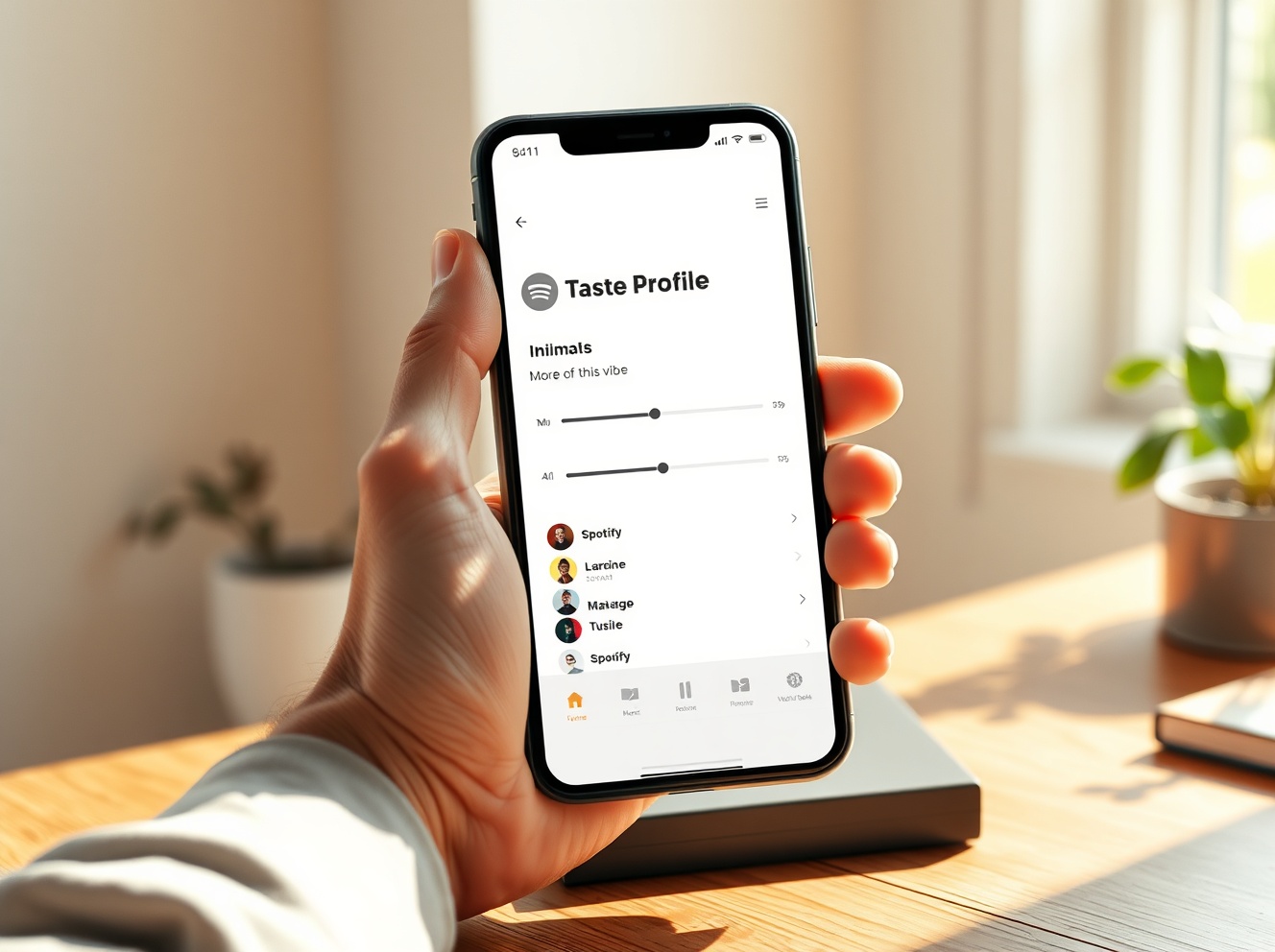
Spotify Taste Profile: Revolutionary Control Over Your Music Algorithm Launches in Beta
In a landmark move for personalized media, Spotify has announced a revolutionary feature that finally hands control of its core recommendation algorithm directly to users. The streaming giant revealed at SXSW 2025 that Premium subscribers will soon be able to view and edit their Taste Profile, the foundational model that powers everything from Discover Weekly to the annual Spotify Wrapped experience. This unprecedented level of user control addresses years of listener frustration and fundamentally changes how streaming services interact with their audiences.
Spotify Taste Profile Editing: What It Is and How It Works
Spotify Co-CEO Gustav Söderström made the announcement on Friday, March 14, 2025, at the South by Southwest conference in Austin, Texas. The feature launches initially in beta for Premium users in New Zealand before a broader global rollout. For the first time, listeners can access a comprehensive dashboard showing all their listening data—including music, podcasts, and audiobooks—in one centralized location within the app.
Users access their Taste Profile by tapping their profile picture and scrolling down. The interface then presents several key components:
- Complete Listening History: A unified view of all audio consumption
- Algorithmic Model Visualization: How Spotify interprets user preferences
- Natural Language Editing: Users can type requests like “less pop music” or “more indie rock”
- Fine-Tuning Controls: Sliders for adjusting specific “vibes” or genres
Previously, Spotify offered limited tools for profile management. Users could only exclude specific tracks or playlists. Consequently, the Taste Profile remained largely hidden and difficult to correct when it became inaccurate. This new system represents a complete paradigm shift toward transparency and user agency.
The Real-World Problem Spotify Is Solving
For years, Spotify users have encountered significant frustration with recommendation accuracy. The core issue stems from how people actually use streaming services in daily life. Many users share accounts with family members, particularly through shared smart speakers or connected car systems. Furthermore, listening habits often include content that doesn’t reflect genuine musical taste.
Common scenarios that corrupted Taste Profiles include:
- Children using parents’ accounts for children’s music
- Sleep sounds or white noise played overnight
- Background music for work or study sessions
- Shared living room speakers with multiple users
These listening patterns created algorithmic confusion. Users rarely remembered which specific tracks needed exclusion, and the previous tools were insufficient for comprehensive correction. The result was often a cluttered Taste Profile that generated irrelevant recommendations. Most notably, this issue “ruined” many users’ annual Spotify Wrapped experiences when children’s music dominated their year-end summaries.
Expert Analysis: The Algorithmic Transparency Movement
Industry analysts view Spotify’s move as part of a broader trend toward algorithmic transparency. Dr. Elena Rodriguez, a media consumption researcher at Stanford University, explains: “Platforms are recognizing that users want understanding and control over the systems that shape their digital experiences. Spotify’s Taste Profile editing represents a significant step beyond the ‘black box’ algorithms that have dominated streaming for a decade.”
Rodriguez notes that similar movements are occurring across social media and news aggregation platforms. However, Spotify’s implementation is particularly noteworthy because it addresses both transparency and immediate corrective action. Users don’t just see how they’re categorized—they can change it directly using intuitive controls.
Technical Implementation and User Experience
The Taste Profile editing feature employs sophisticated natural language processing alongside traditional adjustment controls. When users make changes, Spotify’s recommendation engine recalculates preferences in real-time. The app’s Home page then reflects these adjustments with different suggestions.
Key technical aspects include:
| Component | Function | User Benefit |
|---|---|---|
| Natural Language Processing | Interprets user requests like “more jazz” | Intuitive, conversational control |
| Real-time Algorithm Adjustment | Immediately updates recommendation models | Instant feedback on changes |
| Unified Data Dashboard | Combines music, podcast, and audiobook data | Complete picture of audio consumption |
| Granular Vibe Controls | Adjusts specific musical characteristics | Precise fine-tuning beyond genres |
This technical approach balances simplicity with depth. Casual users can make broad adjustments quickly, while audiophiles can engage in detailed profile sculpting. The system also maintains Spotify’s existing algorithmic strengths while adding user-directed correction capabilities.
Market Context and Competitive Landscape
Spotify’s announcement comes during increased competition in the streaming audio space. Apple Music recently enhanced its personalized station features, while YouTube Music has improved its recommendation algorithms. Amazon Music continues integrating with Alexa’s voice controls for hands-free management.
However, no competitor has offered direct algorithmic editing at this scale. Industry observers suggest this could become a significant differentiator for Spotify. Market research indicates that recommendation accuracy consistently ranks among the top three factors for subscriber satisfaction and retention across all streaming platforms.
The rollout strategy—beginning with Premium subscribers in New Zealand—follows Spotify’s established pattern for testing major features. This approach allows for controlled data collection and refinement before global deployment. Historically, successful New Zealand beta tests have reached worldwide audiences within 3-6 months.
Future Implications for Music Discovery
This development potentially changes how listeners discover new music. Traditionally, algorithms operated unilaterally based on implicit signals like skips, repeats, and playlist additions. Now, users can provide explicit guidance about their preferences, creating a hybrid recommendation system.
Music industry professionals are particularly interested in how this might affect artist discovery. “This could help niche genres and emerging artists,” suggests Marcus Chen, A&R director at Independent Music Collective. “If users can explicitly request ‘more underground hip-hop’ or ‘less mainstream pop,’ it creates pathways for music that algorithms might otherwise overlook.”
The feature also addresses growing concerns about algorithmic homogenization. Critics have argued that streaming recommendations create “filter bubbles” where users hear increasingly similar music. By allowing direct intervention, Spotify potentially mitigates this effect while maintaining personalized discovery.
Privacy Considerations and Data Management
With increased transparency comes heightened attention to data practices. Spotify’s Taste Profile dashboard shows exactly what data the company collects about listening habits. This visibility aligns with broader digital privacy trends where users demand more control over their information.
The company emphasizes that all Taste Profile editing occurs locally on users’ devices initially, with changes then synchronized to Spotify’s servers. This approach potentially enhances privacy while maintaining the cloud-based benefits of the recommendation system. Users can review their complete listening history without that review itself becoming additional behavioral data—a distinction privacy advocates have requested for years.
Conclusion
Spotify’s Taste Profile editing feature represents a fundamental shift in how streaming services approach personalization. By granting users unprecedented control over their recommendation algorithms, Spotify addresses long-standing complaints while pioneering new standards for algorithmic transparency. The beta launch in New Zealand provides a testing ground for what could become an industry-standard feature across all streaming platforms. As users gain more agency over their digital experiences, Spotify’s move may well define the next era of music discovery and personalized media consumption.
FAQs
Q1: When will Spotify Taste Profile editing be available globally?
Spotify has not announced specific global rollout dates. The feature launches in beta for Premium subscribers in New Zealand first. Based on previous feature releases, worldwide availability typically follows within 3-6 months of successful beta testing.
Q2: Can free Spotify users edit their Taste Profiles?
Initially, the feature is available only to Premium subscribers. Spotify often tests new features with paying users before considering broader availability. The company has not commented on future plans for free tier access.
Q3: How does Taste Profile editing affect Spotify Wrapped?
Changes made to your Taste Profile will influence future Spotify Wrapped summaries. The feature specifically addresses complaints about Wrapped accuracy when account sharing or incidental listening distorted annual summaries. Your edited preferences will shape the data Wrapped analyzes.
Q4: Does editing my Taste Profile delete my listening history?
No. The editing feature adjusts how Spotify interprets your listening history for recommendations. It does not delete historical data. You’re modifying the algorithmic model built from your data, not the underlying data itself.
Q5: Can I completely reset my Taste Profile and start over?
Spotify has not specified whether a complete reset option will be available. The announced controls focus on incremental adjustment rather than wholesale replacement. The natural language interface may allow requests like “reset my preferences” but this functionality hasn’t been confirmed.
This post Spotify Taste Profile: Revolutionary Control Over Your Music Algorithm Launches in Beta first appeared on BitcoinWorld.
You May Also Like

A Netflix ‘KPop Demon Hunters’ Short Film Has Been Rated For Release

Ripple pushes urgent XRPL patch — but nodes must trust its new key