The post The fundraising stack web3 teams need now appeared on BitcoinEthereumNews.com. Disclosure: The views and opinions expressed here belong solely to the author and do not represent the views and opinions of crypto.news’ editorial. EigenLayer just turned the seemingly impossible into something trivial. With its latest upgrade, projects can now export Ethereum’s (ETH) battle-tested security to other networks — starting with Base — by flipping a few switches. No rewrites, no weeks of engineering. What used to be a migration headache is now a configuration decision. Summary Fundraising is stuck in the past — too many teams still hack raises together with spreadsheets and custom contracts, wasting weeks and adding risk. Composability is the fix — just as standards transformed infrastructure, fundraising stacks can be built from audited modules, account abstraction wallets, and cross-chain tools like CAIP and USDC’s CCTP. The payoff is speed + trust — assembling from standards can cut setup time by 85%, lower audit costs, and deliver a seamless investor experience with clear disclosures and real-time vesting data. Fundraising is part of the product — the raise is the first impression of your governance and discipline; when UX is smooth and transparent, it builds trust that lasts beyond launch. Fundraising stacks should work the same way. Too many teams are still patching raises together with custom contracts, spreadsheets, and chat threads. It’s slow, risky, and wastes precious runway. The next generation of fundraising stacks will be ready for investors on day one and built to work across chains without rework. Composability changed infrastructure — fundraising is next Infrastructure builders aim to hide cross-chain complexity under the hood while keeping security intact. Account abstraction has already introduced smart accounts to everyday users, allowing for gasless payments, bundled transactions, and social recovery. Ethereum’s upcoming Pectra upgrade goes even further, letting legacy wallets switch to smart-wallet logic. That unlocks the… The post The fundraising stack web3 teams need now appeared on BitcoinEthereumNews.com. Disclosure: The views and opinions expressed here belong solely to the author and do not represent the views and opinions of crypto.news’ editorial. EigenLayer just turned the seemingly impossible into something trivial. With its latest upgrade, projects can now export Ethereum’s (ETH) battle-tested security to other networks — starting with Base — by flipping a few switches. No rewrites, no weeks of engineering. What used to be a migration headache is now a configuration decision. Summary Fundraising is stuck in the past — too many teams still hack raises together with spreadsheets and custom contracts, wasting weeks and adding risk. Composability is the fix — just as standards transformed infrastructure, fundraising stacks can be built from audited modules, account abstraction wallets, and cross-chain tools like CAIP and USDC’s CCTP. The payoff is speed + trust — assembling from standards can cut setup time by 85%, lower audit costs, and deliver a seamless investor experience with clear disclosures and real-time vesting data. Fundraising is part of the product — the raise is the first impression of your governance and discipline; when UX is smooth and transparent, it builds trust that lasts beyond launch. Fundraising stacks should work the same way. Too many teams are still patching raises together with custom contracts, spreadsheets, and chat threads. It’s slow, risky, and wastes precious runway. The next generation of fundraising stacks will be ready for investors on day one and built to work across chains without rework. Composability changed infrastructure — fundraising is next Infrastructure builders aim to hide cross-chain complexity under the hood while keeping security intact. Account abstraction has already introduced smart accounts to everyday users, allowing for gasless payments, bundled transactions, and social recovery. Ethereum’s upcoming Pectra upgrade goes even further, letting legacy wallets switch to smart-wallet logic. That unlocks the…

The fundraising stack web3 teams need now

Disclosure: The views and opinions expressed here belong solely to the author and do not represent the views and opinions of crypto.news’ editorial.

EigenLayer just turned the seemingly impossible into something trivial. With its latest upgrade, projects can now export Ethereum’s (ETH) battle-tested security to other networks — starting with Base — by flipping a few switches. No rewrites, no weeks of engineering. What used to be a migration headache is now a configuration decision.

Summary

  • Fundraising is stuck in the past — too many teams still hack raises together with spreadsheets and custom contracts, wasting weeks and adding risk.
  • Composability is the fix — just as standards transformed infrastructure, fundraising stacks can be built from audited modules, account abstraction wallets, and cross-chain tools like CAIP and USDC’s CCTP.
  • The payoff is speed + trust — assembling from standards can cut setup time by 85%, lower audit costs, and deliver a seamless investor experience with clear disclosures and real-time vesting data.
  • Fundraising is part of the product — the raise is the first impression of your governance and discipline; when UX is smooth and transparent, it builds trust that lasts beyond launch.

Fundraising stacks should work the same way. Too many teams are still patching raises together with custom contracts, spreadsheets, and chat threads. It’s slow, risky, and wastes precious runway. The next generation of fundraising stacks will be ready for investors on day one and built to work across chains without rework.

Composability changed infrastructure — fundraising is next

Infrastructure builders aim to hide cross-chain complexity under the hood while keeping security intact. Account abstraction has already introduced smart accounts to everyday users, allowing for gasless payments, bundled transactions, and social recovery. Ethereum’s upcoming Pectra upgrade goes even further, letting legacy wallets switch to smart-wallet logic. That unlocks the same advanced flow without the need for a separate deployment, and makes the user experience feel closer to web2 apps.

When wallets can bundle approvals and sponsorship into one clean motion, there’s no excuse for a clunky investor experience that still demands seed phrases, chain switching, and “try again with more gas.”

This is not only about wallets. It’s about connective tissue. Chain-agnostic identifiers (CAIPs) and WalletConnect v2 sessions let one authorization span multiple chains and namespaces, so a single “connect” can route commitments wherever the cap table and treasury live. The standards exist; founders just need to treat their raise like software and compose from proven parts instead of shipping duct tape.

The real cost of building everything from scratch

Across dozens of teams, internal data show that assembling from ready-made building blocks can cut 3–5 weeks, roughly 85% from the fundraising setup: tokenomics modeling, vesting logic, contract deployments, onboarding, and the coordination tax. The external picture explains why. Professional audits routinely consume weeks and meaningful five- to six-figure spend; the more you reinvent, the more you pay in time and risk. Using standard, vetted libraries narrows the surface area and focuses auditors on what’s truly novel. Sources note that simple tokens can be checked quickly while full dApps stretch into multi-week engagements; cost scales with scope. If your raise is a bespoke codebase, you just volunteered for the expensive path.

Regulatory friction compounds the hit. Under Markets in Crypto-Assets Regulation, issuers and crypto asset service providers face uniform disclosure and authorization expectations across the EU. You don’t win by improvising policy in the eleventh hour. You win by designing disclosures, registrations, and transfer rules into the stack from the start so compliance reads like documentation rather than a rescue mission.

What “investor-grade” actually looks like

Start with the issuance and vesting you don’t have to apologize for. Use standardized, building blocks for ERC-20, access control, timelocks, and distribution; keep customization small, obvious, and well-tested. OpenZeppelin didn’t become default by accident — it became default because auditors and exchanges recognize the predictability of code everyone already understands. The goal isn’t to be clever; it’s to be legible.

Make capital movement chain-agnostic by design. If investors fund one ecosystem and you operate treasury in another, they shouldn’t notice. USDC’s (USDC) Cross-Chain Transfer Protocol natively burns and mints across supported chains, so liquidity isn’t fragmented into wrapped stables, and its newer “V2” features add faster transfers and programmable hooks that automate what used to be manual reconciliation. Where appropriate, pair this with trust-minimized messaging like IBC in the Cosmos world to keep bridging assumptions tight. The effect is the same: investors see one, coherent pipe, and not seven bridges and a helpdesk.

Then remove the UX tax. With account abstraction, you can sponsor gas, batch “approve + invest” into a single action, and offer social recovery to non-crypto natives. With CAIP-aligned connection flows, the same session spans chains.

Finally, circulating supply, cliffs, and vesting should be visible in real time and ideally mirrored from on-chain state to an investor-facing portal with downloadable attestations. Unlocks are market events, and opacity only amplifies the rumor mill. Analysts long ago found that higher investor allocations correlate with heavier sell pressure around unlocks; larger unlocks tend to drive sharper drawdowns, and sell-offs often begin before the date. If you believe your model is sound, you should be eager to show it.

Why founders must stop treating fundraising like paperwork

Founders often say they’re “heads down building” and treat fundraising ops as a temporary inconvenience. That mindset is why so many launches stumble. Your raise is the first experience stakeholders have with your network’s incentives and governance discipline. If it feels slow, brittle, or arbitrary, the market assumes your protocol will feel the same. 

Conversely, when a raise lands with clean UX, cross-chain flexibility, clear disclosures, and an unambiguous view of supply, you convert faster and spend less time defending the process because the process explains itself.

This is precisely the lesson from EigenLayer’s upgrade: when you compose from standards and minimize novelty to where it matters, you cut cycle time without trading away security. Multi-chain verification reduces a class of multi-week deployments to a configuration step; a fundraising stack that leans on audited modules, Account Abstraction wallets, CAIP sessions, and native cross-chain USDC does the same for capital formation. The payoff isn’t just speed. It’s trust. And trust is what separates fair-weather “TGE soon” projects from networks that survive bear markets.

What to do Monday morning

If you can launch without a token, you should, until the token is essential to the product. But if you are launching one, design like an engineer, not a promoter. Start with a proper business model, decide where the token is indispensable, and map the supply mechanics to usage instead of hype. Build on rails that already exist: standardized issuance and vesting; account-abstraction wallets that sponsor gas and batch actions; connections that follow the Chain Agnostic Improvement Proposal (CAIP) standard so one session spans chains; native USDC movement via Circle’s Cross-Chain Transfer Protocol (CCTP) or, where it fits, trust-minimized Inter-Blockchain Communication (IBC); and MiCA-ready disclosures generated from parameters you can defend.

Use audits where they’re worth it, and buy back time by refusing to re-implement solved problems. You’ll save weeks of timeline and a meaningful fraction of your legal and audit spend; your investors will say the UX finally feels like a real product.

Infrastructure has already crossed the bridge to composability. Fundraising should follow. The projects that endure will be the ones where removing the chain-agnostic, UX-ready stack would break the business, because by then, it will be the business.

George Worrell

George Worrell (G.P.), co-founder and CPO at Blubird, is a product leader with more than 20 years in UX and emerging tech. His leadership has been instrumental in simplifying the path from web2 to web3 for organizations worldwide. Beyond product strategy, G.P. plays a central role in Blubird’s operations and financial oversight, guiding execution, resource planning, and growth.

Source: https://crypto.news/chain-agnostic-fundraising-stack-web3-teams-need-now/

Market Opportunity
RealLink Logo
RealLink Price(REAL)
$0.0537
$0.0537$0.0537
+3.44%
USD
RealLink (REAL) Live Price Chart
Disclaimer: The articles reposted on this site are sourced from public platforms and are provided for informational purposes only. They do not necessarily reflect the views of MEXC. All rights remain with the original authors. If you believe any content infringes on third-party rights, please contact service@support.mexc.com for removal. MEXC makes no guarantees regarding the accuracy, completeness, or timeliness of the content and is not responsible for any actions taken based on the information provided. The content does not constitute financial, legal, or other professional advice, nor should it be considered a recommendation or endorsement by MEXC.

You May Also Like

Cashing In On University Patents Means Giving Up On Our Innovation Future

Cashing In On University Patents Means Giving Up On Our Innovation Future

The post Cashing In On University Patents Means Giving Up On Our Innovation Future appeared on BitcoinEthereumNews.com. “It’s a raid on American innovation that would deliver pennies to the Treasury while kneecapping the very engine of our economic and medical progress,” writes Pipes. Getty Images Washington is addicted to taxing success. Now, Commerce Secretary Howard Lutnick is floating a plan to skim half the patent earnings from inventions developed at universities with federal funding. It’s being sold as a way to shore up programs like Social Security. In reality, it’s a raid on American innovation that would deliver pennies to the Treasury while kneecapping the very engine of our economic and medical progress. Yes, taxpayer dollars support early-stage research. But the real payoff comes later—in the jobs created, cures discovered, and industries launched when universities and private industry turn those discoveries into real products. By comparison, the sums at stake in patent licensing are trivial. Universities collectively earn only about $3.6 billion annually in patent income—less than the federal government spends on Social Security in a single day. Even confiscating half would barely register against a $6 trillion federal budget. And yet the damage from such a policy would be anything but trivial. The true return on taxpayer investment isn’t in licensing checks sent to Washington, but in the downstream economic activity that federally supported research unleashes. Thanks to the bipartisan Bayh-Dole Act of 1980, universities and private industry have powerful incentives to translate early-stage discoveries into real-world products. Before Bayh-Dole, the government hoarded patents from federally funded research, and fewer than 5% were ever licensed. Once universities could own and license their own inventions, innovation exploded. The result has been one of the best returns on investment in government history. Since 1996, university research has added nearly $2 trillion to U.S. industrial output, supported 6.5 million jobs, and launched more than 19,000 startups. Those companies pay…
Share
BitcoinEthereumNews2025/09/18 03:26
China Blocks Nvidia’s RTX Pro 6000D as Local Chips Rise

China Blocks Nvidia’s RTX Pro 6000D as Local Chips Rise

The post China Blocks Nvidia’s RTX Pro 6000D as Local Chips Rise appeared on BitcoinEthereumNews.com. China Blocks Nvidia’s RTX Pro 6000D as Local Chips Rise China’s internet regulator has ordered the country’s biggest technology firms, including Alibaba and ByteDance, to stop purchasing Nvidia’s RTX Pro 6000D GPUs. According to the Financial Times, the move shuts down the last major channel for mass supplies of American chips to the Chinese market. Why Beijing Halted Nvidia Purchases Chinese companies had planned to buy tens of thousands of RTX Pro 6000D accelerators and had already begun testing them in servers. But regulators intervened, halting the purchases and signaling stricter controls than earlier measures placed on Nvidia’s H20 chip. Image: Nvidia An audit compared Huawei and Cambricon processors, along with chips developed by Alibaba and Baidu, against Nvidia’s export-approved products. Regulators concluded that Chinese chips had reached performance levels comparable to the restricted U.S. models. This assessment pushed authorities to advise firms to rely more heavily on domestic processors, further tightening Nvidia’s already limited position in China. China’s Drive Toward Tech Independence The decision highlights Beijing’s focus on import substitution — developing self-sufficient chip production to reduce reliance on U.S. supplies. “The signal is now clear: all attention is focused on building a domestic ecosystem,” said a representative of a leading Chinese tech company. Nvidia had unveiled the RTX Pro 6000D in July 2025 during CEO Jensen Huang’s visit to Beijing, in an attempt to keep a foothold in China after Washington restricted exports of its most advanced chips. But momentum is shifting. Industry sources told the Financial Times that Chinese manufacturers plan to triple AI chip production next year to meet growing demand. They believe “domestic supply will now be sufficient without Nvidia.” What It Means for the Future With Huawei, Cambricon, Alibaba, and Baidu stepping up, China is positioning itself for long-term technological independence. Nvidia, meanwhile, faces…
Share
BitcoinEthereumNews2025/09/18 01:37
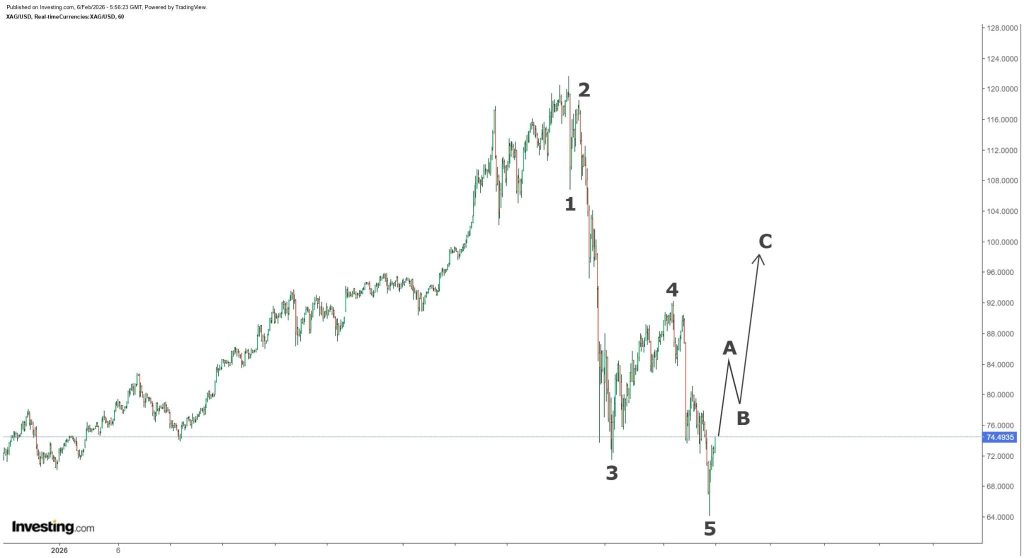
Silver Price Crash Is Over “For Real This Time,” Analyst Predicts a Surge Back Above $90

Silver Price Crash Is Over “For Real This Time,” Analyst Predicts a Surge Back Above $90

Silver has been taking a beating lately, and the Silver price hasn’t exactly been acting like a safe haven. After running up into the highs, the whole move reversed
Share
Captainaltcoin2026/02/07 03:15