For Ramón Recuero, Kinto’s closure marks the second time he has had to oversee damage control after a hack. His […] The post Here’s How a Single Exploit Brought Down Ethereum Layer 2 Kinto appeared first on Coindoo.For Ramón Recuero, Kinto’s closure marks the second time he has had to oversee damage control after a hack. His […] The post Here’s How a Single Exploit Brought Down Ethereum Layer 2 Kinto appeared first on Coindoo.

Here’s How a Single Exploit Brought Down Ethereum Layer 2 Kinto

2025/09/08 08:00
3 min read

Banner magacoin finance

For Ramón Recuero, Kinto’s closure marks the second time he has had to oversee damage control after a hack. His previous project, Babylon Finance, was hit indirectly when Rari Protocol collapsed in 2022, leaving users with millions in unrecovered losses. This time, he is determined to exit openly rather than fade away.

“We’ve been working without salaries for months,” Recuero told the community, adding that continuing operations would only drag out the inevitable. Instead, he promised an orderly wind-down and partial reimbursement to users.

How the Collapse Unfolded

The fatal blow landed on July 10, when an attacker exploited a smart contract loophole on Kinto’s Arbitrum-based chain. By minting 110,000 counterfeit tokens, the hacker siphoned roughly $1.55 million from lending pools on Morpho and a Uniswap v4 vault. Within hours, Kinto’s token had lost 95% of its value.

The flaw had been flagged earlier by security researchers, but while other DeFi platforms patched, Kinto failed to act in time. The timing left the project exposed just as the exploit became public.

In the weeks that followed, the team launched a comeback effort called Phoenix, raising $1 million to reboot trading. A new $KINTO token was issued to restore balances for users, and liquidity pools were partially replenished. But the recovery loans became a heavy drag — and with new investors wary, Kinto’s financing prospects quickly evaporated.

READ MORE:

Why Betting on a Q4 Bitcoin Peak Could Be a Costly Mistake

Protecting Users on the Way Out

As part of the shutdown, all remaining assets will go to the Phoenix lenders, who are expected to recover 76% of their principal. Recuero has also pledged $55,000 of personal funds to cover outstanding debts on Morpho, compensating victims up to $1,100 per address.

He framed the move as a conscious rejection of the “zombie mode” many failed projects slip into: “We’re shutting down cleanly and out in the open,” he said.

Kinto’s fall is the latest reminder that even compliance-oriented crypto ventures are not immune to the speed and severity of DeFi exploits. In a sector where trust can vanish in hours, the difference between survival and collapse often comes down to how much runway a team has left — and whether investors believe a recovery is worth funding.


The information provided in this article is for informational purposes only and does not constitute financial, investment, or trading advice. Coindoo.com does not endorse or recommend any specific investment strategy or cryptocurrency. Always conduct your own research and consult with a licensed financial advisor before making any investment decisions.

The post Here’s How a Single Exploit Brought Down Ethereum Layer 2 Kinto appeared first on Coindoo.

Market Opportunity
Solayer Logo
Solayer Price(LAYER)
$0,08476
$0,08476$0,08476
-1,00%
USD
Solayer (LAYER) Live Price Chart
Disclaimer: The articles reposted on this site are sourced from public platforms and are provided for informational purposes only. They do not necessarily reflect the views of MEXC. All rights remain with the original authors. If you believe any content infringes on third-party rights, please contact service@support.mexc.com for removal. MEXC makes no guarantees regarding the accuracy, completeness, or timeliness of the content and is not responsible for any actions taken based on the information provided. The content does not constitute financial, legal, or other professional advice, nor should it be considered a recommendation or endorsement by MEXC.

You May Also Like

Cashing In On University Patents Means Giving Up On Our Innovation Future

Cashing In On University Patents Means Giving Up On Our Innovation Future

The post Cashing In On University Patents Means Giving Up On Our Innovation Future appeared on BitcoinEthereumNews.com. “It’s a raid on American innovation that would deliver pennies to the Treasury while kneecapping the very engine of our economic and medical progress,” writes Pipes. Getty Images Washington is addicted to taxing success. Now, Commerce Secretary Howard Lutnick is floating a plan to skim half the patent earnings from inventions developed at universities with federal funding. It’s being sold as a way to shore up programs like Social Security. In reality, it’s a raid on American innovation that would deliver pennies to the Treasury while kneecapping the very engine of our economic and medical progress. Yes, taxpayer dollars support early-stage research. But the real payoff comes later—in the jobs created, cures discovered, and industries launched when universities and private industry turn those discoveries into real products. By comparison, the sums at stake in patent licensing are trivial. Universities collectively earn only about $3.6 billion annually in patent income—less than the federal government spends on Social Security in a single day. Even confiscating half would barely register against a $6 trillion federal budget. And yet the damage from such a policy would be anything but trivial. The true return on taxpayer investment isn’t in licensing checks sent to Washington, but in the downstream economic activity that federally supported research unleashes. Thanks to the bipartisan Bayh-Dole Act of 1980, universities and private industry have powerful incentives to translate early-stage discoveries into real-world products. Before Bayh-Dole, the government hoarded patents from federally funded research, and fewer than 5% were ever licensed. Once universities could own and license their own inventions, innovation exploded. The result has been one of the best returns on investment in government history. Since 1996, university research has added nearly $2 trillion to U.S. industrial output, supported 6.5 million jobs, and launched more than 19,000 startups. Those companies pay…
Share
BitcoinEthereumNews2025/09/18 03:26
China Blocks Nvidia’s RTX Pro 6000D as Local Chips Rise
China Blocks Nvidia’s RTX Pro 6000D as Local Chips Rise

The post China Blocks Nvidia’s RTX Pro 6000D as Local Chips Rise appeared on BitcoinEthereumNews.com. China Blocks Nvidia’s RTX Pro 6000D as Local Chips Rise China’s internet regulator has ordered the country’s biggest technology firms, including Alibaba and ByteDance, to stop purchasing Nvidia’s RTX Pro 6000D GPUs. According to the Financial Times, the move shuts down the last major channel for mass supplies of American chips to the Chinese market. Why Beijing Halted Nvidia Purchases Chinese companies had planned to buy tens of thousands of RTX Pro 6000D accelerators and had already begun testing them in servers. But regulators intervened, halting the purchases and signaling stricter controls than earlier measures placed on Nvidia’s H20 chip. Image: Nvidia An audit compared Huawei and Cambricon processors, along with chips developed by Alibaba and Baidu, against Nvidia’s export-approved products. Regulators concluded that Chinese chips had reached performance levels comparable to the restricted U.S. models. This assessment pushed authorities to advise firms to rely more heavily on domestic processors, further tightening Nvidia’s already limited position in China. China’s Drive Toward Tech Independence The decision highlights Beijing’s focus on import substitution — developing self-sufficient chip production to reduce reliance on U.S. supplies. “The signal is now clear: all attention is focused on building a domestic ecosystem,” said a representative of a leading Chinese tech company. Nvidia had unveiled the RTX Pro 6000D in July 2025 during CEO Jensen Huang’s visit to Beijing, in an attempt to keep a foothold in China after Washington restricted exports of its most advanced chips. But momentum is shifting. Industry sources told the Financial Times that Chinese manufacturers plan to triple AI chip production next year to meet growing demand. They believe “domestic supply will now be sufficient without Nvidia.” What It Means for the Future With Huawei, Cambricon, Alibaba, and Baidu stepping up, China is positioning itself for long-term technological independence. Nvidia, meanwhile, faces…
Share
BitcoinEthereumNews2025/09/18 01:37
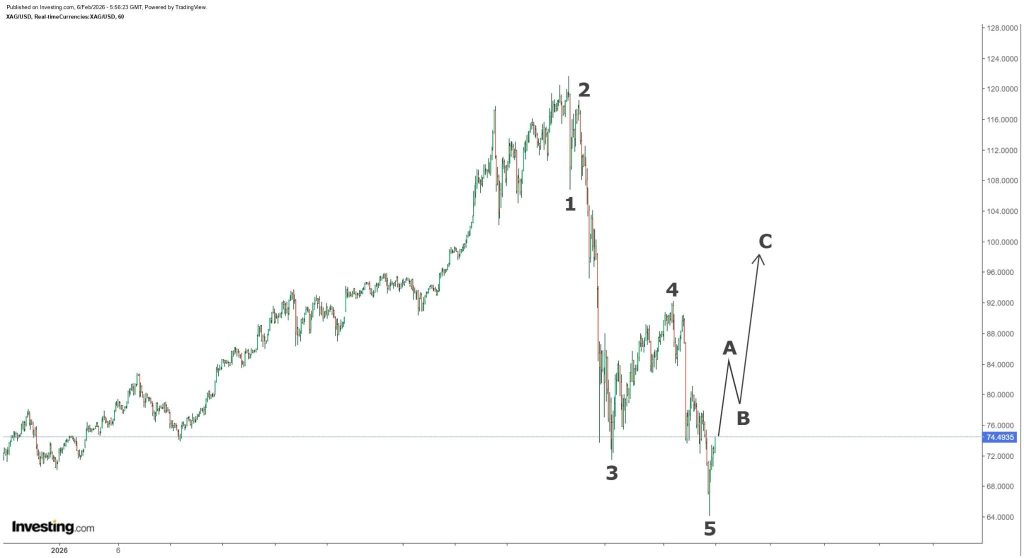
Silver Price Crash Is Over “For Real This Time,” Analyst Predicts a Surge Back Above $90

Silver Price Crash Is Over “For Real This Time,” Analyst Predicts a Surge Back Above $90

Silver has been taking a beating lately, and the Silver price hasn’t exactly been acting like a safe haven. After running up into the highs, the whole move reversed
Share
Captainaltcoin2026/02/07 03:15