BitcoinWorld Hyperliquid Short Squeeze: Explosive 200% Surge Creates Million-Dollar Opportunity The cryptocurrency world is no stranger to dramatic market movements, but recent events on Hyperliquid have truly captivated traders. Imagine a scenario where two tokens, XPL and WLFI, suddenly skyrocket over 200% in mere minutes. This wasn’t just a random pump; it was the direct result of a massive Hyperliquid short squeeze, an event that saw a single whale address trigger an unprecedented wave of liquidations and multi-million dollar profits. Understanding the Hyperliquid Short Squeeze Phenomenon What exactly is a Hyperliquid short squeeze, and why does it lead to such explosive price action? In simple terms, a short squeeze occurs when the price of an asset suddenly increases, forcing traders who bet against it (short sellers) to buy it back to cover their positions. This frantic buying further drives the price up, creating a vicious cycle. On platforms like Hyperliquid, with its perpetual futures trading, these events can be particularly intense due to high leverage. Short Selling: Traders borrow an asset, sell it, and hope to buy it back at a lower price to profit from the difference. Liquidation: If the price moves against a short seller significantly, their position is automatically closed by the exchange to prevent further losses, often at a substantial loss. Thin Order Book: A limited number of buy and sell orders available at various price points, making it easier for large orders to move the price dramatically. The Anatomy of XPL and WLFI’s Explosive Surge The recent incident on Hyperliquid unfolded rapidly overnight. A single, savvy whale address initiated a multi-million dollar long position in XPL. This means they were betting on the price to go up. Crucially, they exploited a “thin order book,” meaning there weren’t many sellers willing to offload XPL at current prices. As the whale’s large buy orders hit the market, the price of XPL had nowhere to go but up. This rapid price increase immediately put immense pressure on existing short sellers. Their positions began to bleed, and many were forced into liquidation. This forced buying from liquidations acted as fuel, propelling XPL’s price over 200% in just two minutes. The whale then strategically began to partially close their position, locking in an astonishing $16 million in profit. Industry observers, including mlmabc, described this as one of the most extreme and unusual liquidation incidents ever seen on the platform. Remarkably, a similar dramatic event, also involving a significant Hyperliquid short squeeze, reportedly impacted WLFI around the same time. This suggests a broader vulnerability or a coordinated strategy targeting illiquid assets on the platform. What Lessons Can We Learn from this Hyperliquid Short Squeeze? Such extreme market events offer valuable insights for all participants in the crypto space. They highlight both the immense opportunities and the significant risks involved in leveraged trading, especially on platforms with deep liquidity challenges. What can traders take away from the XPL and WLFI surges? Market Volatility is Real: Even established platforms can experience sudden, dramatic price swings. Order Book Awareness: Understanding the depth and liquidity of an asset’s order book is crucial, particularly for altcoins. Thin order books are ripe for manipulation or large-scale market impact. Risk Management: Leveraged trading amplifies both gains and losses. Setting stop-loss orders and managing position sizes are paramount to surviving a sudden Hyperliquid short squeeze. Whale Activity: Monitoring significant whale movements can sometimes provide early indicators of potential market shifts, though predicting their exact impact remains challenging. This incident serves as a stark reminder that while the crypto market offers incredible potential for profit, it also demands vigilance and a robust understanding of market dynamics. The speed and scale of the XPL and WLFI surges underscore the unique challenges and opportunities present in decentralized finance. In conclusion, the recent Hyperliquid short squeeze involving XPL and WLFI was a truly spectacular event, showcasing the power of concentrated capital against a thin order book. A single whale’s calculated move led to a 200% price surge, multi-million dollar profits, and widespread liquidations. This dramatic episode provides a powerful lesson in market mechanics, risk management, and the inherent volatility of the crypto landscape. It underscores the need for traders to be acutely aware of liquidity, leverage, and the potential for rapid market shifts. Frequently Asked Questions (FAQs) 1. What is a short squeeze in crypto? A short squeeze happens when the price of a cryptocurrency rapidly increases, forcing short sellers (who bet on price drops) to buy back the asset to limit losses, which further drives the price up. 2. How did the whale profit from the Hyperliquid short squeeze? The whale opened a large ‘long’ position, betting on the price to rise. By exploiting a thin order book, their massive buy orders quickly pushed the price up, leading to short sellers’ liquidations and allowing the whale to sell for a significant profit. 3. What is a “thin order book” and why does it matter? A thin order book means there are few buy or sell orders at various price levels. This lack of liquidity makes an asset’s price highly susceptible to large trades, allowing a single large order to cause significant price movements. 4. How can traders protect themselves from a sudden short squeeze? Traders can protect themselves by using stop-loss orders, managing their leverage carefully, diversifying their portfolios, and being aware of the liquidity of the assets they are trading. 5. Is Hyperliquid a safe platform for trading? Hyperliquid, like other decentralized perpetual exchanges, offers high leverage and unique market dynamics. While it provides opportunities, traders must understand its risks, including the potential for rapid liquidations due to events like a Hyperliquid short squeeze. Did this article shed light on the incredible volatility and potential profits in crypto trading? Share this insight with your fellow traders and crypto enthusiasts on social media! Let’s keep the conversation going about market dynamics and smart trading strategies. To learn more about the latest crypto market trends, explore our article on key developments shaping cryptocurrency price action. This post Hyperliquid Short Squeeze: Explosive 200% Surge Creates Million-Dollar Opportunity first appeared on BitcoinWorld and is written by Editorial TeamBitcoinWorld Hyperliquid Short Squeeze: Explosive 200% Surge Creates Million-Dollar Opportunity The cryptocurrency world is no stranger to dramatic market movements, but recent events on Hyperliquid have truly captivated traders. Imagine a scenario where two tokens, XPL and WLFI, suddenly skyrocket over 200% in mere minutes. This wasn’t just a random pump; it was the direct result of a massive Hyperliquid short squeeze, an event that saw a single whale address trigger an unprecedented wave of liquidations and multi-million dollar profits. Understanding the Hyperliquid Short Squeeze Phenomenon What exactly is a Hyperliquid short squeeze, and why does it lead to such explosive price action? In simple terms, a short squeeze occurs when the price of an asset suddenly increases, forcing traders who bet against it (short sellers) to buy it back to cover their positions. This frantic buying further drives the price up, creating a vicious cycle. On platforms like Hyperliquid, with its perpetual futures trading, these events can be particularly intense due to high leverage. Short Selling: Traders borrow an asset, sell it, and hope to buy it back at a lower price to profit from the difference. Liquidation: If the price moves against a short seller significantly, their position is automatically closed by the exchange to prevent further losses, often at a substantial loss. Thin Order Book: A limited number of buy and sell orders available at various price points, making it easier for large orders to move the price dramatically. The Anatomy of XPL and WLFI’s Explosive Surge The recent incident on Hyperliquid unfolded rapidly overnight. A single, savvy whale address initiated a multi-million dollar long position in XPL. This means they were betting on the price to go up. Crucially, they exploited a “thin order book,” meaning there weren’t many sellers willing to offload XPL at current prices. As the whale’s large buy orders hit the market, the price of XPL had nowhere to go but up. This rapid price increase immediately put immense pressure on existing short sellers. Their positions began to bleed, and many were forced into liquidation. This forced buying from liquidations acted as fuel, propelling XPL’s price over 200% in just two minutes. The whale then strategically began to partially close their position, locking in an astonishing $16 million in profit. Industry observers, including mlmabc, described this as one of the most extreme and unusual liquidation incidents ever seen on the platform. Remarkably, a similar dramatic event, also involving a significant Hyperliquid short squeeze, reportedly impacted WLFI around the same time. This suggests a broader vulnerability or a coordinated strategy targeting illiquid assets on the platform. What Lessons Can We Learn from this Hyperliquid Short Squeeze? Such extreme market events offer valuable insights for all participants in the crypto space. They highlight both the immense opportunities and the significant risks involved in leveraged trading, especially on platforms with deep liquidity challenges. What can traders take away from the XPL and WLFI surges? Market Volatility is Real: Even established platforms can experience sudden, dramatic price swings. Order Book Awareness: Understanding the depth and liquidity of an asset’s order book is crucial, particularly for altcoins. Thin order books are ripe for manipulation or large-scale market impact. Risk Management: Leveraged trading amplifies both gains and losses. Setting stop-loss orders and managing position sizes are paramount to surviving a sudden Hyperliquid short squeeze. Whale Activity: Monitoring significant whale movements can sometimes provide early indicators of potential market shifts, though predicting their exact impact remains challenging. This incident serves as a stark reminder that while the crypto market offers incredible potential for profit, it also demands vigilance and a robust understanding of market dynamics. The speed and scale of the XPL and WLFI surges underscore the unique challenges and opportunities present in decentralized finance. In conclusion, the recent Hyperliquid short squeeze involving XPL and WLFI was a truly spectacular event, showcasing the power of concentrated capital against a thin order book. A single whale’s calculated move led to a 200% price surge, multi-million dollar profits, and widespread liquidations. This dramatic episode provides a powerful lesson in market mechanics, risk management, and the inherent volatility of the crypto landscape. It underscores the need for traders to be acutely aware of liquidity, leverage, and the potential for rapid market shifts. Frequently Asked Questions (FAQs) 1. What is a short squeeze in crypto? A short squeeze happens when the price of a cryptocurrency rapidly increases, forcing short sellers (who bet on price drops) to buy back the asset to limit losses, which further drives the price up. 2. How did the whale profit from the Hyperliquid short squeeze? The whale opened a large ‘long’ position, betting on the price to rise. By exploiting a thin order book, their massive buy orders quickly pushed the price up, leading to short sellers’ liquidations and allowing the whale to sell for a significant profit. 3. What is a “thin order book” and why does it matter? A thin order book means there are few buy or sell orders at various price levels. This lack of liquidity makes an asset’s price highly susceptible to large trades, allowing a single large order to cause significant price movements. 4. How can traders protect themselves from a sudden short squeeze? Traders can protect themselves by using stop-loss orders, managing their leverage carefully, diversifying their portfolios, and being aware of the liquidity of the assets they are trading. 5. Is Hyperliquid a safe platform for trading? Hyperliquid, like other decentralized perpetual exchanges, offers high leverage and unique market dynamics. While it provides opportunities, traders must understand its risks, including the potential for rapid liquidations due to events like a Hyperliquid short squeeze. Did this article shed light on the incredible volatility and potential profits in crypto trading? Share this insight with your fellow traders and crypto enthusiasts on social media! Let’s keep the conversation going about market dynamics and smart trading strategies. To learn more about the latest crypto market trends, explore our article on key developments shaping cryptocurrency price action. This post Hyperliquid Short Squeeze: Explosive 200% Surge Creates Million-Dollar Opportunity first appeared on BitcoinWorld and is written by Editorial Team

Hyperliquid Short Squeeze: Explosive 200% Surge Creates Million-Dollar Opportunity

6 min read

BitcoinWorld

Hyperliquid Short Squeeze: Explosive 200% Surge Creates Million-Dollar Opportunity

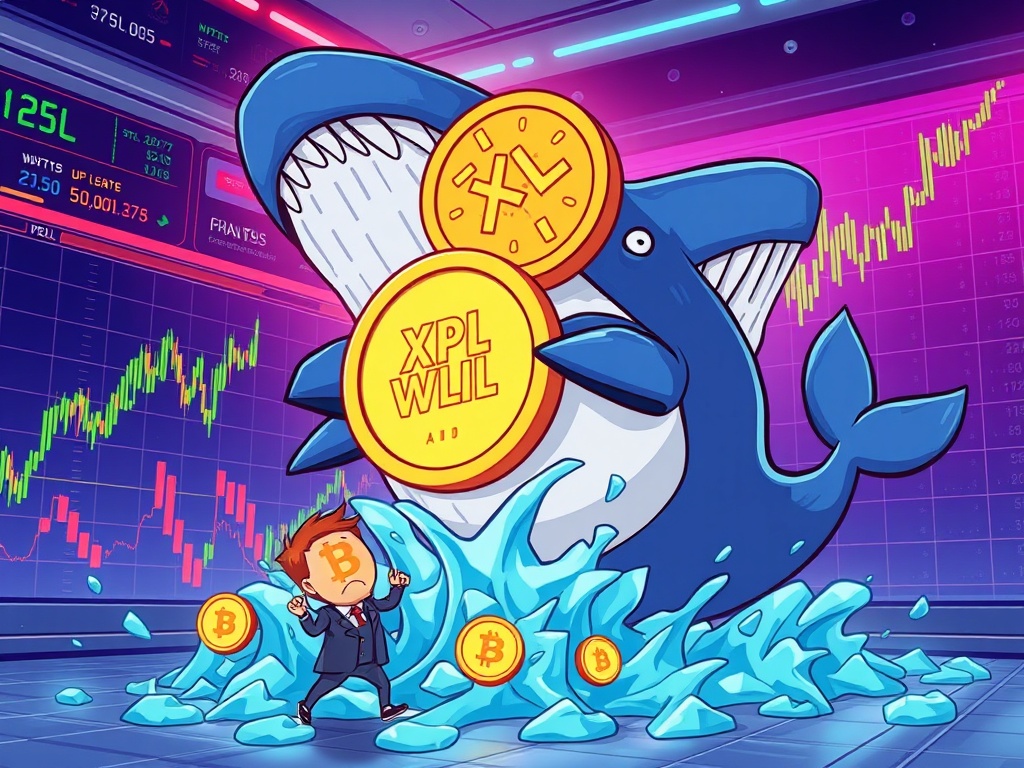
The cryptocurrency world is no stranger to dramatic market movements, but recent events on Hyperliquid have truly captivated traders. Imagine a scenario where two tokens, XPL and WLFI, suddenly skyrocket over 200% in mere minutes. This wasn’t just a random pump; it was the direct result of a massive Hyperliquid short squeeze, an event that saw a single whale address trigger an unprecedented wave of liquidations and multi-million dollar profits.

Understanding the Hyperliquid Short Squeeze Phenomenon

What exactly is a Hyperliquid short squeeze, and why does it lead to such explosive price action? In simple terms, a short squeeze occurs when the price of an asset suddenly increases, forcing traders who bet against it (short sellers) to buy it back to cover their positions. This frantic buying further drives the price up, creating a vicious cycle. On platforms like Hyperliquid, with its perpetual futures trading, these events can be particularly intense due to high leverage.

  • Short Selling: Traders borrow an asset, sell it, and hope to buy it back at a lower price to profit from the difference.
  • Liquidation: If the price moves against a short seller significantly, their position is automatically closed by the exchange to prevent further losses, often at a substantial loss.
  • Thin Order Book: A limited number of buy and sell orders available at various price points, making it easier for large orders to move the price dramatically.

The Anatomy of XPL and WLFI’s Explosive Surge

The recent incident on Hyperliquid unfolded rapidly overnight. A single, savvy whale address initiated a multi-million dollar long position in XPL. This means they were betting on the price to go up. Crucially, they exploited a “thin order book,” meaning there weren’t many sellers willing to offload XPL at current prices. As the whale’s large buy orders hit the market, the price of XPL had nowhere to go but up.

This rapid price increase immediately put immense pressure on existing short sellers. Their positions began to bleed, and many were forced into liquidation. This forced buying from liquidations acted as fuel, propelling XPL’s price over 200% in just two minutes. The whale then strategically began to partially close their position, locking in an astonishing $16 million in profit. Industry observers, including mlmabc, described this as one of the most extreme and unusual liquidation incidents ever seen on the platform.

Remarkably, a similar dramatic event, also involving a significant Hyperliquid short squeeze, reportedly impacted WLFI around the same time. This suggests a broader vulnerability or a coordinated strategy targeting illiquid assets on the platform.

What Lessons Can We Learn from this Hyperliquid Short Squeeze?

Such extreme market events offer valuable insights for all participants in the crypto space. They highlight both the immense opportunities and the significant risks involved in leveraged trading, especially on platforms with deep liquidity challenges. What can traders take away from the XPL and WLFI surges?

  • Market Volatility is Real: Even established platforms can experience sudden, dramatic price swings.
  • Order Book Awareness: Understanding the depth and liquidity of an asset’s order book is crucial, particularly for altcoins. Thin order books are ripe for manipulation or large-scale market impact.
  • Risk Management: Leveraged trading amplifies both gains and losses. Setting stop-loss orders and managing position sizes are paramount to surviving a sudden Hyperliquid short squeeze.
  • Whale Activity: Monitoring significant whale movements can sometimes provide early indicators of potential market shifts, though predicting their exact impact remains challenging.

This incident serves as a stark reminder that while the crypto market offers incredible potential for profit, it also demands vigilance and a robust understanding of market dynamics. The speed and scale of the XPL and WLFI surges underscore the unique challenges and opportunities present in decentralized finance.

In conclusion, the recent Hyperliquid short squeeze involving XPL and WLFI was a truly spectacular event, showcasing the power of concentrated capital against a thin order book. A single whale’s calculated move led to a 200% price surge, multi-million dollar profits, and widespread liquidations. This dramatic episode provides a powerful lesson in market mechanics, risk management, and the inherent volatility of the crypto landscape. It underscores the need for traders to be acutely aware of liquidity, leverage, and the potential for rapid market shifts.

Frequently Asked Questions (FAQs)

1. What is a short squeeze in crypto?
A short squeeze happens when the price of a cryptocurrency rapidly increases, forcing short sellers (who bet on price drops) to buy back the asset to limit losses, which further drives the price up.

2. How did the whale profit from the Hyperliquid short squeeze?
The whale opened a large ‘long’ position, betting on the price to rise. By exploiting a thin order book, their massive buy orders quickly pushed the price up, leading to short sellers’ liquidations and allowing the whale to sell for a significant profit.

3. What is a “thin order book” and why does it matter?
A thin order book means there are few buy or sell orders at various price levels. This lack of liquidity makes an asset’s price highly susceptible to large trades, allowing a single large order to cause significant price movements.

4. How can traders protect themselves from a sudden short squeeze?
Traders can protect themselves by using stop-loss orders, managing their leverage carefully, diversifying their portfolios, and being aware of the liquidity of the assets they are trading.

5. Is Hyperliquid a safe platform for trading?
Hyperliquid, like other decentralized perpetual exchanges, offers high leverage and unique market dynamics. While it provides opportunities, traders must understand its risks, including the potential for rapid liquidations due to events like a Hyperliquid short squeeze.

Did this article shed light on the incredible volatility and potential profits in crypto trading? Share this insight with your fellow traders and crypto enthusiasts on social media! Let’s keep the conversation going about market dynamics and smart trading strategies.

To learn more about the latest crypto market trends, explore our article on key developments shaping cryptocurrency price action.

This post Hyperliquid Short Squeeze: Explosive 200% Surge Creates Million-Dollar Opportunity first appeared on BitcoinWorld and is written by Editorial Team

Market Opportunity
LETSTOP Logo
LETSTOP Price(STOP)
$0.01896
$0.01896$0.01896
+3.71%
USD
LETSTOP (STOP) Live Price Chart
Disclaimer: The articles reposted on this site are sourced from public platforms and are provided for informational purposes only. They do not necessarily reflect the views of MEXC. All rights remain with the original authors. If you believe any content infringes on third-party rights, please contact service@support.mexc.com for removal. MEXC makes no guarantees regarding the accuracy, completeness, or timeliness of the content and is not responsible for any actions taken based on the information provided. The content does not constitute financial, legal, or other professional advice, nor should it be considered a recommendation or endorsement by MEXC.

You May Also Like

Trump swears he'll donate winnings in $10 billion lawsuit against his own IRS

Trump swears he'll donate winnings in $10 billion lawsuit against his own IRS

President Donald Trump told NBC News' Tom Llamas in an interview released on Wednesday that he has no interest in actually keeping any money he wins from his lawsuit
Share
Rawstory2026/02/05 10:43
US President Donald Trump says Warsh would’ve lost Fed if he pledged rate hike

US President Donald Trump says Warsh would’ve lost Fed if he pledged rate hike

The post US President Donald Trump says Warsh would’ve lost Fed if he pledged rate hike appeared on BitcoinEthereumNews.com. US President Donald Trump said that
Share
BitcoinEthereumNews2026/02/05 10:23
Health Insurers To Cover Covid Vaccines Despite RFK, Jr. Moves

Health Insurers To Cover Covid Vaccines Despite RFK, Jr. Moves

The post Health Insurers To Cover Covid Vaccines Despite RFK, Jr. Moves appeared on BitcoinEthereumNews.com. The nation’s biggest health insurance companies will continue to cover vaccinations – including those against Covid-19 and seasonal flu – previously recommended by a federal advisory committee, America’s Health Insurance Plans said Wednesday, Sept. 17, 2025. In this photo is a free flu and Covid-19 vaccine shots available sign, CVS, Queens, New York. (Photo by: Lindsey Nicholson/Universal Images Group via Getty Images) UCG/Universal Images Group via Getty Images The nation’s biggest health insurance companies will continue to cover vaccinations – including those against Covid-19 and seasonal flu – previously recommended by a federal advisory committee. The announcement by America’s Health Insurance Plans (AHIP), which includes CVS Health’s Aetna, Humana, Cigna, Centene and an array of Blue Cross and Blue Shield plans as members, comes ahead of the first meeting of the reconstituted Advisory Committee on Immunization Practices, which now has new members chosen by U.S. Health and Human Services Secretary Robert F. Kennedy Jr., a vaccine critic. “Health plans are committed to maintaining and ensuring affordable access to vaccines,” AHIP said in a statement Wednesday. “Health plan coverage decisions for immunizations are grounded in each plan’s ongoing, rigorous review of scientific and clinical evidence, and continual evaluation of multiple sources of data.” The move by AHIP is good news for millions of Americans at a time of year when they flock to drugstores, pharmacies, physician’s offices and outpatient clinics to get their seasonal flu and Covid shots. Kennedy’s changes to U.S. vaccine policy have created confusion across the country over whether certain vaccines long covered by insurance would continue to be. AHIP has now provided some clarity for millions of Americans. “Health plans will continue to cover all ACIP-recommended immunizations that were recommended as of September 1, 2025, including updated formulations of the COVID-19 and influenza vaccines, with no cost-sharing…
Share
BitcoinEthereumNews2025/09/18 03:11