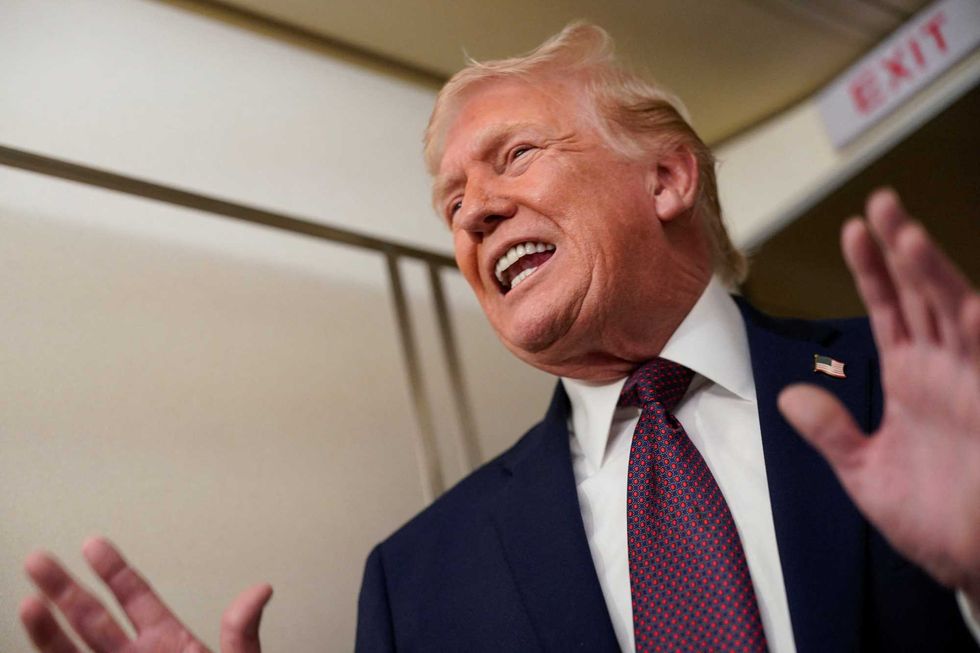
The post U.S. Government Shutdown Odds Hit 84%, Will Bitcoin Crash Again? appeared on BitcoinEthereumNews.com. The odds of a U.S. government shutdown before FebruaryThe post U.S. Government Shutdown Odds Hit 84%, Will Bitcoin Crash Again? appeared on BitcoinEthereumNews.com. The odds of a U.S. government shutdown before February

U.S. Government Shutdown Odds Hit 84%, Will Bitcoin Crash Again?

The odds of a U.S. government shutdown before February 14 continue surging. The spikes come as Bitcoin and broader crypto markets continue to slide, with total market cap falling 1.8% to $2.3 trillion. Meanwhile, the Fear and Greed Index has dropped to 9 from 10, adding to concerns Bitcoin could fall again after dipping below $70,000 during the last partial shutdown.

U.S. Government Shutdown Odds Jump as Funding Deadline Nears

On the prediction market platform Polymarket, traders are now pricing an 84% probability of a U.S. government shutdown before February 14. The odds have climbed sharply, rising by 66% in recent days, as fiscal tensions increase.

Source: Polymarket

Notably, the shutdown fears are tied directly to expiring federal funding. The market has grown more pessimistic that lawmakers can finalize a deal before the deadline. As a result, expectations for a short-term funding bill remain low. 

Polymarket data suggests traders see little chance Congress will pass a bill this week. This uncertainty has coincided with a broader market sell-off. Bitcoin has remained under pressure as risk sentiment weakens across digital assets.

Analysts’ Views as Bitcoin Holds Near Key Levels

Analysts on X have outlined their views for Bitcoin as the broader crypto market stays under pressure. One analyst on X, The Hunter, warned that the current dip could deepen, pointing to BTC near $67,000, Ethereum at $1,950, and Solana at $81. 

The analyst also argued Bitcoin could keep falling and potentially break below $50,000 if selling pressure continues. However, Axel Bitblaze offered a less aggressive downside view, comparing Bitcoin’s current structure to 2024 before a major upside move. 

He said BTC may remain stuck in a wide $60,000 to $80,000 range for some time, with brief rallies followed by sharp pullbacks. Bitblaze also suggested the market could see choppy conditions that frustrate both bulls and bears, rather than a quick rebound. 

While he does not expect a clean V-shaped recovery, he also dismissed the idea of Bitcoin dropping to $50,000, describing the move instead as a slow grind that wears out traders before a base forms.

RSI Near Oversold as MACD Stays Deeply Negative

While shutdown odds continue rising, Bitcoin’s technical structure remains weak. The broader trend turned bearish after rejection near the $100,000 to $95,000 region earlier in 2026. BTC’s price also broke below the prior consolidation zone around $85,000 to $90,000.  That breakdown accelerated the decline toward the $60,000 to $70,000 support range. 

Source: TradingView

The RSI is at 30.54, while its signal line is near 28.79. Notably, this places momentum near the oversold level, which can raise chances of a short-term bounce. However, the MACD is deeply negative at around -5,774.60 and -4,954.66. 

The histogram is near -819.94, indicating strong bearish momentum despite slight contraction. Key support is at $65,700, followed by the psychological $60,000 level. Resistance has shifted lower, now near $70,000 to $72,000.

Source: https://coingape.com/u-s-government-shutdown-odds-hit-84-will-bitcoin-crash-again/

Market Opportunity
Union Logo
Union Price(U)
$0.001352
$0.001352$0.001352
-3.01%
USD
Union (U) Live Price Chart
Disclaimer: The articles reposted on this site are sourced from public platforms and are provided for informational purposes only. They do not necessarily reflect the views of MEXC. All rights remain with the original authors. If you believe any content infringes on third-party rights, please contact service@support.mexc.com for removal. MEXC makes no guarantees regarding the accuracy, completeness, or timeliness of the content and is not responsible for any actions taken based on the information provided. The content does not constitute financial, legal, or other professional advice, nor should it be considered a recommendation or endorsement by MEXC.

You May Also Like

White House adviser: Cryptocurrency bill is "very close" to passage

White House adviser: Cryptocurrency bill is "very close" to passage

PANews reported on June 18 that according to Jinshi, a US White House adviser said that the cryptocurrency bill is "very close" to passage, which will create demand for the
Share
PANews2025/06/18 23:52
Trump caves on his own snubs as retaliation ploy against Dem governors backfires

Trump caves on his own snubs as retaliation ploy against Dem governors backfires

President Donald Trump on Wednesday walked back a snub he gave to two Democratic Governors. Last week, Trump notably did not invite Democratic governors Wes Moore
Share
Rawstory2026/02/12 10:29
Bitcoin devs cheer block reconstruction stats, ignore security budget concerns

Bitcoin devs cheer block reconstruction stats, ignore security budget concerns

The post Bitcoin devs cheer block reconstruction stats, ignore security budget concerns appeared on BitcoinEthereumNews.com. This morning, Bitcoin Core developers celebrated improved block reconstruction statistics for node operators while conveniently ignoring the reason for these statistics — the downward trend in fees for Bitcoin’s security budget. Reacting with heart emojis and thumbs up to a green chart showing over 80% “successful compact block reconstructions without any requested transactions,” they conveniently omitted red trend lines of the fees that Bitcoin users pay for mining security which powered those green statistics. Block reconstructions occur when a node requests additional information about transactions within a compact block. Although compact blocks allow nodes to quickly relay valid bundles of transactions across the internet, the more frequently that nodes can reconstruct without extra, cumbersome transaction requests from their peers is a positive trend. Because so many nodes switched over in August to relay transactions bidding 0.1 sat/vB across their mempools, nodes now have to request less transaction data to reconstruct blocks containing sub-1 sat/vB transactions. After nodes switched over in August to accept and relay pending transactions bidding less than 1 sat/vB, disparate mempools became harmonized as most nodes had a better view of which transactions would likely join upcoming blocks. As a result, block reconstruction times improved, as nodes needed less information about these sub-1 sat/vB transactions. In July, several miners admitted that user demand for Bitcoin blockspace had persisted at such a low that they were willing to accept transaction fees of just 0.1 satoshi per virtual byte — 90% lower than their prior 1 sat/vB minimum. With so many blocks partially empty, they succumbed to the temptation to accept at least something — even 1 billionth of one bitcoin (BTC) — rather than $0 to fill up some of the excess blockspace. Read more: Bitcoin’s transaction fees have fallen to a multi-year low Green stats for block reconstruction after transaction fees crash After…
Share
BitcoinEthereumNews2025/09/18 04:07