Bitwise Asset Management acquired Chorus One on February 4, 2026, moving decisively beyond passive ETF management and into direct ownership of the blockchain infrastructureBitwise Asset Management acquired Chorus One on February 4, 2026, moving decisively beyond passive ETF management and into direct ownership of the blockchain infrastructure

Bitwise’s Chorus One Acquisition Signals a Shift From Passive ETFs to On-Chain Yield Control

2026/02/05 05:19
4 min read

Bitwise Asset Management acquired Chorus One on February 4, 2026, moving decisively beyond passive ETF management and into direct ownership of the blockchain infrastructure that produces yield.

By absorbing one of the industry’s largest non-custodial staking operators, managing more than $3 billion in staked assets, Bitwise is internalizing a revenue stream that has historically leaked to third-party validators. The transaction reframes staking not as a service cost, but as a strategic asset.

Structural Verticalization: From Exposure to Yield Capture

The core logic of the deal is vertical integration. Bitwise is transitioning from a distributor of price exposure into an operator of yield-generating infrastructure.

At present, Bitwise’s spot ETFs, including Ethereum-focused products such as ETHW, rely on external staking providers to generate network rewards. While gross staking yields typically range between 3% and 5%, a meaningful portion is lost to validator and service fees. Owning Chorus One allows Bitwise to internalize that margin and retain staking income within its fund structure.

Control extends beyond economics. Chorus One supports validation and governance across more than 50 blockchain networks, including Ethereum, Solana, and Cosmos. Through the acquisition, Bitwise gains direct influence over validator operations, protocol governance participation, and reward optimization for assets it already holds in custody.

This positions Bitwise not just as an allocator, but as an active participant in the networks underpinning its investment products.

Product Implications: Toward “Total Return” Crypto ETFs

The acquisition also creates a foundation for product expansion. With staking infrastructure in-house, Bitwise can support ETF structures that combine spot price exposure with automated staking rewards.

Such products became feasible following the U.S. Securities and Exchange Commission’s Staking-as-a-Service guidance in late 2025, which clarified how regulated funds may distribute protocol rewards. A “Total Return” ETF, pairing asset appreciation with native yield, would represent a material evolution from today’s fee-compressed spot products.

Chorus One’s specialization in MEV (Maximal Extractable Value) optimization further enhances this model. By improving block construction and transaction ordering, validators can generate incremental “real yield” beyond base inflationary rewards. That optimization has historically accrued to independent validators rather than asset managers.

Under Bitwise’s ownership, that yield becomes part of the fund economics.

Euro Stablecoin Market Poised for 1,600x Explosion by 2030, S&P Global Predicts

Competitive Context: Infrastructure Becomes the Battleground

The deal reflects a broader competitive shift among crypto asset managers. As spot ETF fees trend toward zero, scale alone is no longer sufficient to sustain profitability.

Peers have taken different paths. Fidelity, for example, has built an internal staking desk. Bitwise’s approach relies instead on acquisition, accelerating time-to-market by absorbing an established infrastructure provider rather than building from scratch.

Industry-wide, this strategy is becoming common. In the first five weeks of 2026, crypto-related mergers and acquisitions rose by roughly 40%, driven by firms seeking yield, efficiency, and operational leverage in a high-interest-rate environment.

Operationally, Chorus One is expected to continue operating as a standalone subsidiary, preserving its open-source research and white-label staking services for external institutional clients while prioritizing Bitwise’s internal fund flows.

Market Takeaway

Bitwise’s acquisition of Chorus One underscores a structural reality of the 2026 crypto market. As passive exposure becomes commoditized, asset managers are being forced downstream into the infrastructure that actually produces returns.

By owning the validator layer, Bitwise is repositioning itself from a fee-based ETF issuer to an integrated yield operator. The strategy is less about expanding assets under management and more about controlling the mechanics of return generation.

In an environment where alpha increasingly lives in the plumbing of blockchains rather than price direction, this deal signals where competition among crypto asset managers is heading next.

The post Bitwise’s Chorus One Acquisition Signals a Shift From Passive ETFs to On-Chain Yield Control appeared first on ETHNews.

Market Opportunity
4 Logo
4 Price(4)
$0.01105
$0.01105$0.01105
+12.80%
USD
4 (4) Live Price Chart
Disclaimer: The articles reposted on this site are sourced from public platforms and are provided for informational purposes only. They do not necessarily reflect the views of MEXC. All rights remain with the original authors. If you believe any content infringes on third-party rights, please contact service@support.mexc.com for removal. MEXC makes no guarantees regarding the accuracy, completeness, or timeliness of the content and is not responsible for any actions taken based on the information provided. The content does not constitute financial, legal, or other professional advice, nor should it be considered a recommendation or endorsement by MEXC.

You May Also Like

Cashing In On University Patents Means Giving Up On Our Innovation Future
Cashing In On University Patents Means Giving Up On Our Innovation Future

The post Cashing In On University Patents Means Giving Up On Our Innovation Future appeared on BitcoinEthereumNews.com. “It’s a raid on American innovation that would deliver pennies to the Treasury while kneecapping the very engine of our economic and medical progress,” writes Pipes. Getty Images Washington is addicted to taxing success. Now, Commerce Secretary Howard Lutnick is floating a plan to skim half the patent earnings from inventions developed at universities with federal funding. It’s being sold as a way to shore up programs like Social Security. In reality, it’s a raid on American innovation that would deliver pennies to the Treasury while kneecapping the very engine of our economic and medical progress. Yes, taxpayer dollars support early-stage research. But the real payoff comes later—in the jobs created, cures discovered, and industries launched when universities and private industry turn those discoveries into real products. By comparison, the sums at stake in patent licensing are trivial. Universities collectively earn only about $3.6 billion annually in patent income—less than the federal government spends on Social Security in a single day. Even confiscating half would barely register against a $6 trillion federal budget. And yet the damage from such a policy would be anything but trivial. The true return on taxpayer investment isn’t in licensing checks sent to Washington, but in the downstream economic activity that federally supported research unleashes. Thanks to the bipartisan Bayh-Dole Act of 1980, universities and private industry have powerful incentives to translate early-stage discoveries into real-world products. Before Bayh-Dole, the government hoarded patents from federally funded research, and fewer than 5% were ever licensed. Once universities could own and license their own inventions, innovation exploded. The result has been one of the best returns on investment in government history. Since 1996, university research has added nearly $2 trillion to U.S. industrial output, supported 6.5 million jobs, and launched more than 19,000 startups. Those companies pay…
Share
BitcoinEthereumNews2025/09/18 03:26
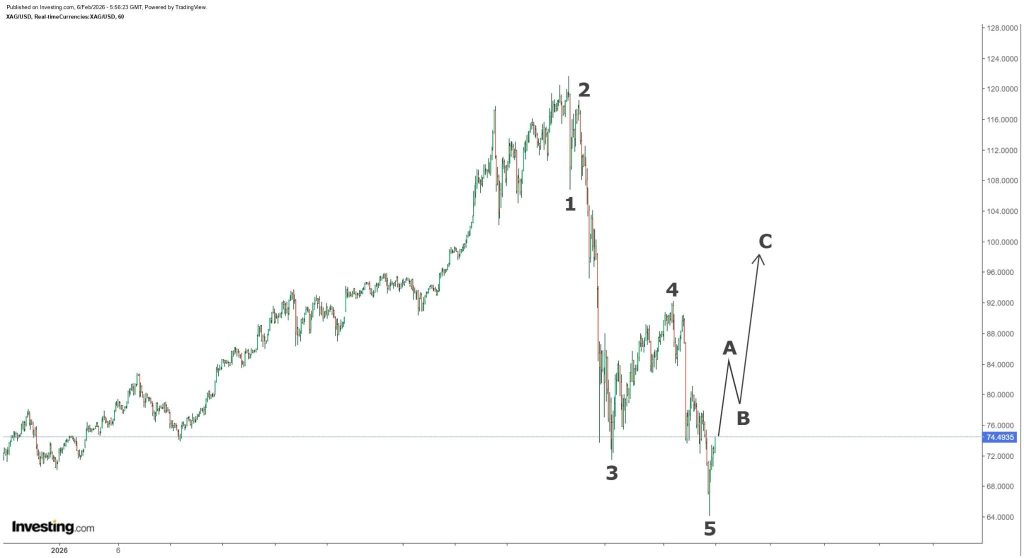
Silver Price Crash Is Over “For Real This Time,” Analyst Predicts a Surge Back Above $90

Silver Price Crash Is Over “For Real This Time,” Analyst Predicts a Surge Back Above $90

Silver has been taking a beating lately, and the Silver price hasn’t exactly been acting like a safe haven. After running up into the highs, the whole move reversed
Share
Captainaltcoin2026/02/07 03:15
Citi Caps Year-End at $4,300, But ETF outflows Challenge Outlook

Citi Caps Year-End at $4,300, But ETF outflows Challenge Outlook

The post Citi Caps Year-End at $4,300, But ETF outflows Challenge Outlook appeared on BitcoinEthereumNews.com. Ethereum Price Prediction: Citi Caps Year-End at $4,300, But ETF outflows Challenge Outlook Disclaimer: The information found on NewsBTC is for educational purposes only. It does not represent the opinions of NewsBTC on whether to buy, sell or hold any investments and naturally investing carries risks. You are advised to conduct your own research before making any investment decisions. Use information provided on this website entirely at your own risk. Related News © 2025 NewsBTC. All Rights Reserved. This website uses cookies. By continuing to use this website you are giving consent to cookies being used. Visit our Privacy Center or Cookie Policy. I Agree Source: https://www.newsbtc.com/news/ethereum/ethereum-price-prediction-citi-caps-year-end-at-4300-but-etf-outflows-challenge-outlook/
Share
BitcoinEthereumNews2025/09/18 14:30