The post Stablecoins Emerge as Leading Real-World Assets While Exposing Banking System Flaws appeared on BitcoinEthereumNews.com. TLDR: Traditional banks imposeThe post Stablecoins Emerge as Leading Real-World Assets While Exposing Banking System Flaws appeared on BitcoinEthereumNews.com. TLDR: Traditional banks impose

Stablecoins Emerge as Leading Real-World Assets While Exposing Banking System Flaws

TLDR:

  • Traditional banks impose arbitrary limits like £500 cheque caps that block legitimate transactions daily.
  • Stablecoins settle instantly without permission while maintaining compliance through regulated issuing companies.
  • Tokenized treasuries and money market funds now represent billions in assets moving onto blockchain infrastructure.
  • Banking account freezes for crypto transfers require extensive questioning and multi-day holds for fund access.

A crypto industry observer has sparked discussion about stablecoins as real-world assets, drawing attention to inefficiencies in traditional banking systems.

The analysis highlights how digital currencies backed by fiat reserves demonstrate stark operational differences from conventional financial infrastructure.

The comparison centers on user experience, settlement speed, and transaction freedom between these parallel systems.

Traditional Banking Faces Operational Restrictions

Zeus, a commentator focused on real-world assets, recently shared personal banking experiences that illustrate systemic constraints. “A few weeks before Christmas, I tried to deposit a cheque. Nothing extreme. £750. The deposit was declined,” he explained.

The rejection occurred because his bank enforced a £500 maximum limit, revealing hard caps embedded in banking infrastructure.

Similarly, online banking transfers face daily limits and trigger automatic reviews based on frequency or amount. Zeus recounted sending £2,000 to a crypto exchange, which resulted in his account being frozen.

“I was asked around twenty-five questions. Where did this money come from? Who are you investing with? What does the company do?” he stated. His funds remained locked for two full days.

These incidents reflect standard procedures rather than exceptional cases. “This isn’t an edge case. This is normal behavior in modern banking. We’ve just been conditioned to accept it,” Zeus noted. Financial institutions apply risk controls that assume potential problems by default.

The restrictions stem from legacy systems and compliance frameworks built over decades. However, users increasingly question whether these delays serve protection or simply maintain institutional control over fund movement.

Stablecoins Demonstrate Alternative Infrastructure Capabilities

Stablecoins function as tokenized claims on dollars, short-term treasuries, and regulated reserves held by issuing companies.

“They are backed by off-chain assets, managed by real companies, operating under real legal and compliance frameworks. There is nothing ‘imaginary’ about them,” Zeus emphasized. These digital assets operate within legal frameworks while offering different user experiences.

The key difference lies in transaction execution. “If I hold a stablecoin in my own wallet, I can move it at any time, in any amount, to anyone, without asking permission,” Zeus explained. Settlement occurs immediately with final confirmation, eliminating pending statuses or arbitrary holds.

Data from platforms like rwa.xyz shows substantial growth in tokenized assets, including treasuries, money market funds, credit instruments, and commodities.

Billions of dollars now exist on-chain, with institutions gradually adopting blockchain-based infrastructure. The expansion concentrates on conservative instruments such as short-term government debt and cash-equivalent products.

Real-world asset tokenization mirrors traditional financial products while improving operational mechanics. “RWAs aren’t about replacing finance. They’re about making finance work the way people already expect it to work,” Zeus stated.

Users who experience both systems often recognize the contrast between instant digital settlement and multi-day processing periods.

The post Stablecoins Emerge as Leading Real-World Assets While Exposing Banking System Flaws appeared first on Blockonomi.

Source: https://blockonomi.com/stablecoins-emerge-as-leading-real-world-assets-while-exposing-banking-system-flaws/

Disclaimer: The articles reposted on this site are sourced from public platforms and are provided for informational purposes only. They do not necessarily reflect the views of MEXC. All rights remain with the original authors. If you believe any content infringes on third-party rights, please contact service@support.mexc.com for removal. MEXC makes no guarantees regarding the accuracy, completeness, or timeliness of the content and is not responsible for any actions taken based on the information provided. The content does not constitute financial, legal, or other professional advice, nor should it be considered a recommendation or endorsement by MEXC.

You May Also Like

Cashing In On University Patents Means Giving Up On Our Innovation Future

Cashing In On University Patents Means Giving Up On Our Innovation Future

The post Cashing In On University Patents Means Giving Up On Our Innovation Future appeared on BitcoinEthereumNews.com. “It’s a raid on American innovation that would deliver pennies to the Treasury while kneecapping the very engine of our economic and medical progress,” writes Pipes. Getty Images Washington is addicted to taxing success. Now, Commerce Secretary Howard Lutnick is floating a plan to skim half the patent earnings from inventions developed at universities with federal funding. It’s being sold as a way to shore up programs like Social Security. In reality, it’s a raid on American innovation that would deliver pennies to the Treasury while kneecapping the very engine of our economic and medical progress. Yes, taxpayer dollars support early-stage research. But the real payoff comes later—in the jobs created, cures discovered, and industries launched when universities and private industry turn those discoveries into real products. By comparison, the sums at stake in patent licensing are trivial. Universities collectively earn only about $3.6 billion annually in patent income—less than the federal government spends on Social Security in a single day. Even confiscating half would barely register against a $6 trillion federal budget. And yet the damage from such a policy would be anything but trivial. The true return on taxpayer investment isn’t in licensing checks sent to Washington, but in the downstream economic activity that federally supported research unleashes. Thanks to the bipartisan Bayh-Dole Act of 1980, universities and private industry have powerful incentives to translate early-stage discoveries into real-world products. Before Bayh-Dole, the government hoarded patents from federally funded research, and fewer than 5% were ever licensed. Once universities could own and license their own inventions, innovation exploded. The result has been one of the best returns on investment in government history. Since 1996, university research has added nearly $2 trillion to U.S. industrial output, supported 6.5 million jobs, and launched more than 19,000 startups. Those companies pay…
Share
BitcoinEthereumNews2025/09/18 03:26
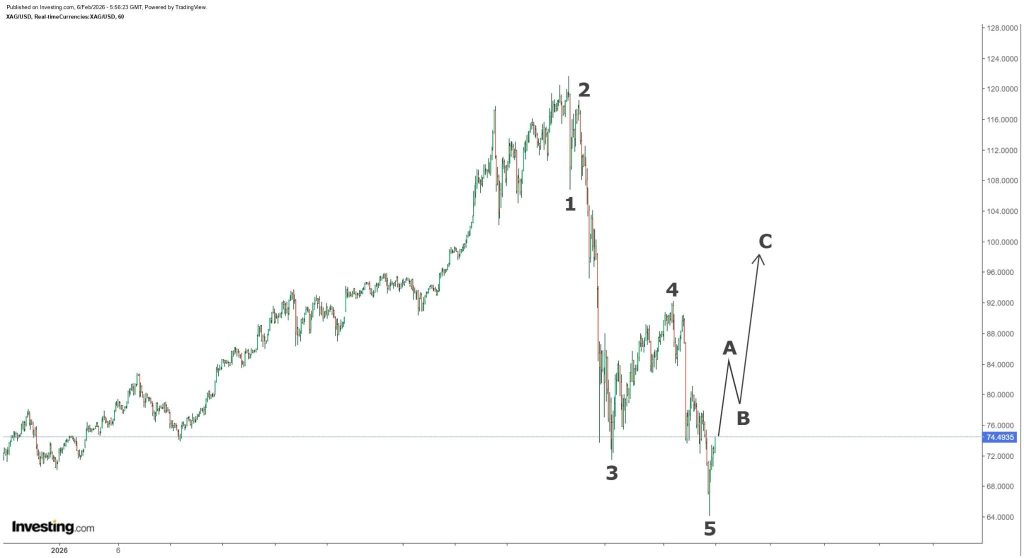
Silver Price Crash Is Over “For Real This Time,” Analyst Predicts a Surge Back Above $90

Silver Price Crash Is Over “For Real This Time,” Analyst Predicts a Surge Back Above $90

Silver has been taking a beating lately, and the Silver price hasn’t exactly been acting like a safe haven. After running up into the highs, the whole move reversed
Share
Captainaltcoin2026/02/07 03:15
Citi Caps Year-End at $4,300, But ETF outflows Challenge Outlook

Citi Caps Year-End at $4,300, But ETF outflows Challenge Outlook

The post Citi Caps Year-End at $4,300, But ETF outflows Challenge Outlook appeared on BitcoinEthereumNews.com. Ethereum Price Prediction: Citi Caps Year-End at $4,300, But ETF outflows Challenge Outlook Disclaimer: The information found on NewsBTC is for educational purposes only. It does not represent the opinions of NewsBTC on whether to buy, sell or hold any investments and naturally investing carries risks. You are advised to conduct your own research before making any investment decisions. Use information provided on this website entirely at your own risk. Related News © 2025 NewsBTC. All Rights Reserved. This website uses cookies. By continuing to use this website you are giving consent to cookies being used. Visit our Privacy Center or Cookie Policy. I Agree Source: https://www.newsbtc.com/news/ethereum/ethereum-price-prediction-citi-caps-year-end-at-4300-but-etf-outflows-challenge-outlook/
Share
BitcoinEthereumNews2025/09/18 14:30