Ethereum is attempting to reclaim the $3,000 level as the broader crypto market remains trapped in a phase of uncertainty and uneven conviction. Price action suggestsEthereum is attempting to reclaim the $3,000 level as the broader crypto market remains trapped in a phase of uncertainty and uneven conviction. Price action suggests

Ethereum Leverage Remains At Record High: What Happens Next?

2026/01/29 10:00
4 min read

Ethereum is attempting to reclaim the $3,000 level as the broader crypto market remains trapped in a phase of uncertainty and uneven conviction. Price action suggests buyers are willing to defend key support zones, yet momentum remains fragile, with rallies struggling to extend meaningfully. This hesitation is occurring against a backdrop of elevated leverage and unstable derivatives behavior, which continues to shape short-term market dynamics.

A recent report from CryptoQuant highlights a growing source of risk beneath the surface. Ethereum’s Estimated Leverage Ratio on Binance remains at a record high, with the 7-day simple moving average holding around 0.632.

This indicates a heavy concentration of leveraged positions, leaving the market increasingly sensitive to sudden price swings and liquidation events. In parallel, order-flow data points to erratic trader behavior, reinforcing the view that the current structure lacks balance.

The Taker Buy Sell Ratio illustrates this instability clearly. On January 25, the metric fell to 0.86, its lowest reading since September, signaling strong taker sell dominance. Shortly after, it rebounded sharply to 1.16, the highest daily level since February 2021, reflecting aggressive market buying. Such abrupt reversals underscore a market driven more by short-term positioning than by sustained directional confidence.

Ethereum Taker Buy Sell Ratio | Source: CryptoQuant

Ethereum Consolidates as High Leverage Amplifies Volatility Risk

The report explains that this abrupt shift in taker behavior is unfolding while Ethereum price action remains structurally weak. After failing to break above the $4,800 all-time high, ETH entered a prolonged corrective phase and is now consolidating near the $2,800 support zone.

This level has become a short-term pivot, repeatedly absorbing selling pressure but failing to generate sustained upside momentum. The lack of follow-through highlights a market caught between defensive buyers and aggressive short-term traders.

What makes this phase particularly sensitive is the interaction between price compression and elevated leverage. With Ethereum’s Estimated Leverage Ratio still near record highs, even modest price moves can trigger outsized reactions in the derivatives market.

Ethereum Estimated Leverage Ratio | Source: CryptoQuant

Rapid reversals in the Taker Buy Sell Ratio reinforce this fragility, signaling that positioning is flipping quickly rather than building in a stable, directional manner. Such conditions often precede sharp expansions in volatility rather than orderly trends.

Under this setup, Ethereum appears highly dependent on a clear external or internal catalyst. Without a decisive shift in macro conditions, spot demand, or network-specific developments, price action is likely to remain reactive. Until conviction emerges on either side, the combination of high leverage and unstable order flow keeps the risk of sudden liquidations elevated, increasing the probability of abrupt and disorderly price movements around key technical levels.

Price Action Details: Testing Critical Resistance

Ethereum’s price action reflects a market caught between stabilization and unresolved downside risk. On the daily chart, ETH is trading near $3,000 after several failed attempts to reclaim higher levels, highlighting this zone as a key psychological and technical pivot.
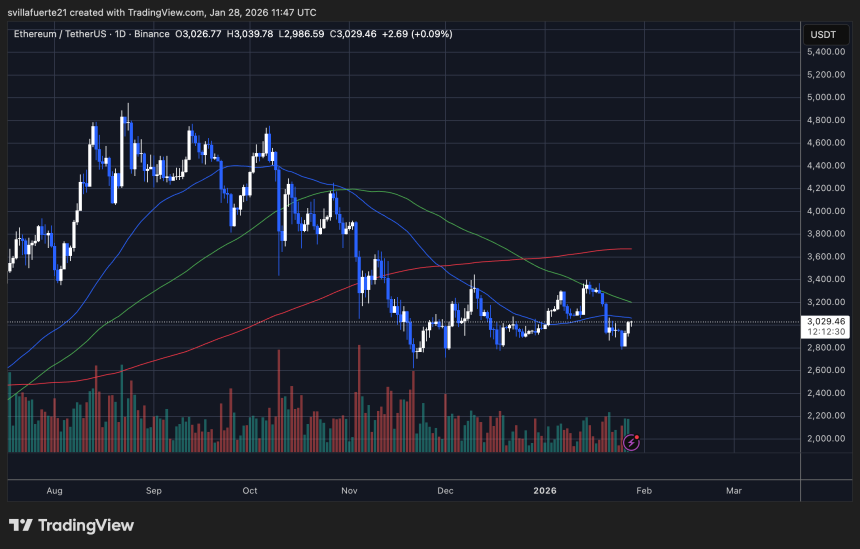
ETH consolidates below key MAs | Source: ETHUSDT chart on TradingView

Price remains below the 50-day and 100-day moving averages, both of which are sloping downward, reinforcing the idea that short- to medium-term momentum is still fragile. The 200-day moving average sits higher, near the mid-$3,500 area, acting as a clear marker of the broader trend deterioration since ETH failed to hold above $4,000.

ETH has transitioned from a strong impulsive uptrend into a wide consolidation range, bounded roughly between $2,800 and $3,400. The recent bounce from the lower end of this range suggests that buyers are still defending the $2,800 support zone, but volume remains muted compared to prior selloffs, indicating a lack of strong conviction on either side. Each rally attempt has so far produced lower highs, consistent with a corrective or distributional phase rather than a renewed trend.

As long as ETH holds above $2,800, the market can argue for consolidation and base-building. However, a sustained break below that level would expose the downside toward the $2,500–$2,600 region. Conversely, reclaiming the $3,300–$3,400 area would be required to meaningfully improve the technical outlook.

Featured image from ChatGPT, chart from TradingView.com 

Disclaimer: The articles reposted on this site are sourced from public platforms and are provided for informational purposes only. They do not necessarily reflect the views of MEXC. All rights remain with the original authors. If you believe any content infringes on third-party rights, please contact service@support.mexc.com for removal. MEXC makes no guarantees regarding the accuracy, completeness, or timeliness of the content and is not responsible for any actions taken based on the information provided. The content does not constitute financial, legal, or other professional advice, nor should it be considered a recommendation or endorsement by MEXC.

You May Also Like

Cashing In On University Patents Means Giving Up On Our Innovation Future
Cashing In On University Patents Means Giving Up On Our Innovation Future

The post Cashing In On University Patents Means Giving Up On Our Innovation Future appeared on BitcoinEthereumNews.com. “It’s a raid on American innovation that would deliver pennies to the Treasury while kneecapping the very engine of our economic and medical progress,” writes Pipes. Getty Images Washington is addicted to taxing success. Now, Commerce Secretary Howard Lutnick is floating a plan to skim half the patent earnings from inventions developed at universities with federal funding. It’s being sold as a way to shore up programs like Social Security. In reality, it’s a raid on American innovation that would deliver pennies to the Treasury while kneecapping the very engine of our economic and medical progress. Yes, taxpayer dollars support early-stage research. But the real payoff comes later—in the jobs created, cures discovered, and industries launched when universities and private industry turn those discoveries into real products. By comparison, the sums at stake in patent licensing are trivial. Universities collectively earn only about $3.6 billion annually in patent income—less than the federal government spends on Social Security in a single day. Even confiscating half would barely register against a $6 trillion federal budget. And yet the damage from such a policy would be anything but trivial. The true return on taxpayer investment isn’t in licensing checks sent to Washington, but in the downstream economic activity that federally supported research unleashes. Thanks to the bipartisan Bayh-Dole Act of 1980, universities and private industry have powerful incentives to translate early-stage discoveries into real-world products. Before Bayh-Dole, the government hoarded patents from federally funded research, and fewer than 5% were ever licensed. Once universities could own and license their own inventions, innovation exploded. The result has been one of the best returns on investment in government history. Since 1996, university research has added nearly $2 trillion to U.S. industrial output, supported 6.5 million jobs, and launched more than 19,000 startups. Those companies pay…
Share
BitcoinEthereumNews2025/09/18 03:26
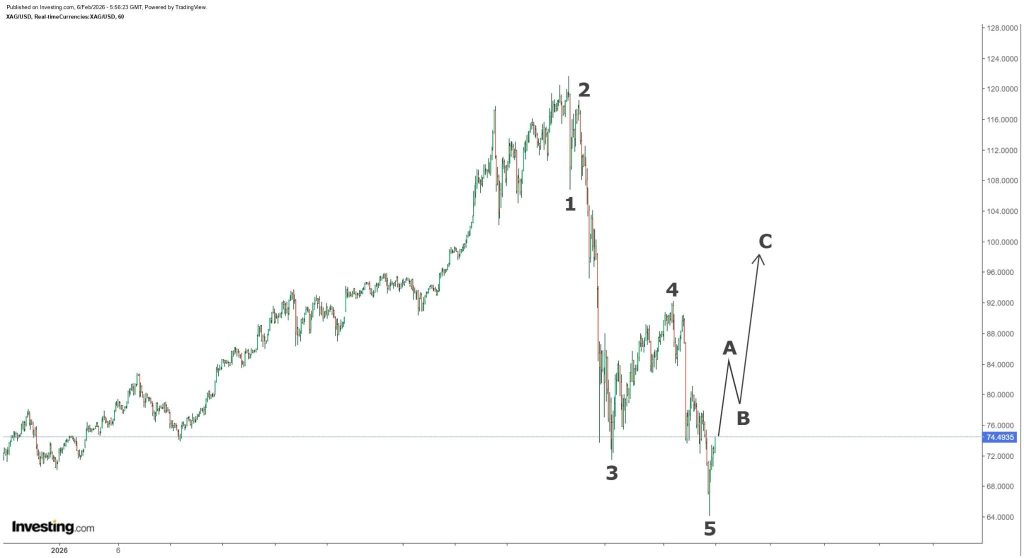
Silver Price Crash Is Over “For Real This Time,” Analyst Predicts a Surge Back Above $90

Silver Price Crash Is Over “For Real This Time,” Analyst Predicts a Surge Back Above $90

Silver has been taking a beating lately, and the Silver price hasn’t exactly been acting like a safe haven. After running up into the highs, the whole move reversed
Share
Captainaltcoin2026/02/07 03:15
Citi Caps Year-End at $4,300, But ETF outflows Challenge Outlook

Citi Caps Year-End at $4,300, But ETF outflows Challenge Outlook

The post Citi Caps Year-End at $4,300, But ETF outflows Challenge Outlook appeared on BitcoinEthereumNews.com. Ethereum Price Prediction: Citi Caps Year-End at $4,300, But ETF outflows Challenge Outlook Disclaimer: The information found on NewsBTC is for educational purposes only. It does not represent the opinions of NewsBTC on whether to buy, sell or hold any investments and naturally investing carries risks. You are advised to conduct your own research before making any investment decisions. Use information provided on this website entirely at your own risk. Related News © 2025 NewsBTC. All Rights Reserved. This website uses cookies. By continuing to use this website you are giving consent to cookies being used. Visit our Privacy Center or Cookie Policy. I Agree Source: https://www.newsbtc.com/news/ethereum/ethereum-price-prediction-citi-caps-year-end-at-4300-but-etf-outflows-challenge-outlook/
Share
BitcoinEthereumNews2025/09/18 14:30