

Understanding Prediction Markets Through Polymarket and Kalshi
Forecasting the future has always been noisy. Opinion polls lag reality, analyst forecasts are often biased, and narratives move faster than data. Prediction markets offer a fundamentally different approach by aggregating capital-weighted beliefs into real-time probabilities, a shift that has increasingly positioned them as part of modern financial data infrastructureIn recent years, prediction markets have moved beyond niche experimentation. They are now actively used to forecast elections, macroeconomic indicators, crypto events, and policy outcomes, often outperforming traditional forecasting methods. Two platforms in particular have come to define this space today: Polymarket and Kalshi.
Table Of Content
- What Are Prediction Markets?
- How Prediction Markets Work in Practice
- Why Prediction Markets Matter in 2025
- The Two Major Prediction Markets Today: Polymarket and Kalshi
- Polymarket: A Crypto-Native Prediction Market
- Kalshi: Regulated Prediction Markets for the Real Economy
- Polymarket vs Kalshi: Different Ends of the Same Stack
- Why Prediction Markets Matter Beyond Trading
- Challenges and Open Questions
- The Future of Prediction Markets
- Frequently Asked Questions About Prediction Markets
- Key Takeaways
- About Onfinality
What Are Prediction Markets?
Prediction markets are marketplaces where participants trade contracts based on the outcome of a future event. These markets convert dispersed information into prices that reflect collective expectations. Each market is framed as a clearly defined question, such as:
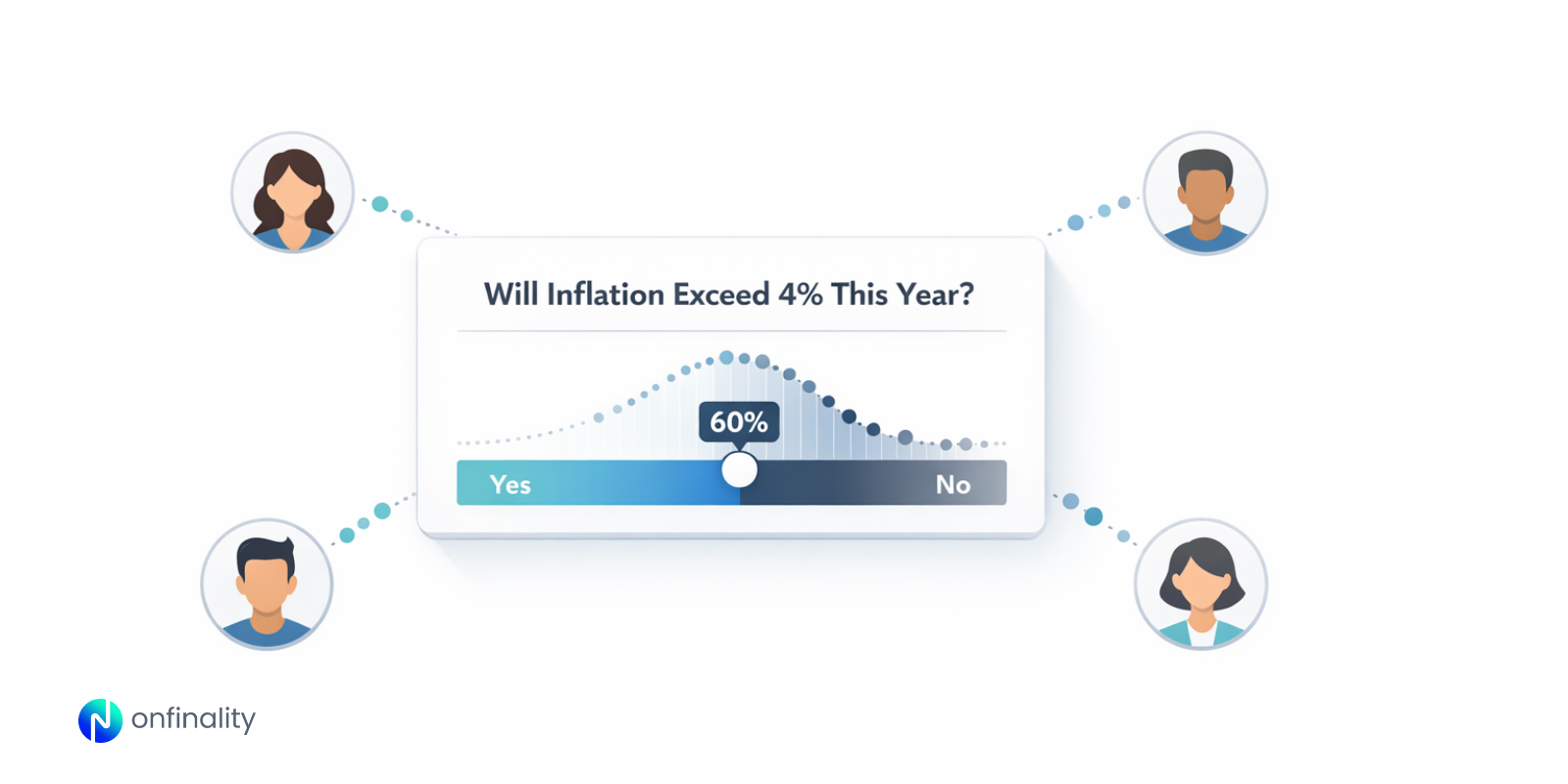
- Will inflation exceed 4 percent this year?
- Will Ethereum ship a specific upgrade by a given date?
The price of a contract reflects the collective probability assigned by the market. For example, a contract trading at 0.65 implies a 65 percent perceived likelihood of that outcome.
Unlike surveys or expert panels, prediction markets reward accuracy with financial incentives. Participants who correctly anticipate outcomes profit, while incorrect forecasts lose capital.However, research has also warned that prediction markets are not always accurate, particularly in politically sensitive contexts. This incentive structure encourages traders to act on information rather than opinion.
How Prediction Markets Work in Practice
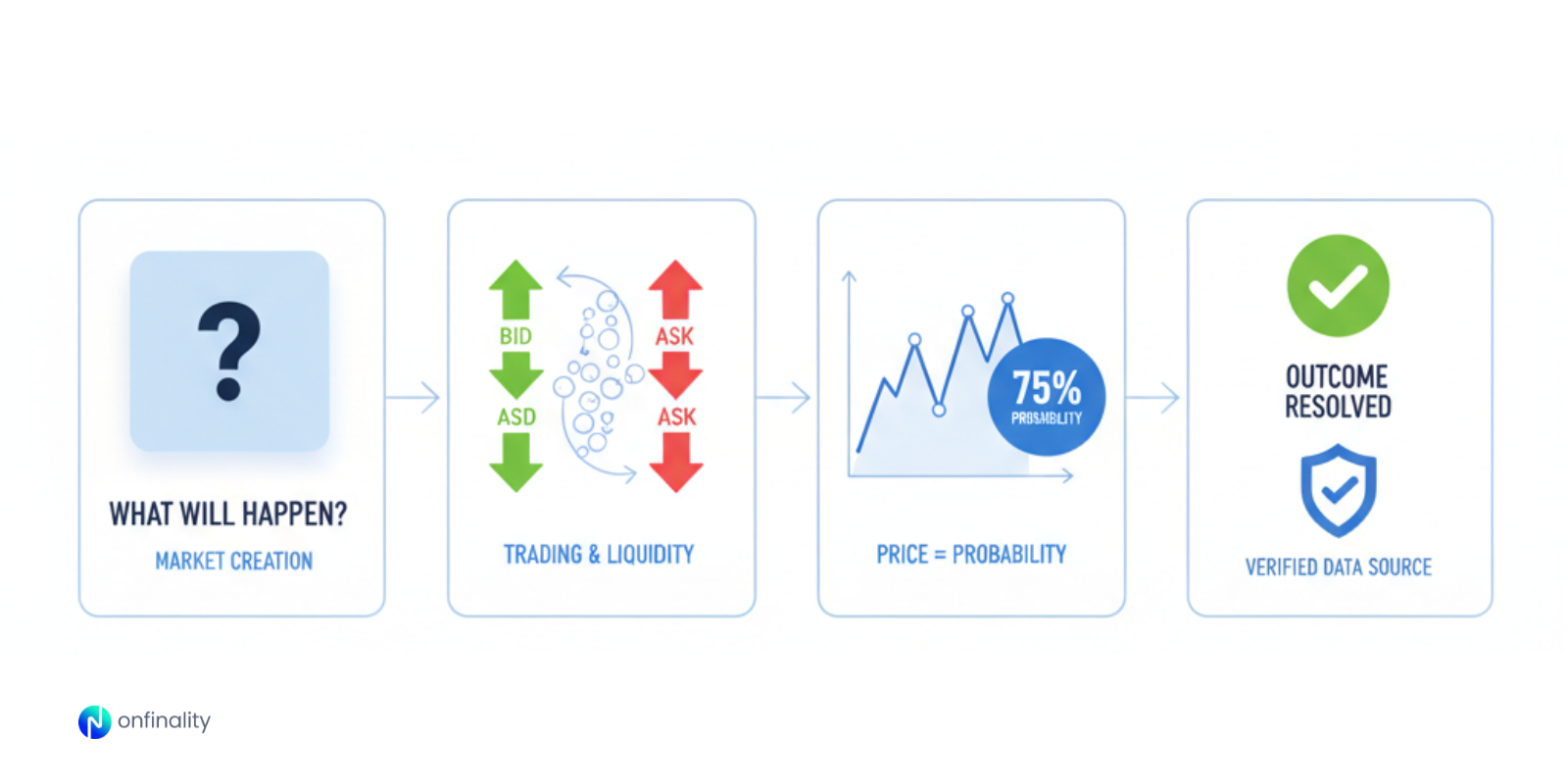
Most prediction markets operate using simple and transparent structures:
- Binary outcomes such as Yes or No
- Clearly defined settlement criteria
- Transparent pricing that reflects probability
- Market makers or liquidity mechanisms to enable trading
Participants buy and sell shares based on their belief in an outcome. As new information enters the system, prices update in real time. Once the event resolves, markets settle based on a predefined data source, often referred to as an oracle or an official authority.
Why Prediction Markets Matter in 2025
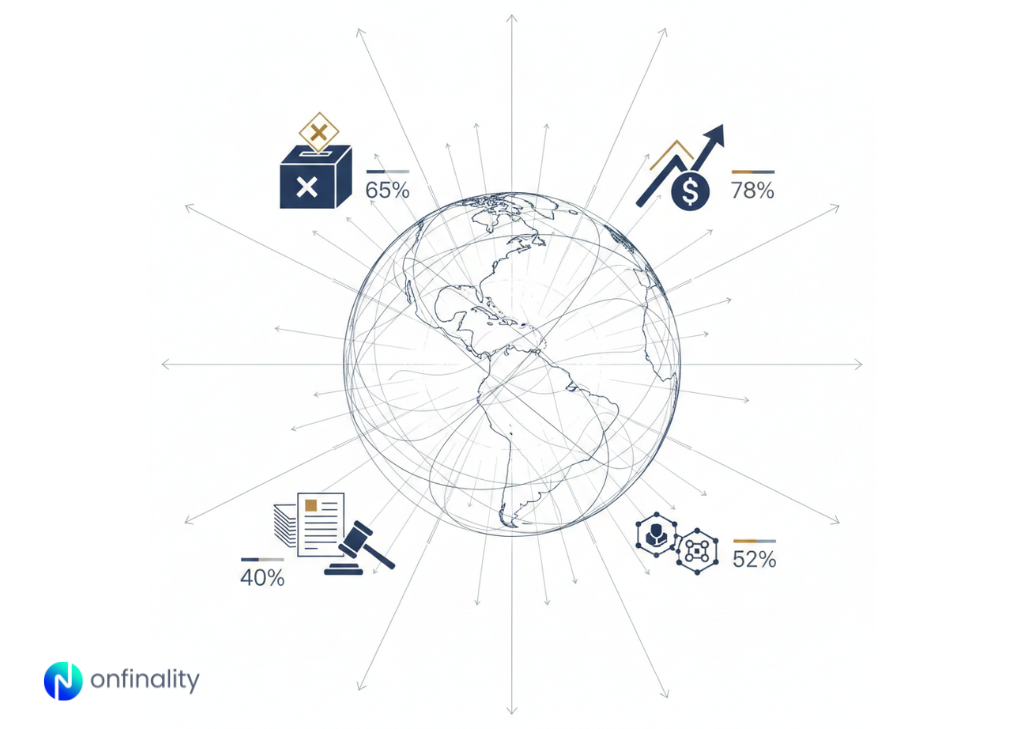
Prediction markets are gaining renewed relevance as uncertainty increases across global politics, macroeconomics, and technology. Traditional forecasting models struggle to adapt quickly, while prediction markets continuously incorporate new information.
Several trends are driving adoption:
- Demand for real-time probabilistic signals
- Growth of crypto-native financial infrastructure
- Institutional interest in alternative risk-hedging tools
The Two Major Prediction Markets Today: Polymarket and Kalshi
While many platforms experiment with event-based trading, Polymarket and Kalshi have emerged as the two most significant prediction markets globally. Both aim to surface real-world probabilities, but they differ sharply in architecture, regulation, and target users.
Polymarket: A Crypto-Native Prediction Market
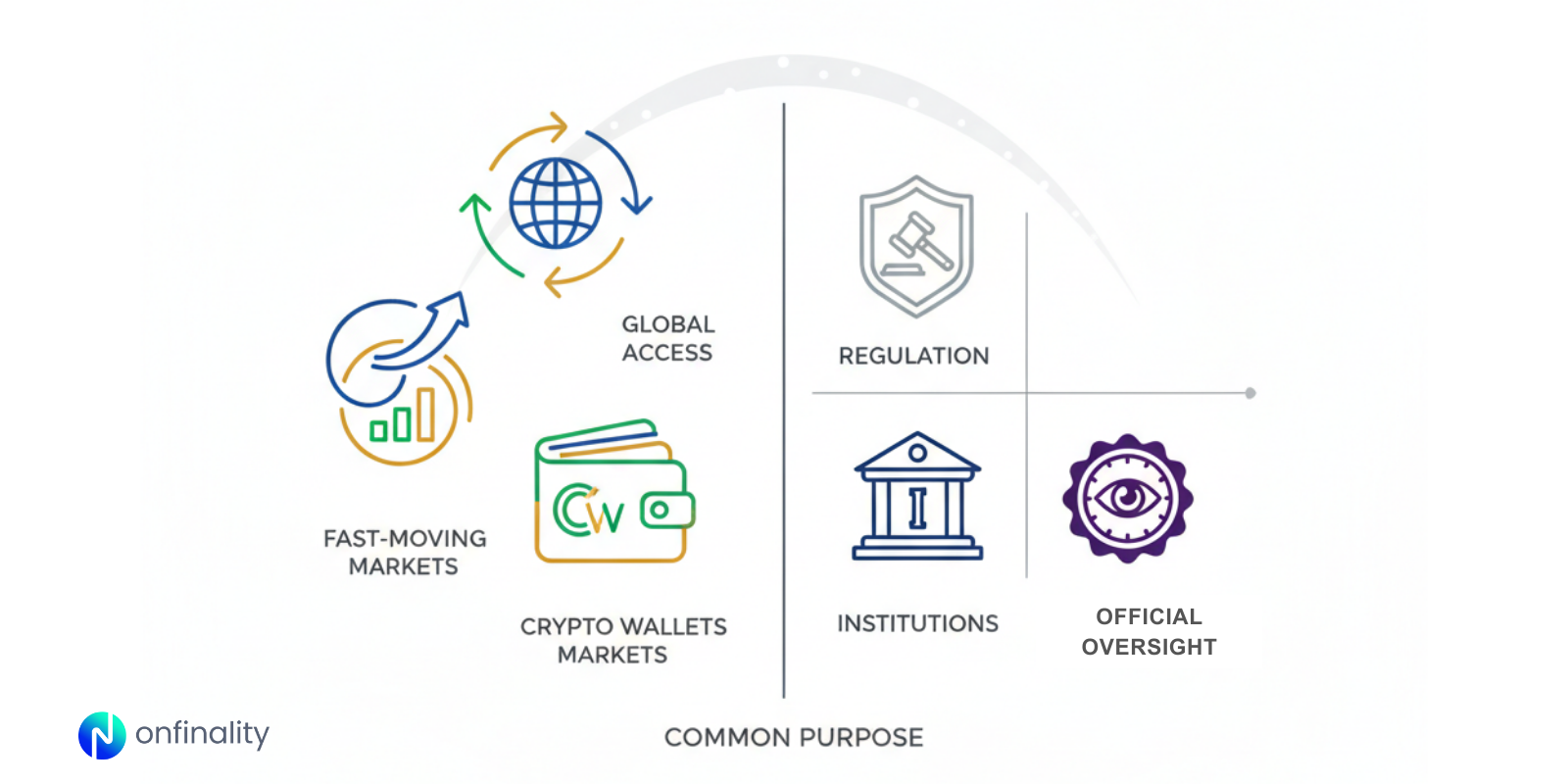
Polymarket is a blockchain-based prediction market that allows users to trade on real-world events using crypto-native rails. Built on decentralized infrastructure, it enables global participation without traditional financial intermediaries.
Key characteristics of Polymarket include:
- Onchain settlement and transparency
- Use of stablecoins for trading
- Rapid creation of new markets
- Global, permissionless access
Polymarket has gained significant attention for markets around elections, geopolitical events, and crypto ecosystem milestones. Because prices update continuously based on user trades, the platform often reflects shifts in sentiment faster than polls or media narratives.
However, Polymarket operates in a regulatory gray area. Access is restricted in certain jurisdictions, and its permissionless nature raises ongoing compliance questions as prediction markets intersect with financial regulation.
Kalshi: Regulated Prediction Markets for the Real Economy
Kalshi takes a fundamentally different approach. It is a CFTC-regulated exchange in the United States, making it the first fully compliant prediction market platform of its kind.
Kalshi focuses on event-based contracts tied to economic indicators, public policy, and institutional risk factors. Examples include inflation rates, interest rate decisions, and regulatory outcomes.
Key attributes of Kalshi include:
- Full regulatory approval under the US Commodity Futures Trading Commission
- Emphasis on institutional and professional traders
- Clear compliance and settlement frameworks
- Integration with traditional financial systems
According to the official CFTC approval announcement, regulated event contracts like those offered by Kalshi are treated as legitimate financial instruments, positioning prediction markets as tools for hedging and risk management rather than speculation.
Polymarket vs Kalshi: Different Ends of the Same Stack
Although Polymarket and Kalshi are often compared, they solve the same forecasting problem from different layers of the financial stack.
Polymarket prioritizes speed, openness, and global accessibility. Kalshi prioritizes regulatory clarity, institutional trust, and jurisdictional compliance. One is crypto-native and permissionless, the other is regulated and region-specific.
Together, they demonstrate how prediction markets can evolve across both decentralized and traditional financial systems.
Why Prediction Markets Matter Beyond Trading
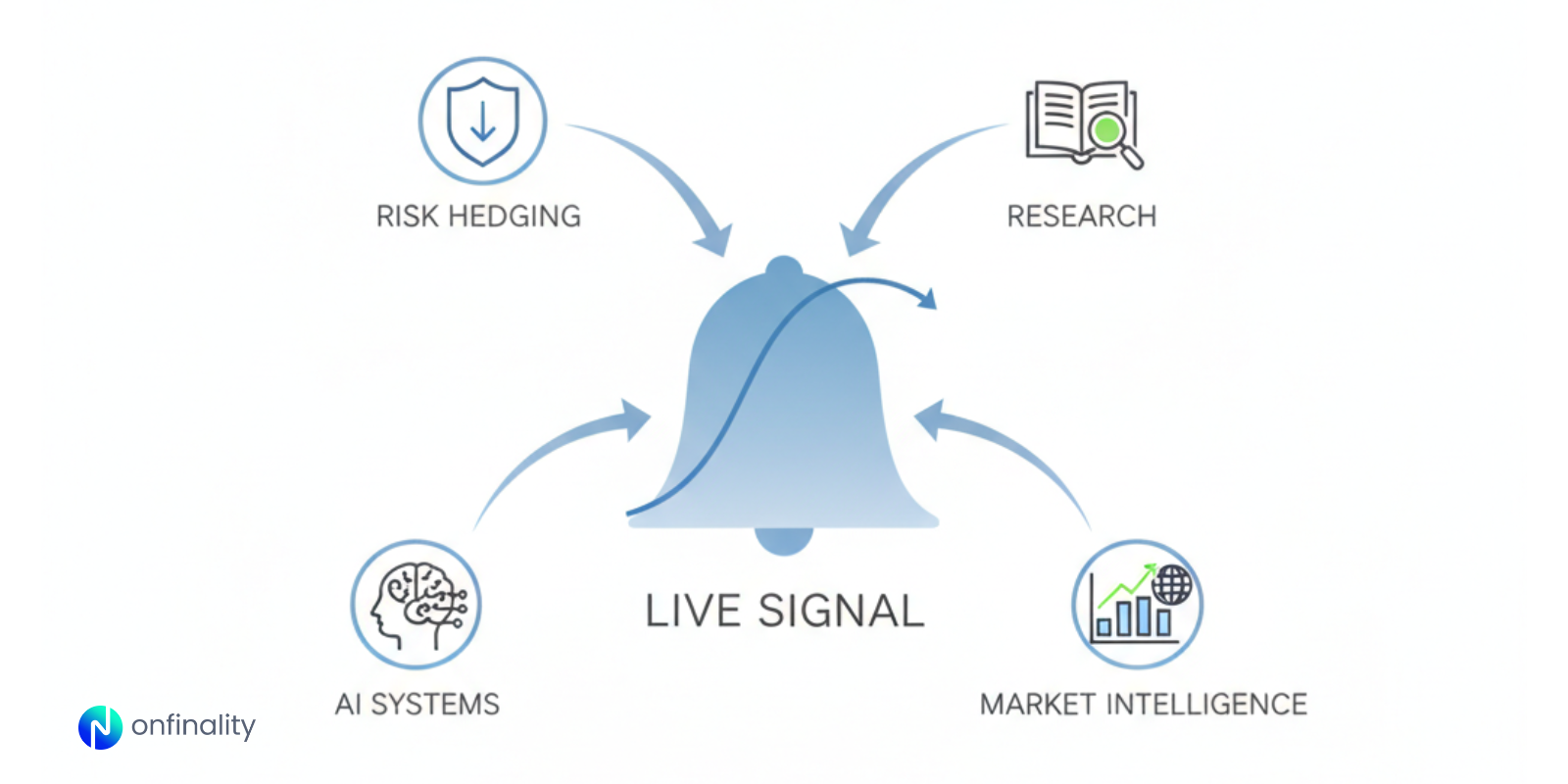
Prediction markets are increasingly valuable not because of trading volume, but because of the signals they generate. These markets produce real-time probabilities that inform decision-making across industries.
Common use cases include:
- Risk hedging for businesses exposed to policy or macro outcomes
- Forecasting inputs for research and analytics teams
- Signal generation for algorithmic and AI-driven systems
- Market sentiment indicators for investors and institutions
Challenges and Open Questions
Despite their promise, prediction markets face meaningful challenges:
- Regulatory uncertainty outside the United States
- Liquidity concentration around high-profile events
- Potential manipulation in low-volume markets
- Dependence on reliable data sources and oracles
- UX complexity for non-financial users
Addressing these issues will be critical for prediction markets to scale sustainably.

The Future of Prediction Markets
Looking ahead, prediction markets are likely to evolve from standalone platforms into integrated components of broader financial and data infrastructure. Early experimentation already includes AI agents, automated market-making, and cross-protocol integrations.
As blockchain infrastructure matures and reliable data access improves, prediction markets may become a foundational layer for probabilistic finance, powering everything from governance decisions to automated risk management systems.
Much like high-performance RPCs and indexing layers enable scalable decentralized applications, prediction markets are shaping up to be the information layer that turns uncertainty into actionable signals.
Frequently Asked Questions About Prediction Markets
Are prediction markets legal?
The legality of prediction markets depends on jurisdiction.
Are prediction markets the same as gambling?
No. Prediction markets are designed to aggregate information rather than provide entertainment.
Why do prediction markets often outperform polls and forecasts?
Prediction markets outperform traditional forecasting tools because they:
- Aggregate diverse, decentralized information
- Penalize incorrect predictions financially
- Update continuously as new data emerges
Who typically uses prediction markets?
Prediction markets are used by a wide range of participants, including:
- Traders and investors managing event-driven risk
- Researchers and analysts seeking probabilistic signals
- Businesses hedging policy or macroeconomic exposure
- Developers and AI systems consuming real-time probability data
Key Takeaways
Prediction markets are evolving into a critical layer of modern information infrastructure. By converting uncertainty into market-driven probabilities, platforms like Polymarket and Kalshi demonstrate how incentives, liquidity, and infrastructure can surface collective intelligence at scale.
As forecasting becomes increasingly data-driven and automated, prediction markets are likely to play a growing role in how financial systems, institutions, and protocols reason about the future.
To explore more about the infrastructure powering real-time, data-intensive Web3 applications, you can read related insights on the OnFinality blog.
About Onfinality
OnFinality is a blockchain infrastructure platform that serves hundreds of billions of API requests monthly across more than 130 networks, including Avalanche, BNB Chain, Cosmos, Polkadot, Ethereum, and Polygon. It provides scalable APIs, RPC endpoints, node hosting, and indexing tools to help developers launch and grow blockchain networks efficiently. OnFinality’s mission is to make Web3 infrastructure effortless so developers can focus on building the future of decentralised applications.
App | Website | Twitter | Telegram | LinkedIn | YouTube
You May Also Like

Vitalik Buterin Challenges Ethereum’s Layer 2 Paradigm

USAA Names Dan Griffiths Chief Information Officer to Drive Secure, Simplified Digital Member Experiences
