The post Trump chaos triggers safe-haven demand appeared on BitcoinEthereumNews.com. Here is what you need to know on Wednesday, January 21: Safe-haven flows continueThe post Trump chaos triggers safe-haven demand appeared on BitcoinEthereumNews.com. Here is what you need to know on Wednesday, January 21: Safe-haven flows continue

Trump chaos triggers safe-haven demand

Here is what you need to know on Wednesday, January 21:

Safe-haven flows continue to dominate financial markets on Tuesday as geopolitical tensions between United States (US) President Donald Trump and Greenland/Europe remain high.

US President Donald Trump argued early Tuesday again that Denmark is unable to adequately protect Greenland and said they will discuss the issue in Davos. Trump also noted that he will impose a 200% tariff on French wines and champagnes if France declines to join the Gaza Board of Peace.

Financial markets in the US returned to action following a long weekend, but the US economic calendar did not feature any high-impact data releases. The country published the Automatic Data Processing (ADP) Employment Change 4-week Average data, showing that private employers added an average of 8K jobs per week in the 4-week period ending January 20, down from the 11K added in the previous week.

The US Dollar (USD) Index continues to edge lower in the American session and is now trading around the 98.50 price zone.

US Dollar Price Today

The table below shows the percentage change of US Dollar (USD) against listed major currencies today. US Dollar was the strongest against the Japanese Yen.

USDEURGBPJPYCADAUDNZDCHF
USD-0.71%-0.12%-0.06%-0.26%-0.30%-0.69%-1.04%
EUR0.71%0.59%0.63%0.45%0.41%0.00%-0.33%
GBP0.12%-0.59%0.06%-0.14%-0.18%-0.57%-0.92%
JPY0.06%-0.63%-0.06%-0.20%-0.24%-0.63%-0.98%
CAD0.26%-0.45%0.14%0.20%-0.04%-0.44%-0.77%
AUD0.30%-0.41%0.18%0.24%0.04%-0.39%-0.72%
NZD0.69%-0.01%0.57%0.63%0.44%0.39%-0.35%
CHF1.04%0.33%0.92%0.98%0.77%0.72%0.35%

The heat map shows percentage changes of major currencies against each other. The base currency is picked from the left column, while the quote currency is picked from the top row. For example, if you pick the US Dollar from the left column and move along the horizontal line to the Japanese Yen, the percentage change displayed in the box will represent USD (base)/JPY (quote).

GBP/USD is trading close to the 1.3460 price zone after the UK’s Office for National Statistics reported on Tuesday that the ILO Unemployment Rate remained unchanged at 5.1% in the three months to November. In this period, the Employment Change was +82,000, compared to the 17,000 decrease recorded in the three months to October.

EUR/USD is trading near the 1.1730 price zone after Germany’s ZEW sentiment data printed at 59.6, above the 50 expected. The EU Economic Sentiment was released at 40.8, well above the 35.2 expected by economists, helping push the Euro (EUR) higher amid an already weakened US Dollar (USD).

USD/CAD is trading near the 1.3830 level, slipping and losing almost half of last week’s gains.

USD/JPY is trading little changed and near the 157.90 price zone.

Gold is trading at a record high of $4.757 zone amid rising geopolitical tensions. Market focus is now on US President Trump’s speech in Davos on Wednesday.

Gold FAQs

Gold has played a key role in human’s history as it has been widely used as a store of value and medium of exchange. Currently, apart from its shine and usage for jewelry, the precious metal is widely seen as a safe-haven asset, meaning that it is considered a good investment during turbulent times. Gold is also widely seen as a hedge against inflation and against depreciating currencies as it doesn’t rely on any specific issuer or government.

Central banks are the biggest Gold holders. In their aim to support their currencies in turbulent times, central banks tend to diversify their reserves and buy Gold to improve the perceived strength of the economy and the currency. High Gold reserves can be a source of trust for a country’s solvency. Central banks added 1,136 tonnes of Gold worth around $70 billion to their reserves in 2022, according to data from the World Gold Council. This is the highest yearly purchase since records began. Central banks from emerging economies such as China, India and Turkey are quickly increasing their Gold reserves.

Gold has an inverse correlation with the US Dollar and US Treasuries, which are both major reserve and safe-haven assets. When the Dollar depreciates, Gold tends to rise, enabling investors and central banks to diversify their assets in turbulent times. Gold is also inversely correlated with risk assets. A rally in the stock market tends to weaken Gold price, while sell-offs in riskier markets tend to favor the precious metal.

The price can move due to a wide range of factors. Geopolitical instability or fears of a deep recession can quickly make Gold price escalate due to its safe-haven status. As a yield-less asset, Gold tends to rise with lower interest rates, while higher cost of money usually weighs down on the yellow metal. Still, most moves depend on how the US Dollar (USD) behaves as the asset is priced in dollars (XAU/USD). A strong Dollar tends to keep the price of Gold controlled, whereas a weaker Dollar is likely to push Gold prices up.

Coming up next:

The ONS will publish the UK December inflation data on Wednesday.

The US will release the PCE reports for October and November, and the Q3 GDP report, on Thursday.

The BoJ will release its monetary policy decision on Friday, while Governor Kazuo Ueda will then offer a press conference. Additionally, the Eurozone and German HCOB Composite, Manufacturing, and Services PMI will be released later in the European session. The US and UK S&P Global PMIs will also be released on Friday.

Source: https://www.fxstreet.com/news/forex-today-trump-chaos-triggers-safe-haven-demand-202601201857

Market Opportunity
OFFICIAL TRUMP Logo
OFFICIAL TRUMP Price(TRUMP)
$3.496
$3.496$3.496
+0.92%
USD
OFFICIAL TRUMP (TRUMP) Live Price Chart
Disclaimer: The articles reposted on this site are sourced from public platforms and are provided for informational purposes only. They do not necessarily reflect the views of MEXC. All rights remain with the original authors. If you believe any content infringes on third-party rights, please contact service@support.mexc.com for removal. MEXC makes no guarantees regarding the accuracy, completeness, or timeliness of the content and is not responsible for any actions taken based on the information provided. The content does not constitute financial, legal, or other professional advice, nor should it be considered a recommendation or endorsement by MEXC.

You May Also Like

Cashing In On University Patents Means Giving Up On Our Innovation Future

Cashing In On University Patents Means Giving Up On Our Innovation Future

The post Cashing In On University Patents Means Giving Up On Our Innovation Future appeared on BitcoinEthereumNews.com. “It’s a raid on American innovation that would deliver pennies to the Treasury while kneecapping the very engine of our economic and medical progress,” writes Pipes. Getty Images Washington is addicted to taxing success. Now, Commerce Secretary Howard Lutnick is floating a plan to skim half the patent earnings from inventions developed at universities with federal funding. It’s being sold as a way to shore up programs like Social Security. In reality, it’s a raid on American innovation that would deliver pennies to the Treasury while kneecapping the very engine of our economic and medical progress. Yes, taxpayer dollars support early-stage research. But the real payoff comes later—in the jobs created, cures discovered, and industries launched when universities and private industry turn those discoveries into real products. By comparison, the sums at stake in patent licensing are trivial. Universities collectively earn only about $3.6 billion annually in patent income—less than the federal government spends on Social Security in a single day. Even confiscating half would barely register against a $6 trillion federal budget. And yet the damage from such a policy would be anything but trivial. The true return on taxpayer investment isn’t in licensing checks sent to Washington, but in the downstream economic activity that federally supported research unleashes. Thanks to the bipartisan Bayh-Dole Act of 1980, universities and private industry have powerful incentives to translate early-stage discoveries into real-world products. Before Bayh-Dole, the government hoarded patents from federally funded research, and fewer than 5% were ever licensed. Once universities could own and license their own inventions, innovation exploded. The result has been one of the best returns on investment in government history. Since 1996, university research has added nearly $2 trillion to U.S. industrial output, supported 6.5 million jobs, and launched more than 19,000 startups. Those companies pay…
Share
BitcoinEthereumNews2025/09/18 03:26
China Blocks Nvidia’s RTX Pro 6000D as Local Chips Rise

China Blocks Nvidia’s RTX Pro 6000D as Local Chips Rise

The post China Blocks Nvidia’s RTX Pro 6000D as Local Chips Rise appeared on BitcoinEthereumNews.com. China Blocks Nvidia’s RTX Pro 6000D as Local Chips Rise China’s internet regulator has ordered the country’s biggest technology firms, including Alibaba and ByteDance, to stop purchasing Nvidia’s RTX Pro 6000D GPUs. According to the Financial Times, the move shuts down the last major channel for mass supplies of American chips to the Chinese market. Why Beijing Halted Nvidia Purchases Chinese companies had planned to buy tens of thousands of RTX Pro 6000D accelerators and had already begun testing them in servers. But regulators intervened, halting the purchases and signaling stricter controls than earlier measures placed on Nvidia’s H20 chip. Image: Nvidia An audit compared Huawei and Cambricon processors, along with chips developed by Alibaba and Baidu, against Nvidia’s export-approved products. Regulators concluded that Chinese chips had reached performance levels comparable to the restricted U.S. models. This assessment pushed authorities to advise firms to rely more heavily on domestic processors, further tightening Nvidia’s already limited position in China. China’s Drive Toward Tech Independence The decision highlights Beijing’s focus on import substitution — developing self-sufficient chip production to reduce reliance on U.S. supplies. “The signal is now clear: all attention is focused on building a domestic ecosystem,” said a representative of a leading Chinese tech company. Nvidia had unveiled the RTX Pro 6000D in July 2025 during CEO Jensen Huang’s visit to Beijing, in an attempt to keep a foothold in China after Washington restricted exports of its most advanced chips. But momentum is shifting. Industry sources told the Financial Times that Chinese manufacturers plan to triple AI chip production next year to meet growing demand. They believe “domestic supply will now be sufficient without Nvidia.” What It Means for the Future With Huawei, Cambricon, Alibaba, and Baidu stepping up, China is positioning itself for long-term technological independence. Nvidia, meanwhile, faces…
Share
BitcoinEthereumNews2025/09/18 01:37
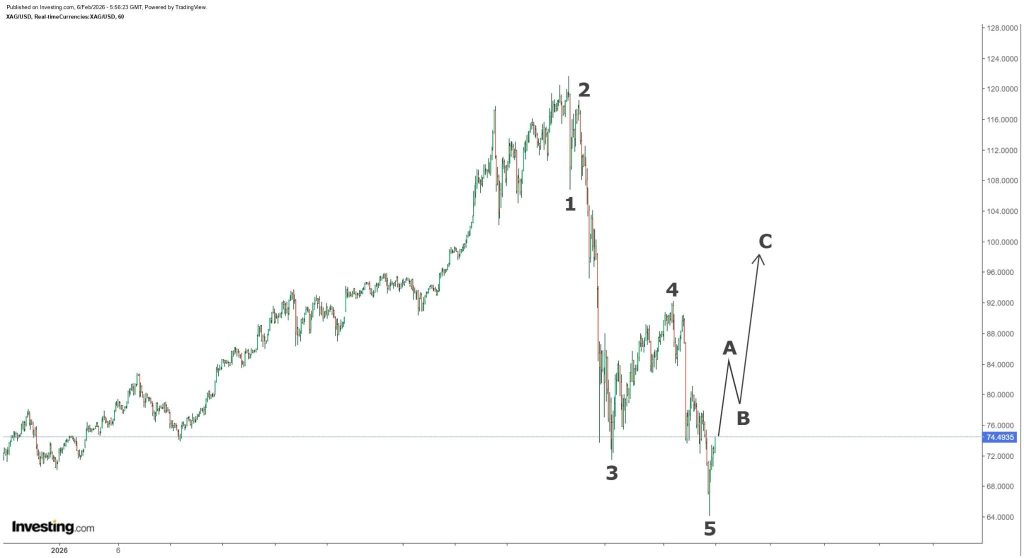
Silver Price Crash Is Over “For Real This Time,” Analyst Predicts a Surge Back Above $90

Silver Price Crash Is Over “For Real This Time,” Analyst Predicts a Surge Back Above $90

Silver has been taking a beating lately, and the Silver price hasn’t exactly been acting like a safe haven. After running up into the highs, the whole move reversed
Share
Captainaltcoin2026/02/07 03:15