House representatives agree to advance several key pieces of crypto legislation.House representatives agree to advance several key pieces of crypto legislation.

GENIUS Act clears House vote, stablecoin law could pass this week

2 min read

The landmark stablecoin legislation, the GENIUS Act, could be on Trump’s desk by the end of the week.

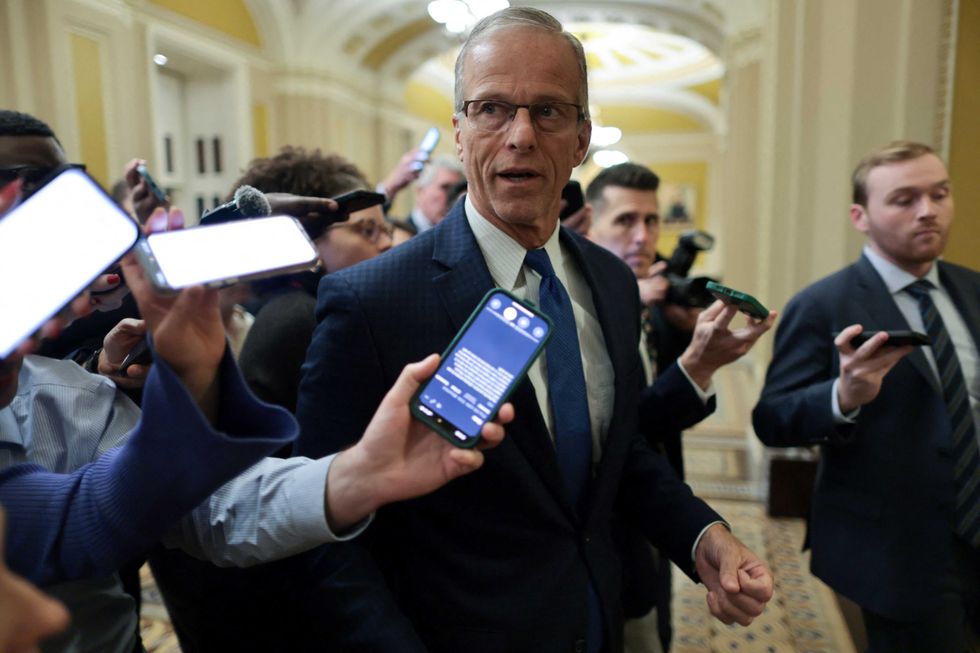
Key stablecoin legislation finally obtained a procedural green light, but with no support from Democrats. On Wednesday, July 16, the U.S. House of Representatives voted 215–211 to advance the GENIUS Act. If the act passes in the next vote, it could reach President Donald Trump’s desk before the end of the week.

Alongside the legislation on stablecoins, lawmakers also agreed to push forward the Digital Asset Market Clarity Act. The so-called Clarity Act would introduce a comprehensive framework for digital asset regulation. Specifically, it outlines the jurisdictions between the Securities and Exchange Commission and the Commodity Futures Trading Commission.

The procedural bill, which allowed debate on the legislation to proceed, obtained support from Republican representatives after they resolved internal disagreements. Ahead of the vote, President Donald Trump stated that key legislators had agreed to support the bill. However, not a single Democratic representative supported the motion to proceed.

Republicans block the Genesis Act over CBDCs

Earlier in the week, legislators blocked the GENIUS Act and the Clarity Act in a 196–223 vote, largely due to divisions within the Republican camp. Notably, members of the House Freedom Caucus, including Marjorie Taylor Greene, Chip Roy, and Michael Cloud, voted against the bill.

Rep. Greene expressed particular concern over the GENIUS Act. She stated that the act might allow for the creation of a national stablecoin, which could serve as a central bank digital currency. Specifically, she cited concerns over digital freedom and surveillance as the reason that CBDCs should not be allowed in the U.S.

https://twitter.com/RepMTG/status/1945489682411753902

Greene stated that unless the GENIUS Act banned CBDCs directly, she would not vote for it. Still, the House is also advancing the Anti-CBDC Surveillance State Act, which directly prohibits the U.S. government from issuing programmable money.

Market Opportunity
Housecoin Logo
Housecoin Price(HOUSE)
$0.0007103
$0.0007103$0.0007103
-0.87%
USD
Housecoin (HOUSE) Live Price Chart
Disclaimer: The articles reposted on this site are sourced from public platforms and are provided for informational purposes only. They do not necessarily reflect the views of MEXC. All rights remain with the original authors. If you believe any content infringes on third-party rights, please contact service@support.mexc.com for removal. MEXC makes no guarantees regarding the accuracy, completeness, or timeliness of the content and is not responsible for any actions taken based on the information provided. The content does not constitute financial, legal, or other professional advice, nor should it be considered a recommendation or endorsement by MEXC.

You May Also Like

XRP Enters ‘Washout Zone,’ Then Targets $30, Crypto Analyst Says
XRP Enters ‘Washout Zone,’ Then Targets $30, Crypto Analyst Says

XRP has entered what Korean Certified Elliott Wave Analyst XForceGlobal (@XForceGlobal) calls a “washout” phase inside a broader Elliott Wave corrective structure
Share
NewsBTC2026/02/05 08:00
Republicans are 'very concerned about Texas' turning blue: GOP senator

Republicans are 'very concerned about Texas' turning blue: GOP senator

While Republicans in the U.S. House of Representatives have a razor-thin with just a four-seat advantage, their six-seat advantage in the U.S. Senate is seen as
Share
Alternet2026/02/05 08:38
Headwind Helps Best Wallet Token

Headwind Helps Best Wallet Token

The post Headwind Helps Best Wallet Token appeared on BitcoinEthereumNews.com. Google has announced the launch of a new open-source protocol called Agent Payments Protocol (AP2) in partnership with Coinbase, the Ethereum Foundation, and 60 other organizations. This allows AI agents to make payments on behalf of users using various methods such as real-time bank transfers, credit and debit cards, and, most importantly, stablecoins. Let’s explore in detail what this could mean for the broader cryptocurrency markets, and also highlight a presale crypto (Best Wallet Token) that could explode as a result of this development. Google’s Push for Stablecoins Agent Payments Protocol (AP2) uses digital contracts known as ‘Intent Mandates’ and ‘Verifiable Credentials’ to ensure that AI agents undertake only those payments authorized by the user. Mandates, by the way, are cryptographically signed, tamper-proof digital contracts that act as verifiable proof of a user’s instruction. For example, let’s say you instruct an AI agent to never spend more than $200 in a single transaction. This instruction is written into an Intent Mandate, which serves as a digital contract. Now, whenever the AI agent tries to make a payment, it must present this mandate as proof of authorization, which will then be verified via the AP2 protocol. Alongside this, Google has also launched the A2A x402 extension to accelerate support for the Web3 ecosystem. This production-ready solution enables agent-based crypto payments and will help reshape the growth of cryptocurrency integration within the AP2 protocol. Google’s inclusion of stablecoins in AP2 is a massive vote of confidence in dollar-pegged cryptocurrencies and a huge step toward making them a mainstream payment option. This widens stablecoin usage beyond trading and speculation, positioning them at the center of the consumption economy. The recent enactment of the GENIUS Act in the U.S. gives stablecoins more structure and legal support. Imagine paying for things like data crawls, per-task…
Share
BitcoinEthereumNews2025/09/18 01:27