TLDR Microsoft President Brad Smith highlights China’s rapid rise in the AI race, especially in Africa, Russia, and Belarus. DeepSeek’s AI model R1 has gained significantTLDR Microsoft President Brad Smith highlights China’s rapid rise in the AI race, especially in Africa, Russia, and Belarus. DeepSeek’s AI model R1 has gained significant

China Surpasses US in AI Race with DeepSeek’s Rise in Global Markets

2026/01/14 00:39
3 min read

TLDR

  • Microsoft President Brad Smith highlights China’s rapid rise in the AI race, especially in Africa, Russia, and Belarus.
  • DeepSeek’s AI model R1 has gained significant market share in regions where American firms have limited reach.
  • China’s open-source AI models offer affordable solutions that are attracting users in countries with high tech costs.
  • Microsoft warns that the AI divide between the global north and south is growing, with China leading the way in the global south.
  • DeepSeek’s success is fueled by government subsidies and low-cost offerings that allow it to undercut American competitors.

Microsoft President Brad Smith has highlighted China’s rising dominance in the AI race, particularly in markets like Africa, Russia, and Belarus. He pointed out that Chinese firms are outpacing American companies, benefiting from government subsidies and open-source models. This shift in the global AI landscape is evident in the rapid rise of China’s AI company, DeepSeek.

China’s AI Growth in Key Global Markets

Chinese tech company DeepSeek has surged ahead, especially in regions where American firms have limited presence. According to Microsoft, DeepSeek’s AI model, R1, dominates markets like Belarus, Cuba, and Russia. The model holds 56% of the market in Belarus, 49% in Cuba, and 43% in Russia.

DeepSeek’s success can be attributed to the company’s low-cost offerings and government support. These factors allow Chinese firms to undercut American competitors, who often rely on paid subscriptions and closed ecosystems. In addition to this, China’s open-source AI models make it easy for users in regions like Africa to access AI tools without the constraints of expensive subscriptions.

DeepSeek’s Rise in Africa

The AI model R1 has also made significant inroads in Africa, where many nations face high costs for access to technology. In countries like Ethiopia and Zimbabwe, DeepSeek has captured 18% and 17% of the market, respectively. These numbers are expected to grow, as the affordability and accessibility of China’s open-source AI tools remain attractive to many users.

Brad Smith acknowledged the growing AI divide between the global north and south, with usage rates much higher in wealthier regions. He warned that if the U.S. does not step up its investments in AI infrastructure, this gap will continue to widen. According to Smith, private capital alone will not be enough to compete with China’s state-backed AI initiatives.

The Competitive Edge of China’s AI Models

China’s success in the AI field is largely driven by the low-cost nature of its offerings, which are powered by subsidies. Microsoft’s data points to how China’s DeepSeek has quickly gained traction in markets traditionally dominated by American companies. The global south, in particular, has benefited from China’s open-source AI tools, as they are more affordable and easier to access compared to paid models from U.S. tech firms.

In response, Microsoft has called for increased public and private investment to compete with China’s growing influence. Smith emphasized the need for international development banks and lending institutions to assist with funding AI-related infrastructure. Without this support, the growing AI divide between the global north and south will only continue to increase.

The post China Surpasses US in AI Race with DeepSeek’s Rise in Global Markets appeared first on CoinCentral.

Market Opportunity
Talus Logo
Talus Price(US)
$0.00348
$0.00348$0.00348
+0.28%
USD
Talus (US) Live Price Chart
Disclaimer: The articles reposted on this site are sourced from public platforms and are provided for informational purposes only. They do not necessarily reflect the views of MEXC. All rights remain with the original authors. If you believe any content infringes on third-party rights, please contact service@support.mexc.com for removal. MEXC makes no guarantees regarding the accuracy, completeness, or timeliness of the content and is not responsible for any actions taken based on the information provided. The content does not constitute financial, legal, or other professional advice, nor should it be considered a recommendation or endorsement by MEXC.

You May Also Like

Ethereum Price Prediction: ETH Targets $10,000 In 2026 But Layer Brett Could Reach $1 From $0.0058

Ethereum Price Prediction: ETH Targets $10,000 In 2026 But Layer Brett Could Reach $1 From $0.0058

Ethereum price predictions are turning heads, with analysts suggesting ETH could climb to $10,000 by 2026 as institutional demand and network upgrades drive growth. While Ethereum remains a blue-chip asset, investors looking for sharper multiples are eyeing Layer Brett (LBRETT). Currently in presale at just $0.0058, the Ethereum Layer 2 meme coin is drawing huge [...] The post Ethereum Price Prediction: ETH Targets $10,000 In 2026 But Layer Brett Could Reach $1 From $0.0058 appeared first on Blockonomi.
Share
Blockonomi2025/09/17 23:45
Will XRP Price Increase In September 2025?
Will XRP Price Increase In September 2025?

Ripple XRP is a cryptocurrency that primarily focuses on building a decentralised payments network to facilitate low-cost and cross-border transactions. It’s a native digital currency of the Ripple network, which works as a blockchain called the XRP Ledger (XRPL). It utilised a shared, distributed ledger to track account balances and transactions. What Do XRP Charts Reveal? […]
Share
Tronweekly2025/09/18 00:00
Vitalik Buterin Reveals Ethereum’s Bold Plan to Stay Quantum-Secure and Simple!

Vitalik Buterin Reveals Ethereum’s Bold Plan to Stay Quantum-Secure and Simple!

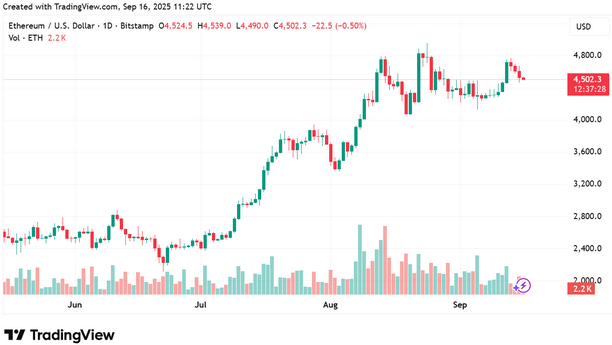
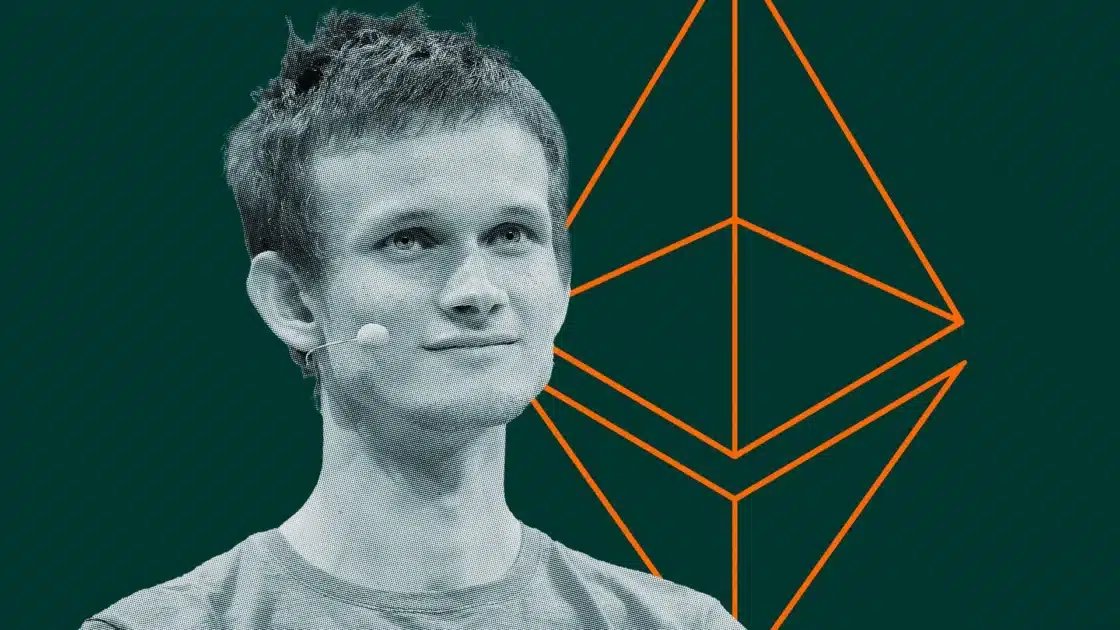
Buterin unveils Ethereum’s strategy to tackle quantum security challenges ahead. Ethereum focuses on simplifying architecture while boosting security for users. Ethereum’s market stability grows as Buterin’s roadmap gains investor confidence. Ethereum founder Vitalik Buterin has unveiled his long-term vision for the blockchain, focusing on making Ethereum quantum-secure while maintaining its simplicity for users. Buterin presented his roadmap at the Japanese Developer Conference, and splits the future of Ethereum into three phases: short-term, mid-term, and long-term. Buterin’s most ambitious goal for Ethereum is to safeguard the blockchain against the threats posed by quantum computing.  The danger of such future developments is that the future may call into question the cryptographic security of most blockchain systems, and Ethereum will be able to remain ahead thanks to more sophisticated mathematical techniques to ensure the safety and integrity of its protocols. Buterin is committed to ensuring that Ethereum evolves in a way that not only meets today’s security challenges but also prepares for the unknowns of tomorrow. Also Read: Ethereum Giant The Ether Machine Takes Major Step Toward Going Public! However, in spite of such high ambitions, Buterin insisted that Ethereum also needed to simplify its architecture. An important aspect of this vision is to remove unnecessary complexity and make Ethereum more accessible and maintainable without losing its strong security capabilities. Security and simplicity form the core of Buterin’s strategy, as they guarantee that the users of Ethereum experience both security and smooth processes. Focus on Speed and Efficiency in the Short-Term In the short term, Buterin aims to enhance Ethereum’s transaction efficiency, a crucial step toward improving scalability and reducing transaction costs. These advantages are attributed to the fact that, within the mid-term, Ethereum is planning to enhance the speed of transactions in layer-2 networks. According to Butterin, this is part of Ethereum’s expansion, particularly because there is still more need to use blockchain technology to date. The other important aspect of Ethereum’s development is the layer-2 solutions. Buterin supports an approach in which the layer-2 networks are dependent on layer-1 to perform some essential tasks like data security, proof, and censorship resistance. This will enable the layer-2 systems of Ethereum to be concerned with verifying and sequencing transactions, which will improve the overall speed and efficiency of the network. Ethereum’s Market Stability Reflects Confidence in Long-Term Strategy Ethereum’s market performance has remained solid, with the cryptocurrency holding steady above $4,000. Currently priced at $4,492.15, Ethereum has experienced a slight 0.93% increase over the last 24 hours, while its trading volume surged by 8.72%, reaching $34.14 billion. These figures point to growing investor confidence in Ethereum’s long-term vision. The crypto community remains optimistic about Ethereum’s future, with many predicting the price could rise to $5,500 by mid-October. Buterin’s clear, forward-thinking strategy continues to build trust in Ethereum as one of the most secure and scalable blockchain platforms in the market. Also Read: Whales Dump 200 Million XRP in Just 2 Weeks – Is XRP’s Price on the Verge of Collapse? The post Vitalik Buterin Reveals Ethereum’s Bold Plan to Stay Quantum-Secure and Simple! appeared first on 36Crypto.
Share
Coinstats2025/09/18 01:22