The post Morning Crypto Report: $17 XRP Dream Faces Bitcoin Crosswind, Shiba Inu 2.0? Vitalik Buterin Exits 6 Coins, SEC Chief Explains Venezuela’s $60 Billion The post Morning Crypto Report: $17 XRP Dream Faces Bitcoin Crosswind, Shiba Inu 2.0? Vitalik Buterin Exits 6 Coins, SEC Chief Explains Venezuela’s $60 Billion

Morning Crypto Report: $17 XRP Dream Faces Bitcoin Crosswind, Shiba Inu 2.0? Vitalik Buterin Exits 6 Coins, SEC Chief Explains Venezuela’s $60 Billion BTC Situation

It is Tuesday, Jan. 13, and the crypto market seems pretty nervous because of the rising CPI volatility.

In the meantime, XRP’s breakout dreams just collided with a historic Bitcoin cross, Vitalik Buterin is rotating six low-cap bags into Ethereum like it is 2020 again, and the SEC finally speaks about the mysterious $60 billion Venezuela Bitcoin stash.

TL;DR

  • XRP golden cross in doubt as BTC pairs reject, but $17 scenario is in play still.
  • Vitalik Buterin sells six airdropped coins for 9.4 ETH.
  • SEC Chairman Atkins speaks out on Venezuela’s $60 billion in BTC.

$17 XRP scenario gets Bitcoin twist

The golden cross everyone’s been waiting for on the XRP/BTC monthly chart by TradingView — where the 23-month moving average finally overtook the 50-month line for the first time since Q4, 2017 — was supposed to be that long-awaited signal for a full reversal. Eight years ago, this setup delivered an 875% move, catapulting XRP past Ethereum in market cap and briefly pushing it into 2nd place globally.

However, the situation has quickly deteriorated. Five days after this technical signal, XRP got close to a 20% drop against BTC, risking a fall from local highs around 0.000022 to 0.000018. That basically brings it back into the compression zone, which cancels out the breakout thesis — at least for now.

XRP/BTC by TradingView

Back in 2017, XRP surged from 0.0000179 to 0.0001740 in 117 days. Using the same ratio today would raise XRP to between $14.96 and $17.40, assuming that BTC trades at between $86,000 and $100,000. Even lower reclaim levels, like 0.00003 and 0.00006, could price XRP between $2.50 and $6, depending on Bitcoin’s trajectory.

But now, BTC’s strength above $92,000 and XRP’s rejection below monthly resistances creates a real crosswind. The golden cross is not invalidated, but unless XRP gets back to $0.00002180-0.00002200 fast, the signal might get run over and rejected, as it did in 2021. The base at $0.00001798-0.00001843 has to hold for bullish sentiment to stay alive.

You Might Also Like

Could this be a repeat of the Shiba Inu story?

As revealed by Lookonchain, Vitalik.eth address, which belongs to Ethereum creator Vitalik Buterin, made another micro-rotation overnight, offloading six low-cap or airdropped tokens, including WOOLLY, IZZY, CHIB, DEGEN, OP and YEE — receiving just 9.4 ETH in total worth $29,400. The swaps were routed through LiFi Diamond, Bungee and PullSplit, with values ranging from $1.36 to $14,000 per asset.

This is similar to an earlier time in Ethereum’s history, when Buterin traded a large number of Shiba Inu tokens for ETH — before SHIB became a multibillion-dollar meme coin sensation. At the time, the historic offloading was seen as a sign of disinterest, but it actually sparked a community obsession.

Source: Lookonchain

It is not clear if names like IZZY, CHIB or WOOLLY will become SHIB 2.0. The sell flow pattern is always the same: convert low-liquidity speculative tokens into base-layer reserves — Ethereum. One idea is that Vitalik sees these swaps as just signal noise until tokens show real utility or stickiness.

SEC Chief Atkins speaks up about Venezuela’s $60 billion BTC

Paul Atkins, the head of the SEC, has confirmed to Fox Business that the rumored $60 billion Bitcoin holdings in Venezuela are more of a geopolitical issue than a regulatory one. During a hearing on the long-awaited CLARITY Act, he said that the SEC and CFTC should formally divide digital asset jurisdiction by the end of Q1.

Atkins made it clear that the focus on regulations should remain on having predictable frameworks for domestic markets, while the Venezuelan BTC is stuck in political limbo. Some people are saying that Venezuela might have tens of thousands of coins from past mining and oil reserve swaps under the Maduro regime.

Bitcoin (BTC) Price by CoinMarketCap

The thing is, if the U.S. tries to take over or freeze these assets using foreign asset seizure laws or sanctions, the Digital Asset Anti-Money Laundering Act (DAAMLA) would stop any sale of the stash. This means that $60 billion worth of Bitcoin could become basically unavailable, cutting the total supply by up to that amount.

Senator John Boozman said that the debate on the CLARITY Act is moving to late January, but there is still a lot of bipartisan momentum. With Ethereum’s regulatory gray zone still unresolved, it is unclear what agency will govern what. Until this is clarified, it is hard to say what the legal landscape will look like in 2026.

What’s next for crypto?

The $17 XRP thesis is not dead, but Bitcoin’s refusal to yield dominance reminds altcoin traders that historical patterns do not repeat cleanly under new liquidity regimes. Buterin’s token exits may be noise, or early signal. And Venezuela’s dormant Bitcoin trove just became part of the global supply-demand calculus.

January’s CPI print looms. If inflation surprises, BTC could test $100,000 and bring alt pairs like XRP/BTC back into breakout mode. Until then, patience is the only valid position.

  • Bitcoin (BTC): Holding $92,000, breakout above $94,000 needed to reopen $100,000 target.
  • XRP: Now at $2.07, BTC pair must reclaim 0.00002180 to reactivate golden cross thesis.
  • Regulation watch: Jan. 31 is now key for CLARITY Act hearings.

You Might Also Like

Source: https://u.today/morning-crypto-report-17-xrp-dream-faces-bitcoin-crosswind-shiba-inu-20-vitalik-buterin-exits-6

Market Opportunity
XRP Logo
XRP Price(XRP)
$1.462
$1.462$1.462
-3.33%
USD
XRP (XRP) Live Price Chart
Disclaimer: The articles reposted on this site are sourced from public platforms and are provided for informational purposes only. They do not necessarily reflect the views of MEXC. All rights remain with the original authors. If you believe any content infringes on third-party rights, please contact service@support.mexc.com for removal. MEXC makes no guarantees regarding the accuracy, completeness, or timeliness of the content and is not responsible for any actions taken based on the information provided. The content does not constitute financial, legal, or other professional advice, nor should it be considered a recommendation or endorsement by MEXC.

You May Also Like

Cashing In On University Patents Means Giving Up On Our Innovation Future

Cashing In On University Patents Means Giving Up On Our Innovation Future

The post Cashing In On University Patents Means Giving Up On Our Innovation Future appeared on BitcoinEthereumNews.com. “It’s a raid on American innovation that would deliver pennies to the Treasury while kneecapping the very engine of our economic and medical progress,” writes Pipes. Getty Images Washington is addicted to taxing success. Now, Commerce Secretary Howard Lutnick is floating a plan to skim half the patent earnings from inventions developed at universities with federal funding. It’s being sold as a way to shore up programs like Social Security. In reality, it’s a raid on American innovation that would deliver pennies to the Treasury while kneecapping the very engine of our economic and medical progress. Yes, taxpayer dollars support early-stage research. But the real payoff comes later—in the jobs created, cures discovered, and industries launched when universities and private industry turn those discoveries into real products. By comparison, the sums at stake in patent licensing are trivial. Universities collectively earn only about $3.6 billion annually in patent income—less than the federal government spends on Social Security in a single day. Even confiscating half would barely register against a $6 trillion federal budget. And yet the damage from such a policy would be anything but trivial. The true return on taxpayer investment isn’t in licensing checks sent to Washington, but in the downstream economic activity that federally supported research unleashes. Thanks to the bipartisan Bayh-Dole Act of 1980, universities and private industry have powerful incentives to translate early-stage discoveries into real-world products. Before Bayh-Dole, the government hoarded patents from federally funded research, and fewer than 5% were ever licensed. Once universities could own and license their own inventions, innovation exploded. The result has been one of the best returns on investment in government history. Since 1996, university research has added nearly $2 trillion to U.S. industrial output, supported 6.5 million jobs, and launched more than 19,000 startups. Those companies pay…
Share
BitcoinEthereumNews2025/09/18 03:26
China Blocks Nvidia’s RTX Pro 6000D as Local Chips Rise

China Blocks Nvidia’s RTX Pro 6000D as Local Chips Rise

The post China Blocks Nvidia’s RTX Pro 6000D as Local Chips Rise appeared on BitcoinEthereumNews.com. China Blocks Nvidia’s RTX Pro 6000D as Local Chips Rise China’s internet regulator has ordered the country’s biggest technology firms, including Alibaba and ByteDance, to stop purchasing Nvidia’s RTX Pro 6000D GPUs. According to the Financial Times, the move shuts down the last major channel for mass supplies of American chips to the Chinese market. Why Beijing Halted Nvidia Purchases Chinese companies had planned to buy tens of thousands of RTX Pro 6000D accelerators and had already begun testing them in servers. But regulators intervened, halting the purchases and signaling stricter controls than earlier measures placed on Nvidia’s H20 chip. Image: Nvidia An audit compared Huawei and Cambricon processors, along with chips developed by Alibaba and Baidu, against Nvidia’s export-approved products. Regulators concluded that Chinese chips had reached performance levels comparable to the restricted U.S. models. This assessment pushed authorities to advise firms to rely more heavily on domestic processors, further tightening Nvidia’s already limited position in China. China’s Drive Toward Tech Independence The decision highlights Beijing’s focus on import substitution — developing self-sufficient chip production to reduce reliance on U.S. supplies. “The signal is now clear: all attention is focused on building a domestic ecosystem,” said a representative of a leading Chinese tech company. Nvidia had unveiled the RTX Pro 6000D in July 2025 during CEO Jensen Huang’s visit to Beijing, in an attempt to keep a foothold in China after Washington restricted exports of its most advanced chips. But momentum is shifting. Industry sources told the Financial Times that Chinese manufacturers plan to triple AI chip production next year to meet growing demand. They believe “domestic supply will now be sufficient without Nvidia.” What It Means for the Future With Huawei, Cambricon, Alibaba, and Baidu stepping up, China is positioning itself for long-term technological independence. Nvidia, meanwhile, faces…
Share
BitcoinEthereumNews2025/09/18 01:37
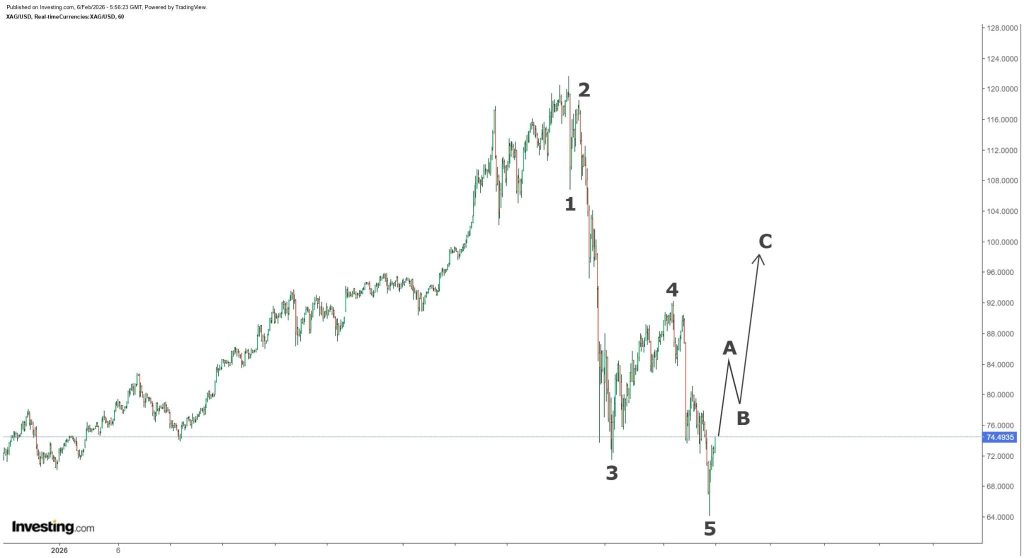
Silver Price Crash Is Over “For Real This Time,” Analyst Predicts a Surge Back Above $90

Silver Price Crash Is Over “For Real This Time,” Analyst Predicts a Surge Back Above $90

Silver has been taking a beating lately, and the Silver price hasn’t exactly been acting like a safe haven. After running up into the highs, the whole move reversed
Share
Captainaltcoin2026/02/07 03:15