

Crypto User Loses $50M in One Copy-Paste Mistake Address Poisoning Scam

The post Crypto User Loses $50M in One Copy-Paste Mistake Address Poisoning Scam appeared first on Coinpedia Fintech News
A crypto user has lost nearly $50 million in USDT after falling victim to an address poisoning scam, according to on-chain analytics platform Lookonchain. The incident happened due to a simple copy-paste mistake during a large transfer and is now being described as one of the costliest errors in crypto history.
How the $50 Million Transfer Went Wrong
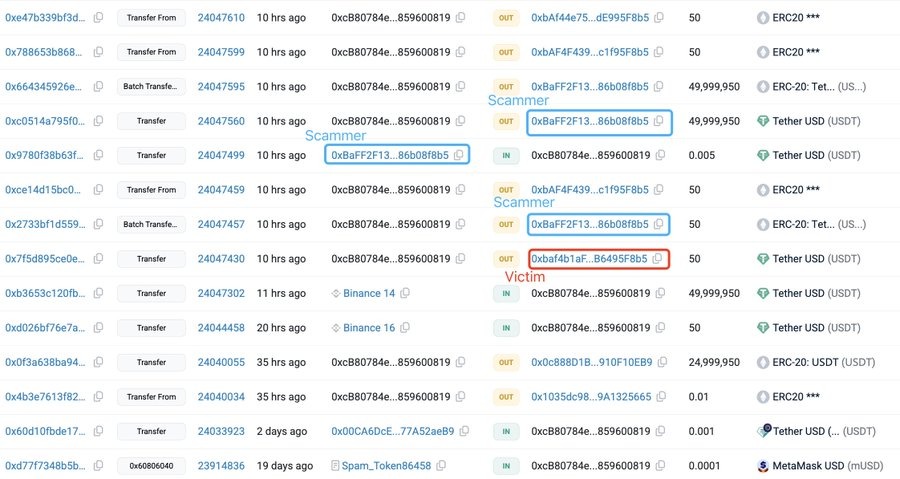
The incident began with what looked like a careful move. Before sending a large amount, the victim first transferred 50 USDT as a test transaction to their own wallet address. This is a common habit among crypto users to avoid errors.
However, scammers were closely monitoring the wallet.
Soon after the test transaction, the scammer created a fake wallet address that looked almost identical to the victim’s real address, matching the same first and last four characters.
The scammer then sent small transactions to the victim so the fake address appeared in the transaction history. This tactic is the core of an address poisoning scam.
- Also Read :
- US Senators Introduce SAFE Crypto Act to Target Rising Crypto Scams
- ,
The Costly Copy-Paste Error
When the victim later sent the remaining 49,999,950 USDT, they copied the address directly from their transaction history. Unfortunately, they unknowingly copied the spoofed address instead of their real one.
Within seconds, the entire amount was sent straight to the scammer’s wallet. Since blockchain transactions are irreversible, the funds were lost instantly with no recovery option.
Why Address Poisoning Scams Are So Dangerous
This type of scam, known as address poisoning, does not hack wallets or steal private keys. Instead, they exploit human habits and wallet design limitations. Many users only check the beginning and ending characters of an address, which scammers take advantage of.
Lookonchain’s shared image clearly shows how repeated small transfers were used to trick the victim into copying the wrong address.
Never Miss a Beat in the Crypto World!
Stay ahead with breaking news, expert analysis, and real-time updates on the latest trends in Bitcoin, altcoins, DeFi, NFTs, and more.
 Subscribe to News
FAQs
An address poisoning scam tricks users into sending crypto to a fake wallet by mimicking their real address.
Always double-check full wallet addresses, avoid relying on transaction history, and test with small transfers.
Blockchain transactions are irreversible, so once funds are sent to a scammer, they cannot be recovered.
Look for unusual small transactions in your wallet history and addresses that closely resemble your own.
Use multi-step verification, test small transactions, and confirm addresses outside wallet history logs.
You May Also Like

Australian regulators ease regulations on stablecoin intermediaries

Tech Firm’s Bold Bitcoin Move Yields Growth But Undercuts Profitability
