The post ETH vs SOL vs AVAX: Which Altcoin Has the Cleanest Breakout Setup Right Now? appeared first on Coinpedia Fintech News As Bitcoin coils near a critical The post ETH vs SOL vs AVAX: Which Altcoin Has the Cleanest Breakout Setup Right Now? appeared first on Coinpedia Fintech News As Bitcoin coils near a critical

ETH vs SOL vs AVAX: Which Altcoin Has the Cleanest Breakout Setup Right Now?

Best Crypto To Invest In 2025: 5 Cheap Cryptos That Are Worth Your Attention This Month 

The post ETH vs SOL vs AVAX: Which Altcoin Has the Cleanest Breakout Setup Right Now? appeared first on Coinpedia Fintech News

As Bitcoin coils near a critical turning point, capital is beginning to rotate toward altcoins with the cleanest continuation structures. Ethereum, Solana, and Avalanche are all trading near key technical zones in the short term, but beneath the surface, their setups diverge meaningfully. When volatility compresses at the market level, relative structure matters. This comparison focuses on which altcoin is best positioned to lead once expansion returns.

Ethereum (ETH): Strong Base, But Momentum Lags

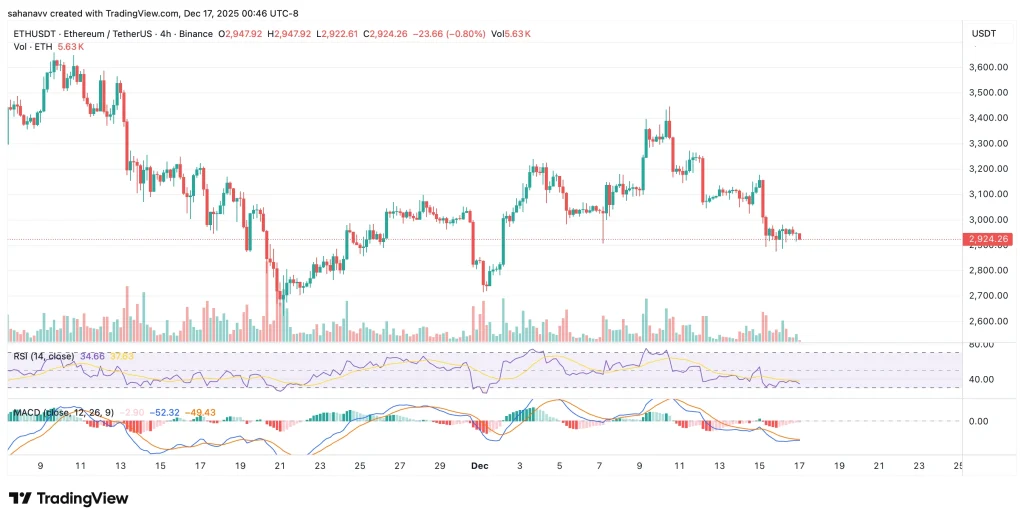
Ethereum continues to respect its rising daily trend support, with higher lows intact on both the 4H and daily timeframes. However, the ETH price remains capped below its near-term resistance zone, with momentum indicators struggling to expand decisively.
ethereum price

On the 4H chart, ETH is consolidating rather than compressing aggressively, suggesting stability—but not urgency. RSI is holding in the neutral-bearish zone, yet it lacks the impulsive characteristics typically seen ahead of strong breakout phases. Meanwhile, MACD suggests a bullish crossover is impending, but as it remains within the negative range, no major impact can be expected. Therefore, the Ethereum price is structurally strong but currently more reactive than leading. 

Avalanche (AVAX): Volatile Structure, Higher Risk

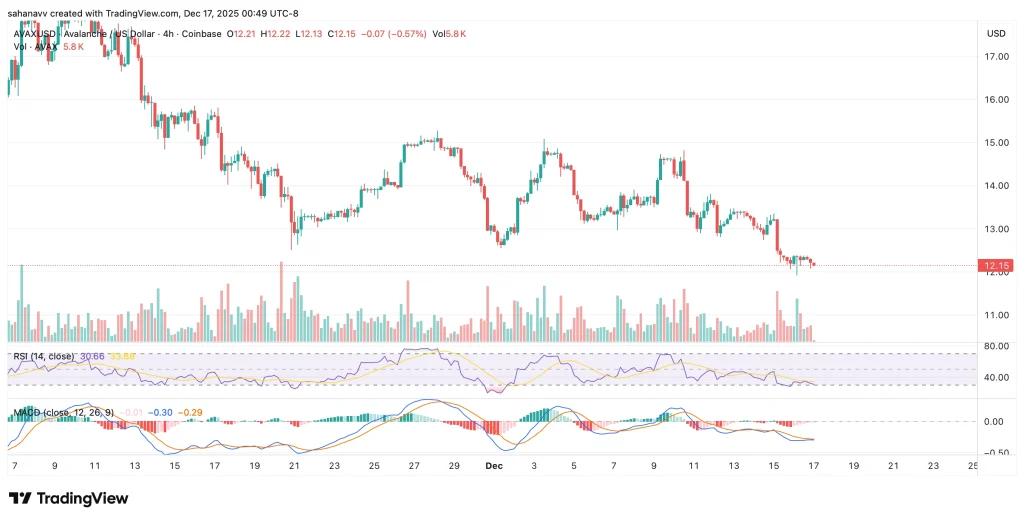
AVAX shows wider price swings and less structural clarity. While it has rebounded from recent lows, the 4H chart reveals inconsistent higher-low formation, and daily resistance remains relatively distant.
avalanche price

Momentum has not improved largely, but volatility expansion without tight compression often leads to fakeouts rather than sustained breakouts. AVAX would need additional consolidation to build a higher-probability setup. Hence, the Avalanche price is momentum-driven but structurally noisy and higher risk.

Solana (SOL): The Cleanest Breakout Structure 

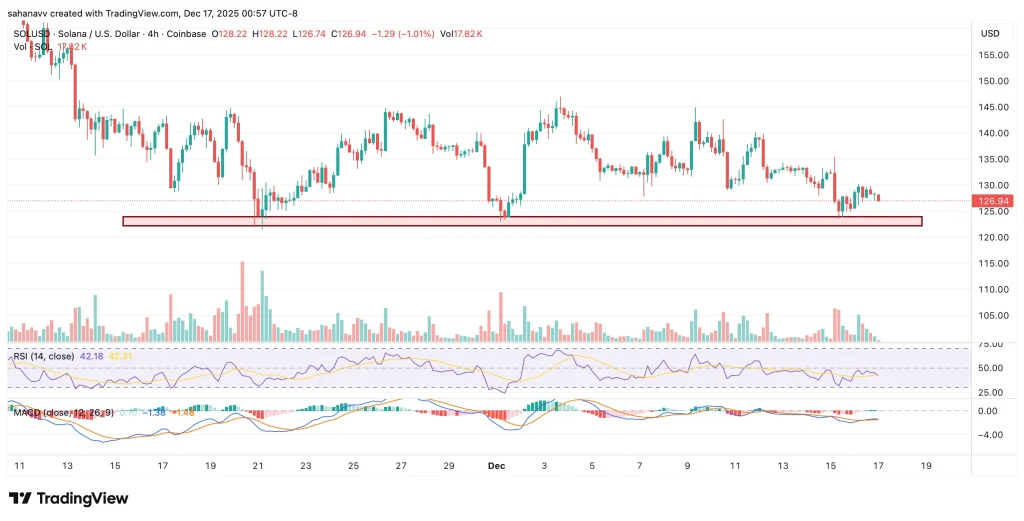
Solana stands out on both the 4H and daily timeframes. Price is compressing tightly beneath resistance while consistently printing higher lows—a classic breakout structure. Volatility has contracted sharply, often a precursor to expansion moves.
solana price

RSI remains elevated but not overheated, and SOL continues to show relative strength against both ETH and the broader altcoin market. Importantly, invalidation levels are clearly defined, making risk management cleaner. Hence, the Solana price is the best balance of structure, momentum, and clarity.

Among the three, Solana currently offers the highest-quality 4H/Daily breakout setup. Its tightening compression, sustained relative strength, and controlled momentum profile give it an edge over ETH’s slower build and AVAX’s volatility. If Bitcoin resolves higher from its own compression zone, SOL appears best positioned to respond with an impulsive continuation move rather than a delayed reaction.

The Bottom Line

While ETH and AVAX both remain in constructive trends, neither currently matches the clarity of Solana’s setup. SOL’s tight compression beneath resistance, persistent higher-low formation, and controlled momentum profile offer a cleaner risk-to-reward framework than its peers. In environments where Bitcoin resolves from compression, altcoins with the most efficient structures tend to move first—and move hardest. Unless SOL loses its higher-timeframe support, it remains the most compelling breakout candidate among the three as traders position for the next phase of market expansion.

Market Opportunity
Ethereum Logo
Ethereum Price(ETH)
$2.829,46
$2.829,46$2.829,46
-2,59%
USD
Ethereum (ETH) Live Price Chart
Disclaimer: The articles reposted on this site are sourced from public platforms and are provided for informational purposes only. They do not necessarily reflect the views of MEXC. All rights remain with the original authors. If you believe any content infringes on third-party rights, please contact service@support.mexc.com for removal. MEXC makes no guarantees regarding the accuracy, completeness, or timeliness of the content and is not responsible for any actions taken based on the information provided. The content does not constitute financial, legal, or other professional advice, nor should it be considered a recommendation or endorsement by MEXC.

You May Also Like

The Channel Factories We’ve Been Waiting For

The Channel Factories We’ve Been Waiting For

The post The Channel Factories We’ve Been Waiting For appeared on BitcoinEthereumNews.com. Visions of future technology are often prescient about the broad strokes while flubbing the details. The tablets in “2001: A Space Odyssey” do indeed look like iPads, but you never see the astronauts paying for subscriptions or wasting hours on Candy Crush.  Channel factories are one vision that arose early in the history of the Lightning Network to address some challenges that Lightning has faced from the beginning. Despite having grown to become Bitcoin’s most successful layer-2 scaling solution, with instant and low-fee payments, Lightning’s scale is limited by its reliance on payment channels. Although Lightning shifts most transactions off-chain, each payment channel still requires an on-chain transaction to open and (usually) another to close. As adoption grows, pressure on the blockchain grows with it. The need for a more scalable approach to managing channels is clear. Channel factories were supposed to meet this need, but where are they? In 2025, subnetworks are emerging that revive the impetus of channel factories with some new details that vastly increase their potential. They are natively interoperable with Lightning and achieve greater scale by allowing a group of participants to open a shared multisig UTXO and create multiple bilateral channels, which reduces the number of on-chain transactions and improves capital efficiency. Achieving greater scale by reducing complexity, Ark and Spark perform the same function as traditional channel factories with new designs and additional capabilities based on shared UTXOs.  Channel Factories 101 Channel factories have been around since the inception of Lightning. A factory is a multiparty contract where multiple users (not just two, as in a Dryja-Poon channel) cooperatively lock funds in a single multisig UTXO. They can open, close and update channels off-chain without updating the blockchain for each operation. Only when participants leave or the factory dissolves is an on-chain transaction…
Share
BitcoinEthereumNews2025/09/18 00:09
Why Is the Bitcoin Price Constantly Falling? Analysis Firm Says “The Selling Process Has Reached Saturation,” Shares Its Expectations

Why Is the Bitcoin Price Constantly Falling? Analysis Firm Says “The Selling Process Has Reached Saturation,” Shares Its Expectations

Cryptocurrency analytics company K33 Research has evaluated the recent price movements of Bitcoin. Here are the details. Continue Reading: Why Is the Bitcoin Price
Share
Coinstats2025/12/18 03:53
Gold continues to hit new highs. How to invest in gold in the crypto market?

Gold continues to hit new highs. How to invest in gold in the crypto market?

As Bitcoin encounters a "value winter", real-world gold is recasting the iron curtain of value on the blockchain.
Share
PANews2025/04/14 17:12