BitcoinWorld Hedera Price Prediction: Will HBAR Explode to $0.5 by 2030? As the cryptocurrency market continues to evolve, investors are constantly searching forBitcoinWorld Hedera Price Prediction: Will HBAR Explode to $0.5 by 2030? As the cryptocurrency market continues to evolve, investors are constantly searching for

Hedera Price Prediction: Will HBAR Explode to $0.5 by 2030?

2025/12/15 19:45
Hedera Price Prediction: Will HBAR Explode to $0.5 by 2030?

BitcoinWorld
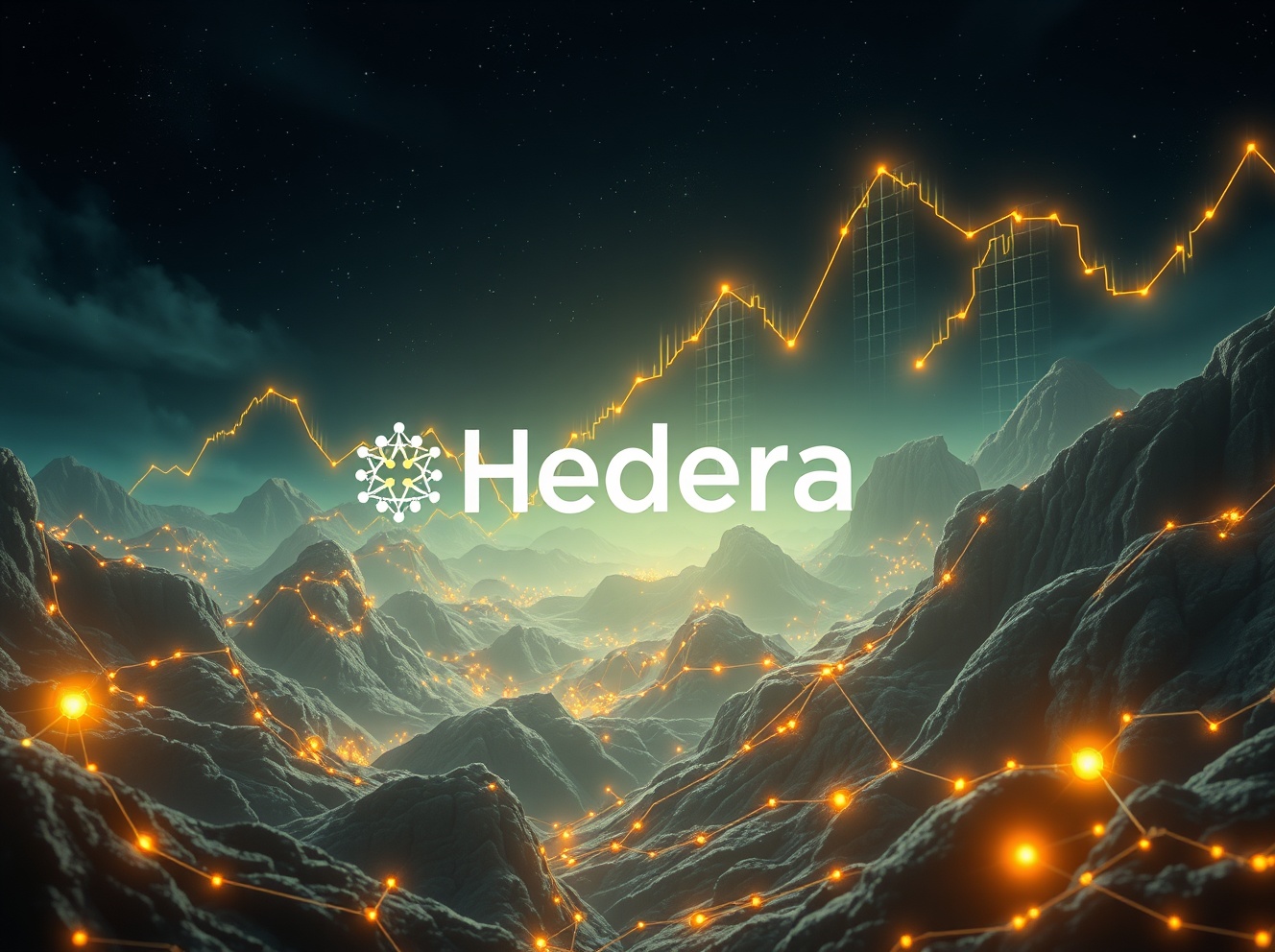
Hedera Price Prediction: Will HBAR Explode to $0.5 by 2030?

As the cryptocurrency market continues to evolve, investors are constantly searching for the next big opportunity. Among the numerous projects vying for attention, Hedera Hashgraph stands out with its unique consensus mechanism and enterprise-focused approach. The burning question on every trader’s mind: Can HBAR reach $0.5 in the coming years? This comprehensive analysis examines technical indicators, adoption metrics, and market trends to provide a realistic Hedera price prediction from 2025 through 2030.

Understanding Hedera Hashgraph and HBAR

Before diving into price predictions, it’s crucial to understand what makes Hedera Hashgraph different. Unlike traditional blockchain networks, Hedera uses a directed acyclic graph (DAG) structure called Hashgraph consensus. This technology offers several advantages including high throughput (10,000+ transactions per second), low fees, and fair ordering of transactions. The native cryptocurrency HBAR serves dual purposes: securing the network through staking and paying for transaction fees and services.

Current HBAR Price Analysis and Market Position

As of our latest analysis, HBAR trades within a specific range that reflects both market sentiment and fundamental developments. Several factors influence its current valuation:

  • Network adoption by enterprises and developers
  • Partnership announcements with major corporations
  • Overall cryptocurrency market trends and Bitcoin dominance
  • Regulatory developments affecting the broader crypto space
  • Technical upgrades and roadmap progress

Hedera Price Prediction 2025: The Foundation Year

Our 2025 Hedera price prediction considers both bullish and bearish scenarios. If current adoption trends continue and the network achieves key milestones, we could see significant price appreciation. However, market volatility and regulatory uncertainty could temper gains. Key factors to watch include:

ScenarioPrice RangeCatalysts
Bullish$0.15 – $0.25Major enterprise adoption, positive regulation
Base Case$0.10 – $0.18Steady growth, continued partnerships
Bearish$0.05 – $0.12Market downturn, adoption delays

HBAR Price Forecast 2026-2027: The Growth Phase

The period between 2026 and 2027 could represent a crucial growth phase for HBAR. By this time, several network upgrades should be fully implemented, and enterprise adoption could reach critical mass. Our analysis suggests that if Hedera maintains its technological edge and continues expanding its ecosystem, the cryptocurrency forecast becomes increasingly positive. The $0.3 level represents a significant psychological and technical barrier that, if broken, could trigger accelerated momentum.

Will HBAR Hit $0.5 by 2030? The Ultimate Target

The million-dollar question: Can HBAR reach $0.5 by 2030? Our comprehensive analysis suggests this target is ambitious but achievable under specific conditions. For this to occur, Hedera would need to:

  • Capture significant market share in the enterprise blockchain space
  • Maintain technological superiority over competing networks
  • Benefit from favorable regulatory frameworks globally
  • Achieve widespread developer adoption and dApp creation
  • Experience increased institutional investment and staking participation

A $0.5 HBAR price would represent substantial growth from current levels and would require both network success and favorable market conditions. While possible, investors should maintain realistic expectations and consider this a best-case scenario rather than a guaranteed outcome.

Factors That Could Influence HBAR Price Trajectory

Several critical factors will determine whether our Hedera price prediction materializes:

  • Enterprise Adoption: Real-world usage by corporations remains Hedera’s primary value proposition
  • Network Performance: Maintaining high throughput and low fees as usage grows
  • Competitive Landscape: How Hedera fares against Ethereum, Solana, and other smart contract platforms
  • Regulatory Environment: Clear regulations could boost institutional participation
  • Tokenomics: Release schedule and circulating supply dynamics

Risks and Challenges for Hedera Hashgraph

While the potential is significant, investors must acknowledge the risks. The cryptocurrency market remains highly volatile, and even promising projects can face unexpected challenges. Technical hurdles, competitive pressures, regulatory crackdowns, or broader economic factors could all impact HBAR’s price trajectory. Diversification and thorough research remain essential for any cryptocurrency investment.

Investment Strategies for HBAR

Based on our Hedera price prediction, several investment approaches could prove effective:

  • Dollar-Cost Averaging: Regular purchases to average entry prices
  • Staking: Earning rewards while supporting network security
  • Portfolio Allocation: Determining appropriate HBAR exposure based on risk tolerance
  • Technical Analysis: Using chart patterns and indicators for entry and exit points

Conclusion: The Path Forward for HBAR

Our comprehensive analysis suggests that while reaching $0.5 by 2030 represents an ambitious target for HBAR, it falls within the realm of possibility given favorable conditions. The Hedera Hashgraph network possesses unique technological advantages and a clear enterprise focus that could drive substantial adoption. However, investors should approach this cryptocurrency forecast with balanced expectations, recognizing both the potential rewards and inherent risks. The coming years will be crucial in determining whether Hedera can translate its technological promise into widespread adoption and corresponding price appreciation.

To learn more about the latest cryptocurrency market trends, explore our articles on key developments shaping blockchain technology and digital asset adoption.

Frequently Asked Questions

What is Hedera Hashgraph?
Hedera Hashgraph is a public distributed ledger that uses a unique consensus algorithm different from traditional blockchains. It’s governed by a council of leading global organizations including Google, IBM, and Boeing.

Who created Hedera?
Hedera was founded by Dr. Leemon Baird and Mance Harmon. Dr. Baird invented the Hashgraph consensus algorithm.

How does HBAR differ from other cryptocurrencies?
HBAR uses a different consensus mechanism (Hashgraph instead of blockchain) that offers higher throughput, lower fees, and fair transaction ordering through its governing council model.

What companies use Hedera?
Major companies using Hedera include ServiceNow for supply chain tracking and various financial institutions for payment solutions.

Is HBAR a good long-term investment?
Like all cryptocurrencies, HBAR carries risk. Its long-term potential depends on enterprise adoption, technological execution, and market conditions. Our Hedera price prediction suggests potential but recommends thorough research and portfolio diversification.

This post Hedera Price Prediction: Will HBAR Explode to $0.5 by 2030? first appeared on BitcoinWorld.

Market Opportunity
Hedera Logo
Hedera Price(HBAR)
$0.11522
$0.11522$0.11522
+0.44%
USD
Hedera (HBAR) Live Price Chart
Disclaimer: The articles reposted on this site are sourced from public platforms and are provided for informational purposes only. They do not necessarily reflect the views of MEXC. All rights remain with the original authors. If you believe any content infringes on third-party rights, please contact service@support.mexc.com for removal. MEXC makes no guarantees regarding the accuracy, completeness, or timeliness of the content and is not responsible for any actions taken based on the information provided. The content does not constitute financial, legal, or other professional advice, nor should it be considered a recommendation or endorsement by MEXC.

You May Also Like

Volante Technologies Customers Successfully Navigate Critical Regulatory Deadlines for EU SEPA Instant and Global SWIFT Cross-Border Payments

Volante Technologies Customers Successfully Navigate Critical Regulatory Deadlines for EU SEPA Instant and Global SWIFT Cross-Border Payments

PaaS leader ensures seamless migrations and uninterrupted payment operations LONDON–(BUSINESS WIRE)–Volante Technologies, the global leader in Payments as a Service
Share
AI Journal2025/12/16 17:16
Fed Acts on Economic Signals with Rate Cut

Fed Acts on Economic Signals with Rate Cut

In a significant pivot, the Federal Reserve reduced its benchmark interest rate following a prolonged ten-month hiatus. This decision, reflecting a strategic response to the current economic climate, has captured attention across financial sectors, with both market participants and policymakers keenly evaluating its potential impact.Continue Reading:Fed Acts on Economic Signals with Rate Cut
Share
Coinstats2025/09/18 02:28
Google's AP2 protocol has been released. Does encrypted AI still have a chance?

Google's AP2 protocol has been released. Does encrypted AI still have a chance?

Following the MCP and A2A protocols, the AI Agent market has seen another blockbuster arrival: the Agent Payments Protocol (AP2), developed by Google. This will clearly further enhance AI Agents' autonomous multi-tasking capabilities, but the unfortunate reality is that it has little to do with web3AI. Let's take a closer look: What problem does AP2 solve? Simply put, the MCP protocol is like a universal hook, enabling AI agents to connect to various external tools and data sources; A2A is a team collaboration communication protocol that allows multiple AI agents to cooperate with each other to complete complex tasks; AP2 completes the last piece of the puzzle - payment capability. In other words, MCP opens up connectivity, A2A promotes collaboration efficiency, and AP2 achieves value exchange. The arrival of AP2 truly injects "soul" into the autonomous collaboration and task execution of Multi-Agents. Imagine AI Agents connecting Qunar, Meituan, and Didi to complete the booking of flights, hotels, and car rentals, but then getting stuck at the point of "self-payment." What's the point of all that multitasking? So, remember this: AP2 is an extension of MCP+A2A, solving the last mile problem of AI Agent automated execution. What are the technical highlights of AP2? The core innovation of AP2 is the Mandates mechanism, which is divided into real-time authorization mode and delegated authorization mode. Real-time authorization is easy to understand. The AI Agent finds the product and shows it to you. The operation can only be performed after the user signs. Delegated authorization requires the user to set rules in advance, such as only buying the iPhone 17 when the price drops to 5,000. The AI Agent monitors the trigger conditions and executes automatically. The implementation logic is cryptographically signed using Verifiable Credentials (VCs). Users can set complex commission conditions, including price ranges, time limits, and payment method priorities, forming a tamper-proof digital contract. Once signed, the AI Agent executes according to the conditions, with VCs ensuring auditability and security at every step. Of particular note is the "A2A x402" extension, a technical component developed by Google specifically for crypto payments, developed in collaboration with Coinbase and the Ethereum Foundation. This extension enables AI Agents to seamlessly process stablecoins, ETH, and other blockchain assets, supporting native payment scenarios within the Web3 ecosystem. What kind of imagination space can AP2 bring? After analyzing the technical principles, do you think that's it? Yes, in fact, the AP2 is boring when it is disassembled alone. Its real charm lies in connecting and opening up the "MCP+A2A+AP2" technology stack, completely opening up the complete link of AI Agent's autonomous analysis+execution+payment. From now on, AI Agents can open up many application scenarios. For example, AI Agents for stock investment and financial management can help us monitor the market 24/7 and conduct independent transactions. Enterprise procurement AI Agents can automatically replenish and renew without human intervention. AP2's complementary payment capabilities will further expand the penetration of the Agent-to-Agent economy into more scenarios. Google obviously understands that after the technical framework is established, the ecological implementation must be relied upon, so it has brought in more than 60 partners to develop it, almost covering the entire payment and business ecosystem. Interestingly, it also involves major Crypto players such as Ethereum, Coinbase, MetaMask, and Sui. Combined with the current trend of currency and stock integration, the imagination space has been doubled. Is web3 AI really dead? Not entirely. Google's AP2 looks complete, but it only achieves technical compatibility with Crypto payments. It can only be regarded as an extension of the traditional authorization framework and belongs to the category of automated execution. There is a "paradigm" difference between it and the autonomous asset management pursued by pure Crypto native solutions. The Crypto-native solutions under exploration are taking the "decentralized custody + on-chain verification" route, including AI Agent autonomous asset management, AI Agent autonomous transactions (DeFAI), AI Agent digital identity and on-chain reputation system (ERC-8004...), AI Agent on-chain governance DAO framework, AI Agent NPC and digital avatars, and many other interesting and fun directions. Ultimately, once users get used to AI Agent payments in traditional fields, their acceptance of AI Agents autonomously owning digital assets will also increase. And for those scenarios that AP2 cannot reach, such as anonymous transactions, censorship-resistant payments, and decentralized asset management, there will always be a time for crypto-native solutions to show their strength? The two are more likely to be complementary rather than competitive, but to be honest, the key technological advancements behind AI Agents currently all come from web2AI, and web3AI still needs to keep up the good work!
Share
PANews2025/09/18 07:00