

The 3-Word Advice I Got From Paul Graham
\
On recognizing when a small idea stops being a niche and starts becoming social infrastructure
Paul Graham doesn’t need much introduction in the startup world.
\ As the co-founder of Y Combinator, he helped shape companies like Airbnb, Stripe, Dropbox and mentored founders who would later define an entire generation, including Sam Altman.
More than an investor, Paul Graham has spent decades observing a very specific phenomenon: why some ideas remain small experiments, while others quietly grow until they become unavoidable.
That’s why I reached out to him.
I’m building a cultural-recommendation platform in Brazil called RecomendeMe, and I wanted clarity on a question that often comes up when you’re working on something that doesn’t fit existing categories:
How do you know when an idea stops looking like a niche project and starts behaving like a new kind of social infrastructure
What signal actually matters?
This was the question I sent him.
His response came back short — almost aggressively simple:
Three words.
No theory. \n No explanation. \n No caveats.
And yet, it immediately reframed how I think about what I’m building.
When you’re creating something new, especially something cultural or social, it’s easy to focus on complex signals: depth of community, engagement quality, niche relevance, social graphs, long-term vision.
Those things matter but they’re not the first signal.
Growth rate isn’t just a metric. \n It’s a proxy for inevitability.
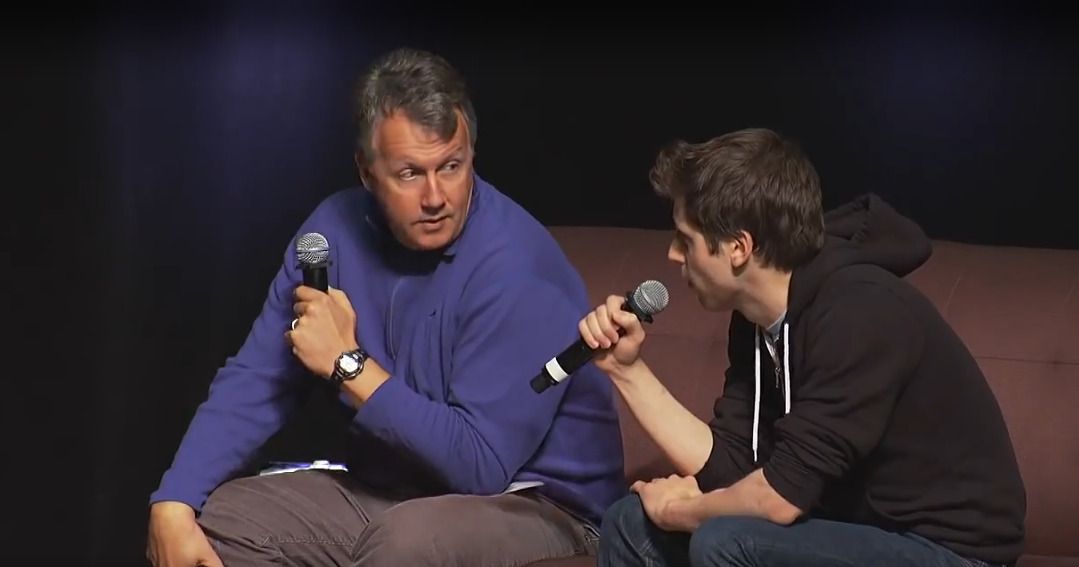
\ 
\ If something grows consistently, it means people are finding it, returning to it, and bringing others along — not because they were told to, but because it feels useful or meaningful to them.
That distinction matters.
It forces a more uncomfortable question:
Is this growing because people genuinely want it to exist — or because I’m pushing it forward?
For founders working on “small” or unconventional ideas, this is the part worth remembering.
Most social infrastructure doesn’t start out looking important. It starts with a handful of people who care enough to come back. Sometimes clarity doesn’t come from a long explanation.
\n Sometimes it comes in three words: from someone who’s seen this pattern repeat itself for decades.
\
What “Growth Rate” Actually Means
When Paul Graham says “growth rate”, he’s not talking about vanity metrics or short-term spikes.
Growth rate is about how fast something grows consistently over time — users, activity, usage, or engagement — without artificial push.
It answers a very specific question:
If you stop promoting this product today, does it keep growing anyway?
A healthy growth rate usually shows a few things at once:
- People are discovering the product organically
- A meaningful percentage of users come back
- Some users naturally bring others with them
- Usage forms a habit, not just a one-time interaction
In early-stage products, growth rate matters more than absolute size. Ten users growing into twenty is often a stronger signal than a thousand users who never return.
What makes growth rate powerful is that it compresses multiple truths into one signal: product-market fit, relevance, word-of-mouth, and perceived value.
For cultural or social products, this matters even more.
- You can’t force people to care about culture.
- You can’t buy genuine recommendations.
- If a cultural platform is growing at a steady pace, it’s usually because it’s creating something people feel compelled to participate in.
That’s why growth rate works as an early test of inevitability.
Not because it predicts scale perfectl: but because it reveals desire.
And desire is what turns small ideas into infrastructure.
\
Another Useful Insight: Growth Rate Replaces Speculation
One practical reason growth rate matters so much is that it removes guesswork.
\
- Early founders tend to debate endlessly: \n - Is the idea too niche? \n - Is the market ready? \n - Is this cultural or just a hobby? \n - Is it infrastructure or just content?
Growth rate answers those questions without discussion.
If usage grows week over week, something is working. \n If it doesn’t, no amount of theory will fix that.
This is especially important for cultural products, where it’s easy to confuse taste with traction. People may like the idea, praise it, or say it’s interesting — but unless they return and use it again, nothing real is happening.
Growth rate doesn’t measure enthusiasm. \n It measures behavior.
And behavior is what scales.
\
Conclusion
What I value most about Paul Graham’s writing and advice is how consistently it cuts through noise.
His ideas don’t try to impress. They try to clarify.
Over the years, his essays have shaped how many founders think about growth, focus, and what actually matters early on. This short response felt like an extension of that same mindset; not a new theory, but a reminder.
For me, it helped reset priorities.
Instead of spending energy debating whether what I’m building shouldbecome infrastructure, the question became simpler: \n is it growing because people find it useful enough to come back?
That shift matters. It turns abstract ambition into something measurable. It replaces speculation with observation.
This wasn’t about validation or endorsement.
\n It was about being reminded how to think clearly at an early stage — and that, in practice, is one of the most valuable things a founder can receive.
\ \ \
You May Also Like

USD/INR opens flat on hopes of RBI’s follow-through intervention

A Netflix ‘KPop Demon Hunters’ Short Film Has Been Rated For Release
