

Zindi pioneers community-driven AI innovation in Caribbean with region-first Speech Recognition AI Hackathon
Zindi, the world’s leading data science and AI competition platform focused on emerging markets, partnered with the Artificial Intelligence Innovation Centre (AIIC) to design and deliver a Caribbean-wide AI Hackathon, marking a major milestone for AI innovation and talent development in the region. The winners of the hackathon were announced at the official launch of the AIIC, held today in Port of Spain, Trinidad & Tobago.
The hackathon focused on Automatic Speech Recognition (ASR) — a rapidly growing field of artificial intelligence that underpins technologies such as voice assistants, transcription services, and customer support systems. While ASR is transforming industries globally, existing systems often struggle to accurately understand Caribbean accents, limiting accessibility and inclusion.
To help address this gap, participants worked with a unique dataset of 28,000 manually transcribed audio clips from BBC Caribbean, training models to more accurately convert Caribbean speech into text. The challenge aimed to demonstrate how locally relevant data and talent can produce AI solutions better suited to regional contexts.
The competition attracted over 40 teams from across the Caribbean, reflecting growing interest and capability in AI across the region. The top 10 teams on the leaderboard were invited to pitch real-world applications of their solutions, showcasing how improved speech recognition could drive impact in areas such as education, financial services, agriculture, and digital communication.
AIIC will open source the winning ASR models to enable further development of solutions by the Caribbean developer community.
 Picture Caption: Sarah Rudder Chulhan | Associate Director, Digital Client Experience | Technology, Infrastructure & Innovation | CIBC Caribbean
The hackathon was supported by partners including CIBC, Infolytics, and Data Axis.
“The launch of the AIIC represents a pivotal moment for artificial intelligence in the Caribbean,” said Craig Ramlal, Executive Director of the Artificial Intelligence Innovation Centre. “By partnering with Zindi to run this hackathon, we were able to tap into a broader regional community of technologists and apply AI to a problem that directly affects how we as Caribbean people can benefit from AI. This is exactly the kind of applied innovation the AIIC was created to support.”
“This partnership with AIIC shows what’s possible when you combine strong local leadership with a global AI innovation platform,” said Celina Lee, CEO and Co-Founder of Zindi. “There is no shortage of AI talent in the Caribbean. Our goal at Zindi is to provide the platform, data, and opportunities that allow that talent to shine and to build solutions that are grounded in local realities but have global relevance.”
The initiative underscores Zindi’s growing role as a platform for AI innovation beyond Africa and the Middle East, while reinforcing the Caribbean’s emergence as a region to watch in the global AI landscape.
About Zindi
Zindi is the world’s leading AI challenge platform focused on emerging markets, with a growing community of more than 90,000 data scientists and AI practitioners across 180+ countries. Founded in 2018, Zindi connects organizations with top AI talent to solve real-world business, environmental, and social challenges using machine learning and artificial intelligence. Through competitions, learning opportunities, and community tools, Zindi enables individuals to build skills, advance careers, and create impact across sectors including agriculture, health, climate, energy, and financial inclusion.
About the Artificial Intelligence Innovation Centre (AIIC)
The Artificial Intelligence Innovation Centre (AIIC) is the Caribbean’s first and largest centre dedicated to advancing research, capacity building, commercialization, and policy and governance in artificial intelligence. Established at The University of the West Indies, St. Augustine, AIIC partners with over 20 institutions, supports 50+ members, and hosts 35+ active projects. Its work spans core AI research and applied solutions across domains including robotics, cybersecurity, energy, sustainability, climate resilience, agriculture, and the digital humanities.
You May Also Like

JPMorgan Launches JPMD Token on Coinbase’s Base
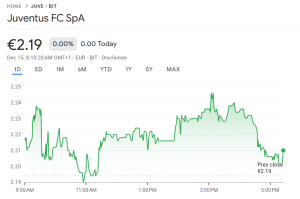
Juventus Owner Rejects Tether Takeover Bid, Says Club’s History And Values “Not For Sale”
