The post UK to Regulate Crypto Under FCA by 2027 in Major Financial Law Overhaul appeared on BitcoinEthereumNews.com. The post UK to Regulate Crypto Under FCA byThe post UK to Regulate Crypto Under FCA by 2027 in Major Financial Law Overhaul appeared on BitcoinEthereumNews.com. The post UK to Regulate Crypto Under FCA by

UK to Regulate Crypto Under FCA by 2027 in Major Financial Law Overhaul

The post UK to Regulate Crypto Under FCA by 2027 in Major Financial Law Overhaul appeared first on Coinpedia Fintech News

The United Kingdom plans to bring the crypto industry fully under its financial regulatory framework, with oversight transferring to the Financial Conduct Authority (FCA) beginning in 2027, according to the UK Treasury. The policy aims to regulate digital assets in a manner similar to traditional financial products while preserving space for innovation, signaling the government’s intent to strengthen consumer protection and maintain the UK’s position as a global financial hub as crypto adoption continues to rise.

This move signals that the UK wants to stay competitive as a global financial hub, even as crypto adoption continues to grow among everyday users.

FCA to Oversee Exchanges, Wallets, and More

Once the new framework is in place, crypto firms such as exchanges, brokers, and digital wallet providers will be supervised by the FCA. This means they will need to meet the same standards as other financial services, including transparency, consumer protection, and operational safeguards. UK officials believe this approach will give businesses clear rules to follow, helping serious players plan for the long term while pushing out bad actors. 

With around 12% of UK adults now owning crypto, regulators see this as a necessary step rather than an optional one.

Consumer Protection Takes Center Stage

A key reason behind the regulatory push is rising concern over scams and fraud. Recent data shows that losses linked to crypto investment scams in the UK jumped sharply over the past year. By bringing crypto into the regulatory perimeter, the government hopes to reduce these risks and improve trust in the sector. Chancellor Rachel Reeves said the rules are meant to create clarity and protect consumers, while also supporting responsible innovation.

.article-inside-link {
margin-left: 0 !important;
border: 1px solid #0052CC4D;
border-left: 0;
border-right: 0;
padding: 10px 0;
text-align: left;
}

.entry ul.article-inside-link li {
font-size: 14px;
line-height: 21px;
font-weight: 600;
list-style-type: none;
margin-bottom: 0;
display: inline-block;
}

.entry ul.article-inside-link li:last-child {
display: none;
}

  • Also Read :
  •   Brazil’s Largest Bank Itaú Backs Bitcoin as Long-Term Portfolio Hedge
  •   ,

More Rules Coming Before 2027

Alongside regulation, the UK has taken steps to formally recognize crypto assets as legal property. Under new legislation, digital assets like Bitcoin can be owned, inherited, and legally recovered. This gives crypto holders stronger legal standing and adds another layer of legitimacy to the asset class.

The FCA and the Bank of England are not waiting until 2027 to act. Both institutions are working on detailed rules covering crypto trading, custody, issuance, and market abuse. The Bank of England has also proposed a framework for stablecoin regulation. Regulators aim to finalize most of these rules by the end of 2026, giving firms time to prepare.

Global Coordination and Political Concerns

The UK is also looking beyond its borders. Officials plan to work closely with the US through a “Transatlantic Taskforce” to align crypto regulation and support innovation. At the same time, lawmakers are considering banning crypto political donations due to concerns over transparency and ownership.

Overall, the UK’s approach reflects a balancing act between control and growth, setting the stage for a more mature crypto market in the years ahead.

Never Miss a Beat in the Crypto World!

Stay ahead with breaking news, expert analysis, and real-time updates on the latest trends in Bitcoin, altcoins, DeFi, NFTs, and more.


Subscribe to News

FAQs

How could FCA oversight change the day-to-day experience for UK crypto users?

Stronger supervision may lead to clearer disclosures about fees, risks, and how customer assets are handled, making it easier for users to compare platforms. Over time, this could reduce sudden service shutdowns or loss of access to funds, which have been common concerns in unregulated markets.

What does this mean for smaller or overseas crypto firms operating in the UK?

Firms targeting UK customers may need to establish a stronger local presence, invest in compliance teams, or rethink their business models. Some smaller or lightly regulated providers could exit the UK market if they cannot meet regulatory expectations, reducing choice but potentially improving overall quality.

What should crypto holders and businesses watch for next before 2027?

Consultation papers and draft rules from the FCA and Bank of England will signal which activities are likely to be regulated first and how strict requirements may be. Monitoring these updates will help users understand future protections and give firms early insight into licensing, capital, and reporting obligations.

Source: https://coinpedia.org/news/uk-treasury-crypto-fca-rules-2027/

Market Opportunity
Major Logo
Major Price(MAJOR)
$0.07519
$0.07519$0.07519
-5.40%
USD
Major (MAJOR) Live Price Chart
Disclaimer: The articles reposted on this site are sourced from public platforms and are provided for informational purposes only. They do not necessarily reflect the views of MEXC. All rights remain with the original authors. If you believe any content infringes on third-party rights, please contact service@support.mexc.com for removal. MEXC makes no guarantees regarding the accuracy, completeness, or timeliness of the content and is not responsible for any actions taken based on the information provided. The content does not constitute financial, legal, or other professional advice, nor should it be considered a recommendation or endorsement by MEXC.

You May Also Like

Structural job strain caps rand gains – Commerzbank

Structural job strain caps rand gains – Commerzbank

The post Structural job strain caps rand gains – Commerzbank appeared on BitcoinEthereumNews.com. Commerzbank’s Volkmar Baur highlights that South Africa’s unemployment
Share
BitcoinEthereumNews2026/02/19 05:27
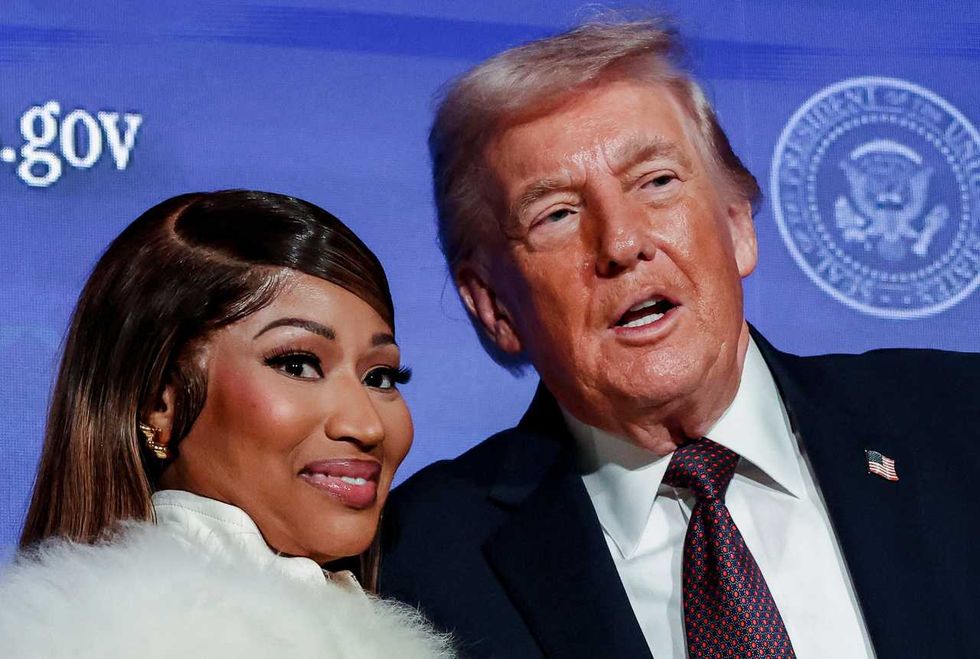
Trump gushes over Nicki Minaj's skin to mark Black History Month: 'So beautiful'

Trump gushes over Nicki Minaj's skin to mark Black History Month: 'So beautiful'

President Donald Trump used an event marking Black History Month to remark on Nicki Minaj's complexion."I love Nikki Minaj," the president told the audience. "She
Share
Rawstory2026/02/19 05:07
Google's AP2 protocol has been released. Does encrypted AI still have a chance?

Google's AP2 protocol has been released. Does encrypted AI still have a chance?

Following the MCP and A2A protocols, the AI Agent market has seen another blockbuster arrival: the Agent Payments Protocol (AP2), developed by Google. This will clearly further enhance AI Agents' autonomous multi-tasking capabilities, but the unfortunate reality is that it has little to do with web3AI. Let's take a closer look: What problem does AP2 solve? Simply put, the MCP protocol is like a universal hook, enabling AI agents to connect to various external tools and data sources; A2A is a team collaboration communication protocol that allows multiple AI agents to cooperate with each other to complete complex tasks; AP2 completes the last piece of the puzzle - payment capability. In other words, MCP opens up connectivity, A2A promotes collaboration efficiency, and AP2 achieves value exchange. The arrival of AP2 truly injects "soul" into the autonomous collaboration and task execution of Multi-Agents. Imagine AI Agents connecting Qunar, Meituan, and Didi to complete the booking of flights, hotels, and car rentals, but then getting stuck at the point of "self-payment." What's the point of all that multitasking? So, remember this: AP2 is an extension of MCP+A2A, solving the last mile problem of AI Agent automated execution. What are the technical highlights of AP2? The core innovation of AP2 is the Mandates mechanism, which is divided into real-time authorization mode and delegated authorization mode. Real-time authorization is easy to understand. The AI Agent finds the product and shows it to you. The operation can only be performed after the user signs. Delegated authorization requires the user to set rules in advance, such as only buying the iPhone 17 when the price drops to 5,000. The AI Agent monitors the trigger conditions and executes automatically. The implementation logic is cryptographically signed using Verifiable Credentials (VCs). Users can set complex commission conditions, including price ranges, time limits, and payment method priorities, forming a tamper-proof digital contract. Once signed, the AI Agent executes according to the conditions, with VCs ensuring auditability and security at every step. Of particular note is the "A2A x402" extension, a technical component developed by Google specifically for crypto payments, developed in collaboration with Coinbase and the Ethereum Foundation. This extension enables AI Agents to seamlessly process stablecoins, ETH, and other blockchain assets, supporting native payment scenarios within the Web3 ecosystem. What kind of imagination space can AP2 bring? After analyzing the technical principles, do you think that's it? Yes, in fact, the AP2 is boring when it is disassembled alone. Its real charm lies in connecting and opening up the "MCP+A2A+AP2" technology stack, completely opening up the complete link of AI Agent's autonomous analysis+execution+payment. From now on, AI Agents can open up many application scenarios. For example, AI Agents for stock investment and financial management can help us monitor the market 24/7 and conduct independent transactions. Enterprise procurement AI Agents can automatically replenish and renew without human intervention. AP2's complementary payment capabilities will further expand the penetration of the Agent-to-Agent economy into more scenarios. Google obviously understands that after the technical framework is established, the ecological implementation must be relied upon, so it has brought in more than 60 partners to develop it, almost covering the entire payment and business ecosystem. Interestingly, it also involves major Crypto players such as Ethereum, Coinbase, MetaMask, and Sui. Combined with the current trend of currency and stock integration, the imagination space has been doubled. Is web3 AI really dead? Not entirely. Google's AP2 looks complete, but it only achieves technical compatibility with Crypto payments. It can only be regarded as an extension of the traditional authorization framework and belongs to the category of automated execution. There is a "paradigm" difference between it and the autonomous asset management pursued by pure Crypto native solutions. The Crypto-native solutions under exploration are taking the "decentralized custody + on-chain verification" route, including AI Agent autonomous asset management, AI Agent autonomous transactions (DeFAI), AI Agent digital identity and on-chain reputation system (ERC-8004...), AI Agent on-chain governance DAO framework, AI Agent NPC and digital avatars, and many other interesting and fun directions. Ultimately, once users get used to AI Agent payments in traditional fields, their acceptance of AI Agents autonomously owning digital assets will also increase. And for those scenarios that AP2 cannot reach, such as anonymous transactions, censorship-resistant payments, and decentralized asset management, there will always be a time for crypto-native solutions to show their strength? The two are more likely to be complementary rather than competitive, but to be honest, the key technological advancements behind AI Agents currently all come from web2AI, and web3AI still needs to keep up the good work!
Share
PANews2025/09/18 07:00