The post Bitcoin Price Prediction: BTC Stalls in a Tight Range as This DeFi Crypto Dominates December Demand appeared first on Coinpedia Fintech News Bitcoin mayThe post Bitcoin Price Prediction: BTC Stalls in a Tight Range as This DeFi Crypto Dominates December Demand appeared first on Coinpedia Fintech News Bitcoin may

Bitcoin Price Prediction: BTC Stalls in a Tight Range as This DeFi Crypto Dominates December Demand
2025/12/13 16:39
btc-eth-crpto

The post Bitcoin Price Prediction: BTC Stalls in a Tight Range as This DeFi Crypto Dominates December Demand appeared first on Coinpedia Fintech News

Bitcoin may be consolidating in a tight and uneventful range, but investor enthusiasm hasn’t cooled across the broader market, it’s simply redirecting. As BTC struggles to break out, market data shows liquidity flowing aggressively into high-growth, utility-driven projects, with Mutuum Finance (MUTM) emerging as the clear leader. December has been dominated by one narrative: the surge of DeFi-native demand, and MUTM now sits at the center of it, nearing a full sellout of its Phase 6 presale while crossing $19.33 million raised and 18,450+ unique holders. 

What sets MUTM apart is its uniquely structured overcollateralized liquidity engine, a model designed to thrive during periods of sideways BTC movement, when traders seek yield, borrowing flexibility, and exposure outside Bitcoin’s stagnation. With its V1 launch approaching, rising wallet accumulation, MUTM is riding December’s momentum and defining it as the next big crypto.

Bitcoin Consolidation Signals a Pause Before the Next Major Move

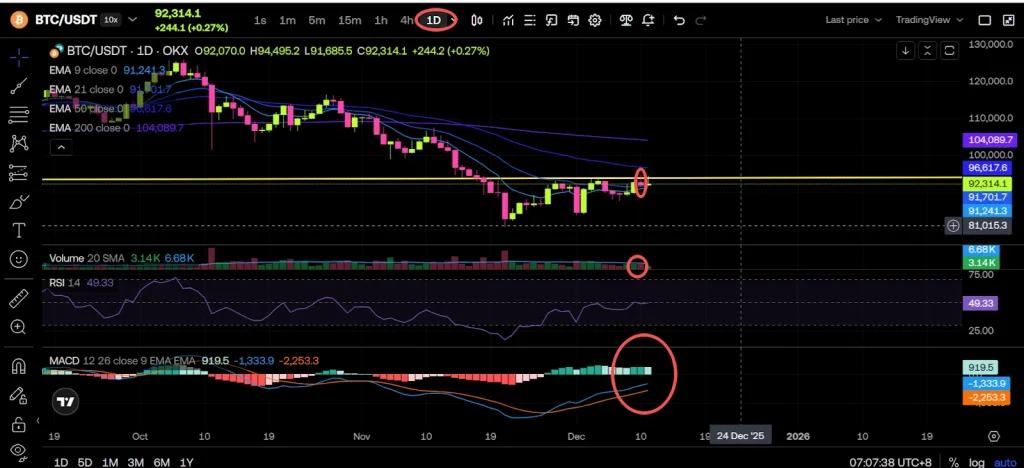
Bitcoin has slipped into a textbook consolidation phase following the Federal Reserve’s December meeting, as the market digests the event’s impact and bullish expectations cool off. The rejection near $94,500, shown by a bearish candle with a long upper wick, highlights clear seller strength at higher levels, while the close above the EMA21 provides only mild technical support rather than a trend-saving signal. Momentum remains flat: the MACD lines are running parallel and a choppy histogram indicate that bullish acceleration has fully stalled, leaving BTC stuck in a neutral range until a fresh catalyst emerges. And while this tightening structure typically precedes a strong breakout in one direction or another, many investors are already shifting attention toward high-momentum alternatives, naturally leading the conversation toward this DeFi crypto.
btc-usd-chart

MUTM Presale Draws Strong Investor Interest

Mutuum Finance (MUTM) is emerging as the DeFi crypto of 2025. Its presale has already attracted over 18,450 participants and raised more than $19.33 million. Phase 6 tokens are currently priced at $0.035, offering investors a final opportunity before Phase 7 increases the price by 20% to $0.04. Unlike many altcoins driven purely by speculation, Mutuum Finance emphasizes adoption and practical utility, positioning it as the next big crypto for early-stage investors.

Dual Lending Architecture Fuels Growth

A key driver of Mutuum Finance’s adoption is its dual lending framework. The Peer-to-Contract (P2C) model pools large, stable assets like USDT and SOL into fully audited smart contracts. Interest rates adjust dynamically based on pool utilization. For instance, lending $15,000 USDT can generate mtUSDT tokens yielding around 15% annually, providing roughly $2,250 in returns. Borrowers can pledge assets, such as $2,000 in ADA, to borrow $1,500 in liquidity without selling their holdings. Stability factors and liquidation thresholds ensure optimal fund usage and solvency.

The Peer-to-Peer (P2P) lending module allows users to negotiate terms directly, accepting higher risks for potentially higher returns. Specialized pools also enable lending, borrowing, and staking, providing steady yields and increasing engagement within the MUTM ecosystem. This approach makes MUTM particularly attractive for active DeFi users seeking real utility.

Driving Value with Fee-to-Buyback

Mutuum Finance strengthens token value through its fee-to-buyback mechanism. Fees generated from lending, borrowing, and staking are used to repurchase MUTM tokens, which are then distributed to mtToken stakers. This cycle connects real on-chain activity with tangible rewards, encouraging sustained engagement rather than speculative trading. By incentivizing participation and creating a self-reinforcing growth model, MUTM establishes itself as the crypto with lasting utility and strong upside potential.

Bitcoin is stuck in a tight range near $94K, leaving traders hungry for yield and alternatives. Mutuum Finance (MUTM) is dominating December demand, with Phase 6 nearly sold out at $0.035, over 18,450 holders, and $19.33M raised. Its dual lending system and fee-to-buyback model offer real DeFi utility, making MUTM the DeFi crypto to watch and the next big crypto for early investors as BTC stalls.

For more information about Mutuum Finance (MUTM) visit the links below:

Website:https://mutuum.com/

Linktree:https://linktr.ee/mutuumfinance

Disclaimer: The articles reposted on this site are sourced from public platforms and are provided for informational purposes only. They do not necessarily reflect the views of MEXC. All rights remain with the original authors. If you believe any content infringes on third-party rights, please contact service@support.mexc.com for removal. MEXC makes no guarantees regarding the accuracy, completeness, or timeliness of the content and is not responsible for any actions taken based on the information provided. The content does not constitute financial, legal, or other professional advice, nor should it be considered a recommendation or endorsement by MEXC.

You May Also Like

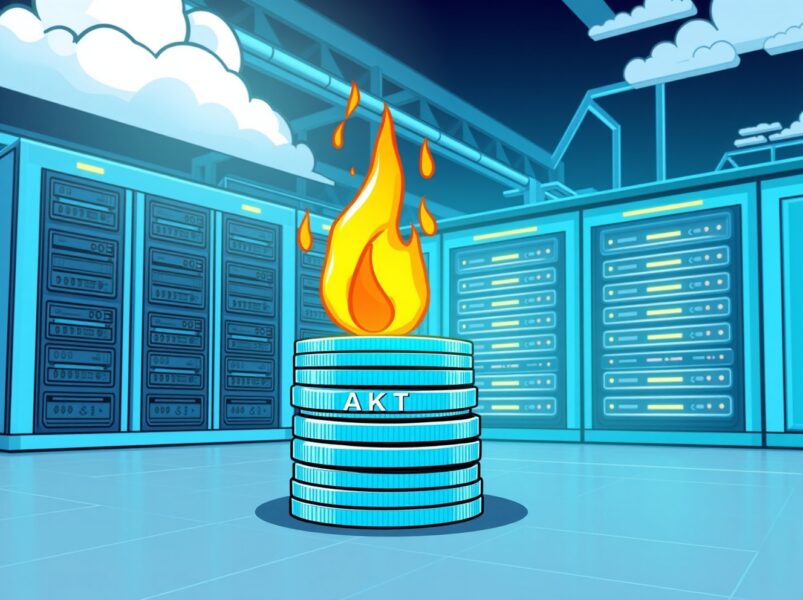
Akash Network’s Strategic Move: A Crucial Burn for AKT’s Future

Akash Network’s Strategic Move: A Crucial Burn for AKT’s Future

BitcoinWorld Akash Network’s Strategic Move: A Crucial Burn for AKT’s Future In the dynamic world of decentralized computing, exciting developments are constantly shaping the future. Today, all eyes are on Akash Network, the innovative supercloud project, as it proposes a significant change to its tokenomics. This move aims to strengthen the value of its native token, AKT, and further solidify its position in the competitive blockchain space. The community is buzzing about a newly submitted governance proposal that could introduce a game-changing Burn Mint Equilibrium (BME) model. What is the Burn Mint Equilibrium (BME) for Akash Network? The core of this proposal revolves around a concept called Burn Mint Equilibrium, or BME. Essentially, this model is designed to create a balance in the token’s circulating supply by systematically removing a portion of tokens from existence. For Akash Network, this means burning an amount of AKT that is equivalent to the U.S. dollar value of fees paid by network users. Fee Conversion: When users pay for cloud services on the Akash Network, these fees are typically collected in various cryptocurrencies or stablecoins. AKT Equivalence: The proposal suggests converting the U.S. dollar value of these collected fees into an equivalent amount of AKT. Token Burn: This calculated amount of AKT would then be permanently removed from circulation, or ‘burned’. This mechanism creates a direct link between network utility and token supply reduction. As more users utilize the decentralized supercloud, more AKT will be burned, potentially impacting the token’s scarcity and value. Why is This Proposal Crucial for AKT Holders? For anyone holding AKT, or considering investing in the Akash Network ecosystem, this proposal carries significant weight. Token burning mechanisms are often viewed as a positive development because they can lead to increased scarcity. When supply decreases while demand remains constant or grows, the price per unit tends to increase. Here are some key benefits: Increased Scarcity: Burning tokens reduces the total circulating supply of AKT. This makes each remaining token potentially more valuable over time. Demand-Supply Dynamics: The BME model directly ties the burning of AKT to network usage. Higher adoption of the Akash Network supercloud translates into more fees, and thus more AKT burned. Long-Term Value Proposition: By creating a deflationary pressure, the proposal aims to enhance AKT’s long-term value, making it a more attractive asset for investors and long-term holders. This strategic move demonstrates a commitment from the Akash Network community to optimize its tokenomics for sustainable growth and value appreciation. How Does BME Impact the Decentralized Supercloud Mission? Beyond token value, the BME proposal aligns perfectly with the broader mission of the Akash Network. As a decentralized supercloud, Akash provides a marketplace for cloud computing resources, allowing users to deploy applications faster, more efficiently, and at a lower cost than traditional providers. The BME model reinforces this utility. Consider these impacts: Network Health: A stronger AKT token can incentivize more validators and providers to secure and contribute resources to the network, improving its overall health and resilience. Ecosystem Growth: Enhanced token value can attract more developers and projects to build on the Akash Network, fostering a vibrant and diverse ecosystem. User Incentive: While users pay fees, the potential appreciation of AKT could indirectly benefit those who hold the token, creating a circular economy within the supercloud. This proposal is not just about burning tokens; it’s about building a more robust, self-sustaining, and economically sound decentralized cloud infrastructure for the future. What Are the Next Steps for the Akash Network Community? As a governance proposal, the BME model will now undergo a period of community discussion and voting. This is a crucial phase where AKT holders and network participants can voice their opinions, debate the merits, and ultimately decide on the future direction of the project. Transparency and community engagement are hallmarks of decentralized projects like Akash Network. Challenges and Considerations: Implementation Complexity: Ensuring the burning mechanism is technically sound and transparent will be vital. Community Consensus: Achieving broad agreement within the diverse Akash Network community is key for successful adoption. The outcome of this vote will significantly shape the tokenomics and economic model of the Akash Network, influencing its trajectory in the rapidly evolving decentralized cloud landscape. The proposal to introduce a Burn Mint Equilibrium model represents a bold and strategic step for Akash Network. By directly linking network usage to token scarcity, the project aims to create a more resilient and valuable AKT token, ultimately strengthening its position as a leading decentralized supercloud provider. This move underscores the project’s commitment to innovative tokenomics and sustainable growth, promising an exciting future for both users and investors in the Akash Network ecosystem. It’s a clear signal that Akash is actively working to enhance its value proposition and maintain its competitive edge in the decentralized future. Frequently Asked Questions (FAQs) 1. What is the main goal of the Burn Mint Equilibrium (BME) proposal for Akash Network? The primary goal is to adjust the circulating supply of AKT tokens by burning a portion of network fees, thereby creating deflationary pressure and potentially enhancing the token’s long-term value and scarcity. 2. How will the amount of AKT to be burned be determined? The proposal suggests burning an amount of AKT equivalent to the U.S. dollar value of fees paid by users on the Akash Network for cloud services. 3. What are the potential benefits for AKT token holders? Token holders could benefit from increased scarcity of AKT, which may lead to higher demand and appreciation in value over time, especially as network usage grows. 4. How does this proposal relate to the overall mission of Akash Network? The BME model reinforces the Akash Network‘s mission by creating a stronger, more economically robust ecosystem. A healthier token incentivizes network participants, fostering growth and stability for the decentralized supercloud. 5. What is the next step for this governance proposal? The proposal will undergo a period of community discussion and voting by AKT token holders. The community’s decision will determine if the BME model is implemented on the Akash Network. If you found this article insightful, consider sharing it with your network! Your support helps us bring more valuable insights into the world of decentralized technology. Stay informed and help spread the word about the exciting developments happening within Akash Network. To learn more about the latest crypto market trends, explore our article on key developments shaping decentralized cloud solutions price action. This post Akash Network’s Strategic Move: A Crucial Burn for AKT’s Future first appeared on BitcoinWorld.
Share
Coinstats2025/09/22 21:35