The post A liability for institutional staking appeared on BitcoinEthereumNews.com. Disclosure: The views and opinions expressed here belong solely to the author and do not represent the views and opinions of crypto.news’ editorial. Institutional capital is finally flowing into the crypto sector. It first came through Bitcoin (BTC) and Ethereum (ETH) ETFs, but the next frontier is staking, where assets don’t just sit around; they earn yield. Institutions demand growth, compliance, and security. Now that crypto is part of their capital base, staking is destined to become a core strategic pillar. Summary Most validators still run on consumer cloud platforms (AWS, Google Cloud), exposing networks to centralization, outages, opaque performance, and compliance blind spots—none acceptable for institutional capital. Dedicated hardware gives operators full visibility, control, and auditability; improves performance and isolation; and is ultimately more cost-efficient and compliant for large-scale staking workloads. As staking becomes a core institutional strategy, only projects with transparent, resilient, enterprise-grade infrastructure — not cloud-dependent abstractions — will clear due diligence and capture long-term inflows. Here’s the problem: most staking infrastructure still runs on shared cloud services designed for Web 2.0 and consumer apps, not institutional financial systems. Cloud services work fine for mobile games, but they’re woefully inadequate when a single minute of outage can cost millions.  The risks of cloud-based staking infrastructure Most staking today is built on the wrong foundation. The majority of validator nodes (the servers and systems that secure proof-of-stake blockchains and earn rewards) still cluster on the Big Tech consumer cloud providers, such as AWS, Google Cloud, and a handful of others. That’s because they’re “easy” to deploy and familiar to developers.  But my grandfather used to say, “The easy way usually ain’t the right way,” and he was right. There is a significant, not-so-hidden predicament for the big tech players. A single policy change, pricing shift, or outage at… The post A liability for institutional staking appeared on BitcoinEthereumNews.com. Disclosure: The views and opinions expressed here belong solely to the author and do not represent the views and opinions of crypto.news’ editorial. Institutional capital is finally flowing into the crypto sector. It first came through Bitcoin (BTC) and Ethereum (ETH) ETFs, but the next frontier is staking, where assets don’t just sit around; they earn yield. Institutions demand growth, compliance, and security. Now that crypto is part of their capital base, staking is destined to become a core strategic pillar. Summary Most validators still run on consumer cloud platforms (AWS, Google Cloud), exposing networks to centralization, outages, opaque performance, and compliance blind spots—none acceptable for institutional capital. Dedicated hardware gives operators full visibility, control, and auditability; improves performance and isolation; and is ultimately more cost-efficient and compliant for large-scale staking workloads. As staking becomes a core institutional strategy, only projects with transparent, resilient, enterprise-grade infrastructure — not cloud-dependent abstractions — will clear due diligence and capture long-term inflows. Here’s the problem: most staking infrastructure still runs on shared cloud services designed for Web 2.0 and consumer apps, not institutional financial systems. Cloud services work fine for mobile games, but they’re woefully inadequate when a single minute of outage can cost millions.  The risks of cloud-based staking infrastructure Most staking today is built on the wrong foundation. The majority of validator nodes (the servers and systems that secure proof-of-stake blockchains and earn rewards) still cluster on the Big Tech consumer cloud providers, such as AWS, Google Cloud, and a handful of others. That’s because they’re “easy” to deploy and familiar to developers.  But my grandfather used to say, “The easy way usually ain’t the right way,” and he was right. There is a significant, not-so-hidden predicament for the big tech players. A single policy change, pricing shift, or outage at…

A liability for institutional staking

Disclosure: The views and opinions expressed here belong solely to the author and do not represent the views and opinions of crypto.news’ editorial.

Institutional capital is finally flowing into the crypto sector. It first came through Bitcoin (BTC) and Ethereum (ETH) ETFs, but the next frontier is staking, where assets don’t just sit around; they earn yield. Institutions demand growth, compliance, and security. Now that crypto is part of their capital base, staking is destined to become a core strategic pillar.

Summary

  • Most validators still run on consumer cloud platforms (AWS, Google Cloud), exposing networks to centralization, outages, opaque performance, and compliance blind spots—none acceptable for institutional capital.
  • Dedicated hardware gives operators full visibility, control, and auditability; improves performance and isolation; and is ultimately more cost-efficient and compliant for large-scale staking workloads.
  • As staking becomes a core institutional strategy, only projects with transparent, resilient, enterprise-grade infrastructure — not cloud-dependent abstractions — will clear due diligence and capture long-term inflows.

Here’s the problem: most staking infrastructure still runs on shared cloud services designed for Web 2.0 and consumer apps, not institutional financial systems. Cloud services work fine for mobile games, but they’re woefully inadequate when a single minute of outage can cost millions. 

The risks of cloud-based staking infrastructure

Most staking today is built on the wrong foundation. The majority of validator nodes (the servers and systems that secure proof-of-stake blockchains and earn rewards) still cluster on the Big Tech consumer cloud providers, such as AWS, Google Cloud, and a handful of others. That’s because they’re “easy” to deploy and familiar to developers. 

But my grandfather used to say, “The easy way usually ain’t the right way,” and he was right. There is a significant, not-so-hidden predicament for the big tech players. A single policy change, pricing shift, or outage at one of these providers can have ripple effects across entire networks, knocking out swaths of validators in one shot.

And that’s just the centralization problem. Compliance and control are another. Meeting the kinds of standards institutions care about — jurisdictional choice, SOC2 for data/information security, and CCSS for crypto operations, while tuning hardware and networks for each protocol — is far harder when you don’t control the physical infrastructure your operation runs on. Cloud platforms are designed to abstract that away, which is great for a weather app, but terrible when the auditors come knocking.

That same abstraction also blinds operators to what’s really happening under the hood. Key performance metrics, such as latency, redundancy configurations, and hardware health, are often hidden behind the provider’s curtain, making uptime guarantees little more than educated guesses. And because cloud infrastructure is shared, you inherit your noisy neighbors’ problems. 

Look no further than the history of recent major outages at AWS, including those in November 2020, December 2021, June 2023, and most recently, a 15-hour outage in October 2025, which brought major banks, airlines, and numerous other companies to a halt. In crypto, you are not just missing rewards or taking a hit to your yield; you can trigger material penalties.

Why institutions prefer bare metal infrastructure

Institutions don’t trust black boxes to handle their capital, and rightfully so. They want to see, touch, and control these systems. That’s why, as staking shifts into the institutional domain, bare-metal infrastructure is taking the lead. Running validators on dedicated machines provides operators with complete control over performance, offering real-time visibility. Nothing is hidden behind a provider’s dashboard or locked inside an abstraction layer.

At scale, bare metal is also more cost-effective for staking workloads than renting slices of general-purpose cloud. The economics can be deceptive at first: what starts as a cheaper way to test an idea on AWS becomes an expensive method to run in production. In a dedicated staking environment, the cost per unit of compute and storage drops, operational isolation is guaranteed, and performance improves.

Then there’s compliance. Auditors want transparent, documented chains of control over every component in your environment. With bare metal, you can prove where your servers are, who can physically access them, how they’re secured, and what redundancy measures are in place. The result is an infrastructure that not only meets the letter of the rules but also instills confidence in counterparties.

Bare-metal deployments in high-tier data centers, with physical security and dedicated failover systems, can deliver the kind of enterprise-grade guarantees that make staking a credible part of a treasury strategy. In the coming wave of due diligence, projects that still rely on shared cloud infrastructure will struggle to clear the bar. Those that pair physical decentralization with operational transparency will be the ones that win serious capital.

Serious capital demands serious infrastructure

As staking evolves into a genuine strategy for institutions, the infrastructure behind it will determine who earns trust and who gets left behind. Cloud-based setups may have fueled crypto’s early growth, but they fall well short of the standards that serious capital demands. Institutions aren’t building games or NFT marketplaces; they’re managing risk, compliance, and capital flows.

That changes the definition of “decentralized.” It’s not enough to spread nodes across different wallets and jurisdictions. Those nodes must be dependable, transparent, and resilient. The projects that recognize this shift now and race to build institutional-grade infrastructure will be the ones that capture the long-term upside.

Thomas Chaffee

Thomas Chaffee is the co-founder of GlobalStake, a carbon-neutral company delivering institutional-grade staking infrastructure. Tom is a serial technology entrepreneur, Silvermine Partner, and co-founder of GlobalStake. He was a public company CEO exiting to two Fortune 500 companies, alongside serving on many boards. Most recently, he and his wife co-founded a Title 1 charter school in Sarasota, FL, serving more than 650 families in need. Tom is an accomplished musician who misspent his youth playing with The Beach Boys, Dan Fogelberg, and many other major acts.

Source: https://crypto.news/cloud-infrastructure-liability-institutional-staking/

Market Opportunity
Notcoin Logo
Notcoin Price(NOT)
$0.0003874
$0.0003874$0.0003874
+1.20%
USD
Notcoin (NOT) Live Price Chart
Disclaimer: The articles reposted on this site are sourced from public platforms and are provided for informational purposes only. They do not necessarily reflect the views of MEXC. All rights remain with the original authors. If you believe any content infringes on third-party rights, please contact service@support.mexc.com for removal. MEXC makes no guarantees regarding the accuracy, completeness, or timeliness of the content and is not responsible for any actions taken based on the information provided. The content does not constitute financial, legal, or other professional advice, nor should it be considered a recommendation or endorsement by MEXC.

You May Also Like

CME Group to Launch Solana and XRP Futures Options

CME Group to Launch Solana and XRP Futures Options

The post CME Group to Launch Solana and XRP Futures Options appeared on BitcoinEthereumNews.com. An announcement was made by CME Group, the largest derivatives exchanger worldwide, revealed that it would introduce options for Solana and XRP futures. It is the latest addition to CME crypto derivatives as institutions and retail investors increase their demand for Solana and XRP. CME Expands Crypto Offerings With Solana and XRP Options Launch According to a press release, the launch is scheduled for October 13, 2025, pending regulatory approval. The new products will allow traders to access options on Solana, Micro Solana, XRP, and Micro XRP futures. Expiries will be offered on business days on a monthly, and quarterly basis to provide more flexibility to market players. CME Group said the contracts are designed to meet demand from institutions, hedge funds, and active retail traders. According to Giovanni Vicioso, the launch reflects high liquidity in Solana and XRP futures. Vicioso is the Global Head of Cryptocurrency Products for the CME Group. He noted that the new contracts will provide additional tools for risk management and exposure strategies. Recently, CME XRP futures registered record open interest amid ETF approval optimism, reinforcing confidence in contract demand. Cumberland, one of the leading liquidity providers, welcomed the development and said it highlights the shift beyond Bitcoin and Ethereum. FalconX, another trading firm, added that rising digital asset treasuries are increasing the need for hedging tools on alternative tokens like Solana and XRP. High Record Trading Volumes Demand Solana and XRP Futures Solana futures and XRP continue to gain popularity since their launch earlier this year. According to CME official records, many have bought and sold more than 540,000 Solana futures contracts since March. A value that amounts to over $22 billion dollars. Solana contracts hit a record 9,000 contracts in August, worth $437 million. Open interest also set a record at 12,500 contracts.…
Share
BitcoinEthereumNews2025/09/18 01:39
Metaplanet CEO Denies Hiding Details

Metaplanet CEO Denies Hiding Details

The post Metaplanet CEO Denies Hiding Details appeared on BitcoinEthereumNews.com. Storm Over Bitcoin Trades: Metaplanet CEO Denies Hiding Details
Share
BitcoinEthereumNews2026/02/21 21:03
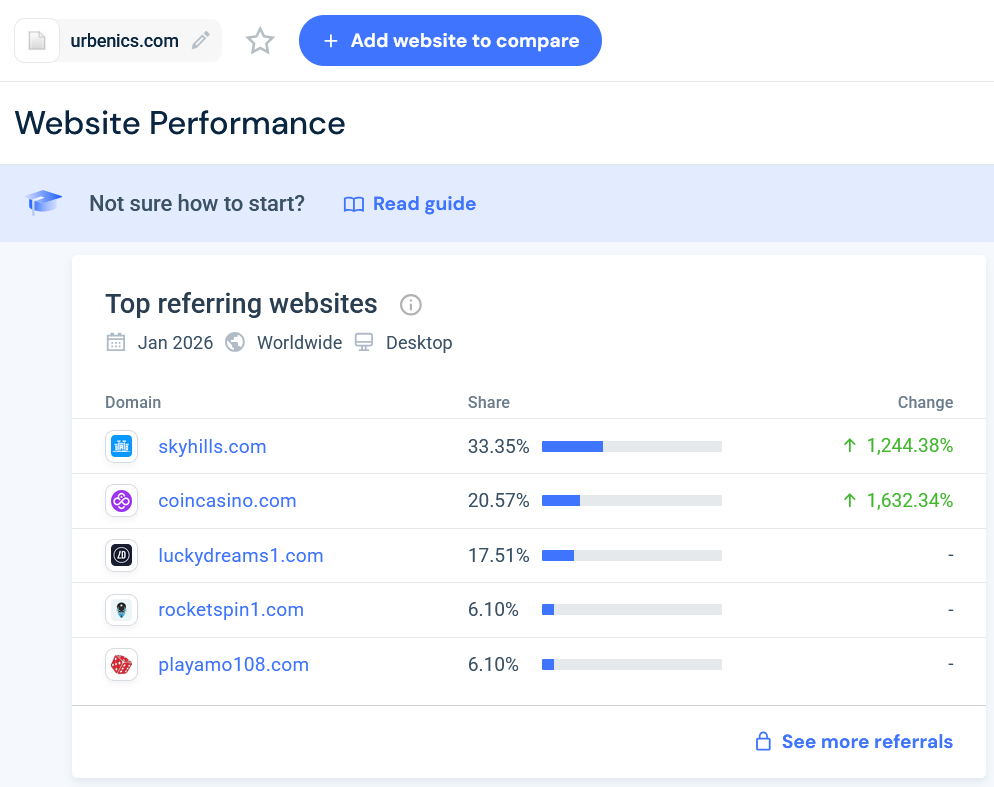
Shadows in the Payment Rail: The Urbenics.com Mystery

Shadows in the Payment Rail: The Urbenics.com Mystery

A new, anonymous player has emerged in the high-risk payment sector. Operating without a public face, Urbenics.com is quietly fueling the offshore casino industry
Share
Fintelegram2026/02/21 20:44