The post XRP gains traction as backbone for tokenized dollar movement appeared on BitcoinEthereumNews.com. For years, XRP’s market identity was shaped by the dynamics that defined the early crypto era: retail-driven speculation, regulatory uncertainty, and an enduring belief that blockchain rails could overturn decades-old banking infrastructure. That narrative was volatile, adversarial, and deeply cyclical as XRP’s performance rose and fell with court headlines and sentiment waves rather than measurable adoption. However, as 2025 draws to a close, a different framing is taking hold. Instead of being viewed as another participant in crypto’s competitive L1 ecosystem, XRP is increasingly being evaluated through the lens of settlement infrastructure. It is a narrative rooted not in token appreciation or ecosystem expansion, but in whether XRP can function as part of the liquidity and messaging stack through which tokenized dollars eventually move. A new report from Digital Asset Solutions (DAS) crystallizes this shift. The firm argues that Ripple’s ecosystem, bolstered by a regulated stablecoin, maturing institutional tools, and a more stable policy backdrop, is now positioning itself adjacent to SWIFT and the correspondent banking network rather than Ethereum or Solana. While the analysis does not claim that XRP has already made this transition, it argues that the market is beginning to price the possibility of one. So, the reframing is subtle but significant, as the question is no longer whether XRP will replace money. The question now is whether XRP can become part of the plumbing that moves it. Policy clarity and product maturity are driving XRP’s narrative change The clearest catalyst for this narrative shift is the alignment between US policy and Ripple’s product architecture. The GENIUS Act, signed into law in July, established the first federal regime for payment stablecoins. Its requirements of a full-reserve backing, strict oversight, and transparent redemption mechanics converted stablecoins from regulatory grey zones into eligible settlement instruments for corporates and, eventually,… The post XRP gains traction as backbone for tokenized dollar movement appeared on BitcoinEthereumNews.com. For years, XRP’s market identity was shaped by the dynamics that defined the early crypto era: retail-driven speculation, regulatory uncertainty, and an enduring belief that blockchain rails could overturn decades-old banking infrastructure. That narrative was volatile, adversarial, and deeply cyclical as XRP’s performance rose and fell with court headlines and sentiment waves rather than measurable adoption. However, as 2025 draws to a close, a different framing is taking hold. Instead of being viewed as another participant in crypto’s competitive L1 ecosystem, XRP is increasingly being evaluated through the lens of settlement infrastructure. It is a narrative rooted not in token appreciation or ecosystem expansion, but in whether XRP can function as part of the liquidity and messaging stack through which tokenized dollars eventually move. A new report from Digital Asset Solutions (DAS) crystallizes this shift. The firm argues that Ripple’s ecosystem, bolstered by a regulated stablecoin, maturing institutional tools, and a more stable policy backdrop, is now positioning itself adjacent to SWIFT and the correspondent banking network rather than Ethereum or Solana. While the analysis does not claim that XRP has already made this transition, it argues that the market is beginning to price the possibility of one. So, the reframing is subtle but significant, as the question is no longer whether XRP will replace money. The question now is whether XRP can become part of the plumbing that moves it. Policy clarity and product maturity are driving XRP’s narrative change The clearest catalyst for this narrative shift is the alignment between US policy and Ripple’s product architecture. The GENIUS Act, signed into law in July, established the first federal regime for payment stablecoins. Its requirements of a full-reserve backing, strict oversight, and transparent redemption mechanics converted stablecoins from regulatory grey zones into eligible settlement instruments for corporates and, eventually,…

XRP gains traction as backbone for tokenized dollar movement

For years, XRP’s market identity was shaped by the dynamics that defined the early crypto era: retail-driven speculation, regulatory uncertainty, and an enduring belief that blockchain rails could overturn decades-old banking infrastructure.

That narrative was volatile, adversarial, and deeply cyclical as XRP’s performance rose and fell with court headlines and sentiment waves rather than measurable adoption.

However, as 2025 draws to a close, a different framing is taking hold.

Instead of being viewed as another participant in crypto’s competitive L1 ecosystem, XRP is increasingly being evaluated through the lens of settlement infrastructure.

It is a narrative rooted not in token appreciation or ecosystem expansion, but in whether XRP can function as part of the liquidity and messaging stack through which tokenized dollars eventually move.

A new report from Digital Asset Solutions (DAS) crystallizes this shift. The firm argues that Ripple’s ecosystem, bolstered by a regulated stablecoin, maturing institutional tools, and a more stable policy backdrop, is now positioning itself adjacent to SWIFT and the correspondent banking network rather than Ethereum or Solana.

While the analysis does not claim that XRP has already made this transition, it argues that the market is beginning to price the possibility of one.

So, the reframing is subtle but significant, as the question is no longer whether XRP will replace money. The question now is whether XRP can become part of the plumbing that moves it.

Policy clarity and product maturity are driving XRP’s narrative change

The clearest catalyst for this narrative shift is the alignment between US policy and Ripple’s product architecture.

The GENIUS Act, signed into law in July, established the first federal regime for payment stablecoins. Its requirements of a full-reserve backing, strict oversight, and transparent redemption mechanics converted stablecoins from regulatory grey zones into eligible settlement instruments for corporates and, eventually, financial institutions.

Ripple’s RLUSD stablecoin fits cleanly within that framework. Launched in late 2024 and custodied by BNY Mellon, RLUSD has grown steadily to roughly $1.3 billion in supply. Institutional investors view this as the first time Ripple can present a fiat-anchored asset that sits comfortably within regulatory boundaries.

At the same time, the settlement of Ripple’s long-running SEC case in August removed a structural impediment that kept XRP off many institutional lists. XRP is now one of the few digital assets with clear classification in secondary trading.

These policy shifts are reflected in market behavior. US spot XRP ETFs launched late in the year have accrued close to $1 billion in inflows, according to SoSo Value data.

The scale is modest relative to Bitcoin or Ethereum. Still, the audience is materially different: flows are coming from allocators who cannot touch unregistered tokens but can hold fully regulated exchange-traded products.

Meanwhile, Ripple has also strengthened its institutional capabilities.

Through a series of acquisitions, including custody firm Palisade, global prime broker Hidden Road (now Ripple Prime), and other infrastructure providers, the firm has assembled a toolkit that resembles a traditional market-structure stack.

These developments do not guarantee XRP’s usage, but they create a more credible platform for enterprises to test on-chain settlement.

Taken together, these shifts help explain why market participants are beginning to examine XRP not as a speculative asset but as a potential utility component within a broader payments architecture.

A different model of value

If XRP is transitioning into financial plumbing, the assumptions underlying its valuation must shift as well.

Traditional crypto metrics, such as developer activity, NFT volumes, and L1 competition, do not map neatly to an asset designed to be held for only seconds at a time.

Instead, XRP’s value is tied to corridor economics, including transaction throughput, liquidity depth, pathfinding efficiency, and the ability to compress FX spreads.

This is where the “Two-Asset Stack” becomes central.

Stern Drew, a crypto research firm, stated that RLUSD serves as the fiat anchor; XRP acts as the neutral bridge asset that moves between rails. The XRP Ledger’s fast, deterministic settlement enables this design, and its federated consensus model offers the predictability that treasury teams prioritize.

Meanwhile, this thesis is not without challenges.

Stablecoins could, in theory, displace the need for a bridge asset if global liquidity consolidates around a few well-regulated issuers or bank-backed tokenized deposits. In such a world, stablecoin-to-stablecoin transfers might dominate, reducing XRP’s role as an intermediary.

Moreover, that risk is amplified by adoption asymmetry.

Ripple says it has more than 300 institutional partners, but the majority use RippleNet’s messaging layer rather than settling value directly on-chain.

Converting these messaging users into settlement participants requires operational redesign, compliance retooling, and meaningful shifts in treasury management. These are processes that move slowly, even when incentives are clear.

At the same time, XRP’s token concentration is another structural concern. Ripple and affiliated entities still hold a significant XRP reserve.

While ETF participation shows institutions are more comfortable with this profile than in previous years, concentration remains an unavoidable part of the asset’s risk evaluation.

These dynamics mean the plumbing narrative is not preordained; it is conditional.

The missing piece

Ripple’s infrastructure stack is more complete than at any point in its history, and the policy environment is finally receptive.

RLUSD provides a compliant dollar instrument, XRP offers a potential liquidity layer, Ripple Prime delivers execution and credit functionality, and ETFs open new distribution channels. Corridors in MENA illustrate technical viability, and the EVM sidechain extends programmability to treasury workflows.

However, one component remains absent: scaled, on-chain direct bank-level settlement.

Until banks begin moving value, not just messages, across distributed rails, XRP’s narrative shift remains a thesis rather than a transformation. The model is coherent, and the incentives are clearer than ever, but the decisive integration has yet to occur.

The market sees the potential. It has not seen the inflection point.

Ripple has built the pipes. Policy has improved. Institutions finally have access channels that meet compliance standards.

However, whether the world’s financial institutions begin routing liquidity through those pipes is the open question that will determine whether XRP’s narrative completes its evolution from speculative token to financial plumbing.

Mentioned in this article

Source: https://cryptoslate.com/xrps-new-plumbing-narrative-exposes-a-valuation-shift-that-most-retail-speculators-are-completely-ignoring/

Market Opportunity
XRP Logo
XRP Price(XRP)
$1.4472
$1.4472$1.4472
+1.28%
USD
XRP (XRP) Live Price Chart
Disclaimer: The articles reposted on this site are sourced from public platforms and are provided for informational purposes only. They do not necessarily reflect the views of MEXC. All rights remain with the original authors. If you believe any content infringes on third-party rights, please contact service@support.mexc.com for removal. MEXC makes no guarantees regarding the accuracy, completeness, or timeliness of the content and is not responsible for any actions taken based on the information provided. The content does not constitute financial, legal, or other professional advice, nor should it be considered a recommendation or endorsement by MEXC.

You May Also Like

CME Group to Launch Solana and XRP Futures Options

CME Group to Launch Solana and XRP Futures Options

The post CME Group to Launch Solana and XRP Futures Options appeared on BitcoinEthereumNews.com. An announcement was made by CME Group, the largest derivatives exchanger worldwide, revealed that it would introduce options for Solana and XRP futures. It is the latest addition to CME crypto derivatives as institutions and retail investors increase their demand for Solana and XRP. CME Expands Crypto Offerings With Solana and XRP Options Launch According to a press release, the launch is scheduled for October 13, 2025, pending regulatory approval. The new products will allow traders to access options on Solana, Micro Solana, XRP, and Micro XRP futures. Expiries will be offered on business days on a monthly, and quarterly basis to provide more flexibility to market players. CME Group said the contracts are designed to meet demand from institutions, hedge funds, and active retail traders. According to Giovanni Vicioso, the launch reflects high liquidity in Solana and XRP futures. Vicioso is the Global Head of Cryptocurrency Products for the CME Group. He noted that the new contracts will provide additional tools for risk management and exposure strategies. Recently, CME XRP futures registered record open interest amid ETF approval optimism, reinforcing confidence in contract demand. Cumberland, one of the leading liquidity providers, welcomed the development and said it highlights the shift beyond Bitcoin and Ethereum. FalconX, another trading firm, added that rising digital asset treasuries are increasing the need for hedging tools on alternative tokens like Solana and XRP. High Record Trading Volumes Demand Solana and XRP Futures Solana futures and XRP continue to gain popularity since their launch earlier this year. According to CME official records, many have bought and sold more than 540,000 Solana futures contracts since March. A value that amounts to over $22 billion dollars. Solana contracts hit a record 9,000 contracts in August, worth $437 million. Open interest also set a record at 12,500 contracts.…
Share
BitcoinEthereumNews2025/09/18 01:39
Metaplanet CEO Denies Hiding Details

Metaplanet CEO Denies Hiding Details

The post Metaplanet CEO Denies Hiding Details appeared on BitcoinEthereumNews.com. Storm Over Bitcoin Trades: Metaplanet CEO Denies Hiding Details
Share
BitcoinEthereumNews2026/02/21 21:03
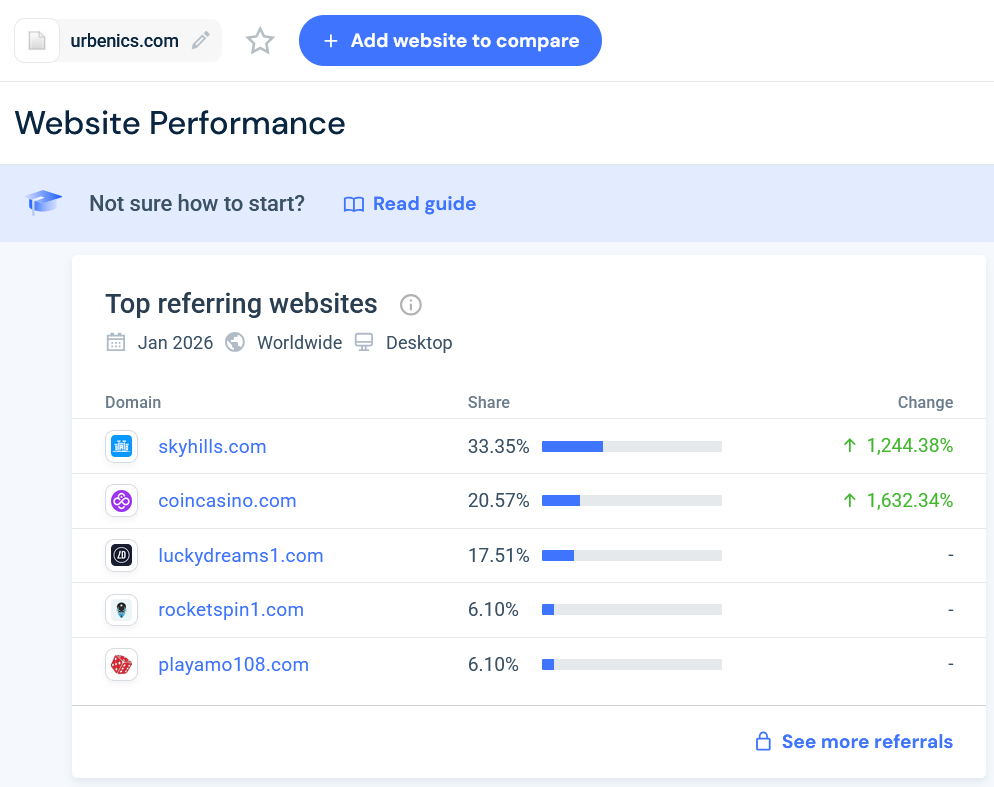
Shadows in the Payment Rail: The Urbenics.com Mystery

Shadows in the Payment Rail: The Urbenics.com Mystery

A new, anonymous player has emerged in the high-risk payment sector. Operating without a public face, Urbenics.com is quietly fueling the offshore casino industry
Share
Fintelegram2026/02/21 20:44