Initially, NFTs were being sold as digital art, but the marketplace has shifted to a way of providing evidence of ownership in the online world. Blockchain transparency is at the core of this change; this is the system of verifying data publicly and unalterably to provide new means of establishing trust on the Internet. The New Importance of Digital History The problem of provenance or evidence of provenance has been among the staples of the traditional art world. NFTs act like a digital certificate of authenticity. One of the uses is currently being used to track the provenance of items, including luxury bags or intellectual property, which can be scanned by a user to get the full creation history of the item, ensuring that ownership is authentic and no third party or authority has to validate the item. This has made analysts speak of a transparent commerce in which the history of transactions, between production and resale, has become available on-chain and has provided more accountability. Verifiable transactions as a principle are becoming widespread in industries despite the fact that mainstream adoption has a way to go. From NFTs to Data: How to Verify Anything NFTs demonstrated the idea of blockchain as one of the examples of a trustless verification system, but the technology has many other uses. The areas that depend on accuracy and transparency, namely supply chain logistics, healthcare, and identity management, are investigating this blockchain tech. Supply chains: The IBM Food Trust and VeChain pilots can be regarded as demonstrations of blockchain pilots that trace the items and all their steps and assist in avoiding fraud and offering more traceability. Healthcare: Blockchain experiments systems are used to ensure the integrity and auditability of patient data; however, centralized electronic medical records are still widely used. Digital identity: Self-sovereign identities (SSI) enable individuals to distribute and manage individual claims without a mediator, and prototypes exist in Sovrin and uPort. Blockchain creates a shared, permanent record that is very hard to change, making it more trustworthy than a private database controlled by one company. Beyond NFTs: A Clearer Look at Blockchain Other online casinos and games are exploring the use of blockchain to certify that their games are fair. They provide this way of letting the player confirm that the result of the game (such as the shuffle of cards or a roll of dice) was not altered later, but it somewhat requires some technical expertise. The latest studies, such as the reviews of crypto game platforms, like this review of Stake casino, mention how the use of decentralized record-keeping and cryptographic verification can contribute to user trust. Though the studies in this situation usually aim at gaming, the principles, such as transparent smart contracts, tamper-proof ledgers, and verifiable outcomes, are applicable to NFTs and other Web3 items. Web3: Everything’s Starting to Connect The interaction of the sub-areas of Web3, such as NFTs, decentralized finance (DeFi), blockchain games, and digital identity via the common concept of transparency and immutability, is one of its identifying characteristics. NFT-based games: NFT games are games that have verifiable fairness, transparent scarcity, and allow players to have true ownership of in-game items through smart contracts, which do not involve any biasing 3rd party. Decentralized marketplaces: Peer-to-peer trades can be backed by smart contracts that omit any form of bias from 3rd parties and decrease the risk of tampering through manipulation. DeFi protocols: Liquidity pools and transaction history are publicly available so that users can observe the activity of the platform by themselves. Familiarity with verifiable systems in one area, like NFT ownership, builds a demand for that same transparency in others. The concept of provable digital ownership, popularized by NFTs, has been introduced, but it is not yet a standard feature across the internet. Transparency: The New Normal Transparency of blockchain is a more general change in digital culture. Traditionally, data, algorithms, and verification were operated centrally and in black box settings. The challenge posed by Web3 is that it puts the power back into users in terms of verification. To creators: Providing a more equal portion of royalties and a lasting credit on their creation is just one method in which decentralized forms of governance are applied in the digital realm. To the consumers: Buyers will be able to review verifiable histories of what they are purchasing and receive a more enduring credit for their creation. To communities: Decentralized models of governance provide transparent, non-corruptible open systems. This simple idea, which states that you should be able to see what you are buying and you should know it is the true form of the idea, which may just become the new standard of all that we do on the internet in the coming decade. The Big Idea Behind Web3 The main concept of blockchain is establishing trust by demonstration. Whatever the field it may be, a marketplace, an app, or a game, blockchain does not entail empty promises but verifiable outcomes. As noted by sources like CCN, this move toward open, transparent systems is a major frontier. Industries from gaming to digital identity are exploring how this “show, don’t just tell” model works. Rather than “trust me,” it’s “see for yourself,” which may allow the internet to be rebuilt on transparency and verifiable data, which makes it far more trustworthy for all. The post Blockchain: The New Key to Owning Digital Stuff appeared first on NFT Plazas.Initially, NFTs were being sold as digital art, but the marketplace has shifted to a way of providing evidence of ownership in the online world. Blockchain transparency is at the core of this change; this is the system of verifying data publicly and unalterably to provide new means of establishing trust on the Internet. The New Importance of Digital History The problem of provenance or evidence of provenance has been among the staples of the traditional art world. NFTs act like a digital certificate of authenticity. One of the uses is currently being used to track the provenance of items, including luxury bags or intellectual property, which can be scanned by a user to get the full creation history of the item, ensuring that ownership is authentic and no third party or authority has to validate the item. This has made analysts speak of a transparent commerce in which the history of transactions, between production and resale, has become available on-chain and has provided more accountability. Verifiable transactions as a principle are becoming widespread in industries despite the fact that mainstream adoption has a way to go. From NFTs to Data: How to Verify Anything NFTs demonstrated the idea of blockchain as one of the examples of a trustless verification system, but the technology has many other uses. The areas that depend on accuracy and transparency, namely supply chain logistics, healthcare, and identity management, are investigating this blockchain tech. Supply chains: The IBM Food Trust and VeChain pilots can be regarded as demonstrations of blockchain pilots that trace the items and all their steps and assist in avoiding fraud and offering more traceability. Healthcare: Blockchain experiments systems are used to ensure the integrity and auditability of patient data; however, centralized electronic medical records are still widely used. Digital identity: Self-sovereign identities (SSI) enable individuals to distribute and manage individual claims without a mediator, and prototypes exist in Sovrin and uPort. Blockchain creates a shared, permanent record that is very hard to change, making it more trustworthy than a private database controlled by one company. Beyond NFTs: A Clearer Look at Blockchain Other online casinos and games are exploring the use of blockchain to certify that their games are fair. They provide this way of letting the player confirm that the result of the game (such as the shuffle of cards or a roll of dice) was not altered later, but it somewhat requires some technical expertise. The latest studies, such as the reviews of crypto game platforms, like this review of Stake casino, mention how the use of decentralized record-keeping and cryptographic verification can contribute to user trust. Though the studies in this situation usually aim at gaming, the principles, such as transparent smart contracts, tamper-proof ledgers, and verifiable outcomes, are applicable to NFTs and other Web3 items. Web3: Everything’s Starting to Connect The interaction of the sub-areas of Web3, such as NFTs, decentralized finance (DeFi), blockchain games, and digital identity via the common concept of transparency and immutability, is one of its identifying characteristics. NFT-based games: NFT games are games that have verifiable fairness, transparent scarcity, and allow players to have true ownership of in-game items through smart contracts, which do not involve any biasing 3rd party. Decentralized marketplaces: Peer-to-peer trades can be backed by smart contracts that omit any form of bias from 3rd parties and decrease the risk of tampering through manipulation. DeFi protocols: Liquidity pools and transaction history are publicly available so that users can observe the activity of the platform by themselves. Familiarity with verifiable systems in one area, like NFT ownership, builds a demand for that same transparency in others. The concept of provable digital ownership, popularized by NFTs, has been introduced, but it is not yet a standard feature across the internet. Transparency: The New Normal Transparency of blockchain is a more general change in digital culture. Traditionally, data, algorithms, and verification were operated centrally and in black box settings. The challenge posed by Web3 is that it puts the power back into users in terms of verification. To creators: Providing a more equal portion of royalties and a lasting credit on their creation is just one method in which decentralized forms of governance are applied in the digital realm. To the consumers: Buyers will be able to review verifiable histories of what they are purchasing and receive a more enduring credit for their creation. To communities: Decentralized models of governance provide transparent, non-corruptible open systems. This simple idea, which states that you should be able to see what you are buying and you should know it is the true form of the idea, which may just become the new standard of all that we do on the internet in the coming decade. The Big Idea Behind Web3 The main concept of blockchain is establishing trust by demonstration. Whatever the field it may be, a marketplace, an app, or a game, blockchain does not entail empty promises but verifiable outcomes. As noted by sources like CCN, this move toward open, transparent systems is a major frontier. Industries from gaming to digital identity are exploring how this “show, don’t just tell” model works. Rather than “trust me,” it’s “see for yourself,” which may allow the internet to be rebuilt on transparency and verifiable data, which makes it far more trustworthy for all. The post Blockchain: The New Key to Owning Digital Stuff appeared first on NFT Plazas.

Blockchain: The New Key to Owning Digital Stuff

2025/11/04 17:13
5 min read
Blockchain: The New Key to Owning Digital Stuff

Initially, NFTs were being sold as digital art, but the marketplace has shifted to a way of providing evidence of ownership in the online world. Blockchain transparency is at the core of this change; this is the system of verifying data publicly and unalterably to provide new means of establishing trust on the Internet.

The New Importance of Digital History

The problem of provenance or evidence of provenance has been among the staples of the traditional art world. NFTs act like a digital certificate of authenticity. One of the uses is currently being used to track the provenance of items, including luxury bags or intellectual property, which can be scanned by a user to get the full creation history of the item, ensuring that ownership is authentic and no third party or authority has to validate the item.

This has made analysts speak of a transparent commerce in which the history of transactions, between production and resale, has become available on-chain and has provided more accountability. Verifiable transactions as a principle are becoming widespread in industries despite the fact that mainstream adoption has a way to go.

From NFTs to Data: How to Verify Anything

NFTs demonstrated the idea of blockchain as one of the examples of a trustless verification system, but the technology has many other uses. The areas that depend on accuracy and transparency, namely supply chain logistics, healthcare, and identity management, are investigating this blockchain tech.

  • Supply chains: The IBM Food Trust and VeChain pilots can be regarded as demonstrations of blockchain pilots that trace the items and all their steps and assist in avoiding fraud and offering more traceability.
  • Healthcare: Blockchain experiments systems are used to ensure the integrity and auditability of patient data; however, centralized electronic medical records are still widely used.
  • Digital identity: Self-sovereign identities (SSI) enable individuals to distribute and manage individual claims without a mediator, and prototypes exist in Sovrin and uPort.

Blockchain creates a shared, permanent record that is very hard to change, making it more trustworthy than a private database controlled by one company.

Beyond NFTs: A Clearer Look at Blockchain

Other online casinos and games are exploring the use of blockchain to certify that their games are fair. They provide this way of letting the player confirm that the result of the game (such as the shuffle of cards or a roll of dice) was not altered later, but it somewhat requires some technical expertise.

The latest studies, such as the reviews of crypto game platforms, like this review of Stake casino, mention how the use of decentralized record-keeping and cryptographic verification can contribute to user trust. Though the studies in this situation usually aim at gaming, the principles, such as transparent smart contracts, tamper-proof ledgers, and verifiable outcomes, are applicable to NFTs and other Web3 items.

Web3: Everything’s Starting to Connect

The interaction of the sub-areas of Web3, such as NFTs, decentralized finance (DeFi), blockchain games, and digital identity via the common concept of transparency and immutability, is one of its identifying characteristics.

  • NFT-based games: NFT games are games that have verifiable fairness, transparent scarcity, and allow players to have true ownership of in-game items through smart contracts, which do not involve any biasing 3rd party.
  • Decentralized marketplaces: Peer-to-peer trades can be backed by smart contracts that omit any form of bias from 3rd parties and decrease the risk of tampering through manipulation.
  • DeFi protocols: Liquidity pools and transaction history are publicly available so that users can observe the activity of the platform by themselves.

Familiarity with verifiable systems in one area, like NFT ownership, builds a demand for that same transparency in others. The concept of provable digital ownership, popularized by NFTs, has been introduced, but it is not yet a standard feature across the internet.

Transparency: The New Normal

Transparency of blockchain is a more general change in digital culture. Traditionally, data, algorithms, and verification were operated centrally and in black box settings. The challenge posed by Web3 is that it puts the power back into users in terms of verification.

  • To creators: Providing a more equal portion of royalties and a lasting credit on their creation is just one method in which decentralized forms of governance are applied in the digital realm.
  • To the consumers: Buyers will be able to review verifiable histories of what they are purchasing and receive a more enduring credit for their creation.
  • To communities: Decentralized models of governance provide transparent, non-corruptible open systems.

This simple idea, which states that you should be able to see what you are buying and you should know it is the true form of the idea, which may just become the new standard of all that we do on the internet in the coming decade.

The Big Idea Behind Web3

The main concept of blockchain is establishing trust by demonstration. Whatever the field it may be, a marketplace, an app, or a game, blockchain does not entail empty promises but verifiable outcomes.

As noted by sources like CCN, this move toward open, transparent systems is a major frontier. Industries from gaming to digital identity are exploring how this “show, don’t just tell” model works. Rather than “trust me,” it’s “see for yourself,” which may allow the internet to be rebuilt on transparency and verifiable data, which makes it far more trustworthy for all.

The post Blockchain: The New Key to Owning Digital Stuff appeared first on NFT Plazas.

Market Opportunity
STUFF.io Logo
STUFF.io Price(STUFF)
$0.00093
$0.00093$0.00093
-1.06%
USD
STUFF.io (STUFF) Live Price Chart
Disclaimer: The articles reposted on this site are sourced from public platforms and are provided for informational purposes only. They do not necessarily reflect the views of MEXC. All rights remain with the original authors. If you believe any content infringes on third-party rights, please contact service@support.mexc.com for removal. MEXC makes no guarantees regarding the accuracy, completeness, or timeliness of the content and is not responsible for any actions taken based on the information provided. The content does not constitute financial, legal, or other professional advice, nor should it be considered a recommendation or endorsement by MEXC.

You May Also Like

Crypto News: Donald Trump-Aligned Fed Governor To Speed Up Fed Rate Cuts?
Crypto News: Donald Trump-Aligned Fed Governor To Speed Up Fed Rate Cuts?

The post Crypto News: Donald Trump-Aligned Fed Governor To Speed Up Fed Rate Cuts? appeared on BitcoinEthereumNews.com. In recent crypto news, Stephen Miran swore in as the latest Federal Reserve governor on September 16, 2025, slipping into the board’s last open spot right before the Federal Open Market Committee kicks off its two-day rate discussion. Traders are betting heavily on a 25-basis-point trim, which would bring the federal funds rate down to 4.00%-4.25%, based on CME FedWatch Tool figures from September 15, 2025. Miran, who’s been Trump’s top economic advisor and a supporter of his trade ideas, joins a seven-member board where just three governors come from Democratic picks, according to the Fed’s records updated that same day. Crypto News: Miran’s Background and Quick Path to Confirmation The Senate greenlit Miran on September 15, 2025, with a tight 48-47 vote, following his nomination on September 2, 2025, as per a recent crypto news update. His stint runs only until January 31, 2026, stepping in for Adriana D. Kugler, who stepped down in August 2025 for reasons not made public. Miran earned his economics Ph.D. from Harvard and worked at the Treasury back in Trump’s first go-around. Afterward, he moved to Hudson Bay Capital Management as an economist, then looped back to the White House in December 2024 to head the Council of Economic Advisers. There, he helped craft Trump’s “reciprocal tariffs” approach, aimed at fixing trade gaps with China and the EU. He wouldn’t quit his White House gig, which irked Senator Elizabeth Warren at the September 7, 2025, confirmation hearings. That limited time frame means Miran gets to cast a vote straight away at the FOMC session starting September 16, 2025. The full board now features Chair Jerome H. Powell (Trump pick, term ends 2026), Vice Chair Philip N. Jefferson (Biden, to 2036), and folks like Lisa D. Cook (Biden, to 2028) and Michael S. Barr…
Share
BitcoinEthereumNews2025/09/18 03:14
Trump crypto company says ‘coordinated attack‘ on stablecoin failed
Trump crypto company says ‘coordinated attack‘ on stablecoin failed

The price of World Liberty Financial's token dipped about 7% early on Monday, later reported to be the result of a social media and short-seller attack.World Liberty
Share
Coinstats2026/02/24 01:56
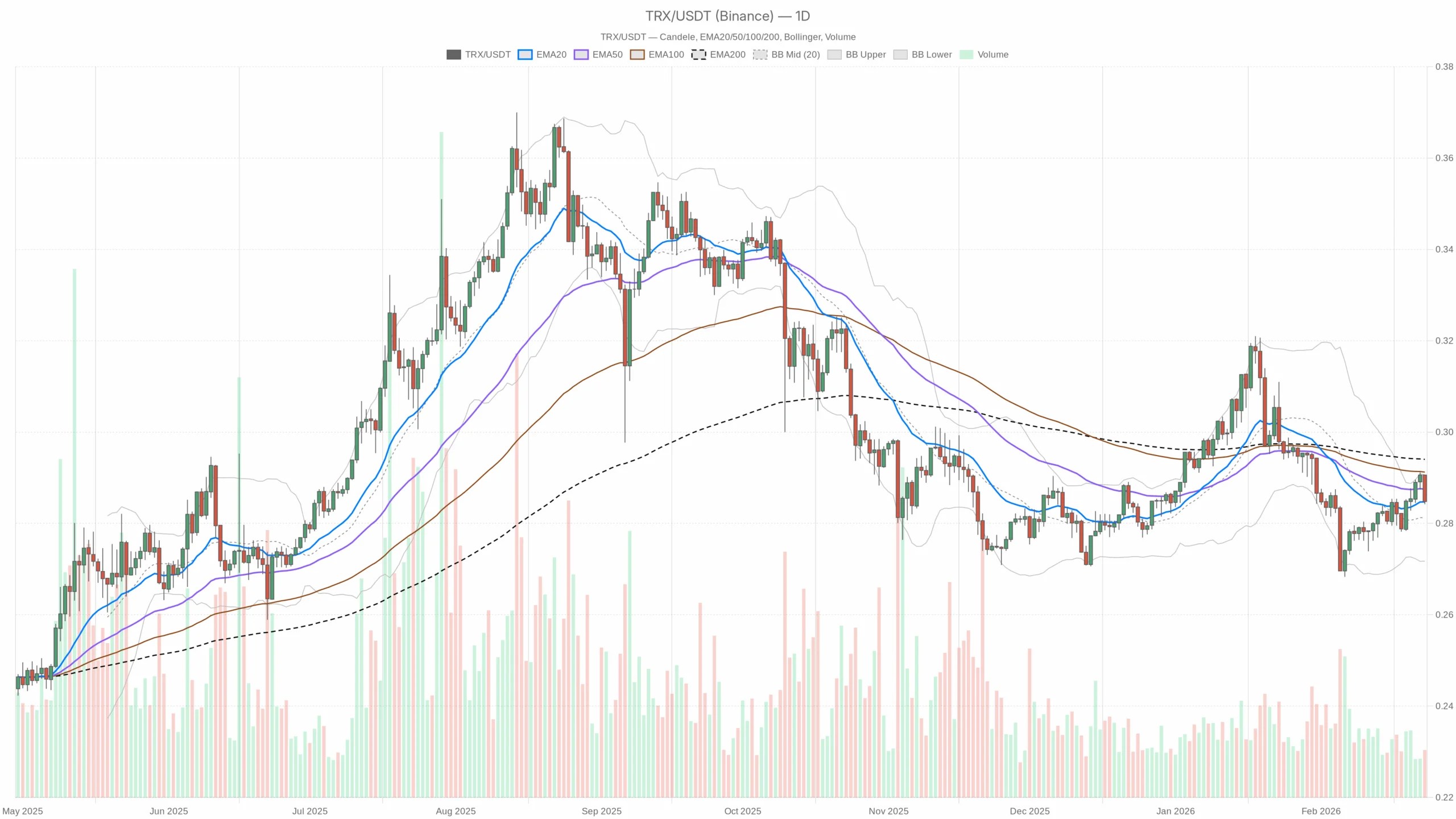
Tron crypto Analysis: 3 Scenarios for TRXUSDT

Tron crypto Analysis: 3 Scenarios for TRXUSDT

The post Tron crypto Analysis: 3 Scenarios for TRXUSDT appeared on BitcoinEthereumNews.com. While the broader crypto market leans risk‑off, Tron crypto (TRXUSDT
Share
BitcoinEthereumNews2026/02/24 02:33