The post Web3 is losing billions, still calling fraud a ‘user error’ appeared on BitcoinEthereumNews.com. Disclosure: The views and opinions expressed here belong solely to the author and do not represent the views and opinions of crypto.news’ editorial. In the first half of 2025 alone, the web3 industry lost over $3.1 billion to hacks, scams, and exploits, according to Hacken’s H1 2025 Security Report. Nearly $600 million (almost one in every five dollars) was drained by phishing and social engineering attacks. Summary In August 2025 alone, scams stole $12.7M from web3 users — far more than high-profile hacks — yet the industry still dismisses it as “user error.” TradFi protects consumers with fraud monitoring, alerts, and reimbursement. Web3 leaves victims holding the bill. Wallet-level safeguards, real-time detection, and automatic protections must be standard, not optional. Treating phishing as financial fraud — backed by insurance-like safety nets — is the only way to unlock mass retail and institutional participation. And the problem isn’t slowing down. In August 2025 alone, phishing scams stole more than $12.7 million from web3 users: not through complex exploits, but through simple deception. Fake links, spoofed sites, and malicious dApps continue to outpace user defenses. Yet despite this, the industry still focuses its attention elsewhere. High-profile protocol hacks dominate headlines, while phishing, responsible for nearly a fifth of all losses, is quietly normalized. It’s the biggest risk no one wants to take responsibility for. Here’s the hard truth: phishing is not a side problem. Until we stop dismissing it as “user error” and start treating it like financial fraud, we are actively sabotaging our own future. Phishing isn’t a user problem but an infrastructure failure In traditional finance, fraud prevention is built into the infrastructure. Banks automatically monitor unusual behavior, can place holds on transactions, and often protect the user by default with real-time alerts. If something goes wrong, there’s a process:… The post Web3 is losing billions, still calling fraud a ‘user error’ appeared on BitcoinEthereumNews.com. Disclosure: The views and opinions expressed here belong solely to the author and do not represent the views and opinions of crypto.news’ editorial. In the first half of 2025 alone, the web3 industry lost over $3.1 billion to hacks, scams, and exploits, according to Hacken’s H1 2025 Security Report. Nearly $600 million (almost one in every five dollars) was drained by phishing and social engineering attacks. Summary In August 2025 alone, scams stole $12.7M from web3 users — far more than high-profile hacks — yet the industry still dismisses it as “user error.” TradFi protects consumers with fraud monitoring, alerts, and reimbursement. Web3 leaves victims holding the bill. Wallet-level safeguards, real-time detection, and automatic protections must be standard, not optional. Treating phishing as financial fraud — backed by insurance-like safety nets — is the only way to unlock mass retail and institutional participation. And the problem isn’t slowing down. In August 2025 alone, phishing scams stole more than $12.7 million from web3 users: not through complex exploits, but through simple deception. Fake links, spoofed sites, and malicious dApps continue to outpace user defenses. Yet despite this, the industry still focuses its attention elsewhere. High-profile protocol hacks dominate headlines, while phishing, responsible for nearly a fifth of all losses, is quietly normalized. It’s the biggest risk no one wants to take responsibility for. Here’s the hard truth: phishing is not a side problem. Until we stop dismissing it as “user error” and start treating it like financial fraud, we are actively sabotaging our own future. Phishing isn’t a user problem but an infrastructure failure In traditional finance, fraud prevention is built into the infrastructure. Banks automatically monitor unusual behavior, can place holds on transactions, and often protect the user by default with real-time alerts. If something goes wrong, there’s a process:…

Web3 is losing billions, still calling fraud a ‘user error’

Disclosure: The views and opinions expressed here belong solely to the author and do not represent the views and opinions of crypto.news’ editorial.

In the first half of 2025 alone, the web3 industry lost over $3.1 billion to hacks, scams, and exploits, according to Hacken’s H1 2025 Security Report. Nearly $600 million (almost one in every five dollars) was drained by phishing and social engineering attacks.

Summary

  • In August 2025 alone, scams stole $12.7M from web3 users — far more than high-profile hacks — yet the industry still dismisses it as “user error.”
  • TradFi protects consumers with fraud monitoring, alerts, and reimbursement. Web3 leaves victims holding the bill.
  • Wallet-level safeguards, real-time detection, and automatic protections must be standard, not optional.
  • Treating phishing as financial fraud — backed by insurance-like safety nets — is the only way to unlock mass retail and institutional participation.

And the problem isn’t slowing down. In August 2025 alone, phishing scams stole more than $12.7 million from web3 users: not through complex exploits, but through simple deception. Fake links, spoofed sites, and malicious dApps continue to outpace user defenses.

Yet despite this, the industry still focuses its attention elsewhere. High-profile protocol hacks dominate headlines, while phishing, responsible for nearly a fifth of all losses, is quietly normalized. It’s the biggest risk no one wants to take responsibility for. Here’s the hard truth: phishing is not a side problem. Until we stop dismissing it as “user error” and start treating it like financial fraud, we are actively sabotaging our own future.

Phishing isn’t a user problem but an infrastructure failure

In traditional finance, fraud prevention is built into the infrastructure. Banks automatically monitor unusual behavior, can place holds on transactions, and often protect the user by default with real-time alerts. If something goes wrong, there’s a process: fraud departments investigate, insurance kicks in, and consumers often receive reimbursement.

In the U.S., Regulation E ensures consumers aren’t liable for unauthorized electronic transfers if reported promptly. Even Zelle, a peer-to-peer payment platform, has come under pressure from regulators and banks to reimburse fraud victims.

Crucially, what users care about isn’t whether their bank has perfect security systems — it’s that they’re never left holding the bill. Insurance, with near-instant reimbursement and no questions asked, is the real safety net. Security enables it, but insurance is what makes people trust the system. 

Web3, by contrast, leaves users to fend for themselves. Click the wrong link, sign a malicious transaction, and the industry shrugs: it’s your fault. This mindset is both unfair and unsustainable. When multi-million-dollar scams occur daily, it’s not luck — it’s broken infrastructure. Retail users shouldn’t need to be cybersecurity experts just to participate in a financial system. They just need to know the system has their back.

The industry’s obsession with “post-mortems”

Web3 security discourse is backward-looking. Smart contract audits, incident reports, and “never again” statements dominate discussions — but only after the damage is done. Audits can’t stop phishing emails. Post-mortems don’t protect wallets. Real-time prevention is missing.

What’s needed are systems that monitor transactions as they happen, analyze behavior in real time, and protect users automatically at the wallet level. These tools exist in various forms — transaction intent previews, malicious contract warnings, wallet-level safeguards — but adoption is fragmented, and protections remain optional rather than standard.

The industry must make these safeguards invisible, automatic, and universal.

Why phishing is killing adoption

It’s tempting to think phishing mostly affects unsophisticated retail users. But that mindset is exactly what’s holding web3 back.

Retail users understandably hesitate to engage in a system where one wrong click can wipe out their funds. Institutions won’t commit capital to markets that can’t meet basic fraud standards. Even large exchanges and custodians cite security risks as a barrier to institutional entry.

Phishing isn’t just a security issue — it’s a bottleneck for adoption. Ignoring it undermines the ecosystem’s future.

TradFi shows the model, web3 should lead

Traditional finance isn’t perfect, but it understands that fraud is a systemic threat. ​​Suspicious transactions are flagged, users are notified automatically, and there are established processes for investigation and reimbursement. These are standard expectations, not optional features.

What’s frustrating is that web3 actually has better tools available. We have programmable infrastructure. We have full transparency on-chain. We have the ability to build real-time analytics into the core of the system.

And yet, despite this, the industry continues to lag behind traditional finance instead of leading the way.

Treating phishing as fraud is existential

The line between mainstream adoption and continued stagnation isn’t about faster blockchains — it’s about trust. Right now, users don’t feel safe.

Until phishing is treated as financial fraud, losses will continue. Real-time detection must be built into the transaction layer. Wallet protections must be proactive, not reactive. Users must know that the system itself is protecting them.

Fraud prevention isn’t the end goal — fearless user experience is. Security is the enabler, but insurance is the promise: a guarantee that no matter what happens, users won’t be ruined. That’s the foundation of adoption.

The path forward

Audits, education, and blaming users won’t solve this. We must design our way out. Fraud detection and protection need to be built directly into the infrastructure. These systems should work automatically, behind the scenes, and without requiring user awareness. After all, bank customers don’t need to read code to verify a transaction. Web3 users shouldn’t have to either.

The defining question for web3’s future is simple: do users trust that their funds are safe? Right now, the answer is no. Phishing isn’t a footnote — it’s the headline; it’s time the industry treats it that way.

Alex Katz

Alex Katz is the CEO of Kerberus. Alex brings operational discipline from his years directing global marketing initiatives and scaling international teams. His background in financial markets and digital growth informs Kerberus’ strategic development, ensuring our security solutions meet enterprise standards while remaining accessible to individual users.

Source: https://crypto.news/web3-losing-billions-still-calling-fraud-a-user-error/

Market Opportunity
Notcoin Logo
Notcoin Price(NOT)
$0.0004148
$0.0004148$0.0004148
-0.14%
USD
Notcoin (NOT) Live Price Chart
Disclaimer: The articles reposted on this site are sourced from public platforms and are provided for informational purposes only. They do not necessarily reflect the views of MEXC. All rights remain with the original authors. If you believe any content infringes on third-party rights, please contact service@support.mexc.com for removal. MEXC makes no guarantees regarding the accuracy, completeness, or timeliness of the content and is not responsible for any actions taken based on the information provided. The content does not constitute financial, legal, or other professional advice, nor should it be considered a recommendation or endorsement by MEXC.

You May Also Like

CME Group to Launch Solana and XRP Futures Options

CME Group to Launch Solana and XRP Futures Options

The post CME Group to Launch Solana and XRP Futures Options appeared on BitcoinEthereumNews.com. An announcement was made by CME Group, the largest derivatives exchanger worldwide, revealed that it would introduce options for Solana and XRP futures. It is the latest addition to CME crypto derivatives as institutions and retail investors increase their demand for Solana and XRP. CME Expands Crypto Offerings With Solana and XRP Options Launch According to a press release, the launch is scheduled for October 13, 2025, pending regulatory approval. The new products will allow traders to access options on Solana, Micro Solana, XRP, and Micro XRP futures. Expiries will be offered on business days on a monthly, and quarterly basis to provide more flexibility to market players. CME Group said the contracts are designed to meet demand from institutions, hedge funds, and active retail traders. According to Giovanni Vicioso, the launch reflects high liquidity in Solana and XRP futures. Vicioso is the Global Head of Cryptocurrency Products for the CME Group. He noted that the new contracts will provide additional tools for risk management and exposure strategies. Recently, CME XRP futures registered record open interest amid ETF approval optimism, reinforcing confidence in contract demand. Cumberland, one of the leading liquidity providers, welcomed the development and said it highlights the shift beyond Bitcoin and Ethereum. FalconX, another trading firm, added that rising digital asset treasuries are increasing the need for hedging tools on alternative tokens like Solana and XRP. High Record Trading Volumes Demand Solana and XRP Futures Solana futures and XRP continue to gain popularity since their launch earlier this year. According to CME official records, many have bought and sold more than 540,000 Solana futures contracts since March. A value that amounts to over $22 billion dollars. Solana contracts hit a record 9,000 contracts in August, worth $437 million. Open interest also set a record at 12,500 contracts.…
Share
BitcoinEthereumNews2025/09/18 01:39
China Blocks Nvidia’s RTX Pro 6000D as Local Chips Rise

China Blocks Nvidia’s RTX Pro 6000D as Local Chips Rise

The post China Blocks Nvidia’s RTX Pro 6000D as Local Chips Rise appeared on BitcoinEthereumNews.com. China Blocks Nvidia’s RTX Pro 6000D as Local Chips Rise China’s internet regulator has ordered the country’s biggest technology firms, including Alibaba and ByteDance, to stop purchasing Nvidia’s RTX Pro 6000D GPUs. According to the Financial Times, the move shuts down the last major channel for mass supplies of American chips to the Chinese market. Why Beijing Halted Nvidia Purchases Chinese companies had planned to buy tens of thousands of RTX Pro 6000D accelerators and had already begun testing them in servers. But regulators intervened, halting the purchases and signaling stricter controls than earlier measures placed on Nvidia’s H20 chip. Image: Nvidia An audit compared Huawei and Cambricon processors, along with chips developed by Alibaba and Baidu, against Nvidia’s export-approved products. Regulators concluded that Chinese chips had reached performance levels comparable to the restricted U.S. models. This assessment pushed authorities to advise firms to rely more heavily on domestic processors, further tightening Nvidia’s already limited position in China. China’s Drive Toward Tech Independence The decision highlights Beijing’s focus on import substitution — developing self-sufficient chip production to reduce reliance on U.S. supplies. “The signal is now clear: all attention is focused on building a domestic ecosystem,” said a representative of a leading Chinese tech company. Nvidia had unveiled the RTX Pro 6000D in July 2025 during CEO Jensen Huang’s visit to Beijing, in an attempt to keep a foothold in China after Washington restricted exports of its most advanced chips. But momentum is shifting. Industry sources told the Financial Times that Chinese manufacturers plan to triple AI chip production next year to meet growing demand. They believe “domestic supply will now be sufficient without Nvidia.” What It Means for the Future With Huawei, Cambricon, Alibaba, and Baidu stepping up, China is positioning itself for long-term technological independence. Nvidia, meanwhile, faces…
Share
BitcoinEthereumNews2025/09/18 01:37
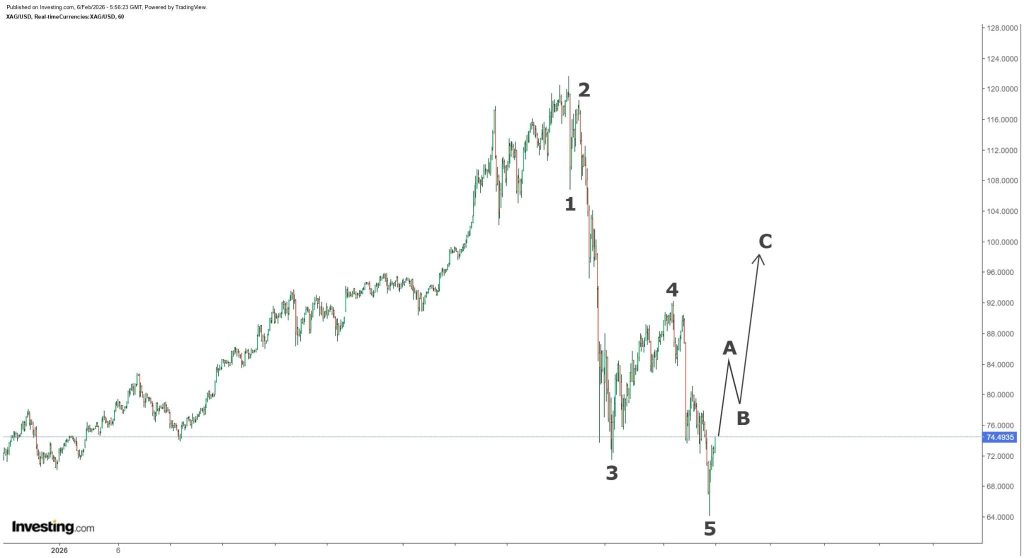
Silver Price Crash Is Over “For Real This Time,” Analyst Predicts a Surge Back Above $90

Silver Price Crash Is Over “For Real This Time,” Analyst Predicts a Surge Back Above $90

Silver has been taking a beating lately, and the Silver price hasn’t exactly been acting like a safe haven. After running up into the highs, the whole move reversed
Share
Captainaltcoin2026/02/07 03:15