The post European Blockchain Sandbox Advances Privacy-Preserving KYC Solutions appeared on BitcoinEthereumNews.com. Timothy Morano Oct 09, 2025 17:26 The European Blockchain Sandbox, featuring IOTA Foundation’s Tokenized KYC Solution, reveals insights on compliant identity verification in Web3, as shared by IOTA Blog. The European Blockchain Sandbox has successfully wrapped up its second cohort, showcasing the IOTA Foundation’s innovative Tokenized Know Your Customer (KYC) Solution. This initiative, part of a three-year project by the European Commission, allows distributed ledger projects to test their solutions with European regulators, according to IOTA Blog. Building a Web3 Identity Solution The sandbox, which ran from June 2024 to March 2025, included 20 projects, among which the IOTA Foundation’s solution stood out. Developed in collaboration with IDnow, walt.id, and Bloom Wallet, the Tokenized KYC Solution facilitates off-chain identity verification. Users receive a tokenized proof in their wallet, enabling decentralized applications (dApps), exchanges, and other services to confirm eligibility without revealing sensitive on-chain data. Key Takeaways from the Sandbox One significant focus was the implementation of Anti-Money Laundering (AML) and KYC regulations. The sandbox emphasized the legal obligations of crypto-asset exchanges to verify user identities. The Tokenized KYC Solution allows the responsible entity to access verified personal data from the identity provider, IDnow, while ensuring authorities can request personal data linked to a soulbound token. The sandbox also explored the reuse of KYC data collected by other entities, a practice with varying rules across Europe. The forthcoming Anti-Money Laundering Regulation (AMLR) aims to harmonize these rules, facilitating the use of customer information across different entities. Soulbound Tokens and Data Classification The sandbox highlighted the classification of data on public permissionless distributed ledger technologies (DLTs) like IOTA. In the Tokenized KYC Solution, only soulbound tokens, which do not contain personal data, are recorded on-chain. These tokens indicate the completion of the KYC process,… The post European Blockchain Sandbox Advances Privacy-Preserving KYC Solutions appeared on BitcoinEthereumNews.com. Timothy Morano Oct 09, 2025 17:26 The European Blockchain Sandbox, featuring IOTA Foundation’s Tokenized KYC Solution, reveals insights on compliant identity verification in Web3, as shared by IOTA Blog. The European Blockchain Sandbox has successfully wrapped up its second cohort, showcasing the IOTA Foundation’s innovative Tokenized Know Your Customer (KYC) Solution. This initiative, part of a three-year project by the European Commission, allows distributed ledger projects to test their solutions with European regulators, according to IOTA Blog. Building a Web3 Identity Solution The sandbox, which ran from June 2024 to March 2025, included 20 projects, among which the IOTA Foundation’s solution stood out. Developed in collaboration with IDnow, walt.id, and Bloom Wallet, the Tokenized KYC Solution facilitates off-chain identity verification. Users receive a tokenized proof in their wallet, enabling decentralized applications (dApps), exchanges, and other services to confirm eligibility without revealing sensitive on-chain data. Key Takeaways from the Sandbox One significant focus was the implementation of Anti-Money Laundering (AML) and KYC regulations. The sandbox emphasized the legal obligations of crypto-asset exchanges to verify user identities. The Tokenized KYC Solution allows the responsible entity to access verified personal data from the identity provider, IDnow, while ensuring authorities can request personal data linked to a soulbound token. The sandbox also explored the reuse of KYC data collected by other entities, a practice with varying rules across Europe. The forthcoming Anti-Money Laundering Regulation (AMLR) aims to harmonize these rules, facilitating the use of customer information across different entities. Soulbound Tokens and Data Classification The sandbox highlighted the classification of data on public permissionless distributed ledger technologies (DLTs) like IOTA. In the Tokenized KYC Solution, only soulbound tokens, which do not contain personal data, are recorded on-chain. These tokens indicate the completion of the KYC process,…

European Blockchain Sandbox Advances Privacy-Preserving KYC Solutions


Timothy Morano
Oct 09, 2025 17:26

The European Blockchain Sandbox, featuring IOTA Foundation’s Tokenized KYC Solution, reveals insights on compliant identity verification in Web3, as shared by IOTA Blog.



European Blockchain Sandbox Advances Privacy-Preserving KYC Solutions

The European Blockchain Sandbox has successfully wrapped up its second cohort, showcasing the IOTA Foundation’s innovative Tokenized Know Your Customer (KYC) Solution. This initiative, part of a three-year project by the European Commission, allows distributed ledger projects to test their solutions with European regulators, according to IOTA Blog.

Building a Web3 Identity Solution

The sandbox, which ran from June 2024 to March 2025, included 20 projects, among which the IOTA Foundation’s solution stood out. Developed in collaboration with IDnow, walt.id, and Bloom Wallet, the Tokenized KYC Solution facilitates off-chain identity verification. Users receive a tokenized proof in their wallet, enabling decentralized applications (dApps), exchanges, and other services to confirm eligibility without revealing sensitive on-chain data.

Key Takeaways from the Sandbox

One significant focus was the implementation of Anti-Money Laundering (AML) and KYC regulations. The sandbox emphasized the legal obligations of crypto-asset exchanges to verify user identities. The Tokenized KYC Solution allows the responsible entity to access verified personal data from the identity provider, IDnow, while ensuring authorities can request personal data linked to a soulbound token.

The sandbox also explored the reuse of KYC data collected by other entities, a practice with varying rules across Europe. The forthcoming Anti-Money Laundering Regulation (AMLR) aims to harmonize these rules, facilitating the use of customer information across different entities.

Soulbound Tokens and Data Classification

The sandbox highlighted the classification of data on public permissionless distributed ledger technologies (DLTs) like IOTA. In the Tokenized KYC Solution, only soulbound tokens, which do not contain personal data, are recorded on-chain. These tokens indicate the completion of the KYC process, with data stored securely off-chain. Despite this, such tokens are treated as pseudonymized personal data under GDPR, necessitating ongoing review and compliance.

Implications for Wallet Providers and Node Operators

The sandbox examined the GDPR classification of wallet providers and node operators. Self-hosted wallet providers, which operate solely on a user’s device, are not considered data controllers or processors. This aligns with GDPR, as responsibility for personal data lies with entities accessing or using it, such as IDnow for verification.

Node operators, performing only technical functions, should not be treated as controllers. The Tokenized KYC Solution supports this view, as verified identity data remains off-chain, and nodes merely relay pseudonymized attestations without accessing identity data.

Future Prospects for Tokenized KYC

New regulations, including the Transfer of Funds Regulation, require cryptoasset exchanges to hold data about self-hosted wallet users. There is a growing need for on-chain identification tools that ensure compliance while maintaining privacy. The IOTA Foundation’s solution integrates identity verification into a soulbound token, allowing for secure and private interactions within Web3 ecosystems.

The IOTA Trust Framework, developed alongside the rebased IOTA Mainnet, further supports privacy and compliance. This suite of infrastructure components is designed to facilitate solutions like the Tokenized KYC Solution.

The IOTA Foundation expresses gratitude to IDnow, walt.id, and Bloom Wallet for their collaboration, demonstrating an effective, privacy-preserving solution for the Web3 space.

For more information, visit the IOTA Blog.

Image source: Shutterstock


Source: https://blockchain.news/news/european-blockchain-sandbox-advances-privacy-preserving-kyc-solutions

Market Opportunity
Omnity Network Logo
Omnity Network Price(OCT)
$0.006572
$0.006572$0.006572
+2.19%
USD
Omnity Network (OCT) Live Price Chart
Disclaimer: The articles reposted on this site are sourced from public platforms and are provided for informational purposes only. They do not necessarily reflect the views of MEXC. All rights remain with the original authors. If you believe any content infringes on third-party rights, please contact service@support.mexc.com for removal. MEXC makes no guarantees regarding the accuracy, completeness, or timeliness of the content and is not responsible for any actions taken based on the information provided. The content does not constitute financial, legal, or other professional advice, nor should it be considered a recommendation or endorsement by MEXC.

You May Also Like

CME Group to Launch Solana and XRP Futures Options

CME Group to Launch Solana and XRP Futures Options

The post CME Group to Launch Solana and XRP Futures Options appeared on BitcoinEthereumNews.com. An announcement was made by CME Group, the largest derivatives exchanger worldwide, revealed that it would introduce options for Solana and XRP futures. It is the latest addition to CME crypto derivatives as institutions and retail investors increase their demand for Solana and XRP. CME Expands Crypto Offerings With Solana and XRP Options Launch According to a press release, the launch is scheduled for October 13, 2025, pending regulatory approval. The new products will allow traders to access options on Solana, Micro Solana, XRP, and Micro XRP futures. Expiries will be offered on business days on a monthly, and quarterly basis to provide more flexibility to market players. CME Group said the contracts are designed to meet demand from institutions, hedge funds, and active retail traders. According to Giovanni Vicioso, the launch reflects high liquidity in Solana and XRP futures. Vicioso is the Global Head of Cryptocurrency Products for the CME Group. He noted that the new contracts will provide additional tools for risk management and exposure strategies. Recently, CME XRP futures registered record open interest amid ETF approval optimism, reinforcing confidence in contract demand. Cumberland, one of the leading liquidity providers, welcomed the development and said it highlights the shift beyond Bitcoin and Ethereum. FalconX, another trading firm, added that rising digital asset treasuries are increasing the need for hedging tools on alternative tokens like Solana and XRP. High Record Trading Volumes Demand Solana and XRP Futures Solana futures and XRP continue to gain popularity since their launch earlier this year. According to CME official records, many have bought and sold more than 540,000 Solana futures contracts since March. A value that amounts to over $22 billion dollars. Solana contracts hit a record 9,000 contracts in August, worth $437 million. Open interest also set a record at 12,500 contracts.…
Share
BitcoinEthereumNews2025/09/18 01:39
China Blocks Nvidia’s RTX Pro 6000D as Local Chips Rise

China Blocks Nvidia’s RTX Pro 6000D as Local Chips Rise

The post China Blocks Nvidia’s RTX Pro 6000D as Local Chips Rise appeared on BitcoinEthereumNews.com. China Blocks Nvidia’s RTX Pro 6000D as Local Chips Rise China’s internet regulator has ordered the country’s biggest technology firms, including Alibaba and ByteDance, to stop purchasing Nvidia’s RTX Pro 6000D GPUs. According to the Financial Times, the move shuts down the last major channel for mass supplies of American chips to the Chinese market. Why Beijing Halted Nvidia Purchases Chinese companies had planned to buy tens of thousands of RTX Pro 6000D accelerators and had already begun testing them in servers. But regulators intervened, halting the purchases and signaling stricter controls than earlier measures placed on Nvidia’s H20 chip. Image: Nvidia An audit compared Huawei and Cambricon processors, along with chips developed by Alibaba and Baidu, against Nvidia’s export-approved products. Regulators concluded that Chinese chips had reached performance levels comparable to the restricted U.S. models. This assessment pushed authorities to advise firms to rely more heavily on domestic processors, further tightening Nvidia’s already limited position in China. China’s Drive Toward Tech Independence The decision highlights Beijing’s focus on import substitution — developing self-sufficient chip production to reduce reliance on U.S. supplies. “The signal is now clear: all attention is focused on building a domestic ecosystem,” said a representative of a leading Chinese tech company. Nvidia had unveiled the RTX Pro 6000D in July 2025 during CEO Jensen Huang’s visit to Beijing, in an attempt to keep a foothold in China after Washington restricted exports of its most advanced chips. But momentum is shifting. Industry sources told the Financial Times that Chinese manufacturers plan to triple AI chip production next year to meet growing demand. They believe “domestic supply will now be sufficient without Nvidia.” What It Means for the Future With Huawei, Cambricon, Alibaba, and Baidu stepping up, China is positioning itself for long-term technological independence. Nvidia, meanwhile, faces…
Share
BitcoinEthereumNews2025/09/18 01:37
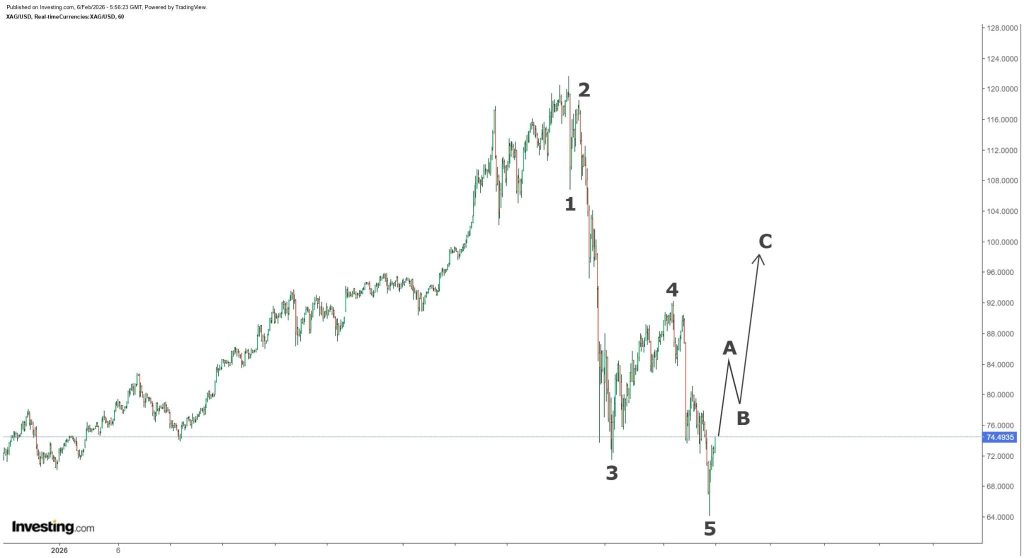
Silver Price Crash Is Over “For Real This Time,” Analyst Predicts a Surge Back Above $90

Silver Price Crash Is Over “For Real This Time,” Analyst Predicts a Surge Back Above $90

Silver has been taking a beating lately, and the Silver price hasn’t exactly been acting like a safe haven. After running up into the highs, the whole move reversed
Share
Captainaltcoin2026/02/07 03:15