Investors have piled into Solana-linked products and on-chain cash, pushing the network back into the spotlight. Based on reports, the total supply of stablecoins sitting on Solana recently climbed to about $15 billion, a new peak that traders say is adding fuel to activity on the chain. Related Reading: 2%–4% In Crypto? Morgan Stanley Thinks That’s The Smart Move Now Stablecoin Liquidity Hits A Milestone The bulk of that supply is held in USDC, which accounts for roughly 75% of stablecoins on Solana, according to analytics cited by market commentators. That concentration has helped trading desks and decentralized apps move larger sums with less friction than on some rival chains. On top of the on-chain cash, US-listed ETFs tied to Solana and related products have recorded fast early takeup, giving institutions a simpler route into the token and staking rewards. The REX-Osprey SOL + Staking ETF, known by the ticker SSK, passed the $100 million AUM mark within days of launch, showing how appetite for regulated access to Solana can materialize quickly. ETFs Bring Fresh Flows And Visibility Reports show that REX-Osprey’s suite of crypto ETFs has now crossed half a billion dollars in combined assets under management, a sign that product innovation on Wall Street is translating into real capital flows into the sector. Market watchers say ETFs let big investors get exposure without interacting directly with wallets and custody solutions. Network Upgrades, Use Cases Part Of The Move Observers point to recent code upgrades and faster settlement as part of why more stablecoins are parked on Solana. Those changes aim to reduce delays and lower costs for traders who move USDC and other dollar-pegged tokens. Although technical gains in and of itself do not produce price movement, they can enhance a network’s attractiveness for high-frequency activity and for projects focused on tokenized assets that require transaction finality. Related Reading: Bitcoin Breaks $123,000 As Rising Open Interest Signals More Action Ahead Regulatory Framework Remains Relevant Regulation and approvals in the United States have influenced this impulse. Asset managers have filed for Solana ETFs and modified their necessary paperwork with the SEC while awaiting permits to list a product tied to the token. According to a recent reports, multiple firms have updated their submissions while the regulator is still reviewing. The broader political backdrop, including comments from US President Donald Trump and others, has kept attention on how policy could tilt institutional demand. Featured image from Unsplash, chart from TradingViewInvestors have piled into Solana-linked products and on-chain cash, pushing the network back into the spotlight. Based on reports, the total supply of stablecoins sitting on Solana recently climbed to about $15 billion, a new peak that traders say is adding fuel to activity on the chain. Related Reading: 2%–4% In Crypto? Morgan Stanley Thinks That’s The Smart Move Now Stablecoin Liquidity Hits A Milestone The bulk of that supply is held in USDC, which accounts for roughly 75% of stablecoins on Solana, according to analytics cited by market commentators. That concentration has helped trading desks and decentralized apps move larger sums with less friction than on some rival chains. On top of the on-chain cash, US-listed ETFs tied to Solana and related products have recorded fast early takeup, giving institutions a simpler route into the token and staking rewards. The REX-Osprey SOL + Staking ETF, known by the ticker SSK, passed the $100 million AUM mark within days of launch, showing how appetite for regulated access to Solana can materialize quickly. ETFs Bring Fresh Flows And Visibility Reports show that REX-Osprey’s suite of crypto ETFs has now crossed half a billion dollars in combined assets under management, a sign that product innovation on Wall Street is translating into real capital flows into the sector. Market watchers say ETFs let big investors get exposure without interacting directly with wallets and custody solutions. Network Upgrades, Use Cases Part Of The Move Observers point to recent code upgrades and faster settlement as part of why more stablecoins are parked on Solana. Those changes aim to reduce delays and lower costs for traders who move USDC and other dollar-pegged tokens. Although technical gains in and of itself do not produce price movement, they can enhance a network’s attractiveness for high-frequency activity and for projects focused on tokenized assets that require transaction finality. Related Reading: Bitcoin Breaks $123,000 As Rising Open Interest Signals More Action Ahead Regulatory Framework Remains Relevant Regulation and approvals in the United States have influenced this impulse. Asset managers have filed for Solana ETFs and modified their necessary paperwork with the SEC while awaiting permits to list a product tied to the token. According to a recent reports, multiple firms have updated their submissions while the regulator is still reviewing. The broader political backdrop, including comments from US President Donald Trump and others, has kept attention on how policy could tilt institutional demand. Featured image from Unsplash, chart from TradingView

All Eyes On Solana: $15-B Stablecoin Supply, ETF Demand Drive Next Leg Up

2025/10/07 06:30

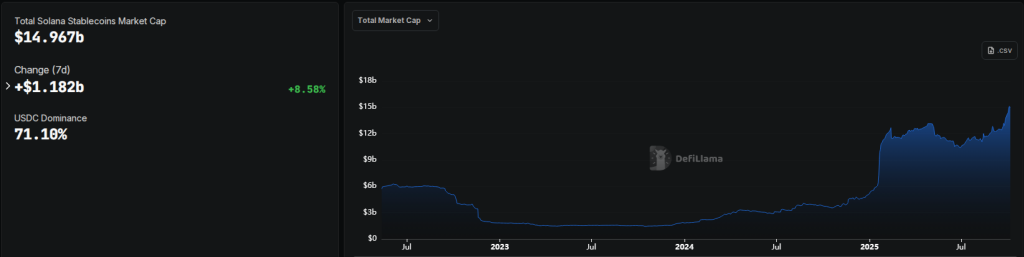
Investors have piled into Solana-linked products and on-chain cash, pushing the network back into the spotlight. Based on reports, the total supply of stablecoins sitting on Solana recently climbed to about $15 billion, a new peak that traders say is adding fuel to activity on the chain.

Stablecoin Liquidity Hits A Milestone

The bulk of that supply is held in USDC, which accounts for roughly 75% of stablecoins on Solana, according to analytics cited by market commentators. That concentration has helped trading desks and decentralized apps move larger sums with less friction than on some rival chains.

On top of the on-chain cash, US-listed ETFs tied to Solana and related products have recorded fast early takeup, giving institutions a simpler route into the token and staking rewards.

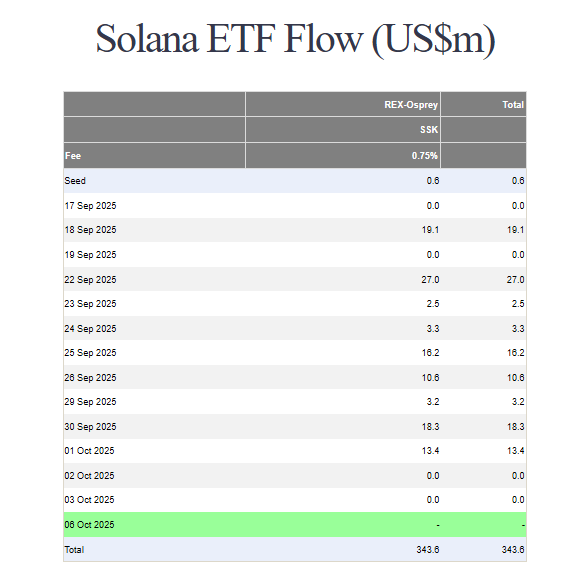
The REX-Osprey SOL + Staking ETF, known by the ticker SSK, passed the $100 million AUM mark within days of launch, showing how appetite for regulated access to Solana can materialize quickly.
ETFs Bring Fresh Flows And Visibility

Reports show that REX-Osprey’s suite of crypto ETFs has now crossed half a billion dollars in combined assets under management, a sign that product innovation on Wall Street is translating into real capital flows into the sector.

Market watchers say ETFs let big investors get exposure without interacting directly with wallets and custody solutions.
Network Upgrades, Use Cases Part Of The Move

Observers point to recent code upgrades and faster settlement as part of why more stablecoins are parked on Solana. Those changes aim to reduce delays and lower costs for traders who move USDC and other dollar-pegged tokens.

Although technical gains in and of itself do not produce price movement, they can enhance a network’s attractiveness for high-frequency activity and for projects focused on tokenized assets that require transaction finality.

Regulatory Framework Remains Relevant

Regulation and approvals in the United States have influenced this impulse. Asset managers have filed for Solana ETFs and modified their necessary paperwork with the SEC while awaiting permits to list a product tied to the token.

According to a recent reports, multiple firms have updated their submissions while the regulator is still reviewing.

The broader political backdrop, including comments from US President Donald Trump and others, has kept attention on how policy could tilt institutional demand.

Featured image from Unsplash, chart from TradingView

Market Opportunity
B Logo
B Price(B)
$0.18429
$0.18429$0.18429
-0.64%
USD
B (B) Live Price Chart
Disclaimer: The articles reposted on this site are sourced from public platforms and are provided for informational purposes only. They do not necessarily reflect the views of MEXC. All rights remain with the original authors. If you believe any content infringes on third-party rights, please contact service@support.mexc.com for removal. MEXC makes no guarantees regarding the accuracy, completeness, or timeliness of the content and is not responsible for any actions taken based on the information provided. The content does not constitute financial, legal, or other professional advice, nor should it be considered a recommendation or endorsement by MEXC.

You May Also Like

Shocking OpenVPP Partnership Claim Draws Urgent Scrutiny

Shocking OpenVPP Partnership Claim Draws Urgent Scrutiny

The post Shocking OpenVPP Partnership Claim Draws Urgent Scrutiny appeared on BitcoinEthereumNews.com. The cryptocurrency world is buzzing with a recent controversy surrounding a bold OpenVPP partnership claim. This week, OpenVPP (OVPP) announced what it presented as a significant collaboration with the U.S. government in the innovative field of energy tokenization. However, this claim quickly drew the sharp eye of on-chain analyst ZachXBT, who highlighted a swift and official rebuttal that has sent ripples through the digital asset community. What Sparked the OpenVPP Partnership Claim Controversy? The core of the issue revolves around OpenVPP’s assertion of a U.S. government partnership. This kind of collaboration would typically be a monumental endorsement for any private cryptocurrency project, especially given the current regulatory climate. Such a partnership could signify a new era of mainstream adoption and legitimacy for energy tokenization initiatives. OpenVPP initially claimed cooperation with the U.S. government. This alleged partnership was said to be in the domain of energy tokenization. The announcement generated considerable interest and discussion online. ZachXBT, known for his diligent on-chain investigations, was quick to flag the development. He brought attention to the fact that U.S. Securities and Exchange Commission (SEC) Commissioner Hester Peirce had directly addressed the OpenVPP partnership claim. Her response, delivered within hours, was unequivocal and starkly contradicted OpenVPP’s narrative. How Did Regulatory Authorities Respond to the OpenVPP Partnership Claim? Commissioner Hester Peirce’s statement was a crucial turning point in this unfolding story. She clearly stated that the SEC, as an agency, does not engage in partnerships with private cryptocurrency projects. This response effectively dismantled the credibility of OpenVPP’s initial announcement regarding their supposed government collaboration. Peirce’s swift clarification underscores a fundamental principle of regulatory bodies: maintaining impartiality and avoiding endorsements of private entities. Her statement serves as a vital reminder to the crypto community about the official stance of government agencies concerning private ventures. Moreover, ZachXBT’s analysis…
Share
BitcoinEthereumNews2025/09/18 02:13
Telos Advisers Welcomes Stephen Gardner as a Strategic Advisory Board Member
Telos Advisers Welcomes Stephen Gardner as a Strategic Advisory Board Member

Former Amtrak CEO brings more than 25 years of leadership experience in rail, infrastructure delivery, and national transportation policy NEWARK, N.J.–(BUSINESS
Share
AI Journal2026/02/03 02:16
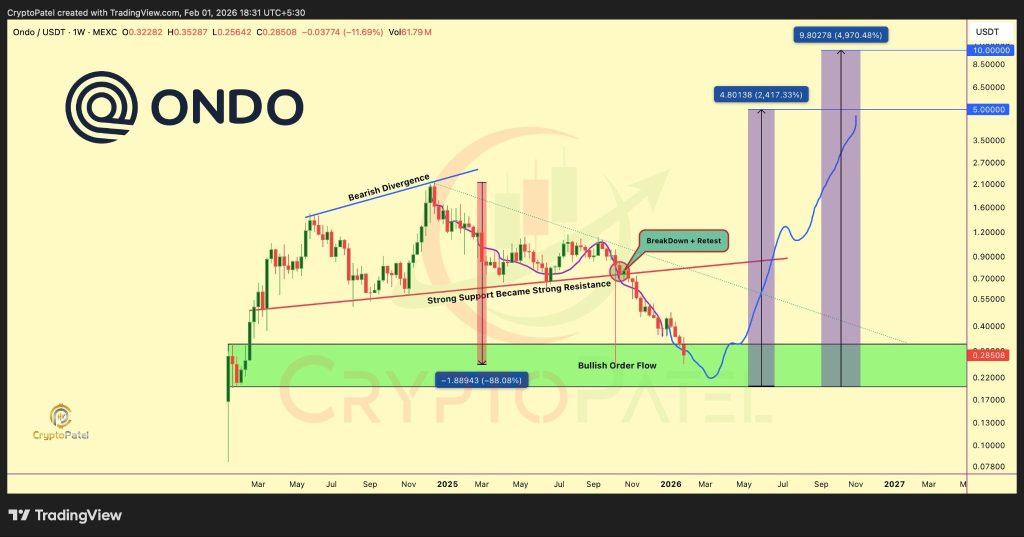
ONDO Price Crashes 88% From All-Time Highs, But Analyst Says ‘Last Hope’ Zone Is Here

ONDO Price Crashes 88% From All-Time Highs, But Analyst Says ‘Last Hope’ Zone Is Here

The ONDO price has drifted into a part of the chart that usually gets traders paying attention. After months of downside, the price is now sitting inside a zone
Share
Captainaltcoin2026/02/03 02:30
