

Abracadabra Stablecoin Drop Forces Emergency Mode as MIM Hits $0.49
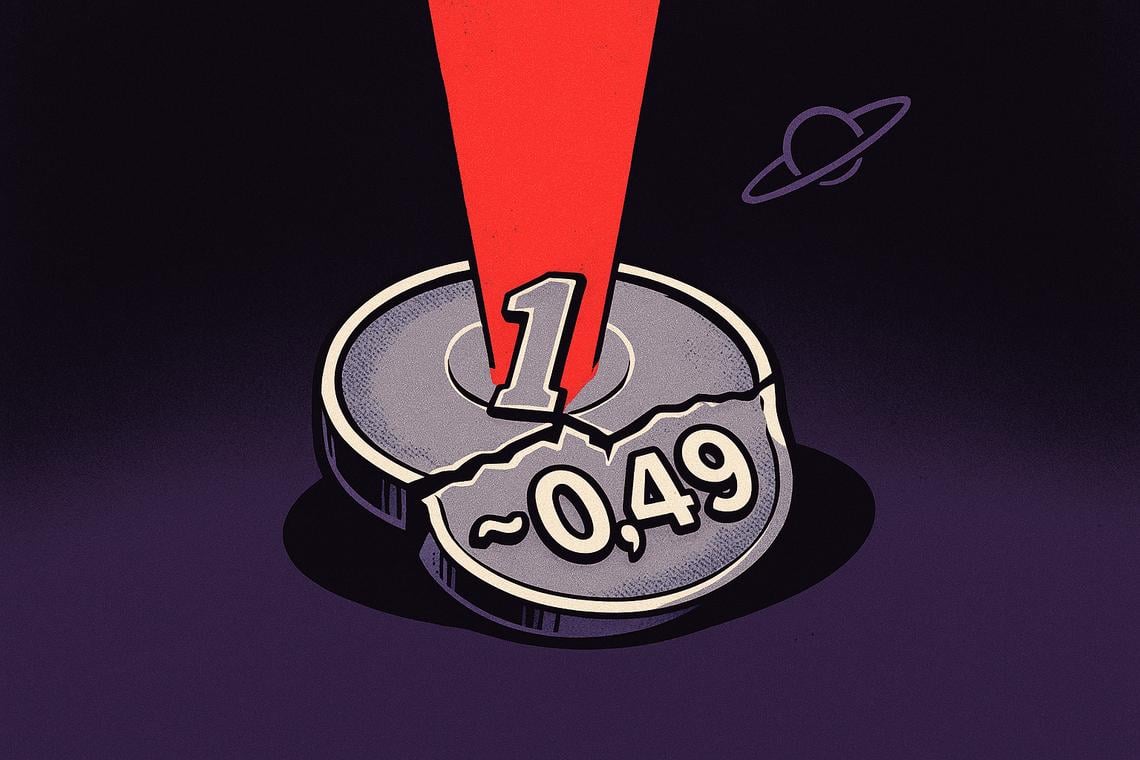
Abracadabra’s stablecoin has done something a stablecoin should never do — it collapsed. MIM, the dollar-pegged token at the center of Abracadabra’s DeFi lending ecosystem, plunged to around $0.49 this week, wiping out more than half its intended value and forcing the protocol into emergency mode.
Key takeaways
- MIM dropped to approximately $0.49, losing more than 50% of its $1 peg.
- The price slide followed a pattern: first to $0.74, a brief recovery to $0.89, then a sharp crash.
- Abracadabra raised interest rates across all Cauldrons and paused Curve liquidity incentives as emergency measures.
- A $100,000 liquidity injection into Curve on June 15 failed to hold the peg.
- Thin and imbalanced Curve Finance pools are identified as the root cause of the depeg.
Abracadabra’s MIM Stablecoin Plummets to 49 Cents
The collapse did not happen overnight. MIM first slipped to $0.74 in mid-June, prompting concern but not yet panic. The token briefly clawed back to $0.89, raising hopes of a natural recovery. Those hopes evaporated fast. Within days, the price fell sharply again — this time all the way to $0.49, according to CoinMarketCap data.
That kind of price path, a partial recovery followed by a deeper crash, is one of the more dangerous patterns in DeFi. It signals that whatever propped the price up the first time was not structural, and that the underlying pressure never really went away.
Initial Price Declines and Circulating Supply
The scale of the problem is not small. With a circulating supply of roughly $104 million, MIM is not a micro-cap experiment. A stablecoin of that size trading near 49 cents creates real losses for holders and borrowers across the protocol. It also puts collateral positions under stress and complicates the math for anyone who borrowed MIM expecting it to stay close to a dollar.
Broader market conditions did not help. Bitcoin dropped below $60,000 for the second time in June, setting off over $850 million in liquidations across crypto markets. That kind of macro pressure hits DeFi protocols hard, especially those whose collateral values and liquidity depend on stable market conditions.
Emergency Measures to Restore MIM’s $1 Peg
Abracadabra moved quickly once the second crash hit, rolling out a set of emergency measures aimed at contracting MIM supply and restoring the $1 peg through borrower behavior rather than direct market intervention.
Raising Interest Rates Across Cauldrons
The most significant lever the protocol pulled was raising interest rates across all of its Cauldrons — the lending markets where users deposit collateral and borrow MIM. Higher rates make it progressively more expensive to sit on open debt. The logic is straightforward: if holding a borrow position gets costly enough, borrowers close those positions, repay MIM, and that repaid MIM gets burned. Fewer tokens in circulation means less downward pressure on the price. The rate hikes cover both active markets and older, deprecated ones. No fixed end date has been set for the emergency measures.
Pausing Curve Bribes and Liquidity Incentives
Alongside the rate hikes, Abracadabra also paused Curve bribes and liquidity incentives until MIM returns to its peg. That is a meaningful strategic shift. Rather than continuing to reward liquidity providers in a broken market — which can actually create inefficient incentive flows without fixing the underlying imbalance — the protocol is choosing to redirect that pressure toward supply reduction instead.
The pause signals that the team sees the problem as structural, not just a short-term liquidity gap that more incentives can paper over.
Borrower Incentives and Liquidity Challenges
One of the more quietly effective mechanisms now in play is the discount repayment window. Because MIM trades well below $1, borrowers can buy it cheaply on the open market and use it to repay their debt at face value. That gap between what MIM costs to acquire and what it cancels in debt creates a direct financial incentive to close positions now rather than later.
Discount Repayment Mechanism
Abracadabra described this as a “natural incentive” for borrowers to act. If enough users take advantage of the discount — buying MIM at 49 or 60 cents and burning it against dollar-denominated debt — the circulating supply contracts and the sell pressure that caused the peg to break begins to ease. It is an elegant mechanism in theory, but it depends entirely on borrower behavior at scale, which is never guaranteed.
Liquidity Additions Fail to Stabilize Peg
The limits of direct liquidity injection were already on display earlier this month. On June 15, Abracadabra added $100,000 in MIM, USDT, and USDC to a Curve liquidity pool in an attempt to rebalance the pool after withdrawals tied to DeFi incentive changes. That step did not hold. The peg broke again within days, and this time the move was sharper.
The episode exposed the core vulnerability. Liquidity imbalance in Curve pools is the fundamental problem driving MIM’s instability. When those pools become thin or heavily one-sided, even modest sell orders can cascade into large price dislocations. A $100,000 injection is meaningful in isolation, but it is not enough depth to absorb sustained selling in a stressed market.
It is worth noting that Abracadabra also dealt with a separate security incident in October 2025, when attackers exploited a logic flaw and drained around $1.8 million from its Cauldrons. That exploit is unrelated to the current depeg, but it has kept the protocol under a higher level of scrutiny ever since — making the current episode land harder in terms of market confidence.
The real question now is whether the emergency rate hikes generate enough repayment activity to meaningfully shrink MIM’s $104 million supply. If borrowers respond at scale, the arithmetic starts to work in the protocol’s favor. If they do not — or if Curve pools remain too thin to support orderly price discovery — MIM stays exposed to further instability with each market swing.
FAQ
What caused the drop in Abracadabra’s MIM stablecoin price?
Liquidity imbalances in Curve Finance pools combined with broader crypto market weakness caused MIM’s price to fall sharply, ultimately reaching around $0.49 — well below its intended $1 peg.
What emergency steps has Abracadabra taken to restore the MIM peg?
Abracadabra raised interest rates across all Cauldrons to incentivize faster debt repayment and reduce circulating supply. It also paused Curve bribes and liquidity incentives until MIM returns to its $1 peg.
How does the discount repayment window help stabilize MIM?
Borrowers can purchase MIM below $1 on the open market and use it to repay debt at face value, creating a financial incentive to close positions. Each repayment burns MIM and reduces the total circulating supply, easing pressure on the peg.
Has Abracadabra’s liquidity addition to Curve pools been effective?
No. The $100,000 in liquidity added to Curve on June 15 failed to hold the peg, which broke again within days — this time more sharply, highlighting that thin pool depth remains the protocol’s primary structural challenge.
Article produced with the assistance of artificial intelligence and reviewed by the editorial team.


You May Also Like

Exxon, Chevron investors cautious after oil news

Amazon (AMZN) Stock: $48B India Investment Fuels Cloud Battle Against Tech Giants
Govt drafting new law to tighten e-commerce platform accountability, plug regulatory gaps



